
Apple Ripening Chart – Apple Picking Season?
The short answer: Apple varieties ripen on a rolling schedule from late June through mid-November — low-chill varieties like Anna and Dorsett Golden lead off in early summer, mid-season standards like Honeycrisp and Gala peak in September, and dense, long-storing varieties like Arkansas Black, Granny Smith, and GoldRush finish out the season into November. Planting a mix of early, mid, and late varieties is how you stretch a single orchard’s harvest across five months instead of a few weeks.
1. Introduction
Successful apple production requires a precise understanding of ripening timelines. Because apples reach maturity at different times throughout the year, growers can strategically select varieties to extend their harvest window from early summer through late fall. This guide covers the physiological signs of ripeness, the tools needed for harvest, and a detailed ripening chart by variety — for site selection, pollination needs, and planting basics, start with our Apple Tree Growing Guide.
Table of Contents
2. Apple Ripening Chart
The chart above maps each variety we carry to its typical ripening window and lets you click straight through to that variety’s product page — use it to pick a spread of early, mid, and late apples instead of a cluster that all ripens the same week.

If you want to stretch your apple harvest across the season, the ripening chart is the place to start. This chart, also known as the apple harvest calendar, provides a concise overview of when different apple varieties are at their peak ripeness. By using this chart, you can strategically plant varieties that will extend your harvest season, ensuring you enjoy apples at their best, whether for fresh eating, baking, or selling — pair it with our Apple Pollination Chart to make sure the varieties you pick can actually pollinate each other. It’s an essential tool for anyone passionate about getting the most out of their apple season.
3. Apple Ripening Dates By Variety
Early-season apples like Anna and Dorsett Golden ripen in June, mid-season varieties like Honeycrisp and Golden Delicious ripen in September, and late apples like Arkansas Black and GoldRush hold on the tree into late October or November — the lists below give exact windows for each of the 30+ varieties in our ripening chart.
Apple varieties reach maturity at different times throughout the growing season. By selecting a mix of early, mid, and late-season cultivars, you can secure a continuous harvest from early summer through late autumn.
Note on Ripening Windows: The following dates are estimates for the Mid-South (Zones 6-8). Exact ripening depends on local weather patterns, elevation, and specific orchard microclimates. (Several varieties below list “chill hours” — the cumulative hours between roughly 32 and 45°F that a tree needs over winter to break dormancy and bloom properly. Low-chill varieties are the ones suited to warm-winter regions.)
Early Season (June – August)
Early season apples often have thinner skins and shorter storage lives. They are typically best used for fresh eating, immediate baking, or summer sauces.
- Anna (Early to Mid-June): A high-yielding, low-chill variety (200–300 chill hours). Sweet-tart flavor; excellent for southern climates.
- Dorsett Golden (Early to Mid-June): A low-chill variety (about 250 chill hours) with a yellow skin and crisp, sweet flesh. Serves as a primary pollinator for Anna.
- Ein Shemer (Early to Mid-June): A low-chill Israeli variety with a sweet-tart profile. Best for fresh eating or processing.
- Red June (Mid-June): An old Southern heirloom. Small to medium fruit with a brisk, tangy flavor suitable for pies.
- Zestar! (Early to Mid-August): Developed for crispness in early summer. Balanced sweet-tart flavor with an exceptional shelf life for an early variety.
- Gala (Late August): A popular commercial standard known for its mild, sweet flavor and firm, fine-textured flesh.
- Mollies Delicious (Late August): Large, sweet, and juicy. Unrelated to Red Delicious; specifically bred for performance in warmer climates.
- Sansa (Late August): A Gala cross with Akane. Exceptional crunch and sweetness for an August apple.
Mid-Season (September – Early October)
Mid-season varieties provide the classic “autumn harvest.” Many of these are versatile for both fresh eating and long-term storage.
- McIntosh (Early September): A heritage variety known for its aromatic, tart flesh. Softens when cooked, making it a standard for apple sauce.
- Jonathan (Early September): A classic sweet-tart apple with spicy undertones. High acidity makes it ideal for baking.
- Antonovka (Early to Mid-September): A vigorous Russian variety often used for rootstock. Extremely hardy with tart, aromatic fruit for pies and cider.
- Cortland (Mid-September): A McIntosh cross that is slow to brown (oxidize), making it a top choice for salads and cheese boards.
- Liberty (Mid-September): Highly resistant to apple scab, cedar apple rust, and mildew — see our Fire Blight Resistant Apple Varieties guide for more disease-resistant picks. Crisp, tart-sweet fruit suitable for organic orchards.
- Cinnamon Spice (Mid to Late September): Known for a distinct spice-like aroma. Excellent for fresh eating and specialized baking.
- Honeycrisp (Late September): Famous for its explosive crunch and high juice content. Needs careful thinning for consistent annual crops.
- Golden Delicious (Late September): A mild, honey-sweet apple. Naturally high in pectin, it is a staple for apple butter and cider.
- Honeygold (Late September): Bred for cold hardiness. A Golden Delicious alternative with more sweetness and a hint of honey flavor.
- Wolf River (Late September): Noted for producing enormous fruit (up to 1 lb). Primarily a baking apple used for dumplings and pies.
- Mutsu (Crispin) (Late September): A large, yellow-green apple with a coarse, crunchy texture. Sweet and juicy; holds its shape well when baked.
- Crimson Crisp (Late September): A disease-resistant modern variety with a deep red skin and a firm, snappy texture.
- Jonaprince (Late September): A Jonagold sport with deep red color. High sugar levels and a very firm crunch.
- Shizuka (Late September): A sibling to Mutsu but milder and slower to oxidize. Exceptionally sweet.
Late Season (October – November)
Late varieties are typically firm-fleshed and high in sugars and acids. They are the best candidates for winter storage and cider production.
- Ambrosia (Early October): A “low acid” apple with a sweet, honeyed flavor and fine-grained flesh.
- Red Rome (Early October): Often called the “Baker’s Buddy.” Holds its shape and color perfectly when cooked.
- Fuji (Mid-October): One of the sweetest apples available. Dense, crisp flesh that can store for up to 6 months in refrigeration.
- Freedom (Mid-October): A high-vigor, disease-resistant variety. Juicy and large, suitable for fresh eating or cider.
- Stayman Winesap (Mid to Late October): Firm fruit with a distinct “wine-like” tartness. Excellent for cider blends and baking.
- Arkansas Black (Late October): Extremely firm fruit that is nearly black at maturity. Very tart when picked; mellows and sweetens after 1–2 months of storage.
- Enterprise (Late October): A modern disease-resistant variety. Tart-sweet flavor that improves after a few weeks in storage.
- Granny Smith (Late October): The standard for tartness. Firm, green skin and crisp flesh; essential for commercial-style baking.
- Pink Lady (Late October): Requires a long growing season. High sugar and high acid profile with a unique “fizz” when bitten.
- GoldRush (Late October to Early November): A disease-resistant variety with a complex, spicy-tart flavor. Widely considered one of the best apples for long-term storage.
4. When Are Apples In Season?
Apple season runs from late June to mid-November depending on variety, and the exact date at your site can shift 7–14 days in either direction based on spring temperatures, latitude, altitude, and how much direct sun the fruit gets.
The timing of the apple harvest is determined by a combination of genetics, geography, and environmental variables. While the general season spans from early summer to late autumn, the specific window for picking varies by several weeks depending on your location and the varieties you grow.
The Harvest Window
- Season Start: The earliest harvests begin in late June to early July with low-chill, early-ripening varieties like ‘Anna’ or ‘Dorsett Golden’. In northern or high-altitude regions, the season typically begins in early August with summer apples like ‘Zestar!’.
- Season Peak: The majority of popular mid-season varieties, such as ‘Honeycrisp’ and ‘Gala’, reach maturity between September and early October.
- Season End: The harvest concludes in late October to mid-November with late-maturing, dense-fleshed varieties like ‘Arkansas Black’, ‘Granny Smith’, and ‘GoldRush’. In regions with mild winters, some late-season varieties can hold on the tree into early December.
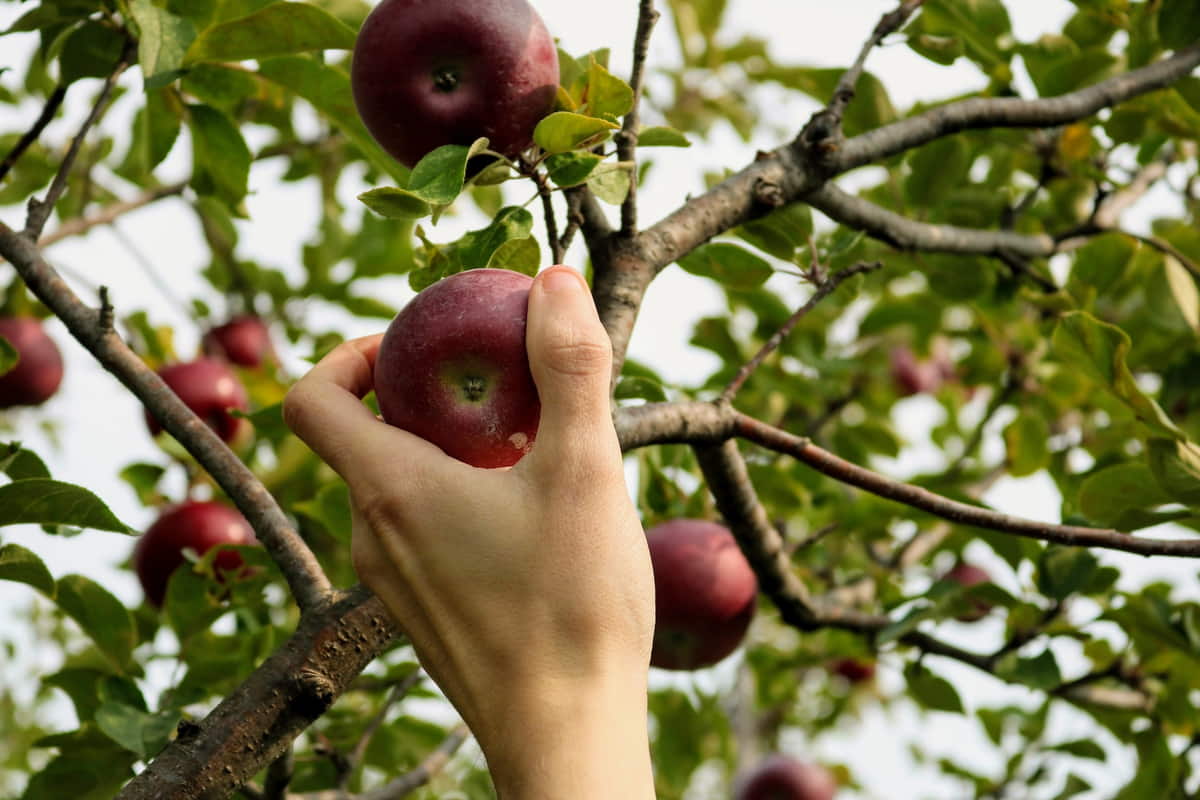
Factors Influencing Maturity Dates
Several environmental and physical factors can shift the ripening timeline by 7–14 days in either direction:
- Spring Temperatures: A warm spring with early bloom dates generally leads to an earlier harvest. Conversely, a cold spring with late frosts can delay fruit development and, in some cases, thin the crop naturally.
- Geographical Location: Orchards in southern latitudes experience higher heat unit accumulation (Growing Degree Days), leading to earlier maturity than the same varieties grown in northern latitudes.
- Altitude: For every 1,000 feet of elevation gain, the temperature typically drops about 3.5°F. Orchards at higher altitudes will consistently harvest later than those in nearby valleys.
- Sunlight Exposure: Sunlight is the primary driver of the starch-to-sugar conversion. Fruit located on the outer, south-facing side of the canopy will often ripen several days before fruit located in the shaded interior.
- Water Availability: While apples need consistent moisture for fruit sizing, excessive rainfall or heavy irrigation immediately before harvest can cause the fruit to swell too quickly, leading to “skin cracking” or “splitting.”
Predicting Your Local Harvest
To accurately predict when to pick, growers should monitor their trees starting two weeks before the estimated variety date. Use the physical markers—ground color, ease of separation, and seed color—to confirm that environmental factors have brought the fruit to full maturity.
5. Harvesting Apples
Judge ripeness by ground color (green fading to yellow or cream), a firm-but-yielding feel near the stem, and dark seed color, then handle picked fruit gently and cool it quickly — apples keep best at 30–32°F and 90% relative humidity.
Harvesting apples is a technical process that relies on specific physiological indicators. Picking at the correct stage of maturity ensures optimal sugar-to-acid ratios and maximizes the fruit’s storage potential. Below is the technical criteria for assessing ripeness and managing fruit post-harvest.
Signs of Apple Ripeness
Determining the exact harvest window requires observing several physical changes in the fruit:
- Ground Color Change: The most reliable visual indicator is the “ground color”—the part of the skin not exposed to direct sun. As the apple matures, this base color shifts from a lime green to a pale yellow or cream.
- Texture and Firmness: Ripe fruit should be firm to the touch. A gentle press near the stem should result in a slight yield without leaving a permanent dent. Softness or a “mealy” texture indicates the fruit is overripe.
- Flavor Profile: The starch-to-sugar conversion should be nearly complete. A ripe apple will have lost its astringency and developed the characteristic aromatic profile of its variety.
- Seed Pigmentation: In most varieties, seeds transition from white or translucent to a deep, dark brown at maturity. While useful, this should be used as a secondary confirmation alongside ground color.

Post-Harvest Handling
The longevity of your harvest depends on how the fruit is managed immediately after it leaves the tree.
Cleaning and Grading
Sort apples based on size and physical condition. Remove any dirt or orchard debris using cold water; this also helps “pre-cool” the fruit, removing field heat and preserving crispness.
Disease and Pest Inspection
Inspect every fruit for skin breaks, insect exit holes (such as codling moth), or fungal lesions — good pollination earlier in the season (a nearby crabapple pollinator helps here) sets the stage for a fuller, more uniform harvest. Apples that have fallen to the ground (drops) should be processed immediately for cider or sauce and never stored with hand-picked fruit, as they are highly susceptible to soil-borne pathogens that can spoil the entire batch.
Cold Storage Specifications
To extend shelf life, apples must be kept in a controlled environment. The ideal storage temperature is 30°F to 32°F with a relative humidity of 90%. This environment slows the fruit’s respiration rate and ethylene production.
Note: Do not store apples in the same compartment as leafy greens or cruciferous vegetables. Apples naturally release ethylene gas as they age, which will cause vegetables to yellow and spoil prematurely.
6. Apple Picking Tools
A telescoping picking pole handles the upper canopy, a padded picking bag or bucket protects thin-skinned varieties on the way down, and a three-legged orchard ladder is the safest way to reach fruit tucked against the trunk.
Using the correct equipment is essential for maintaining fruit quality and ensuring the safety of the grower. Whether managing a home orchard or a commercial operation, specific tools are designed to prevent bruising and allow for efficient harvesting from different parts of the tree canopy.
Apple Picking Pole
A picking pole is a telescopic tool equipped with a wire basket or “claw” and a cushioned liner at the end. This tool allows for the harvest of fruit from the upper canopy without the use of a ladder. The design ensures that apples are pulled gently from the spur, and the internal padding prevents mechanical damage as the fruit is lowered.
Apple Picking Baskets
Specialized harvest baskets are designed with padded interiors to protect the thin skin of varieties like ‘Golden Delicious’ or ‘Gala’. Some models feature waist-straps, which distribute the weight of the fruit across the hips, allowing the picker to use both hands to secure the fruit.
Orchard Tripod Ladders
Unlike standard A-frame ladders, orchard ladders utilize a three-legged (tripod) design. This provides superior stability on the uneven or sloped terrain common in orchards. The single back leg can be inserted into the tree’s interior canopy, allowing the picker to reach fruit closer to the trunk while the flared top rests securely against branches.

Apple Picking Aprons and Bags
Picking bags are worn over the shoulders and feature a wide, reinforced opening for quick depositing of fruit. Most professional models utilize a “bottom-drop” design, where the base of the bag can be unlatched to gently roll the apples into a storage bin, minimizing the risk of bruising caused by pouring the fruit.
Apple Picking Buckets
Sturdy, rigid-walled buckets are used for smaller harvests or when picking varieties that are less prone to bruising. High-quality harvest buckets include padded bottoms to ensure that the initial apples deposited are not crushed by the weight of the subsequent fruit.
Apple Harvesting Machinery
In large-scale commercial operations, manual labor is often supplemented by mechanical harvesters. These systems include “shaker-and-catch” machines, which use controlled vibrations to drop fruit into soft-mesh collectors, and vacuum-assist platforms that transport hand-picked fruit via tubes directly into large bulk bins.
7. Long-Term Apple Storage and Preservation
Dehydrating, canning, freezing, and freeze-drying each trade off convenience for shelf life — canned apples hold 12–18 months, freeze-dried apples in Mylar with oxygen absorbers can last 15–25 years, and whole fruit in home cold storage stays fresh for a few months at 30–32°F.
Preserving apples allows for a continuous food supply throughout the winter and spring. Depending on the intended use—whether for fresh snacking, baking, or long-term emergency stores—different technical methods can be applied to maintain nutritional density and flavor.

Dehydrating Apples
Dehydration reduces the moisture content of the fruit to roughly 5–10% (lower still for crisp chips), which inhibits the growth of bacteria, yeast, and mold.
- Process: Slices are treated with an antioxidant (like lemon juice or ascorbic acid) to prevent browning and then dried at 135°F (57°C) until they reach a leathery or crisp texture.
- Storage: Dehydrated apples should be kept in airtight containers in a cool, dark place. They can be eaten as a dry snack or rehydrated for use in pies and cobblers.
Apple Canning
Canning is a method used to create a vacuum-sealed, shelf-stable product. Because apples are naturally high-acid fruits (with a pH typically between 3.3 and 3.9), they can be safely processed in a boiling water bath. Always follow a tested recipe — from the USDA or the National Center for Home Food Preservation — and adjust the processing time for your altitude.
- Method: Slices are usually packed in a light syrup or water, or processed into apple sauce.
- Safety: Proper processing times based on altitude are required to ensure the destruction of spoilage organisms. Once canned, apples retain their quality for 12–18 months when stored in a temperature-controlled environment.
Apple Freezing
Freezing stops microbial growth and slows down enzymatic changes that lead to spoilage.
- Preparation: To prevent browning, slices should be soaked in an acid wash or blanched briefly in boiling water to halt enzyme activity.
- Packaging: Using vacuum-sealed bags is recommended to prevent “freezer burn” caused by sublimation. While freezing alters the cellular structure (making the fruit softer upon thawing), it is the most effective way to preserve the “fresh” flavor for baking.
Freeze-Drying Apples
Freeze-drying is a sophisticated preservation technique that utilizes a process called sublimation. The fruit is frozen to extremely low temperatures, and a vacuum is applied to turn the ice directly into vapor without passing through the liquid phase.
- Benefits: This method removes nearly 99% of moisture while retaining almost 100% of the original nutrients, shape, and flavor.
- Longevity: When stored in Mylar bags with oxygen absorbers, freeze-dried apples can remain shelf-stable for 15–25 years.
Storage Containers and Facilities
For whole fruit storage, the physical environment is the most important factor in preventing rot and moisture loss.
Commercial Storage: Professional growers often use Controlled Atmosphere (CA) storage. These facilities strictly regulate oxygen levels (reduced to 1-2%), carbon dioxide levels, and temperature to “sleep” the fruit, extending the fresh window for up to 10–12 months.
8. Apple Festivals and Community Impact
Apple festivals let growers showcase heirloom and disease-resistant varieties that never make it to grocery shelves, and they give home orchardists a low-stakes way to taste a cultivar before committing an entire tree to it.
Apple festivals are specialized agricultural events focused on the regional harvest and the promotion of local apple cultivars. These gatherings provide a venue for grower education and the commercial exchange of both fresh fruit and value-added products.
Variety Showcasing and Consumer Education
Festivals often include sensory evaluation (tasting) of numerous cultivars. This allows consumers to identify specific flavor profiles—such as the balance of brix (sugar) to acidity—and culinary uses for varieties not typically found in standard retail environments, such as heritage or regional specialty apples.
Culinary and Industrial Applications
These events serve as a primary market for apple-derived products. Technical demonstrations, such as cider pressing or the preparation of variety-specific preserves, illustrate the practical applications of different apple flesh types and acidity levels.
Support for Local Agriculture
By connecting orchards directly with the community, festivals support the economic viability of local agriculture. They also encourage the preservation of biodiversity by highlighting disease-resistant and heirloom varieties that are essential for low-input food forests and home orchards.

9. Apple FAQ
Can you ripen apples faster after harvest?
Yes, you can accelerate the softening and aromatic development of apples by exposing them to ethylene gas. Placing apples in a paper bag with high-ethylene producers, such as ripe bananas or tomatoes, will speed up the process. Keep the bag in a room-temperature area; however, note that while the texture will soften, the apple will not become significantly sweeter once removed from the tree.
Do apples continue to ripen if picked early?
Apples will continue to undergo physiological changes after being picked, such as softening of the flesh and changes in skin color. However, unlike some other fruits, apples store their energy as starch. Once picked, they stop accumulating sugar from the tree. If harvested too early, the fruit may soften but will remain starchy and lack the full flavor profile of tree-ripened fruit.
What color are apples before they reach maturity?
Most apple varieties are predominantly green or a dull yellowish-green during their developmental stage. This is due to high chlorophyll levels in the skin. As the fruit matures, the chlorophyll breaks down, revealing the “ground color” (yellow or cream) and allowing anthocyanins (red pigments) to develop if the variety and sunlight levels permit.
Which apple varieties are available year-round?
Varieties like Fuji, Granny Smith, and Red Delicious are common year-round because they have dense flesh and are “long-keepers.” Large-scale growers use Controlled Atmosphere (CA) storage to extend their shelf life. In these facilities, oxygen levels are lowered to 1–2% and carbon dioxide (CO2) is strictly regulated. This process puts the fruit into a state of dormancy, allowing it to stay crisp for up to 12 months.
Why does refrigeration extend the shelf life of apples?
Refrigeration extends shelf life by slowing the fruit’s respiration rate and its natural production of ethylene. Low temperatures (ideally 30°F–32°F) delay the breakdown of cell walls and pectin, which keeps the fruit crisp. Additionally, the higher humidity in a refrigerator’s crisper drawer prevents the fruit from losing moisture and shriveling.
10. Resources & Further Reading
- Michigan State University (2023): Apple Starch Index Scale A definitive visual guide for performing the starch-iodine test, including variety-specific maturity charts for commercial standards. https://www.canr.msu.edu/resources/starch-index-scale
- Washington State University (2024): Apple Harvest and Maturity In-depth technical articles on the physiological changes during ripening, including ethylene production and respiratory phases. https://treefruit.wsu.edu/web-article/harvest-apples/
- Purdue University (2016): Home Storage of Fruit Practical specifications for converting standard cold spaces into effective storage environments, including temperature and humidity data. https://www.purdue.edu/hla/sites/yardandgarden/wp-content/uploads/sites/2/2016/10/HO-95.pdf
- Oregon State University (2023): Picking and Storing Apples and Pears Technical overview of maturity markers like ground color and seed pigmentation, with specific storage life tables for common cultivars. https://extension.oregonstate.edu/catalog/fs-147-picking-storing-apples-pears
- Cornell University (2024): Predicting Apple Harvest Windows Detailed scientific methodology for calculating harvest dates using the Streif Index and starch-iodine patterns for commercial orchards. https://nysipm.cornell.edu/agriculture/fruits/tree-fruits/
- University of Illinois (2024): Fruit Harvesting and Storage Comprehensive guide focusing on the chemical transition of starch to sugar and the importance of pre-cooling fruit to extend shelf life. https://extension.illinois.edu/fruit-trees/fruit-harvesting-and-storage
- ATTRA Sustainable Agriculture (2022): Organic Apple Production Overview Technical guide for managing organic orchards, focusing on disease-resistant varieties, nutrient cycling, and low-input pest management. https://attra.ncat.org/publication/organic-apple-production-overview/
- Permies.com (2018): Apple Tree Guilds and Companions Community discussion and case studies on integrating understory allies like comfrey and dill into productive apple orchard guilds. https://permies.com/t/102804/Apple-tree-guilds-companions