
Arkansas Black Apple
$49.95
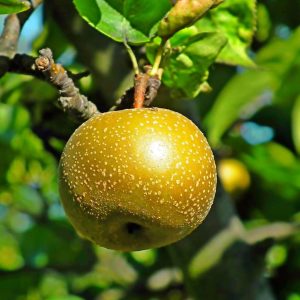
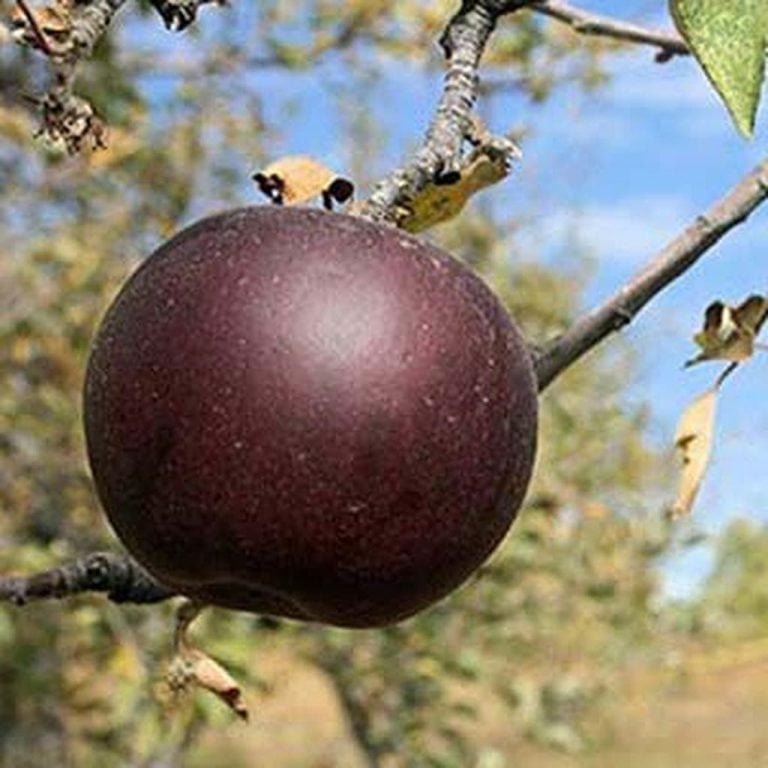
Arkansas Black Apple (Malus domestica ‘Arkansas Black’) is a mid-nineteenth-century Arkansas heirloom bearing deep crimson to nearly black fruit that develops complex sweet-tart flavor with notes of cinnamon, cherry, and vanilla after two to three months of cold storage. It grows in USDA hardiness zones 5-9 and AHS heat zones 4-9, needs 850-1050 chill hours, and requires cross-pollination with a compatible variety such as Freedom Apple or Fuji Apple to set fruit.
4-5′ Bare Root Grafted Tree
Rootstock: Malus domestica, M7 – Semi Dwarf, G935 – Dwarf
Can’t be shipped to: AK, HI, MT
Out of stock — back next season
Spring 2027 inventory drops in June. Drop your email and we'll notify you the day this variety is back in stock.
You're on the list. Check your inbox for a confirmation link — click it to lock in your spot. We'll email you the day this variety is back in stock.
Arkansas Black Apple emerged in the mid-nineteenth century in Benton County, Arkansas, where pomologists credit John Braithwaite with planting the seedling that became the variety. Braithwaite’s nursery records indicate the seedling was among ungrafted stock around 1843, with fruiting first documented around 1865 and the variety entering public attention by 1870. Its parentage is believed to involve Winesap — period sources describe it as a variety of Winesap — though the specific cross that produced it was never confirmed, and it may have arisen as an open-pollinated chance seedling in or near Winesap stock.
Arkansas Black became a commercial force across the Ozarks apple belt in the late 1800s, representing an estimated 10 to 15 percent of Arkansas apple production at its peak, with Benton County alone supporting some 40,000 acres of commercial orchards around 1900. Its near-black skin at peak maturity — among the darkest of any named apple — and long cold-storage keeping quality made it a farmstead staple. Commercial decline came in the early twentieth century as codling moth infestations raised spray costs, drought and the Depression hit growers hard, and cold-storage infrastructure shifted market preference to softer-skinned cultivars. The variety has seen renewed interest among hard cider producers and heritage orchard enthusiasts who value its late-season harvest and tannin-forward profile.
Arkansas Black needs 800 to 1,000 chill hours, placing it squarely in mid-belt orchard territory — reliable in zones 5 through 7 and marginal at both ends of the range. A deep, well-drained loam or sandy clay loam with pH between 6.0 and 7.0 supports consistent spur development; the spur-bearing habit means fruit load is distributed along older wood, so waterlogged soils that promote root rot will collapse productivity quickly. Site selection matters: a gentle slope improves cold-air drainage and reduces late-frost damage to blossoms, which emerge mid- to late spring. Once established, the tree tolerates moderate drought and handles humid summers better than many heritage varieties, though consistent moisture during the fruit development window — roughly late June through August — reduces premature drop and supports the dense flesh that makes long storage possible. Mulching to a 4-inch depth around the root zone conserves moisture and moderates soil temperature without creating the wet crown conditions that invite crown rot. Thin fruit clusters to one apple per spur by early June to promote size and discourage biennial bearing.
USDA Hardiness Zone: 5-9
AHS Heat Zone: 4-9
Chill Hours: 850-1050
Sun Requirements: Full Sun
Soil pH: 6.0-7.0
Soil Type: Loam, sandy loam to clay loam; well-drained
Soil Drainage: Well-drained; does not tolerate wet/waterlogged soils
Water Requirements: Regular watering; approximately 1 inch per week during the growing season; mulching helps retain soil moisture
Drought Tolerance: Moderate; good drought tolerance once established but fruits best with consistent moisture
Heat Tolerance: High; tolerates heat and humidity well; adapts to warm climates
Plant Spacing: Select a rootstock above for exact spacing information.
How to Prune: Can be maintained at a smaller size with annual pruning
Arkansas Black develops an upright, rounded canopy with a moderate growth rate of roughly 1 to 2 feet per year, reaching 12 to 15 feet tall and wide on semi-dwarf rootstock. The spur-bearing habit is structurally important: fruiting spurs develop along scaffold limbs from the trunk outward, concentrating crop load on older wood rather than shoot tips. This means the central leader and primary scaffolds bear the bulk of the structural stress at harvest, and those limbs need to be strong and well-angled. Training to a modified central leader during the first three to five years — establishing four to five scaffold branches at wide angles — sets up a frame that can support decades of spur-borne crops without significant breakage. Annual pruning focuses on maintaining light penetration into the interior canopy: spurs that are shaded produce small, poorly colored fruit. Spacing of 12 to 15 feet for semi-dwarf stock allows adequate airflow, which matters for this variety's moderate scab susceptibility. The deciduous habit opens the canopy fully in winter, making scaffold assessment and corrective pruning straightforward each dormant season.
Mature Height: Select a rootstock above for exact size information.
Mature Spread: Select a rootstock above for exact spread information.
Growth Habit: Upright, rounded; spur-bearing (fruit develops along entire limb length from trunk to tip in spur-type forms)
Growth Rate: Moderate; approximately 1-2 feet per year
Foliage Type: Deciduous
Food Forest Layer: Canopy, Sub-canopy
Leaf Color: Dark green foliage of medium density in the historical Manhattan, Kansas trial
Attracts Wildlife: Bees; birds; butterflies
Life Span: productive life 50-100+ years with proper care
Arkansas Black is triploid, meaning it carries three sets of chromosomes rather than the standard two. Triploid varieties produce sterile pollen that cannot fertilize other apple trees, so Arkansas Black cannot serve as a pollinator for any companion in your orchard. More critically, a triploid tree itself needs pollen from two separate diploid varieties to achieve consistent fruit set — one diploid pollinator is often insufficient for reliable cropping because bloom overlap with a single variety may be incomplete across variable spring conditions. Arkansas Black blooms in mid- to late spring; choose diploid pollinators that also bloom in that window. Enterprise Apple and Liberty Apple are well-matched companions: both are diploid, bloom in the same mid-spring window, and bring disease resistance that complements Arkansas Black's profile in humid climates. Plant all three within 50 feet of each other and ensure bee access during the bloom period.
Bloom Season: Late
Bloom Window: Late Apr - Early May
Pollination Requirements: Requires cross-pollination; triploid variety — plant two additional non-triploid diploid varieties nearby; cannot serve as a pollinator for other trees
Pollination Mechanism: Insect-pollinated (bees)
Flower Color: White to pale pink
Ploidy: Triploid (3n)
The skin turns deep crimson to near-black at full maturity in late October to early November — one of the darkest pigmented apples in cultivation — with thick, waxy, smooth skin that resists bruising during handling. Flesh is greenish-white to creamy yellow, very firm, and high in acid at harvest; Brix levels run moderate but acid dominates the fresh palate, which can register as austere without storage conditioning. After two to three months of cold storage at 32 to 34°F, the acid softens, sugars concentrate, and layered aromatics emerge — cinnamon, cherry, and faint vanilla — making it one of the most complex-flavored late-season keepers available. Storage life extends to six to eight months under proper refrigeration, longer than most modern cultivars. Culinary applications include fresh eating post-storage, high-acid single-varietal hard cider, baking where firm texture holds through heat, pies, applesauce, and preserves. Fruit size ranges from 2 to 3 inches in diameter; yield is moderate to heavy on established spur systems.
Ripening Season: Very Late
Harvest Window: Late Oct - Early Nov
Fruit Size: 2-3 inch
Flavor: Tart and firm when freshly harvested; develops complex sweet-tart flavor with aromatic notes of cinnamon, cherry, and vanilla after 2-3 months cold storage; high acid, spicy
Fruit Color: Deep crimson to nearly black at full maturity; flesh is greenish-white to creamy yellow when storage-ripened
Fruit Texture: Very firm and crisp; maintains crisp texture even after months of storage
Fruit Skin: Thick, smooth, waxy; deep crimson to near-black; tough skin
Bearing Habit: Spur-bearing; annual bearing
Years to Bear: Select a rootstock above for exact bearing information.
Yield: Fair bearer in the historical Manhattan, Kansas trial; bore a light crop in 1897
Storage Life: 6-8 months with refrigeration; flavor improves significantly after 2-3 months cold storage
Culinary Uses: Fresh eating (best after storage), hard cider, cooking, baking, applesauce, pies, jams, jellies; exceptional storage apple
Among the primary apple diseases, Apple Scab (Venturia inaequalis) poses the greatest challenge for Arkansas Black — moderately susceptible, this variety will develop lesions on leaves and fruit in humid conditions without management. Rake and remove fallen leaves each autumn to eliminate overwintering spores, and prune for an open canopy to reduce leaf wetness duration. OMRI-listed copper or sulfur sprays from green tip through petal fall cover the critical infection window organically. Fire Blight (Erwinia amylovora) and Powdery Mildew (Podosphaera leucotricha) rate as moderately resistant, reducing routine spray need; prune mildew-affected shoot tips during wet springs. Cedar Apple Rust (Gymnosporangium juniperi-virginianae) resistance is solid — a practical advantage where eastern red cedar is common. Black Rot (Botryosphaeria obtusa) resistance is moderate; remove mummified fruit and dead wood promptly. All four primary pests — Codling Moth (Cydia pomonella), Plum Curculio (Conotrachelus nenuphar), Apple Maggot (Rhagoletis pomonella), and Brown Marmorated Stink Bug (Halyomorpha halys) — rate as moderately susceptible. Kaolin clay applied pre-bloom through mid-summer physically excludes curculio and maggot. Use pheromone traps to time OMRI-listed spinosad at codling moth egg hatch; the thick waxy skin slows but does not prevent stink bug feeding damage.
Apple Scab: Moderately Susceptible
Fire Blight: Moderately Resistant
Powdery Mildew: Moderately Resistant
Cedar Apple Rust: Resistant
Black Rot: Moderately Resistant
Codling Moth: Moderately Susceptible
Plum Curculio: Moderately Susceptible
Apple Maggot: Moderately Susceptible
Brown Marmorated Stink Bug: Moderately Susceptible
- Always plant two diploid pollinators: Arkansas Black produces sterile pollen — one diploid companion is not enough. Plant two compatible varieties such as Enterprise and Liberty within 50 feet.
- Delay harvest until skin is fully black: Picking early locks in harsh acid and forfeits the storage-ripening process. Wait for near-black coloration in late October to early November.
- Cold-store for 60–90 days minimum: Fresh-harvest flavor is astringent; the cinnamon-vanilla profile develops after 2–3 months at 32–34°F. Plan to start tasting in January.
- Prioritize scab sanitation: Raking and destroying fallen leaves in autumn removes overwintering inoculum — more effective than late-season spray applications alone.
- Monitor codling moth with pheromone traps: Set traps at pink bud and use degree-day tracking to time OMRI-listed spinosad at first-generation egg hatch — firm skin slows entry but does not prevent it.
We ship in late winter or early spring based on your USDA hardiness zone.
We strive to ship orders on the scheduled dates listed in the table below. However, please note that the actual shipping date may be subject to change due to factors like weather conditions and order volume.
The specific date for shipping your order will be determined according to your zipcode at the time of checkout.
Our plants are shipped bare root, packed in moist sawdust, and securely wrapped in plastic to prevent the roots from drying out. We use USPS Ground Advantage for shipping, ensuring that your plants typically arrive within 2-5 days after packaging.
In case you're unable to plant the trees immediately upon arrival, we recommend soaking them in water for a few hours and temporarily heeling them in. Ideally, they should be planted within three days of receipt for optimal health.
See our full shipping policy and map here
| Zone | Ship Date |
|---|---|
| 11 - 8b | March 1st, 2027 |
| 8a - 7b | March 8th, 2027 |
| 7a | March 15th, 2027 |
| 6b | March 22nd, 2027 |
| 6a | March 29th, 2027 |
| 5b - 5a | April 12th, 2027 |
| 4b - 4a | April 26th, 2027 |
| 3b - 1a | May 3rd, 2027 |
Our 365-Day Plant Guarantee: We ensure that our plants are delivered to you alive and healthy. If your plant does not survive its first year, you're eligible for store credit under these conditions:
- Your location falls within the appropriate USDA hardiness zone for the plant variety (refer to our hardiness zone map).
- You maintain the roots' moisture and plant within three days of delivery, following the instructions in our Planting Guide.
If you're concerned about your plant's health, please consult our guide, How to Tell if Your Tree is Dead or Dormant. Remember, our plants are shipped in a dormant state and may leaf out at different times based on their species. To check for plant vital
3 reviews for Arkansas Black Apple
Related products

Bur Oak
Checking fit- SOLD OUT

Red Mulberry
Checking fitRated 4.89 out of 5 
Pawnee Pecan
Checking fit
Swamp Chestnut Oak
Checking fitRated 5.00 out of 5


Juan C. (verified owner) –
Ekaterina Sorokina (verified owner) –
Anonymous (verified owner) –
It is getting leaves now