Enterprise Apple
$49.95
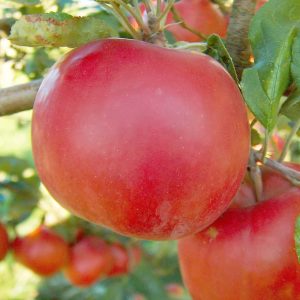
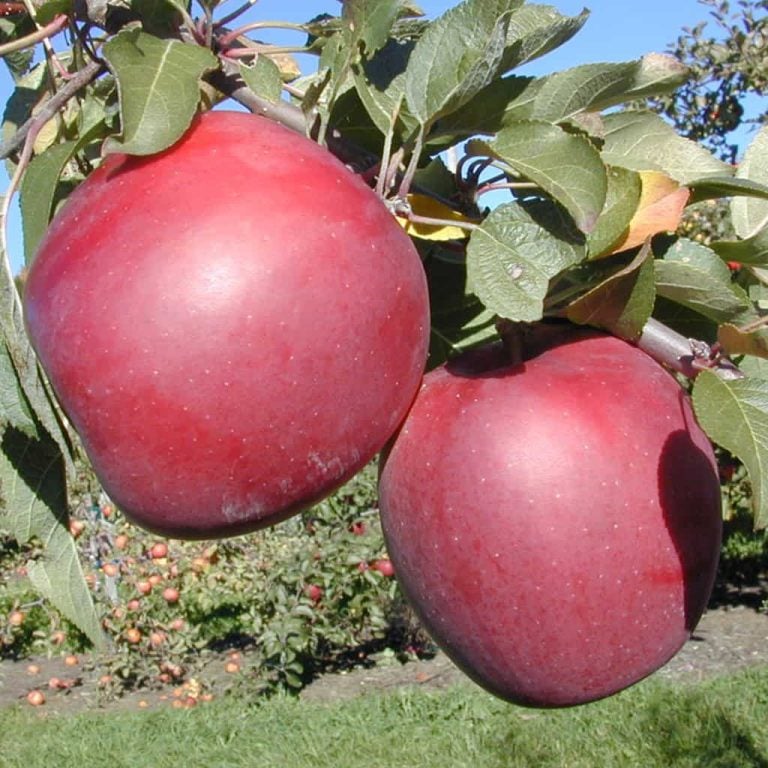
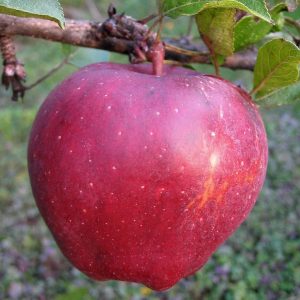
Enterprise Apple (Malus domestica ‘Enterprise’) is a late-season storage apple from the PRI cooperative breeding program, producing dark red fruit with firm, fine-grained flesh whose spicy-sweet flavor deepens after several weeks in cold storage. It grows in USDA hardiness zones 4-8 and AHS heat zones 1-7, needs 800-1000 chill hours, and requires cross-pollination with a compatible variety such as GoldRush Apple or Honeycrisp Apple to set fruit.
4-5′ Bare Root Grafted Tree
Rootstock: G214 – Semi Dwarf
Sizes like M.9 — genuinely dwarf. Fire blight and Phytophthora resistant, and very early to bear.
• Support: Stake or trellis for life; M.9-class roots are brittle and poorly anchored.
Can’t be shipped to: AK, HI, MT
In stock
Enterprise, released under the breeding designation Co-op 30 by the Purdue-Rutgers-Illinois (PRI) cooperative apple breeding program, resulted from a 1971 cross made at West Lafayette, Indiana. The seed parent was PRI 1661-2 and the pollen parent was PRI 1661-1, both complex breeding selections developed within the program’s long-running scab-resistance research. The PRI effort, which began after World War II with the deliberate introduction of Malus floribunda 821 as a Vf-gene donor, aimed to build scab immunity into commercially competitive dessert apple cultivars for humid-climate orchards. Enterprise carries at least one copy of the Vf factor conferring field immunity to common races of apple scab. It was introduced commercially in the early 1990s — the U.S. plant patent was filed and granted in that period — and positioned as a late-season red apple suited to the eastern United States that growers could manage with dramatically reduced fungicide programs.
Enterprise performs across a broad mid-belt climate range, needing around 800 chill hours — a target comfortably met across zones 4 through 7 wherever winters dip reliably below 45°F for sufficient duration. Its late-season ripening in mid to late October means the tree spends more of the growing season filling fruit, which amplifies the importance of consistent soil moisture from late June through early September. Drought stress during that cell-division and sizing window translates directly into smaller, less flavorful fruit. Soil pH in the 6.0–7.0 range keeps nutrient uptake — especially calcium, which governs cell-wall integrity and storage life — in an efficient zone. Well-drained loam is ideal, but the variety tolerates clay or sandy loam as long as standing water doesn't accumulate around the root zone after rain. Mulching with 3–4 inches of wood chips through the drip line conserves moisture while moderating soil temperature swings that can trigger early bark cracking.
USDA Hardiness Zone: 4-8
AHS Heat Zone: 1-7
Chill Hours: 800-1000
Sun Requirements: Full Sun
Soil pH: 6.0-7.0
Soil Type: Loam; tolerates clay or sandy loam if drainage is adequate
Soil Drainage: Well-drained
Water Requirements: Medium; consistent moisture especially during fruit development
On a semi-dwarf rootstock, Enterprise develops a spreading, round-topped canopy that settles in at 12–15 feet tall and equally wide. On a dwarfing rootstock it stays closer to 8–10 feet in both dimensions — a scale that suits intensive, high-density planting systems where inter-row cultivation remains practical. Growth rate is moderate to vigorous in the establishment phase, then slows as spur development consolidates. Fruit load is carried primarily on persistent spurs, which accumulate along two- and three-year-old wood and benefit from thinning cuts every two to three seasons to prevent overcrowding. The round-topped form responds well to an open-center or central-leader training system depending on rootstock vigor; dwarfing rootstocks anchor better under central-leader management since they don't develop sufficient root mass to stabilize a wide spreading head without support. The deciduous canopy provides useful summer shade on the south-facing side of mixed planting rows.
Mature Height: 12-15 ft tall (semi-dwarf); 8-10 ft tall (dwarf)
Mature Spread: 12-15 ft wide (semi-dwarf); 8-10 ft wide (dwarf)
Growth Habit: Spreading, round-topped
Growth Rate: Moderate to Fast
Foliage Type: Deciduous
Food Forest Layer: Canopy, Sub-canopy
Permaculture Role: Productive tree; food producer; wildlife habitat; insectary attractor
Attracts Wildlife: Bees, pollinators, birds, small mammals
Life Span: productive life 30-100 years depending on rootstock and management
Enterprise is a diploid and a cross-pollination-dependent variety — it produces viable pollen but sets fruit poorly without a compatible donor blooming at the same time. Flowers open in the late April to mid-May window, placing it squarely in the mid-to-late bloom group for most temperate zones. Any mid-to-late blooming diploid apple with overlap in that window serves as a functional pollinator. GoldRush Apple is an ideal pairing: it shares the late bloom window, also carries strong disease resistance, and stores well into winter alongside Enterprise. Honeycrisp Apple and Fuji Apple also overlap reliably. Plant pollinators within 50 feet to ensure adequate bee foraging overlap; positioning them upwind of the prevailing spring breeze improves insect transfer rates.
Bloom Season: Late
Bloom Window: Late Apr - Early May
Pollination Requirements: Requires cross-pollination; not self-fertile
Pollination Mechanism: Insect (bees)
Flower Color: White to light pink
Ploidy: Diploid
Fruit runs 2.75–3 inches in diameter, typically weighing 8–12 ounces, with 80–100% dark cardinal-red to near-crimson skin coverage over a yellow-green ground. The flesh is firm, fine-grained, and crisp at harvest — a texture that holds through months of refrigeration with minimal softening. Flavor at picking is spicy-sweet with a rich body and mild tartness; the profile mellows and deepens after four to six weeks in cold storage, losing some of the sharper edge and developing a more rounded sweetness that many tasters prefer. Brix values land in the moderate-to-high range. Culinary versatility is broad: the firm texture holds structure through baking and cooking without turning to mush, making it suitable for pies, sauces, and drying as well as fresh eating. Storage life reaches five to six months under consistent refrigeration, making it one of the longest-keeping late-season apples in general cultivation. Cider blenders use it for body and color.
Ripening Season: Very Late
Harvest Window: Mid Oct - Late Oct
Fruit Size: 2.75-3 inch
Fruit Weight: 8-12 oz
Flavor: Spicy-sweet, rich, mildly tart; flavor deepens and mellows in storage
Fruit Color: Dark red to cardinal red over yellow-green ground; 80-100% red coverage
Fruit Texture: Firm, crisp, fine-grained; retains crispness through storage
Fruit Skin: Smooth, glossy, moderately thick and tough
Bearing Habit: Annual bearer; spurs
Years to Bear: 2-5 years
Storage Life: 5-6 months under refrigeration; peak quality after 1-2 months in cold storage
Culinary Uses: Fresh eating, baking, cider, applesauce, drying; flavor improves after 4-6 weeks cold storage
Enterprise carries virtual immunity to apple scab (Venturia inaequalis) via the Vf resistance gene from Malus floribunda 821, eliminating a disease that historically demands eight to twelve fungicide applications per season and making it a strong candidate for low-spray programs. Fire blight (Erwinia amylovora) resistance is strong — the variety withstands normal infection pressure without rapid shoot dieback, though sites with a severe history should remove infected wood during dormant pruning. Cedar apple rust (Gymnosporangium juniperi-virginianae) resistance is similarly strong, relevant wherever Juniperus virginiana grows as an alternate host. Powdery mildew (Podosphaeria leucotricha) sits at moderate resistance; promote airflow through annual thinning cuts and avoid excess nitrogen that encourages dense, susceptible growth. Black rot (Botryosphaeria obtusa) is a genuine weak point — moderate susceptibility means orchard sanitation matters: remove mummified fruit and dead spurs during winter pruning to reduce overwintering inoculum. All four major pest species — codling moth (Cydia pomonella), plum curculio (Conotrachelus nenuphar), apple maggot (Rhagoletis pomonella), and brown marmorated stink bug (Halyomorpha halys) — require active management. Apply kaolin clay at petal fall for codling moth and curculio; monitor with sticky ball traps for apple maggot adults through July and August. Exclusion netting is the most effective BMSB control for small-scale plantings.
Apple Scab: Very Resistant
Fire Blight: Resistant
Powdery Mildew: Moderately Resistant
Cedar Apple Rust: Resistant
Black Rot: Moderately Susceptible
Codling Moth: Susceptible
Plum Curculio: Susceptible
Apple Maggot: Susceptible
Brown Marmorated Stink Bug: Susceptible
- Let it age in the cooler: Enterprise flavor improves noticeably after four to six weeks at 32–35°F; pick in mid-to-late October and sample in December for full flavor.
- Dormant sanitation for black rot: Remove mummified fruit and dead spur stubs during winter pruning to eliminate the primary inoculum load for the next season.
- Pest exclusion at petal fall: Apply kaolin clay (OMRI-listed) at petal fall, reapply after each rain, and use pheromone traps from two weeks before bloom — covers codling moth, plum curculio, apple maggot, and stink bug.
- Match rootstock to site: On shallow or poorly drained soils, a semi-dwarf rootstock (M.7, G.30) outperforms dwarfing stocks that anchor poorly and need permanent staking.
- Pair with a diploid pollinator: Enterprise blooms late April to mid-May and needs a compatible donor — GoldRush or Fuji work well; avoid triploids, which shed sterile pollen.
We ship in late winter or early spring based on your USDA hardiness zone.
We strive to ship orders on the scheduled dates listed in the table below. However, please note that the actual shipping date may be subject to change due to factors like weather conditions and order volume.
The specific date for shipping your order will be determined according to your zipcode at the time of checkout.
Our plants are shipped bare root, packed in moist sawdust, and securely wrapped in plastic to prevent the roots from drying out. We use USPS Ground Advantage for shipping, ensuring that your plants typically arrive within 2-5 days after packaging.
In case you're unable to plant the trees immediately upon arrival, we recommend soaking them in water for a few hours and temporarily heeling them in. Ideally, they should be planted within three days of receipt for optimal health.
See our full shipping policy and map here
| Zone | Ship Date |
|---|---|
| 11 - 8b | March 1st, 2027 |
| 8a - 7b | March 8th, 2027 |
| 7a | March 15th, 2027 |
| 6b | March 22nd, 2027 |
| 6a | March 29th, 2027 |
| 5b - 5a | April 12th, 2027 |
| 4b - 4a | April 26th, 2027 |
| 3b - 1a | May 3rd, 2027 |
Our 365-Day Plant Guarantee: We ensure that our plants are delivered to you alive and healthy. If your plant does not survive its first year, you're eligible for store credit under these conditions:
- Your location falls within the appropriate USDA hardiness zone for the plant variety (refer to our hardiness zone map).
- You maintain the roots' moisture and plant within three days of delivery, following the instructions in our Planting Guide.
If you're concerned about your plant's health, please consult our guide, How to Tell if Your Tree is Dead or Dormant. Remember, our plants are shipped in a dormant state and may leaf out at different times based on their species. To check for plant vital
4 reviews for Enterprise Apple
Related products

McIntosh Apple
Checking fitRated 5.00 out of 5
Honeycrisp Apple
Rated 5.00 out of 5$49.95 Select Rootstock This product has multiple variants. The options may be chosen on the product pageChecking fit
Wolf River Apple
Checking fit
Cinnamon Spice Apple
Checking fit

Clint S. (verified owner) –
Scott W. (verified owner) –
Trees arrived in good condition. Actually bigger than I thought they would be. Each tree had 2 limbs about 24 inches long. Root system had lots of fine roots. I was very happy with them.
Lawrence Leshkevich (verified owner) –
So far so good!
Brenda S. (verified owner) –
Looks healthy. Just beginning to open up.