Shizuka Apple
$49.95
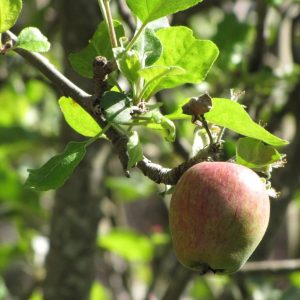
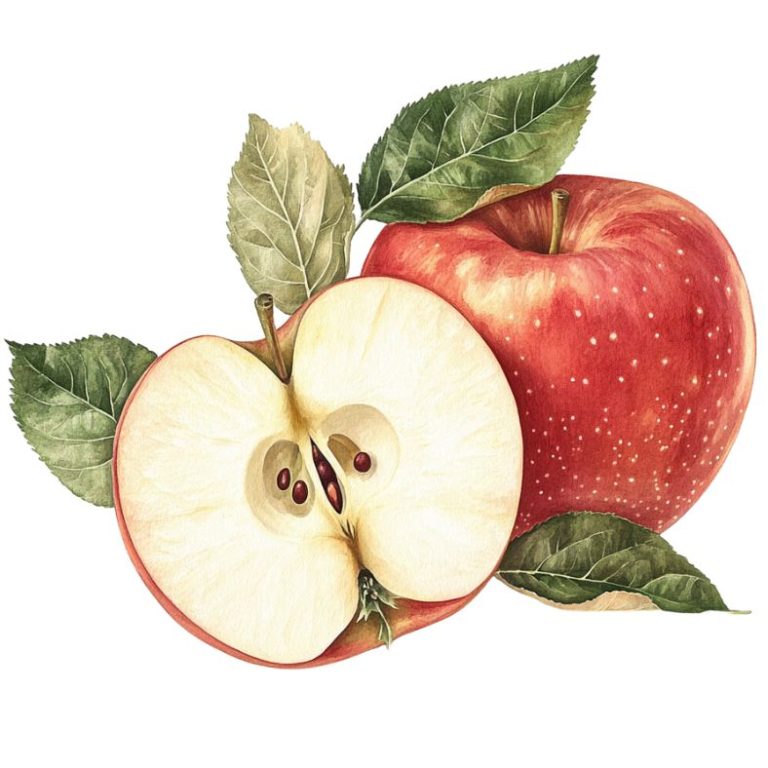
Shizuka Apple (Malus domestica ‘Shizuka’) is a very large Japanese apple — a Golden Delicious × Indo sibling of Mutsu — bearing sweet, low-acid, tropical-hinted fruit up to 4 inches across with crisp, slow-browning flesh. It grows in USDA hardiness zones 4-8 and AHS heat zones 1-8, and needs 800-1000 chill hours, and requires cross-pollination with a compatible variety such as Freedom Apple or Fuji Apple to set fruit.
4-5′ Bare Root Grafted Tree
Rootstock: G214 – Semi Dwarf
Sizes like M.9 — genuinely dwarf. Fire blight and Phytophthora resistant, and very early to bear.
• Support: Stake or trellis for life; M.9-class roots are brittle and poorly anchored.
Can’t be shipped to: AK, HI, MT
In stock
Shizuka was developed at the Aomori Apple Experiment Station in Kuroishi, Japan, and introduced commercially in 1986 by Tsuneo Murakami. Its parentage is recorded as Golden Delicious crossed with Indo — the same parental combination used to create Mutsu — making Shizuka and Mutsu genetic siblings from the same breeding program rather than parent and offspring, despite some sources describing Shizuka as a Mutsu seedling. Like Mutsu, Shizuka carries a triploid genetic constitution (three chromosome sets) resulting in sterile pollen and an inability to fulfill any cross-pollination role in the orchard. The breeding station screened over 5,000 hybrid seedlings from multiple crosses, targeting sweet, tree-ripened fruit with strong storage qualities. Shizuka gained traction first in Japan and later among specialty growers in the Pacific Northwest and Midwest, valued for its late-October harvest window, large fruit size, and notably lower acidity compared to its sibling Mutsu. Unlike Mutsu, Shizuka is not susceptible to blister spot, a minor commercial advantage in humid production regions.
Shizuka's chill requirement of roughly 800 to 1,000 hours suits standard mid-belt climates — zones 5 through 7 are the sweet spot, though documented plantings succeed across zones 4–8 when site selection is careful. In humid summer climates, drainage is especially important: the variety's susceptibility to both apple scab and fire blight worsens on waterlogged roots, which stress the canopy and reduce the tree's ability to push new growth after infection. Choose a gentle slope or raised bed to encourage cold-air drainage as well — late frosts during bloom group 3 (mid-spring) are the primary yield threat in northern zones. Soil pH should stay between 6.0 and 7.0; outside that range, calcium and magnesium uptake decline and fruit quality suffers. Apply 1 inch of water weekly through the growing season, tapering off after harvest in August to harden the wood before winter. Consistent moisture during June and July, when fruit cells are dividing rapidly, pays dividends in final fruit size, which can reach 300 to 500 grams on well-managed trees.
USDA Hardiness Zone: 4-8
AHS Heat Zone: 1-8
Chill Hours: 800-1000
Sun Requirements: Full Sun (6+ hours direct sunlight daily)
Soil pH: 6.0-7.0
Soil Type: Deep, well-drained loam to sandy clay loam soil
Soil Drainage: Well-drained; does not tolerate standing water
Water Requirements: Medium; 1 inch per week during growing season
Plant Spacing: Standard: 20-25 ft; Semi-dwarf: 12-15 ft; Dwarf: 6-8 ft
How to Prune: Prune annually in late winter/early spring before budbreak; remove dead, diseased, or crossing branches; thin to open canopy for light and air circulation; maintain central leader
Shizuka's growth pattern mirrors its Mutsu parentage: vigorous and upright-spreading, with strong scaffold branches that require early training to keep the canopy open and the central leader dominant. On semi-dwarf rootstock, expect 14 to 20 feet tall and 10 to 12 feet wide at maturity; dwarf rootstock keeps the tree at 8 to 12 feet and simplifies picking large fruit at harvest. The tree is a spur bearer, meaning fruit develops on short, stubby lateral spurs rather than on long one-year wood — a trait that rewards annual light pruning over heavy renewal cuts. Annual dormant pruning in late winter targets dead, crossing, and inward-facing branches to maintain airflow, which is particularly important for a variety that is moderately to highly susceptible to scab and rust. Root architecture follows rootstock: fibrous lateral systems on dwarfing rootstocks anchor less deeply but compete less with the tree's spur system. Adequate staking for the first three to five years prevents windthrow in vigorous-growing seasons.
Mature Height: 20-30 ft tall (standard); 14-20 ft tall (semi-dwarf); 8-12 ft tall (dwarf)
Mature Spread: 10-12 ft wide (semi-dwarf); 8-12 ft wide (dwarf)
Growth Habit: Upright-spreading; spur-bearing; vigorous (similar to Mutsu)
Growth Rate: Moderate to Fast (vigorous, similar to Mutsu)
Foliage Type: Deciduous
Food Forest Layer: Canopy
Attracts Wildlife: Bees, butterflies, birds (fruit), deer
Life Span: 50-100+ years
Shizuka carries three chromosome sets (triploid), which means its pollen is largely sterile and cannot serve as a pollen donor for other apple varieties in the orchard. This has a direct planning consequence: the tree needs not just one but two compatible diploid pollinators planted within roughly 100 feet, because neither a second Shizuka nor another triploid (such as Mutsu or Jonagold) can take that role. Shizuka flowers in mid-spring, aligning with Bloom Group 3 varieties. Reliable diploid companions from the nursery's inventory that share this bloom window include Fuji Apple and Honeycrisp Apple; planting both ensures redundant pollen supply even when one tree has an off-bloom year. Bees are the primary transfer agent. In years with cold, wet springs during bloom, supplemental hive placement near the orchard improves fruit set on this large-fruited variety.
Bloom Season: Mid
Bloom Window: Mid Apr - Late Apr
Pollination Requirements: Requires two diploid pollinators; triploid — cannot pollinate others
Pollination Mechanism: Insect (bee) pollinated
Flower Color: White to pale pink
Ploidy: Triploid (3n)
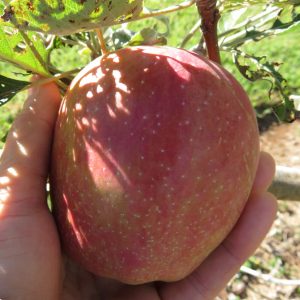
Shizuka routinely produces fruit at 3 to 4 inches in diameter and 300 to 500 grams — roughly double the weight of a standard Fuji. Flavor is sweet and low in malic acid, with Brix values typically in the 13 to 15 range and a faint tropical undertone that stands out from the sharper Mutsu. Flesh is crisp and very juicy at harvest, softening slightly in cold storage, but browns slowly after cutting — a practical advantage for fresh-cut applications. Harvest falls in early to late October in Zone 6 temperate climates, two weeks ahead of Mutsu, and fruit stores at 32°F for 3 to 5 months. Culinary range is broad: the firm flesh holds shape during baking for pies and tarts, while low acidity and high juice content suit blended cider and applesauce. Biennial bearing is a known tendency; fruit thinning to one apple per spur in the heavy year moderates the cycle.
Ripening Season: Very Late
Harvest Window: Early Oct - Late Oct
Fruit Size: 3-4 inch
Fruit Weight: 300-500 g (10-18 oz)
Flavor: Sweet, low acidity, very juicy; hint of tropical notes; similar to Mutsu but milder and sweeter
Fruit Color: Yellow-green with reddish-orange blush; russet dots
Fruit Texture: Crisp to slightly soft; fine-grained; very juicy; slow to brown when cut
Bearing Habit: Spur bearer; tends toward biennial bearing (heavy crop every other year)
Years to Bear: 2-5 years
Storage Life: 3-5 months in cold storage
Culinary Uses: Fresh eating; baking; pies; applesauce; cider; suitable for cooking due to flesh firmness during heat
Shizuka's disease profile demands proactive management, especially in humid summer climates. Cedar apple rust (Gymnosporangium juniperi-virginianae) is the gravest concern — the variety is highly susceptible. Remove eastern red cedar or ornamental juniper within a quarter mile where feasible; these alternate hosts drive the pathogen's life cycle. Apply OMRI-listed copper or sulfur protectant sprays at half-inch green through petal fall on a 7-to-10-day schedule during wet weather. Apple scab (Venturia inaequalis) susceptibility is also high. Rake fallen leaves in autumn to eliminate overwintering spores, and prune annually for canopy airflow. OMRI-listed lime sulfur on a Mills Table schedule provides organic-compliant control. Fire blight (Erwinia amylovora) is another susceptibility: remove infected shoots 8 to 12 inches below the margin, sterilize tools between each cut, and avoid excessive nitrogen. Black rot (Botryosphaeria obtusa) rates as moderately susceptible; removing mummified fruit and cankers each season limits inoculum buildup. Codling moth (Cydia pomonella), plum curculio (Conotrachelus nenuphar), apple maggot (Rhagoletis pomonella), and brown marmorated stink bug (Halyomorpha halys) are all moderately susceptible. Kaolin clay applied at petal fall, red sticky sphere traps for apple maggot monitoring, and exclusion netting in late summer address all four without synthetic inputs.
Apple Scab: Susceptible
Fire Blight: Susceptible
Powdery Mildew: Resistant
Cedar Apple Rust: Very Susceptible
Black Rot: Moderately Susceptible
Codling Moth: Moderately Susceptible
Plum Curculio: Moderately Susceptible
Apple Maggot: Moderately Susceptible
Brown Marmorated Stink Bug: Moderately Susceptible
- Plan for two diploid pollinators: Shizuka's sterile triploid pollen cannot pollinate any neighbor; plant at least two Bloom Group 3 diploid varieties within 100 feet to guarantee fruit set every season.
- Start rust protection early: Cedar apple rust is damaging to this variety; begin OMRI-listed copper or sulfur sprays at first bud swell and maintain the schedule through petal fall whenever rain is in the forecast.
- Remove junipers or buffer distance: Eastern red cedar is the primary rust reservoir; eliminating nearby hosts is more effective than any spray program alone for cedar apple rust control.
- Sanitation for scab and fire blight: Remove fallen leaves and mummified fruit before bud break to cut primary inoculum for apple scab and reduce conditions that favor fire blight infection.
We ship in late winter or early spring based on your USDA hardiness zone.
We strive to ship orders on the scheduled dates listed in the table below. However, please note that the actual shipping date may be subject to change due to factors like weather conditions and order volume.
The specific date for shipping your order will be determined according to your zipcode at the time of checkout.
Our plants are shipped bare root, packed in moist sawdust, and securely wrapped in plastic to prevent the roots from drying out. We use USPS Ground Advantage for shipping, ensuring that your plants typically arrive within 2-5 days after packaging.
In case you're unable to plant the trees immediately upon arrival, we recommend soaking them in water for a few hours and temporarily heeling them in. Ideally, they should be planted within three days of receipt for optimal health.
See our full shipping policy and map here
| Zone | Ship Date |
|---|---|
| 11 - 8b | March 1st, 2027 |
| 8a - 7b | March 8th, 2027 |
| 7a | March 15th, 2027 |
| 6b | March 22nd, 2027 |
| 6a | March 29th, 2027 |
| 5b - 5a | April 12th, 2027 |
| 4b - 4a | April 26th, 2027 |
| 3b - 1a | May 3rd, 2027 |
Our 365-Day Plant Guarantee: We ensure that our plants are delivered to you alive and healthy. If your plant does not survive its first year, you're eligible for store credit under these conditions:
- Your location falls within the appropriate USDA hardiness zone for the plant variety (refer to our hardiness zone map).
- You maintain the roots' moisture and plant within three days of delivery, following the instructions in our Planting Guide.
If you're concerned about your plant's health, please consult our guide, How to Tell if Your Tree is Dead or Dormant. Remember, our plants are shipped in a dormant state and may leaf out at different times based on their species. To check for plant vital
Related products

Common Apple
Checking fit
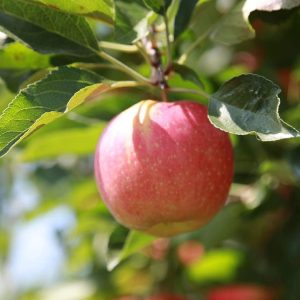
Winesap Apple
Rated 5.00 out of 5$49.95 Select Rootstock This product has multiple variants. The options may be chosen on the product pageChecking fit- SOLD OUT
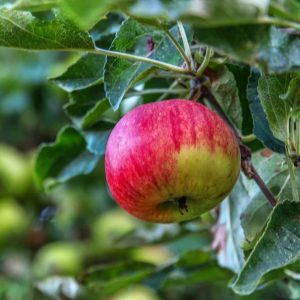
Sansa Apple
Checking fit 
Anna Apple
Checking fit

Reviews
There are no reviews yet.