Jonathan Apple
$49.95
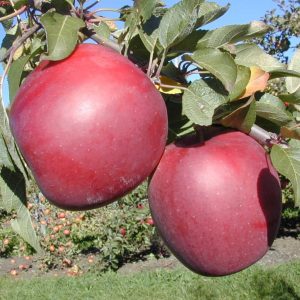
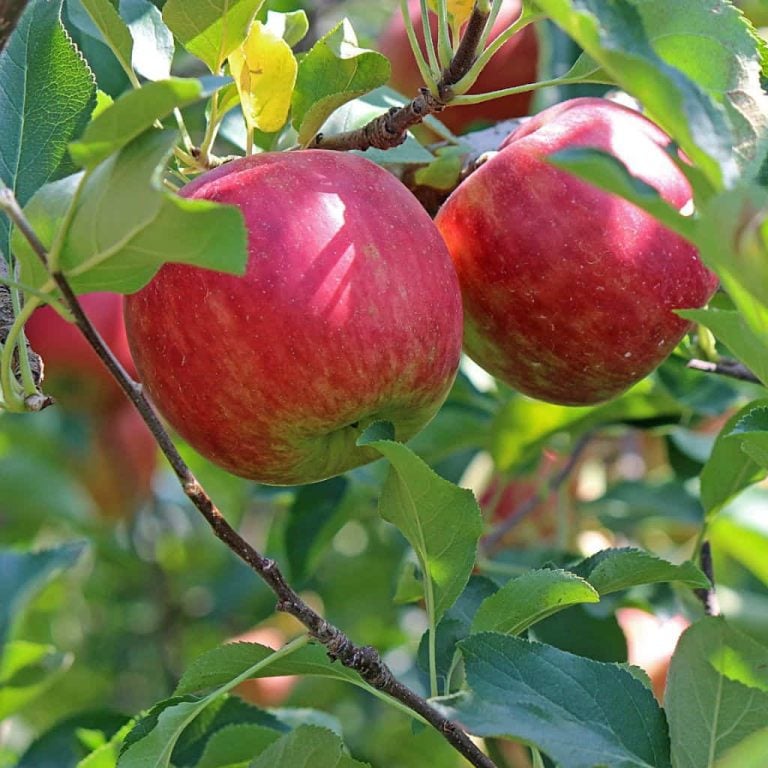
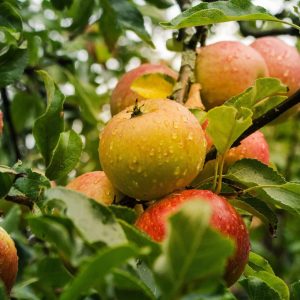
Jonathan Apple (also known as Rick Apple; Malus domestica) is a 19th-century New York heirloom apple discovered around 1800, yielding bright crimson 2.5–3 inch fruit with spicy, sprightly sweet-tart flavor and fine-grained juicy flesh excellent for eating, pies, and cider. It grows in USDA hardiness zones 4-8 and AHS heat zones 1-7, needs 800-1000 chill hours, and requires cross-pollination with a compatible variety such as Golden Delicious Apple or Freedom Apple to set fruit.
4-5′ Bare Root Grafted Tree
Rootstock: G890 – Semi Dwarf
About 60-65% of a standard tree, the largest Geneva we use. Highly tolerant of fire blight and collar rot, and resistant to woolly apple aphid.
• Support: Freestanding; no staking required.
Can’t be shipped to: AK, HI, MT
In stock
Jonathan was discovered around 1800 on the farm of Philip Rick in Woodstock, New York, as an open-pollinated chance seedling. The variety was named ‘Jonathan’ after Jonathan Hasbrouck, a local figure who championed its distribution, and entered commercial propagation in the 1820s. True parentage has never been confirmed; some early pomologists proposed Esopus Spitzenburg as the probable mother tree, but this remains unverified. By the early twentieth century Jonathan ranked among the most widely grown commercial apples in the United States, prized for its spicy-sweet character and dual utility in fresh markets and processing. It has since served as a parent for a significant number of modern cultivars, most notably Jonagold — the Cornell cross of Jonathan and Golden Delicious released in 1968 — and through Jonagold, to Jonaprince and numerous other sports and crosses.
Jonathan requires roughly 800 to 1,000 chill hours, placing it comfortably in the mid-belt of temperate climate zones — well-suited to regions where winters reliably dip below 45°F for extended periods without dropping to extremes that damage dormant buds. Consistent soil moisture during late spring and early summer matters most; irregular watering during fruit cell division promotes corking and misshapen fruit. Well-drained loam or sandy loam with a pH between 6.0 and 6.5 gives the best nutrient uptake; pH drift above 6.5 can lock out micronutrients and contribute to bitter pit. Annual fertilization with compost or balanced organic amendments supports the variety's heavy bearing habit without pushing excessive vegetative growth, which can worsen its susceptibility to fire blight and powdery mildew. Thinning fruitlets to one per cluster at 6 to 8 weeks after bloom is essential for consistent fruit size and to avoid biennial bearing. Space standard trees 20 to 25 feet apart; semi-dwarf rootstocks at 12 to 18 feet allow more intensive management.
USDA Hardiness Zone: 4-8
AHS Heat Zone: 1-7
Chill Hours: 800-1000
Sun Requirements: Full Sun
Soil pH: 6.0-6.5
Soil Type: Loam, sandy loam; well-drained, fertile soil preferred
Soil Drainage: Well-drained; does not tolerate standing water
Water Requirements: Medium; consistent moisture needed, especially during fruit development
Plant Spacing: Standard: 20-25 ft; Semi-dwarf: 12-18 ft; Dwarf: 8-12 ft
Jonathan develops an upright to spreading canopy with a naturally open structure, which is a practical advantage given its vulnerability to fungal diseases — good airflow through the canopy is part of the integrated management strategy. On standard rootstocks the tree reaches 15 to 25 feet tall; semi-dwarf selections stay at 10 to 15 feet and come into bearing faster. Growth rate is slow to moderate, and the wood is moderately strong but can be prone to narrow branch angles on young trees, making early training on a central leader or modified central leader critical for long-term structural integrity. Pruning should prioritize removing crossing and interior branches annually to maintain light penetration and reduce humidity pockets. Fall foliage turns yellow to orange-red, adding minor ornamental value before leaf drop. The tree is long-lived — well-maintained standard trees can remain productive for 50 to 100 years on suitable sites.
Mature Height: 15-25 ft tall (standard); 10-15 ft tall (semi-dwarf); 8-12 ft tall (dwarf)
Mature Spread: 10-15 ft wide
Growth Habit: Upright to spreading; open canopy
Growth Rate: Slow to Moderate
Foliage Type: Deciduous
Food Forest Layer: Canopy, Sub-canopy
Leaf Color: Medium green
Fall Foliage Color: Yellow to orange-red
Thorns?: No
Attracts Wildlife: Yes; bees, butterflies, birds (fruit)
Life Span: 50-100+ years
Jonathan is self-unfruitful and requires pollen from a compatible diploid apple blooming in mid-season (Flowering Group 3) to set a commercial crop. Bloom opens in mid-April to early May, overlapping reliably with Cortland Apple, Golden Delicious Apple, and McIntosh Apple, all of which are widely available and bloom-compatible. Jonathan itself is diploid (2n), meaning it produces viable pollen and can act as a pollinator for other mid-season varieties in the planting. Honeybees are the primary pollination vector; placing hives near the orchard during peak bloom significantly improves fruit set. Plant compatible pollinators within 50 feet for optimal cross-pollination; a ratio of one pollinator tree per four to six Jonathan trees is practical for home orchards.
Bloom Season: Mid
Bloom Window: Mid Apr - Late Apr
Pollination Requirements: Cross-pollination required; self-unfruitful
Pollination Mechanism: Insect (bee); requires cross-pollination by honeybees carrying pollen from compatible nearby variety
Flower Color: White with pink tinge
Ploidy: Diploid (2n)
Jonathan produces medium-sized fruit averaging 2.5 to 3 inches in diameter and 6 to 7 oz (170 to 200 g) in weight. The flavor profile is genuinely distinctive: sweet-tart with a spicy, sprightly subacid quality rarely found in modern commercial varieties. Acidity is moderate to moderately high, with a fine-grained, juicy flesh that holds up well in pies and sauce while also delivering a satisfying fresh-eating experience. Skin color ranges from bright red to crimson blush over a yellow-green base; striping becomes more pronounced in cooler fall temperatures. The skin is thin but durable — it holds integrity through processing and resists cracking in the field. For culinary use, Jonathan excels in apple butter, cider blending (where its acidity adds structure), and baked applications where it softens without losing body. Cold storage life runs 4 to 8 weeks under refrigeration — adequate for home use but shorter than late-season keepers like Arkansas Black.
Ripening Season: Late
Harvest Window: Mid Sep - Mid Oct
Fruit Size: 2.5-3 inch
Fruit Weight: 6-7 oz (170-200 g)
Flavor: Sweet-tart with spicy undertones; fine-grained, juicy, sprightly subacid; excellent for fresh eating and cooking
Fruit Color: Bright red to crimson blush over yellow-green base; striped in cooler climates
Fruit Texture: Crisp, fine-grained, juicy; flesh ivory to yellow-white
Fruit Skin: Thin but tough; smooth, taut, and glossy
Bearing Habit: Annual bearer; bears young and heavily
Years to Bear: 2-4 years
Storage Life: 4-8 weeks under refrigeration
Culinary Uses: Fresh eating; pie and baking; applesauce and apple butter; cider; drying; freezing
Jonathan carries significant disease susceptibility across its main threats, and disease management is the primary cultural challenge in humid, wet-spring climates. Fire blight (Erwinia amylovora) is the most serious concern — Jonathan is highly susceptible, and infected shoots must be pruned 8 to 12 inches below visible canker margins with sanitized tools. Avoid excess nitrogen, which stimulates succulent shoot growth most vulnerable to blight. Powdery mildew (Podosphaera leucotricha) is equally problematic; Jonathan is highly susceptible, and preventive management means prioritizing canopy pruning that maximizes airflow and reduces leaf-surface humidity favoring spore germination. Apple scab (Venturia inaequalis) causes fruit and foliage lesions; removing infected leaf litter in fall interrupts the overwintering cycle. Cedar apple rust (Gymnosporangium juniperi-virginianae) risk rises near eastern red cedar; removing nearby juniper hosts reduces inoculum pressure. Black rot (Botryosphaeria obtusa) is moderately susceptible — sanitation of mummified fruit and dead wood is the primary control. For insect pests — codling moth (Cydia pomonella), plum curculio (Conotrachelus nenuphar), apple maggot (Rhagoletis pomonella), and brown marmorated stink bug (Halyomorpha halys) — Jonathan shows moderate susceptibility across all four. Kaolin clay barriers applied before petal fall, codling moth traps with pheromone lures, and perimeter exclusion nets for stink bug pressure are the recommended organic approaches.
Apple Scab: Susceptible
Fire Blight: Very Susceptible
Powdery Mildew: Very Susceptible
Cedar Apple Rust: Susceptible
Black Rot: Moderately Susceptible
Codling Moth: Moderately Susceptible
Plum Curculio: Moderately Susceptible
Apple Maggot: Moderately Susceptible
Brown Marmorated Stink Bug: Moderately Susceptible
- Fire Blight Response: Keep pruning shears in a 10% bleach or 70% isopropyl alcohol solution during blight-season cuts; sterilizing between cuts is mandatory to stop spread in this highly susceptible variety.
- Powdery Mildew Prevention: Prune out silvered shoot tips during dormancy; the fungus overwinters in buds and removing them before bud swell cuts the primary inoculum load significantly.
- Annual Fruit Thinning: Thin to one fruit per cluster six to eight weeks after bloom; unthinned clusters produce small fruit and often trigger biennial bearing cycles.
- Pollinator Placement: Plant at least one mid-season diploid — Cortland, Golden Delicious, or McIntosh — within 50 feet; Jonathan will not set meaningful crops without cross-pollination.
- Scab and Rust Management: Rake and remove leaf litter in fall to interrupt apple scab's overwintering stage; in eastern red cedar areas, scout junipers for rust galls and remove them before spore horns appear.
We ship in late winter or early spring based on your USDA hardiness zone.
We strive to ship orders on the scheduled dates listed in the table below. However, please note that the actual shipping date may be subject to change due to factors like weather conditions and order volume.
The specific date for shipping your order will be determined according to your zipcode at the time of checkout.
Our plants are shipped bare root, packed in moist sawdust, and securely wrapped in plastic to prevent the roots from drying out. We use USPS Ground Advantage for shipping, ensuring that your plants typically arrive within 2-5 days after packaging.
In case you're unable to plant the trees immediately upon arrival, we recommend soaking them in water for a few hours and temporarily heeling them in. Ideally, they should be planted within three days of receipt for optimal health.
See our full shipping policy and map here
| Zone | Ship Date |
|---|---|
| 11 - 8b | March 1st, 2027 |
| 8a - 7b | March 8th, 2027 |
| 7a | March 15th, 2027 |
| 6b | March 22nd, 2027 |
| 6a | March 29th, 2027 |
| 5b - 5a | April 12th, 2027 |
| 4b - 4a | April 26th, 2027 |
| 3b - 1a | May 3rd, 2027 |
Our 365-Day Plant Guarantee: We ensure that our plants are delivered to you alive and healthy. If your plant does not survive its first year, you're eligible for store credit under these conditions:
- Your location falls within the appropriate USDA hardiness zone for the plant variety (refer to our hardiness zone map).
- You maintain the roots' moisture and plant within three days of delivery, following the instructions in our Planting Guide.
If you're concerned about your plant's health, please consult our guide, How to Tell if Your Tree is Dead or Dormant. Remember, our plants are shipped in a dormant state and may leaf out at different times based on their species. To check for plant vital
Related products

Enterprise Apple
Checking fitRated 5.00 out of 5
Cinnamon Spice Apple
Checking fit
Granny Smith Apple
$49.95 Select Rootstock This product has multiple variants. The options may be chosen on the product pageChecking fit
Ambrosia Apple
Checking fit


Reviews
There are no reviews yet.