Siberian Crabapple
$39.95
Siberian Crabapple (also known as Chinese Crab Apple; Malus baccata) is an exceptionally cold-hardy wild crabapple species from Siberia and northern China, reaching Zone 2, that produces abundant small tart-sour fruit used in jellies, preserves, and cider, plus showy white flowers from pink buds. It grows in USDA hardiness zones 2-7 and AHS heat zones 1-6, and needs about 500-700 chill hours.
3-4′ Bare Root Grafted Tree
Propagation: Seedling (own-root)
Can’t be shipped to: AK, HI
In stock
Malus baccata is a wild species native to northern China, Siberia, Mongolia, Korea, and the Himalayan foothills, cultivated in the West since the late eighteenth century. The species was formally described by Moritz Balthasar Borkhausen in 1803. In North America, the horticulturist Niels Ebbesen Hansen at the South Dakota Agricultural Experiment Station made extensive use of Malus baccata genetics in late-nineteenth and early-twentieth-century breeding programs aimed at developing cold-tolerant apple and crabapple selections for the northern Great Plains; his work with this species produced, among others, the Dolgo crabapple. Beyond landscape use, Malus baccata has contributed as a rootstock across Canadian and northern US apple production systems, valued for the extreme cold hardiness — to Zone 2 — it can confer. Recent genomic work has confirmed Malus baccata as a contributor to the genomes of some cultivated apple populations in both European and Chinese breeding histories, making it one of the more broadly influential wild Malus species in documented horticultural use.
The Zone 2 rating reflects genuine botanical adaptation to deep cold — hard freezes that kill most Malus cultivars barely affect a well-established Siberian Crabapple. Still, site selection matters: low-lying frost pockets delay bud break safely but can trap late radiative freezes that damage open flowers. Full sun is required for adequate fruit set and to reduce foliar disease pressure; shaded canopies stay damp longer, creating ideal conditions for scab. Soil pH between 5.5 and 7.5 gives wide latitude, though pH below 6.0 maximizes phosphorus availability for root development. Drainage is non-trivial at this size — a 30- to 40-foot tree with spreading fibrous roots draws substantial moisture and can develop collar rot in persistently saturated soils. Once established, moderate drought tolerance means supplemental irrigation is rarely needed except during severe summer dry spells in the first two to three years. Avoid high-nitrogen fertilizer: it stimulates fast, water-rich growth that is disproportionately susceptible to fire blight strikes.
USDA Hardiness Zone: 2-7
AHS Heat Zone: 1-6
Sun Requirements: Full Sun
Soil pH: 5.5-7.5
Soil Type: Loam, clay, sand
Soil Drainage: Well-drained
Water Requirements: Medium
Drought Tolerance: Moderate
How to Prune: Prune in late winter while dormant; remove water sprouts and crossing branches to improve airflow; avoid spring pruning to reduce fire blight entry points
Siberian Crabapple develops into a broad, rounded canopy reaching 30 to 40 feet in both height and spread — dimensions that suit a canopy layer planting or a windbreak role in large-scale landscapes. The spreading fibrous root system anchors well in a range of soil textures. Leaves are dark green through summer, transitioning to yellow in fall — though early leaf drop is common, often before full autumn color develops. Flower buds open pink and mature to white, appearing from early April through mid-May in a prolonged bloom window that overlaps with many apple cultivars. The small red or yellow fruits — roughly 0.4 inch across — hang in dense clusters and remain on the tree well into winter. This persistence is ecologically significant: the fruit shrinks and sweetens after frost, becoming a primary food source for overwintering birds when other resources are scarce. Branching structure is upright to broadly rounded, requiring relatively little corrective pruning to maintain a sound scaffold once the tree is past the juvenile stage.
Mature Height: 30-40 ft tall
Mature Spread: 30-40 ft wide
Growth Habit: Upright, Broad-Rounded
Growth Rate: Moderate
Foliage Type: Deciduous
Food Forest Layer: Canopy, Sub-canopy
Permaculture Role: Pollinator, Wildlife Support, Fruit Tree
Leaf Color: Green
Fall Foliage Color: Yellow (minor; early leaf drop common)
Attracts Wildlife: Birds, Butterflies, Bees, Pollinators
Life Span: 50-100+ years
Malus baccata is not self-fertile and performs best with a compatible Malus blooming nearby. The bloom window runs from early April through mid-May in temperate climates, which is broader than most crabapple cultivars — meaning it overlaps with a wide range of both apple and crabapple pollinators. Practically any simultaneously blooming diploid crabapple or apple within roughly 50 feet will serve. Compatible pollinators already in the catalog include Callaway Crabapple, Prairie Fire Crabapple, and Snowdrift Crabapple. This species also functions as an effective pollinizer for nearby apple trees, given the extended bloom duration and abundant insect-attracting flowers. Pollination is handled by bees and other generalist insects; fragrant white blossoms open from distinctive pink buds, drawing early-season pollinators before most orchard trees are in full flower.
Bloom Season: Early
Bloom Window: Early Apr - Mid May
Pollination Requirements: Cross-Pollination Recommended
Pollination Mechanism: Insect (Bees)
Flower Color: White (pink buds)
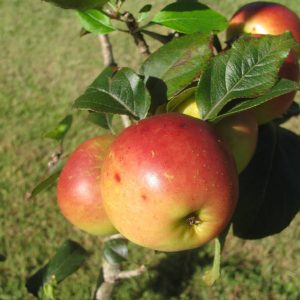
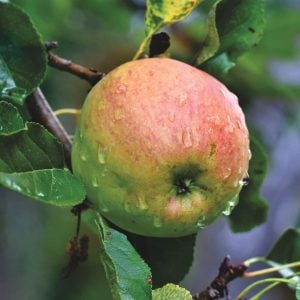
Fruits are small — approximately 0.4 inch in diameter — and color red or yellow depending on the individual seedling, a reminder that this is a wild species rather than a clonal cultivar. Flavor is sharply tart, with high malic acid and low sugar levels typical of wild Malus. They are not palatable raw in quantity but perform well in high-pectin applications: jelly, preserves, and cider blending benefit from the natural acid load and color. Seeds contain hydrogen cyanide precursors (amygdalin) and should not be consumed in quantity. Fresh fruit stores two to four weeks under refrigeration, but the more relevant characteristic is persistence on the tree: fruits remain through winter, concentrating sugar after repeated freeze-thaw cycles. That persistence makes the tree a reliable supplemental wildlife food source from October through February in most of its range. Yields per tree are high given the fruit density, though processing small fruits at this scale is labor-intensive — most growers use the crop primarily for wildlife benefit rather than culinary production.
Ripening Season: Very Late
Harvest Window: Mid Sep - Mid Nov
Fruit Size: 0.4 inch
Flavor: Tart/Sour
Fruit Color: Red or Yellow
Years to Bear: 4-6 years
Storage Life: Persists on tree into winter; fresh fruit 2-4 weeks
Culinary Uses: Jelly, Preserves, Dried fruit, Cider ingredient
Apple scab (Venturia inaequalis) demands the most consistent management attention: Siberian Crabapple is susceptible, and in humid summer climates scab can heavily defoliate trees by late summer. Management focuses on sanitation — raking and removing fallen leaves in autumn breaks the overwintering spore cycle before the next spring's ascospore release. Avoid overhead irrigation; drip or soil-level water delivery keeps foliage dry during the high-risk window from bloom through petal fall. Powdery mildew (Podosphaera leucotricha) is moderately troublesome, appearing as a white coating on young shoot tips; pruning to open the canopy center improves air circulation and reduces infection severity. The tree shows good resistance to cedar-apple rust (Gymnosporangium juniperi-virginianae) and apple leaf spot (Diplocarpon mali). Fire blight (Erwinia amylovora) is moderate in severity; avoid high-nitrogen fertility and heavy pruning that stimulates succulent growth. Eastern tent caterpillar (Malacosoma americanum), woolly apple aphid (Eriosoma lanigerum), and San Jose scale (Quadraspidiotus perniciosus) are moderately susceptible — monitor for egg masses in winter and physically remove tent caterpillar nests when small. Japanese beetle (Popillia japonica) feeding can be significant: hand-pick beetles in early morning when they are sluggish, and place pheromone traps well away from the canopy.
Apple Scab: Susceptible
Fire Blight: Moderately Resistant
Cedar-Apple Rust: Resistant
Powdery Mildew: Moderately Susceptible
Apple Leaf Spot: Resistant
Eastern Tent Caterpillar: Moderately Susceptible
Woolly Apple Aphid: Moderately Susceptible
Japanese Beetle: Susceptible
San Jose Scale: Moderately Susceptible
- Scab sanitation in fall: Rake and destroy fallen leaves each autumn — the primary overwintering site for Venturia inaequalis ascospores. High-temperature composting is acceptable; shallow burial or burning works equally well.
- Japanese beetle monitoring: Begin checking foliage in late June; hand-pick into soapy water in early morning before beetles warm up. Place pheromone traps at least 30 feet from the canopy — closer traps attract more beetles than they capture.
- Canopy pruning timing: Prune in late winter while fully dormant; avoid pruning after bud break, which creates wounds coinciding with peak fire blight infection weather.
- Pollinizer placement: Plant a compatible diploid crabapple within 50 feet; the long bloom window overlaps most commercial apple cultivars, anchoring pollination for an entire mixed orchard block.
- Check local invasive status: This species is listed as invasive in some jurisdictions; verify local ordinances before planting.
We ship in late winter or early spring based on your USDA hardiness zone.
We strive to ship orders on the scheduled dates listed in the table below. However, please note that the actual shipping date may be subject to change due to factors like weather conditions and order volume.
The specific date for shipping your order will be determined according to your zipcode at the time of checkout.
Our plants are shipped bare root, packed in moist sawdust, and securely wrapped in plastic to prevent the roots from drying out. We use USPS Ground Advantage for shipping, ensuring that your plants typically arrive within 2-5 days after packaging.
In case you're unable to plant the trees immediately upon arrival, we recommend soaking them in water for a few hours and temporarily heeling them in. Ideally, they should be planted within three days of receipt for optimal health.
See our full shipping policy and map here
| Zone | Ship Date |
|---|---|
| 11 - 8b | March 1st, 2027 |
| 8a - 7b | March 8th, 2027 |
| 7a | March 15th, 2027 |
| 6b | March 22nd, 2027 |
| 6a | March 29th, 2027 |
| 5b - 5a | April 12th, 2027 |
| 4b - 4a | April 26th, 2027 |
| 3b - 1a | May 3rd, 2027 |
Our 365-Day Plant Guarantee: We ensure that our plants are delivered to you alive and healthy. If your plant does not survive its first year, you're eligible for store credit under these conditions:
- Your location falls within the appropriate USDA hardiness zone for the plant variety (refer to our hardiness zone map).
- You maintain the roots' moisture and plant within three days of delivery, following the instructions in our Planting Guide.
If you're concerned about your plant's health, please consult our guide, How to Tell if Your Tree is Dead or Dormant. Remember, our plants are shipped in a dormant state and may leaf out at different times based on their species. To check for plant vital
5 reviews for Siberian Crabapple
Related products

Ein-Shemer Apple
Checking fitRated 5.00 out of 5
Anna Apple
Checking fit
Wolf River Apple
Checking fit
Jonathan Apple
Checking fit


Jerome Post (verified owner) –
Saplings had green buds when received on3/11/22. Most tree saplings I have received in the past were dormant. Overall saplings look good
Jennifer G. (verified owner) –
The crabapple arrived in great shape and I plan on seeing beautiful blooms each spring.
Cliff C. (verified owner) –
Paul (verified owner) –
Hopes are high
Neal N. (verified owner) –
Small, but these are fast growers in the soil in my area.