
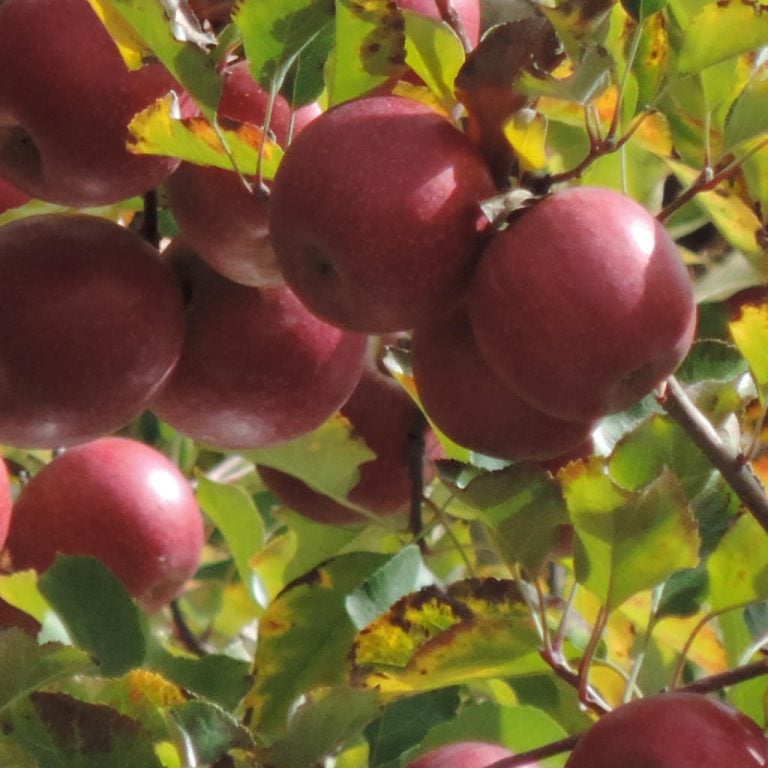
Pink Lady Apple
$49.95
Pink Lady Apple (also known as Cripps Pink; Malus domestica ‘Cripps Pink’) is an Australian-bred apple crossing Golden Delicious and Lady Williams, bearing firm, very crisp fruit with a distinctive effervescent sweet-tart flavor and flesh that resists browning when sliced. It grows in USDA hardiness zones 6-9 and AHS heat zones 3-9, needs 400-500 chill hours, and requires cross-pollination with a compatible variety such as Fuji Apple or Freedom Apple to set fruit.
4-5′ Bare Root Grafted Tree
Rootstock: M111 – Semi Dwarf, Malus domestica, G214 – Dwarf
Can’t be shipped to: AK, HI, MT
Only 0 left in stock!
Out of stock — back next season
Spring 2027 inventory drops in June. Drop your email and we'll notify you the day this variety is back in stock.
You're on the list. Check your inbox for a confirmation link — click it to lock in your spot. We'll email you the day this variety is back in stock.
Cripps Pink was developed by horticulturist John Cripps at the Stoneville Research Station of the Western Australia Department of Agriculture from a cross of Golden Delicious and Lady Williams made in 1973. The cultivar was officially named in 1979, honoring its breeder. Lady Williams, a late-ripening Australian variety, contributed the extended harvest window and strong red coloration; Golden Delicious supplied sweetness and storage stability. The resulting cultivar is one of the few that ripens as late as November in the Southern Hemisphere growing season, concentrating sugars and acid over an unusually long maturation period. Pink Lady is a registered trademark controlled by Apple and Pear Australia Limited in more than 80 jurisdictions, applied exclusively to Cripps Pink fruit that meets defined color and sugar thresholds; growers selling under that brand require a license agreement. The underlying cultivar name, Cripps Pink, carries no trademark. USPP7880 has expired, placing the genetics in the public domain.
At 400–500 chill hours, Pink Lady sits at the lower end for most zone 6–7 climates, where it reliably meets dormancy requirements without the overchill risk that can push bloom too early and expose flowers to late frost. In zone 8–9, the reduced chill demand is a practical asset. The late ripening season — up to 215 days from bloom — means the tree needs a long frost-free window after petal fall: aim for sites with a last spring frost by mid-April and a first fall frost no earlier than late October. Soil should be well-drained loam with a pH of 6.0–6.5; wet feet during summer promote Phytophthora collar rot and compound existing fire blight vulnerability. Consistent soil moisture during the June–August fruit cell division period directly affects final fruit size and minimizes internal breakdown in storage. Thin aggressively in early June — leaving one fruit per spur — or biennial bearing becomes the default pattern. Full sun (six-plus hours direct daily) is required to develop the characteristic pink blush; shaded fruit stays green-yellow and poorly colored regardless of maturity.
USDA Hardiness Zone: 6-9
AHS Heat Zone: 3-9
Chill Hours: 400-500
Sun Requirements: Full Sun (minimum 6 hours direct sunlight daily)
Soil pH: 6.0-6.5
Soil Type: Loam, well-drained; tolerates various soil types if drainage is good
Soil Drainage: Well-drained; does not tolerate waterlogged conditions
Water Requirements: Medium; consistent moisture especially during fruit development; avoid waterlogging
Drought Tolerance: Low to Moderate; requires consistent moisture for good fruit development
Heat Tolerance: Performs well in hot-summer climates
Plant Spacing: Select a rootstock above for exact spacing information.
On standard rootstock, Pink Lady reaches 15–20 feet tall with a 12–20-foot spread and an upright-spreading canopy — a scale suitable for open orchard blocks but large for a typical backyard. Semi-dwarf or dwarfing rootstocks (M.7, M.9, M.26) bring the tree into the 8–15-foot range, shorten the time to first crop, and allow high-density planting at 6–12-foot spacing. The spur-bearing habit concentrates fruiting wood along the main scaffold branches, which means the pruning goal is keeping spurs well-lit rather than generating long annual extension shoots. A modified central-leader form suits standard trees; an open-center or tall-spindle system works well on dwarfing stocks. Root architecture is fibrous and lateral, staying relatively shallow under sandy or compacted soils — a consideration for staking dwarfing trees, which need permanent support stakes when grown on M.9. The tree is deciduous, reaching full dormancy by December and breaking bud in early spring.
Mature Height: Select a rootstock above for exact size information.
Mature Spread: Select a rootstock above for exact spread information.
Growth Habit: Upright-spreading; spur-bearing; naturally vigorous
Growth Rate: Moderate; approximately 1-2 ft per year under optimal conditions
Foliage Type: Deciduous
Food Forest Layer: Canopy, Sub-canopy
Leaf Color: Dark green (summer)
Attracts Wildlife: Bees (pollinators), birds (cedar waxwings, robins, orioles, bluebirds, woodpeckers), deer, rabbits, squirrels
Life Span: 50-100+ years with proper care
Pink Lady blooms in mid-April, placing it firmly in the mid-season bloom group for most temperate climates. It is diploid and not reliably self-fertile, so a compatible cross-pollinator within 50–100 feet is required for consistent crops. Bloom overlap is the primary matching criterion: mid-season diploids Fuji Apple, Gala Apple, Granny Smith Apple, and Golden Delicious Apple all provide adequate bloom synchrony. Because Pink Lady blooms in the middle of the season, it avoids the earliest cold snaps that can catch ultra-early varieties and also avoids the very-late-season bloom overlap problem. Pollination is bee-mediated; maintaining ground cover plantings of clover or phacelia near the orchard improves native pollinator density. Pink Lady is diploid — it provides viable pollen and can serve as a pollinator for other mid-season diploid varieties in return.
Bloom Season: Mid
Bloom Window: Mid Apr - Late Apr
Pollination Requirements: Requires cross-pollination; not reliably self-fertile; plant a compatible diploid apple variety within 50-100 ft
Pollination Mechanism: Insect-pollinated (primarily bees)
Flower Color: White with pink tinge
Ploidy: Diploid (2x)
Fruit runs 2.5–3.5 inches in diameter and 5–8 oz, with the typical commercial harvest size averaging around 5.4 oz. The skin develops a bright pink to red blush over a yellow-green background, with 50–90% coverage at full maturity depending on sun exposure. Flavor is sweet-tart with a honey-sweet finish and a distinctive effervescent quality that results from the high malic acid content holding in balance with elevated soluble solids — Brix values typically fall in the 14–17 range at commercial harvest. Flesh is very firm and dense, resisting the mealy softening that affects many late-season varieties in storage. Sliced fruit browns slowly, making it useful in salads and cheese boards where appearance matters. Culinary versatility is high: the firm texture holds shape through baking and roasting, the acid-sugar balance complements both sweet and savory preparations, and the juice yield is sufficient for blended cider. Refrigerated shelf life reaches 6–8 months; controlled-atmosphere storage extends that to 10–12 months, placing Pink Lady among the longest-storing mainstream varieties available to home growers.
Ripening Season: Very Late
Harvest Window: Late Oct - Mid Nov
Fruit Size: 2.5-3.5 inch
Fruit Weight: 5-8 oz (140-227 g); average approximately 5.4 oz (154 g)
Flavor: Sweet-tart with honey-sweet finish; balanced acid-sugar ratio; distinctive effervescent quality; flesh resists browning
Fruit Color: Bright pink to red blush over yellow-green background; 50-90% pink coverage at full maturity
Fruit Texture: Firm and very crisp; dense; resists mealiness in storage
Bearing Habit: Spur-bearing; prone to biennial bearing if not thinned in early summer
Years to Bear: Select a rootstock above for exact bearing information.
Storage Life: 6-8 months refrigerated; up to 10-12 months in controlled atmosphere storage; one of the longest-storing apple varieties
Culinary Uses: Fresh eating; salads; baking (holds shape); cheese boards; cider; juice; drying; slow to brown when sliced
Pink Lady is susceptible to all four primary apple diseases common in humid-summer climates. Apple scab (Venturia inaequalis) infects leaves and fruit during wet spring periods; apply timed copper or sulfur at green tip through petal fall, and rake fallen leaves in autumn to remove overwintering inoculum. Fire blight (Erwinia amylovora) hits hardest during warm, wet bloom — prune infected wood 12 inches below any visible canker margin using sterilized tools, and keep nitrogen inputs moderate to avoid the succulent shoot growth fire blight targets. Powdery mildew (Podosphaera leucotricha) responds to annual pruning that opens the canopy and to potassium bicarbonate or OMRI-listed sulfur sprays at first sign of white mycelium. Cedar apple rust (Gymnosporangium juniperi-virginianae) requires both a juniper and an apple host — removing eastern red cedars within 500 feet is the most effective long-term control. Bitter rot (Colletotrichum acutatum) is moderately susceptible; prompt removal of mummified fruit and copper applications during wet harvest seasons limit spread. Codling moth (Cydia pomonella), plum curculio (Conotrachelus nenuphar), and apple maggot (Rhagoletis pomonella) are all moderately susceptible — kaolin clay from petal fall through midsummer physically excludes all three; pheromone traps improve codling moth timing. Spotted wing drosophila (Drosophila suzukii) is moderately resistant, aided by the very firm flesh at harvest.
Apple Scab: Susceptible
Fire Blight: Susceptible
Powdery Mildew: Susceptible
Cedar Apple Rust: Susceptible
Bitter Rot: Moderately Susceptible
Codling Moth: Moderately Susceptible
Plum Curculio: Moderately Susceptible
Apple Maggot: Moderately Susceptible
Spotted Wing Drosophila: Moderately Resistant
- Thin aggressively in June: Biennial bearing is the most common production problem; thin to one fruit per spur cluster within 4-6 weeks of petal fall to keep the tree on an annual cycle and support full fruit size.
- Prune for airflow: Annual dormant pruning to open the center reduces humidity inside the canopy, limiting the succulent shoot tips that fire blight targets and the conditions powdery mildew requires.
- Remove junipers within 500 feet: Cedar apple rust requires both hosts to complete its cycle; eliminating eastern red cedar near the planting is the most effective long-term control without chemical intervention.
- Start scab management at green tip: Susceptibility to apple scab means early copper applications and tracking infection periods with local extension models to avoid coverage gaps.
We ship in late winter or early spring based on your USDA hardiness zone.
We strive to ship orders on the scheduled dates listed in the table below. However, please note that the actual shipping date may be subject to change due to factors like weather conditions and order volume.
The specific date for shipping your order will be determined according to your zipcode at the time of checkout.
Our plants are shipped bare root, packed in moist sawdust, and securely wrapped in plastic to prevent the roots from drying out. We use USPS Ground Advantage for shipping, ensuring that your plants typically arrive within 2-5 days after packaging.
In case you're unable to plant the trees immediately upon arrival, we recommend soaking them in water for a few hours and temporarily heeling them in. Ideally, they should be planted within three days of receipt for optimal health.
See our full shipping policy and map here
| Zone | Ship Date |
|---|---|
| 11 - 8b | March 1st, 2027 |
| 8a - 7b | March 8th, 2027 |
| 7a | March 15th, 2027 |
| 6b | March 22nd, 2027 |
| 6a | March 29th, 2027 |
| 5b - 5a | April 12th, 2027 |
| 4b - 4a | April 26th, 2027 |
| 3b - 1a | May 3rd, 2027 |
Our 365-Day Plant Guarantee: We ensure that our plants are delivered to you alive and healthy. If your plant does not survive its first year, you're eligible for store credit under these conditions:
- Your location falls within the appropriate USDA hardiness zone for the plant variety (refer to our hardiness zone map).
- You maintain the roots' moisture and plant within three days of delivery, following the instructions in our Planting Guide.
If you're concerned about your plant's health, please consult our guide, How to Tell if Your Tree is Dead or Dormant. Remember, our plants are shipped in a dormant state and may leaf out at different times based on their species. To check for plant vital
Related products

Jonathan Apple
Checking fit
Liberty Apple
$49.95 Select Rootstock This product has multiple variants. The options may be chosen on the product pageChecking fit
Robinson Crabapple
Checking fit
Granny Smith Apple
$49.95 Select Rootstock This product has multiple variants. The options may be chosen on the product pageChecking fit


Reviews
There are no reviews yet.