$59.95Original price was: $59.95.$47.96Current price is: $47.96.
Antonovka Apple (also known as Antonówka; Malus domestica ‘Antonovka’) is a centuries-old Russian folk apple from the Kursk region, bearing large tart, aromatic, high-acid fruit that mellows and sweetens in storage and excels in cider, pies, and preserves. It grows in USDA hardiness zones 3-7 and AHS heat zones 1-6, needs 800-1000 chill hours, and requires cross-pollination with a compatible variety such as Freedom Apple or Fuji Apple to set fruit.
4-5′ Bare Root Grafted Tree Propagation: Seedling (own-root) Can’t be shipped to: AK, HI, MT
Out of stock
🌿 Save when you buy in bulk
10% OFF when you buy 3+
15% OFF when you buy 10+
20% OFF when you buy 20+
Out of stock — back next season
Spring 2027 inventory drops in June. Drop your email and we'll notify you the day this variety is back in stock.
You're on the list. Check your inbox for a confirmation link — click it to lock in your spot. We'll email you the day this variety is back in stock.
Antonovka is a cultivar of vernacular selection — a folk variety that arose from the Kursk region of western Russia during the early nineteenth century, first documented in historical records around 1826. No formal breeding program, named breeder, or controlled cross produced it; the tree emerged through the centuries-old Russian practice of selecting superior seedlings from populations grown at dachas and farmsteads. From Kursk, the variety spread across Russian orchards, Siberia, and the Baltic states, becoming what is sometimes called the people’s apple of the post-Soviet world.
Antonovka’s significance in pomology extends well beyond its eating quality. The variety’s seedlings produce an unusually deep taproot, a characteristic rare among apple trees, which confers cold hardiness to approximately minus 45 degrees Celsius when used as a rootstock — a threshold that allowed grafted apple orchards to survive conditions that would kill any other rootstock system. For this reason, Antonovka became the dominant cold-climate rootstock across Russian and Eastern European breeding programs for generations. Several distinct strains circulate under the name, most notably Common Antonovka (Antonovka Obyknovennaya) and the One-and-a-Half-Pound Antonovka formalized by Ivan Michurin in 1888, which differs in fruit size.
Antonovka's zone 3 rating reflects genuine structural hardiness rather than marginal tolerance, making it one of the few full-sized apple trees worth planting in the northern tier of the continent. It pulls between 800 and 1,000 chill hours, placing it firmly in mid-belt territory—reliable across most of the upper Midwest, New England, and mid-Atlantic highlands, but too demanding for mild-winter coastal climates. Soil drainage matters more than soil type: Antonovka tolerates clay loam and sandy loam provided the root zone does not stay saturated through spring. A soil pH between 6.0 and 7.0 keeps nutrient availability in the productive range. Once the taproot anchors the tree, established specimens show moderate to high drought tolerance—an asset in climates with dry summer spells—though consistent moisture during cell expansion in June and July prevents undersized fruit. Standard trees spread to 15–25 feet and need 12–16 feet of spacing for adequate airflow, which directly reduces scab and fire blight pressure. Annual pruning to open the crown is the single most cost-effective disease-management investment for this cultivar.
USDA Hardiness Zone: 3-7 AHS Heat Zone: 1-6 Chill Hours: 800-1000 Sun Requirements: Full Sun Soil pH: 6.0-7.0 Soil Type: Well-drained loam; tolerates a range of soil types Soil Drainage: Well-drained Water Requirements: Medium; drought-tolerant once established Drought Tolerance: Moderate to High Plant Spacing: 12-16 ft apart
Standard-sized Antonovka trees develop an upright, spreading habit with a rounded crown and dense secondary branching, eventually reaching 20 to 30 feet tall and 15 to 25 feet wide over several decades. Semi-dwarf rootstocks rein the tree to 12–16 feet in both dimensions while cutting time to first harvest. The deep taproot that made Antonovka historically valuable as a rootstock source also anchors the tree firmly against wind loading—an advantage in open exposed sites where shallower-rooted varieties topple or lean. Dense branching means the crown shades itself unless pruned; scaffold selection at planting and annual thinning cuts are necessary to maintain light penetration to interior fruiting spurs. Growth habit is annual to biennial—older trees in particular tend toward alternate-year cropping, which growers can partially offset by early thinning to a single fruit per cluster in heavy years. Fragrant blossoms in mid to late April and a strong fruit aroma at harvest make this a sensory presence in any orchard or food forest canopy layer.
Mature Height: 20-30 ft tall (standard); 12-16 ft tall (semi-dwarf) Mature Spread: 15-25 ft wide (standard); 12-16 ft wide (semi-dwarf) Growth Habit: Upright, spreading; rounded crown with dense branching Foliage Type: Deciduous Food Forest Layer: Canopy Thorns?: No Attracts Wildlife: Bees; birds; deer Life Span: 100+ years
Antonovka is a diploid and requires cross-pollination from a second apple variety blooming within the same mid-April to late-April window. Bloom group compatibility is the primary selection criterion: choose diploid cultivars whose flowering overlaps reliably in your local climate. Cortland Apple is a well-documented overlap partner across the mid-Atlantic and upper Midwest, with consistent mid-spring bloom and strong bee activity. Liberty Apple offers similar timing and adds disease-resistance advantages that reduce overall orchard spray pressure. McIntosh Apple is another reliable mid-spring bloomer historically paired with Antonovka in northern orchards. Plant pollinators within 50 feet for optimal bee transfer. Flowers are white to pale pink and attract multiple native bee species alongside honey bees; no hand pollination is needed in sites with adequate pollinator habitat.
Bloom Season: Mid Bloom Window: Mid Apr - Late Apr Pollination Requirements: Requires cross-pollination; not self-fertile Pollination Mechanism: Insect (bees) Flower Color: White to pale pink Ploidy: Diploid (2n)
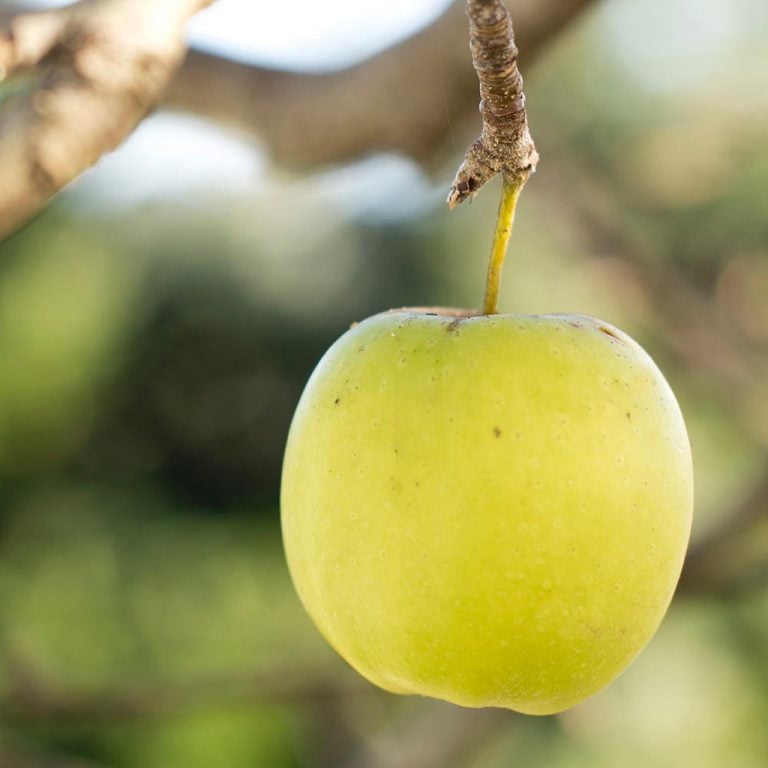
Fruit runs large, from 3.0 to 3.5 inches in diameter and 170 to 285 grams, with occasional specimens reaching 300 grams. Skin color is greenish-yellow to yellow with partial russet and no blush—visually plain by modern supermarket standards, but the interior character drives its culinary reputation. Flesh is pure white, very juicy, firm, and sharply tart at harvest, with high acid content that holds structure through cooking. Flavor descriptors center on aromatic, almost perfumed acidity rather than sweetness; Brix at harvest typically runs in the 10–12 range, with natural sugars rising during storage as malic acid gradually converts. After two to three months in cold storage, texture softens toward mealy and flavor mellows appreciably—some growers prefer Antonovka exclusively from storage for fresh eating. Cider applications value the variety for its acid backbone and aromatic lift; bakers prize it for sauce and pie because the high acid prevents structure collapse at heat. Preserves and apple butter benefit from the same acid-pectin synergy. Harvest runs from mid-September through late October depending on location.
Ripening Season: Mid Harvest Window: Late Aug - Late Sep Fruit Size: 3-3.5 inch Fruit Weight: 6-10 oz (170-285 g); up to 300 g reported Flavor: Tart, aromatic, high-acid with pure white juicy flesh; flavor mellows and sweetens after storage Fruit Color: Greenish-yellow to yellow, often with russet; no blush Fruit Texture: Firm, crisp when freshly harvested; softens to mealy after storage Bearing Habit: Annual to biennial; tends toward biennial bearing in older trees Years to Bear: 2-4 years Storage Life: 2-3 months refrigerated Culinary Uses: Cider; baking (pies, sauce); preserves; fresh eating when fully ripe
Antonovka carries moderate resistance to Apple Scab (Venturia inaequalis), Powdery Mildew (Podosphaera leucotricha), and Cedar Apple Rust (Gymnosporangium juniperi-virginianae)—a practical advantage over susceptible cultivars, though not a replacement for orchard sanitation. Rake and remove fallen leaves promptly each autumn; scab overwinterns in leaf debris and reinfects in spring wetting events. Antonovka shows moderate susceptibility to Fire Blight (Erwinia amylovora), which is the higher-stakes concern. Prune out blighted tissue to 12–18 inches below visible discoloration during dry weather, sterilizing tools between cuts with 70 percent isopropyl alcohol. Avoid excess nitrogen fertilization, which drives the succulent shoot growth fire blight favors. Black Rot (Botryosphaeria obtusa) also warrants moderate attention: mummified fruit is the primary inoculum source, so harvesting or removing every fruit—including drops—before winter is essential. All four tracked pest categories—Codling Moth (Cydia pomonella), Plum Curculio (Conotrachelus nenuphar), Apple Maggot (Rhagoletis pomonella), and Brown Marmorated Stink Bug (Halyomorpha halys)—are moderately susceptible. Kaolin clay applied before petal fall and reapplied after rain deters Plum Curculio and Apple Maggot mechanically. Codling Moth traps with pheromone lures guide spray timing if OMRI-listed spinosad is used. Exclusion netting is the most reliable BMSB management in high-pressure areas.
Apple Scab: Moderately Resistant Fire Blight: Moderately Susceptible Powdery Mildew: Moderately Resistant Cedar Apple Rust: Moderately Resistant Black Rot: Moderately Susceptible Codling Moth: Moderately Susceptible Plum Curculio: Moderately Susceptible Apple Maggot: Moderately Susceptible Brown Marmorated Stink Bug: Moderately Susceptible
Thin aggressively in heavy years: Antonovka tends toward biennial bearing; removing excess fruitlets to one per cluster by late June redirects energy into the remaining fruit and encourages annual production.
Manage fire blight with dry-weather pruning: Prune out infected wood only during dry spells, cutting 12–18 inches below visible symptoms, and sterilize tools between each cut.
Remove all mummified fruit each winter: Black Rot overwinters in fruit mummies; eliminating every dried or dropped apple before spring dramatically reduces next-season infection pressure.
Plant a mid-spring diploid pollinator within 50 feet: Antonovka needs a compatible bloom-group partner; Cortland, Liberty, or McIntosh all overlap reliably in mid to late April.
Use kaolin clay for curculio and maggot pressure: Start applications at petal fall and reapply after each significant rainfall to maintain the physical barrier that deters Plum Curculio and Apple Maggot from ovipositing.
We ship in late winter or early spring based on your USDA hardiness zone.
We strive to ship orders on the scheduled dates listed in the table below. However, please note that the actual shipping date may be subject to change due to factors like weather conditions and order volume.
The specific date for shipping your order will be determined according to your zipcode at the time of checkout.
Our plants are shipped bare root, packed in moist sawdust, and securely wrapped in plastic to prevent the roots from drying out. We use USPS Ground Advantage for shipping, ensuring that your plants typically arrive within 2-5 days after packaging.
In case you're unable to plant the trees immediately upon arrival, we recommend soaking them in water for a few hours and temporarily heeling them in. Ideally, they should be planted within three days of receipt for optimal health.
Our 365-Day Plant Guarantee: We ensure that our plants are delivered to you alive and healthy. If your plant does not survive its first year, you're eligible for store credit under these conditions:
You maintain the roots' moisture and plant within three days of delivery, following the instructions in our Planting Guide.
If you're concerned about your plant's health, please consult our guide, How to Tell if Your Tree is Dead or Dormant. Remember, our plants are shipped in a dormant state and may leaf out at different times based on their species. To check for plant vital
Reviews
There are no reviews yet.
Be the first to review “Antonovka Apple”Cancel Reply
$49.95Original price was: $49.95.$39.96Current price is: $39.96.Select Rootstock This product has multiple variants. The options may be chosen on the product page
Checking fit
Get the restock alert.
One email the day Spring 2027 inventory posts in June. No spam.
Reviews
There are no reviews yet.