
Mollies Delicious Apple
$49.95
Mollies Delicious Apple (Malus domestica) is an early-August-ripening apple developed at the New Jersey Agricultural Experiment Station, bearing sweet, aromatic fruit with cedar apple rust resistance and flavor drawing on both Golden Delicious and Red Gravenstein parentage. It grows in USDA hardiness zones 4-8 and AHS heat zones 1-9, needs 450-650 chill hours, and requires cross-pollination with a compatible variety such as Honeycrisp Apple or Enterprise Apple to set fruit.
4-5′ Bare Root Grafted Tree
Rootstock: Malus domestica
Full-size tree with the deepest, most drought-tolerant root system.
Longest-lived option; takes a few extra years to begin bearing.
• Support: Freestanding; no staking required.
Can’t be shipped to: AK, HI, MT
Out of stock
Out of stock — back next season
Spring 2027 inventory drops in June. Drop your email and we'll notify you the day this variety is back in stock.
You're on the list. Check your inbox for a confirmation link — click it to lock in your spot. We'll email you the day this variety is back in stock.
Mollie’s Delicious was developed by G. W. Schneider at the New Jersey Agricultural Experiment Station in New Brunswick, with the cross made in 1948 and the variety introduced in 1966. Its parentage is a complex four-way cross: (Golden Delicious × Edgewood) × (Red Gravenstein × Close). The name honors Mollie Whatley, wife of a Rutgers student, who was an enthusiastic admirer of the fruit. Golden Delicious contributed the sweet, mild base flavor and low-acid profile; Gravenstein brought aromatic complexity and an early-harvest tendency that has defined the variety’s commercial niche. Edgewood and Close, both older regional varieties, added genetic diversity to the cross but are rarely cited in popular descriptions today. The variety gained regional traction across the mid-Atlantic and Upper South as an early-season option before gravitating toward home-orchard and pick-your-own markets. Its acceptably low chill requirement extends its planting range into warmer sites where high-chill cultivars underperform.
At 400–500 chill hours, Mollies Delicious sits comfortably below mid-range requirements, which opens it to growers at warmer Zone 8 sites where accumulated winter cold is unreliable. That said, the early May to late May bloom window means late frosts in colder parts of Zone 5–6 remain a real risk; planting on elevated ground or north-facing slopes delays bloom slightly and reduces frost exposure. Soil drainage matters more during fruit set than at establishment: waterlogged roots in June and July compromise cell expansion and invite Phytophthora root rots. Target a well-drained loamy to sandy loam profile with pH held between 6.0 and 7.0 — lime-adjust acidic clay sites before planting rather than after. Spacing of 10–20 feet depends entirely on rootstock; dwarfing rootstocks (M.9, M.26) allow tighter rows and earlier bearing, while semi-dwarf choices (MM.111, MM.106) suit permanent plantings expected to last 50 or more years. Consistent summer irrigation during the 6–8 weeks of fruit development fills fruit to the characteristic 7–8.7 oz size; irregular moisture at this stage causes lenticel breakdown and cracking near harvest.
USDA Hardiness Zone: 4-8
AHS Heat Zone: 1-9
Chill Hours: 450-650
Sun Requirements: Full Sun
Soil pH: 6.0-7.0
Soil Type: Sandy loam to clay loam; well-drained loamy soil preferred
Soil Drainage: Well-drained
Water Requirements: Medium; regular watering, tolerates occasional dry periods once established
Plant Spacing: 10-20 ft depending on rootstock
Mollies Delicious develops an upright-spreading crown that, on semi-dwarf rootstock, typically reaches 15–20 feet in height and spread at maturity. The growth rate is moderate to fast in the juvenile phase, slowing as spur systems develop and bearing begins — usually within 2–5 years from planting depending on rootstock dwarfing. The upright-spreading habit naturally creates wide branch angles, which reduces the need for aggressive corrective training compared with strongly fastigiate cultivars. Annual dormant pruning focuses on thinning spur clusters every 3–4 years to prevent overcrowding and to maintain fruit size as the tree ages. After roughly six years of bearing, a biennial cropping pattern can emerge; managing this requires aggressive fruit thinning in heavy years — removing fruit to one per spur cluster and one per 6-inch spacing — which recharges bud set for the following season. The deciduous foliage provides moderate summer canopy that benefits inter-planted food forest companions requiring partial shade. Bark and spur structure are broadly typical of the domestica species, making the tree compatible with standard grafting operations for adding additional varieties onto established scaffolds.
Mature Height: 15-20 ft tall
Mature Spread: 15-20 ft wide
Growth Habit: Upright-spreading
Growth Rate: Moderate to Fast
Foliage Type: Deciduous
Food Forest Layer: Canopy
Attracts Wildlife: Bees, birds, butterflies
Life Span: 50-100+ years
Mollies Delicious is self-sterile and depends on insect-transferred pollen from a diploid partner blooming during the same early-May-to-late-May window. As a diploid, it produces viable pollen and can serve as a pollinator for compatible varieties nearby — no secondary pollinators required on its behalf beyond a single compatible partner. Fuji Apple and Golden Delicious Apple are well-matched mid-season bloomers that consistently overlap with Mollies Delicious in Zone 5–8 conditions. Honeycrisp Apple also aligns in bloom timing and is widely available. Managed honeybee colonies or a strong native bee population within 200 feet of the orchard block are the most reliable pollination drivers; bloom timing in late spring typically coincides with peak bee foraging activity, making insect transfer efficient when weather cooperates.
Bloom Season: Late
Bloom Window: Late Apr - Early May
Pollination Requirements: Requires cross-pollination; self-sterile
Pollination Mechanism: Insect-pollinated (bees)
Flower Color: White to light pink
Ploidy: Diploid
Fruit size runs 3.1–3.3 inches in diameter with weights of 200–245 grams (7–8.7 oz), placing Mollies Delicious among the larger-fruited early-season apples. The skin presents a yellow-green base overlaid with red blush and faint striping across 50% or more of the surface, brightening as harvest approaches in early to late August. Flavor is sweet and aromatic with low acidity — the Golden Delicious influence dominates on the palate, while the Gravenstein ancestry contributes a richer aromatic character that distinguishes it from purely sweet, mild summer apples. Flesh is crisp and fine-grained with good juice content at harvest, though it softens faster than late-season varieties; refrigerated storage extends shelf life to roughly 10 weeks, which is respectable for an August apple. Fresh eating is the primary use, with the low-acid sweetness making it especially accessible to consumers who find tart apples difficult. It also performs in cooking, canning, applesauce, and light baking, though the soft texture after prolonged heat means shorter cook times preserve better structure.
Ripening Season: Early
Harvest Window: Early Aug - Late Aug
Fruit Size: 3.1-3.3 inch
Fruit Weight: 7-8.7 oz (200-245 g)
Flavor: Sweet, aromatic, low-acid; flavor similar to Golden Delicious with aromatic complexity of Red Gravenstein
Fruit Color: Yellow-green base with red blush/stripes over 50% of surface
Fruit Texture: Crisp, fine-grained; juicy
Bearing Habit: Spur-bearing; biennial tendency after 6 years
Years to Bear: 2-5 years
Storage Life: 10 weeks refrigerated
Culinary Uses: Fresh eating, cooking, canning, applesauce, jellies, light baking
Mollies Delicious carries strong resistance to Cedar Apple Rust (Gymnosporangium juniperi-virginianae), a real advantage on humid sites near eastern red cedar host trees where this disease normally requires repeated management. The three significant disease weaknesses are Apple Scab (Venturia inaequalis), Fire Blight (Erwinia amylovora), and Powdery Mildew (Podosphaera leucotricha), all rated susceptible. Scab control centers on autumn leaf-litter removal to disrupt overwintering ascospores, combined with open-canopy pruning that reduces wetness duration on leaf surfaces during spring infection periods. Fire blight management relies on dormant pruning 8–12 inches below visible discoloration, with pruner blades disinfected between cuts; high-nitrogen fertilization should be avoided since it encourages the succulent shoot growth that the bacterium preferentially colonizes. Powdery mildew pressure concentrates on shaded interior shoots — annual thinning of crowded wood and open-center training reduce humidity and infection incidence. Black Rot (Botryosphaeria obtusa) is moderately susceptible; removing mummified fruit before winter eliminates the primary overwintering inoculum. All four pest categories — Codling Moth (Cydia pomonella), Plum Curculio (Conotrachelus nenuphar), Apple Maggot (Rhagoletis pomonella), and Brown Marmorated Stink Bug (Halyomorpha halys) — show moderate susceptibility. Kaolin clay applied from petal fall through mid-July creates a physical deterrent against curculio and maggot oviposition; pheromone traps calibrate codling moth spray timing for OMRI-listed spinosad applications.
Apple Scab: Susceptible
Fire Blight: Susceptible
Powdery Mildew: Susceptible
Cedar Apple Rust: Very Resistant
Black Rot: Moderately Susceptible
Codling Moth: Moderately Susceptible
Plum Curculio: Moderately Susceptible
Apple Maggot: Moderately Susceptible
Brown Marmorated Stink Bug: Moderately Susceptible
- Sanitation is the scab program: Remove fallen leaves completely each autumn to disrupt apple scab overwintering; combine with open-canopy pruning to reduce leaf wetness during infection periods.
- Fire blight pruning protocol: Cut infected shoots 8-12 inches below visible discoloration during dormancy; sterilize pruner blades in 10% bleach between every cut to prevent spreading the pathogen.
- Kaolin clay from petal fall: Begin codling moth, plum curculio, and apple maggot protection with kaolin clay at petal fall; reapply after each rain event through mid-July.
- Manage biennial bearing early: In heavy crop years, thin to one fruit per spur and one per 6-inch spacing to prevent the tree from exhausting carbohydrate reserves and producing few buds the following season.
We ship in late winter or early spring based on your USDA hardiness zone.
We strive to ship orders on the scheduled dates listed in the table below. However, please note that the actual shipping date may be subject to change due to factors like weather conditions and order volume.
The specific date for shipping your order will be determined according to your zipcode at the time of checkout.
Our plants are shipped bare root, packed in moist sawdust, and securely wrapped in plastic to prevent the roots from drying out. We use USPS Ground Advantage for shipping, ensuring that your plants typically arrive within 2-5 days after packaging.
In case you're unable to plant the trees immediately upon arrival, we recommend soaking them in water for a few hours and temporarily heeling them in. Ideally, they should be planted within three days of receipt for optimal health.
See our full shipping policy and map here
| Zone | Ship Date |
|---|---|
| 11 - 8b | March 1st, 2027 |
| 8a - 7b | March 8th, 2027 |
| 7a | March 15th, 2027 |
| 6b | March 22nd, 2027 |
| 6a | March 29th, 2027 |
| 5b - 5a | April 12th, 2027 |
| 4b - 4a | April 26th, 2027 |
| 3b - 1a | May 3rd, 2027 |
Our 365-Day Plant Guarantee: We ensure that our plants are delivered to you alive and healthy. If your plant does not survive its first year, you're eligible for store credit under these conditions:
- Your location falls within the appropriate USDA hardiness zone for the plant variety (refer to our hardiness zone map).
- You maintain the roots' moisture and plant within three days of delivery, following the instructions in our Planting Guide.
If you're concerned about your plant's health, please consult our guide, How to Tell if Your Tree is Dead or Dormant. Remember, our plants are shipped in a dormant state and may leaf out at different times based on their species. To check for plant vital
2 reviews for Mollies Delicious Apple
Related products

Gladiator Crabapple
Checking fit
Arkansas Black Apple
Rated 4.67 out of 5$49.95 Select Rootstock This product has multiple variants. The options may be chosen on the product pageChecking fit
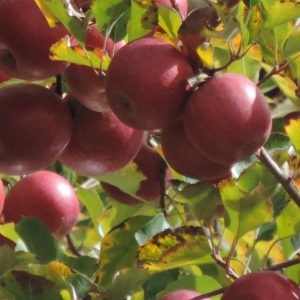
Pink Lady Apple
$49.95 Select Rootstock This product has multiple variants. The options may be chosen on the product pageChecking fit
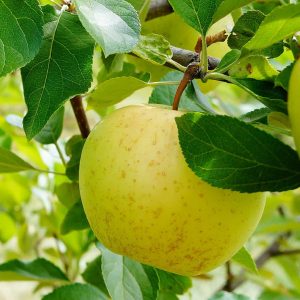
Honeygold Apple
Checking fitRated 5.00 out of 5

Jay S. (verified owner) –
Received fresh in good condition. Planted later same day. Any guarantee on their survival?
Barbara B. (verified owner) –
Receive my Molly Apple tree, looks great. I highly recommend ordering from this nursery