Carolina Red June Apple
$49.95
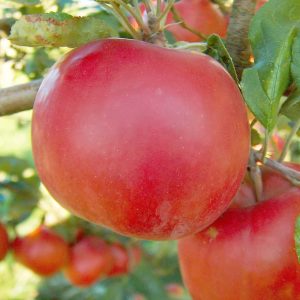
Red June Apple (also known as Carolina June; Malus domestica) is an early American heirloom apple ripening ahead of most summer varieties, bearing small, deep-red fruit with brisk tart-sweet white flesh faintly stained red—eaten fresh, sauced, or pressed into cider. It grows in USDA hardiness zones 5-8 and AHS heat zones 3-9, needs 600-800 chill hours, and requires cross-pollination with a compatible variety such as GoldRush Apple or Honeycrisp Apple to set fruit.
4-5′ Bare Root Grafted Tree
Rootstock: M111 – Semi Dwarf
The most “bulletproof” option; thrives in heavy clay or dry, sandy soils.
Excellent drought resistance once established.
• Support: Freestanding; no staking required.
Can’t be shipped to: AK, HI, MT
In stock
Red June Apple is an American heirloom of uncertain precise origin, documented in southern nursery trade under a cluster of regional names — Carolina Red June, Red Juneating, Georgia June, Jones Early Harvest, and Wilson’s June — by the early nineteenth century. No breeder, no named cross, and no institution stands behind it; the variety arose through the centuries-long American farm practice of selecting superior open-pollinated seedlings and propagating them by name. Evidence from nursery catalogs places it firmly in the Carolinas and surrounding states by the early 1800s, though some sources suggest a Tennessee origin, reflecting the wide regional distribution the variety had already achieved by the time formal pomological records began.
Historically, Red June occupied a specific and valued niche in the Southern orchard calendar: its late June to early August harvest bridged the gap between the last spring soft fruits and the main autumn apple season, providing fresh fruit during the period when virtually no other apple was available from local trees. That summer-bearing trait, unusual in the apple world where most cultivars ripen in autumn, accounts for its long persistence in Appalachian homestead orchards long after commercial apple culture shifted toward autumn varieties.
Red June performs across a broad climate band, adapting to zones 4 through 9 with a chilling requirement of roughly 800 to 1,000 hours — mid-belt territory suited to humid temperate climates. Full sun is essential for the sugar development and color that make this early variety worth harvesting; shading accelerates the already short storage window. Well-drained loam or clay loam with a pH between 5.0 and 6.8 suits it well, supporting nutrient uptake while limiting waterlogging that encourages Phytophthora and fire blight at the root zone. Moderate, consistent irrigation during late spring through early summer matters most here: fruit set coincides with the warmest, driest stretch of the season in many growing regions, and water stress reduces size and increases premature drop. Space trees 12 to 16 feet apart to ensure airflow, which matters given this variety's disease susceptibility. A 3-inch organic mulch ring kept clear of the trunk moderates soil moisture and reduces splash dispersal of scab spores from fallen fruit.
USDA Hardiness Zone: 5-8
AHS Heat Zone: 3-9
Chill Hours: 600-800
Sun Requirements: Full Sun
Soil pH: 5.0-6.8
Soil Type: Loam, clay loam, sandy loam
Soil Drainage: Well-drained
Water Requirements: Medium
Plant Spacing: 12-16 ft apart
Red June grows with an upright, spreading habit and reaches 15 to 20 feet tall with a spread of 12 to 16 feet, forming a moderately open canopy that responds well to annual dormant pruning. The upright scaffold branches angle outward with age, creating natural light penetration if vertical water sprouts are removed each year and the center is kept open through selective heading and thinning cuts. This open-center or modified-leader form is particularly valuable for a disease-susceptible variety, since dense canopy growth traps humidity and prolongs leaf wetness — exactly the conditions that drive scab and rust infection cycles. Medium growth rate means trees establish quickly enough to bear in two to four years from planting without outpacing the grower's ability to train them. As a deciduous tree, it offers spring bloom interest from its white flowers with pink tinge, summer fruit production, and modest fall foliage color before leafing out again in spring. The root system is moderately vigorous and anchors well in loamy soils; avoid low-lying frost pockets where late spring radiation frost can kill blossoms.
Mature Height: 15-20 ft tall
Mature Spread: 12-16 ft wide
Growth Habit: Upright, Spreading
Growth Rate: Moderate
Foliage Type: Deciduous
Food Forest Layer: Canopy
Attracts Wildlife: Bees, Butterflies, Birds, Small Mammals
Life Span: 40-100+ years
Red June is a diploid apple requiring cross-pollination from a compatible mid-season variety with overlapping bloom. Bloom falls in the mid- to late-April window in temperate climates, aligning it well with many standard diploid cultivars. Gala Apple and Honeycrisp Apple are strong partners: both bloom in the same mid-spring period, carry compatible S-alleles, and are diploids that produce abundant viable pollen. Golden Delicious Apple serves as a reliable universal cross-pollinator and blooms in overlapping sequence. Pollination is carried out by honeybees and native bees; planting pollinators within 50 feet improves fruit set, which Red June needs — fruit thinning to one per cluster after set both counters the biennial bearing tendency and improves individual fruit size.
Bloom Season: Late
Bloom Window: Late Apr - Early May
Pollination Requirements: Requires Cross-Pollination
Pollination Mechanism: Insect (Bees)
Flower Color: White with Pink Tinge
Ploidy: Diploid
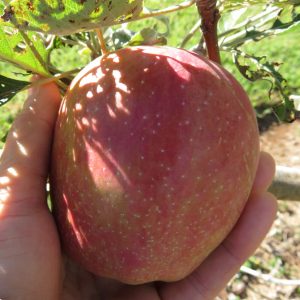
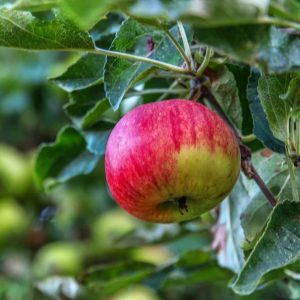
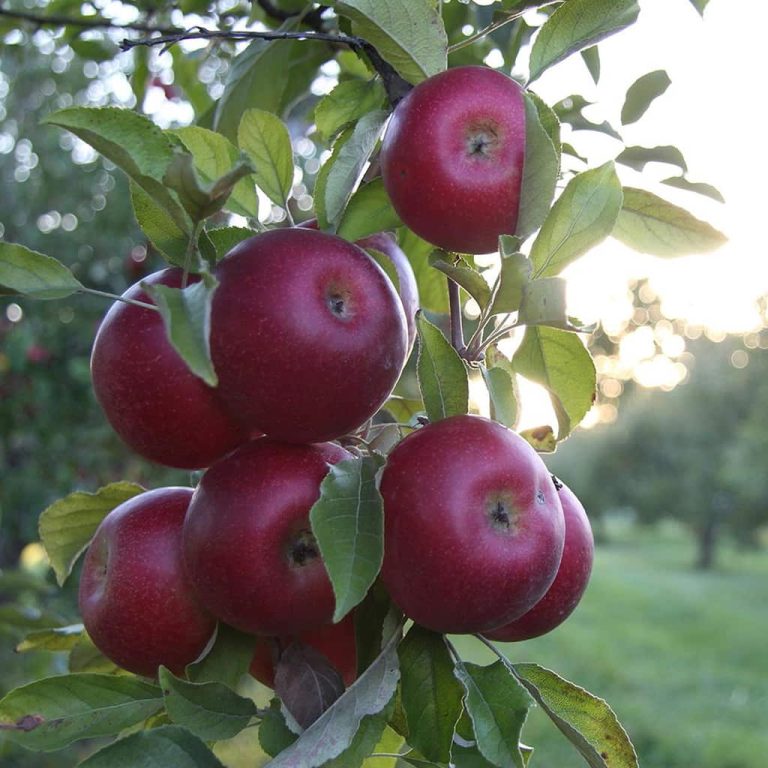
Red June produces small to medium fruit averaging 2 to 2.5 inches in diameter, with deep red skin over a yellow-green base — the intense skin color develops fully in the two weeks before peak ripeness and is one of the most reliable harvest-readiness cues. The flesh is fine-grained, tender, and white, frequently stained crimson near the skin, with a brisk tart-sweet flavor profile that experienced tasters describe as subacid: enough acidity to give structure but not sharply sour. Brix values typically run in the 10–13 range, lower than fall dessert apples but appropriate for its culinary role. Storage life is short — two to four weeks under refrigeration — so Red June is best used promptly at harvest for fresh eating, sauce, early-season pies, and cider blending. The tender, thin skin makes it poor for long-haul shipping but excellent for home orchardists and direct-market growers who can move fruit quickly. A biennial tendency means alternate years may produce lighter crops; aggressive fruit thinning in heavy years reduces the carbohydrate debt that drives off-year underproduction.
Ripening Season: Very Early
Harvest Window: Late Jun - Early Aug
Fruit Size: 2-2.5 inch
Flavor: Brisk, tart-sweet; subacid with juicy white flesh stained red; good to very good quality
Fruit Color: Deep red over yellow-green; flesh white often stained red
Fruit Texture: Fine-grained, tender, crisp when fresh
Fruit Skin: Thin, tender, smooth, glossy
Bearing Habit: Biennial tendency; may produce second lighter fall crop in some climates
Years to Bear: 2-4 years
Storage Life: 2-4 weeks
Culinary Uses: Fresh Eating, Pies, Sauce, Cider, Drying
Red June carries meaningful susceptibility to several diseases common in humid temperate climates, and a proactive IPM plan is necessary for consistent harvests. Apple scab (Venturia inaequalis) is the most critical threat: this variety is susceptible, so sanitation is the first line of defense — rake and remove all fallen leaves and mummified fruit each autumn, since overwintering ascospores release during spring bud break and primary infection begins at petal fall. Pruning for an open canopy reduces leaf wetness duration and limits infection windows. Cedar apple rust (Gymnosporangium juniperi-virginianae) is a second susceptibility: remove nearby eastern red cedars (Juniperus virginiana) within a half-mile radius where feasible, as they are the obligate alternate host. Fire blight (Erwinia amylovora) rates as moderately susceptible — prune blighted shoots 12 inches below visible infection and sterilize tools between cuts. Avoid excess nitrogen, which stimulates succulent growth most vulnerable to fire blight. Black rot (Botryosphaeria obtusa) is listed; remove mummified fruit promptly. Codling moth (Cydia pomonella), plum curculio (Conotrachelus nenuphar), and apple maggot (Rhagoletis pomonella) are the primary insect pressures. Kaolin clay from petal fall through early summer reduces curculio egg-laying; codling moth is managed with pheromone traps and OMRI-listed spinosad at egg hatch.
Apple Scab: Susceptible
Fire Blight: Moderately Susceptible
Cedar Apple Rust: Susceptible
Codling Moth: Moderately Resistant
Plum Curculio: Moderately Susceptible
Apple Maggot: Susceptible
Brown Marmorated Stink Bug: Moderately Susceptible
- Thin fruit early: Red June bears biennially — thin to one fruit per cluster within three weeks of petal fall to even crop load, improve size, and encourage annual bearing.
- Scab sanitation in fall: Susceptible to apple scab; rake and destroy all fallen leaves and fruit before the first frost to prevent overwintering ascospores from recharging spring inoculum.
- Remove cedar hosts nearby: Cedar apple rust susceptibility means eastern red cedars within a half-mile are active reservoirs; removing them cuts infection pressure significantly.
- Plant two pollinators, not one: The bloom window can shift in cool springs; having both a Gala and a Golden Delicious nearby ensures overlap even in off-season years.
- Harvest in waves: Fruit ripens unevenly over a four-to-six-week window; pick every seven to ten days rather than stripping the tree in one pass.
We ship in late winter or early spring based on your USDA hardiness zone.
We strive to ship orders on the scheduled dates listed in the table below. However, please note that the actual shipping date may be subject to change due to factors like weather conditions and order volume.
The specific date for shipping your order will be determined according to your zipcode at the time of checkout.
Our plants are shipped bare root, packed in moist sawdust, and securely wrapped in plastic to prevent the roots from drying out. We use USPS Ground Advantage for shipping, ensuring that your plants typically arrive within 2-5 days after packaging.
In case you're unable to plant the trees immediately upon arrival, we recommend soaking them in water for a few hours and temporarily heeling them in. Ideally, they should be planted within three days of receipt for optimal health.
See our full shipping policy and map here
| Zone | Ship Date |
|---|---|
| 11 - 8b | March 1st, 2027 |
| 8a - 7b | March 8th, 2027 |
| 7a | March 15th, 2027 |
| 6b | March 22nd, 2027 |
| 6a | March 29th, 2027 |
| 5b - 5a | April 12th, 2027 |
| 4b - 4a | April 26th, 2027 |
| 3b - 1a | May 3rd, 2027 |
Our 365-Day Plant Guarantee: We ensure that our plants are delivered to you alive and healthy. If your plant does not survive its first year, you're eligible for store credit under these conditions:
- Your location falls within the appropriate USDA hardiness zone for the plant variety (refer to our hardiness zone map).
- You maintain the roots' moisture and plant within three days of delivery, following the instructions in our Planting Guide.
If you're concerned about your plant's health, please consult our guide, How to Tell if Your Tree is Dead or Dormant. Remember, our plants are shipped in a dormant state and may leaf out at different times based on their species. To check for plant vital
Related products

Anna Apple
Checking fit
Winesap Apple
Rated 5.00 out of 5$49.95 Select Rootstock This product has multiple variants. The options may be chosen on the product pageChecking fit
McIntosh Apple
Checking fitRated 5.00 out of 5- SOLD OUT

Sansa Apple
Checking fit


Reviews
There are no reviews yet.