Profusion Crabapple
$39.95
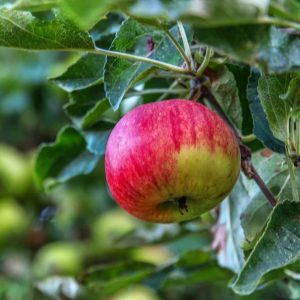
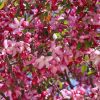
Profusion Crabapple (Malus x moerlandsii ‘Profusion’) is a Dutch-bred ornamental crabapple with disease resistance, bearing deep rose-pink to violet-red flowers from dark red buds, rounded form with amber fall foliage, and small bright-red fruit suitable for jellies and wildlife feeding. It grows in USDA hardiness zones 4-8 and AHS heat zones 2-7, and needs about 650-1000 chill hours.
3-4′ Bare Root Grafted Tree
Rootstock: B118 – Semi Dwarf
A Budagovsky selection at roughly 85-90% of standard, so nearly full size. Exceptionally cold hardy and well anchored.
• Support: Freestanding; no staking required.
Can’t be shipped to: AK, HI
In stock
Profusion is a hybrid crabapple within the Malus × moerlandsii group, named in honor of Carolus Philippus Moerlands, director of the School of Horticulture at Boskoop in the Netherlands in the early twentieth century. The cultivar was developed in the Netherlands as part of the Boskoop ornamental-tree breeding tradition that produced many purple-foliaged flowering crabapples during the 1930s; an improved selection, sold under the synonym Malus ‘Directeur Moerlands,’ represents a later refinement with stronger scab resistance. The Malus × moerlandsii hybrid lineage draws on Asian crabapple species, particularly those contributing dark pigmentation to both foliage and flowers. Profusion reached wide North American distribution by the mid-twentieth century and became one of the most planted purple-foliage crabapple cultivars in the trade. It remains a benchmark of the deep violet-pink end of the ornamental crabapple color palette and has been a reference point for subsequent dark-flowered breeding work.
Profusion performs across a broad soil range — loam, clay, sand, and chalk — provided drainage is adequate. Waterlogged roots weaken the tree's immune response, making it more vulnerable to the pest pressures it already carries. Settle it into full sun; even partial shade reduces flowering density and can slow the foliage transition from its distinctive reddish-purple spring color to the bronze-green of summer. Soil pH between 6.0 and 6.5 keeps iron available and maintains healthy leaf color. Consistent moisture during the first two to three growing seasons builds root architecture; once established, the tree tolerates moderate drought without significant stress. Mulching to a 3-to-4-inch depth suppresses competing vegetation and moderates soil temperature, particularly through humid summers where soil moisture swings can stress the shallow fibrous roots.
USDA Hardiness Zone: 4-8
AHS Heat Zone: 2-7
Sun Requirements: Full Sun
Soil pH: 6.0-6.5
Soil Type: Loam, clay, sand, chalk; adaptable to wide range of soils
Soil Drainage: Well-drained, moist but well-drained
Water Requirements: Medium; moderate and consistent moisture; drought tolerant once established
Drought Tolerance: Moderate; tolerates drought once established
How to Prune: Prune in late winter; remove water sprouts, crossing branches, and dead wood; avoid spring pruning to reduce fire blight entry points
The rounded, spreading canopy reaches 15 to 20 feet tall and spreads to roughly 20 feet wide, growing at a fast rate that fills a landscape slot quickly without overwhelming a moderate-sized yard. The fibrous, laterally spreading root system is non-invasive and causes no conflict with hardscaping or underground utilities — a meaningful advantage for street and patio placements. Foliage emerges reddish-purple in spring, shifting to bronze-green through summer before turning amber to orange-red in fall, giving the tree three distinct seasonal phases of visual interest. Winter brings a fourth: the persistent bright-red to maroon-red fruit, roughly half an inch across, holds on branches well after leaf drop and attracts birds through the coldest months. Pruning should address crossing branches and water sprouts during late winter dormancy; the rounded form requires minimal corrective work once the primary scaffold is established.
Mature Height: 15-20 ft tall
Mature Spread: 20 ft wide
Growth Habit: Rounded; spreading
Growth Rate: Fast
Foliage Type: Deciduous
Food Forest Layer: Canopy, Sub-canopy
Leaf Color: Reddish-purple emerging, transitioning to bronze-green
Fall Foliage Color: Amber; variable orange to orange-red
Attracts Wildlife: Birds, butterflies, bees
Life Span: 50-100+ years
Most Malus cultivars, including Profusion, produce viable pollen but set fruit more reliably and consistently when a compatible cross-pollinator blooms nearby at the same time. Profusion flowers mid-April through early May in a temperate climate — growers should select a companion that overlaps this window. Insect pollinators, primarily bees, handle transfer; a tree within roughly 100 feet of the companion is sufficient for active bee activity to bridge the gap. Good companions from the nursery's existing inventory include Prairie Fire Crabapple, which blooms in a similar window and is widely planted, and Robinson Crabapple, which overlaps in both timing and zone compatibility. Any diploid Malus flowering in the same two-to-three-week span will serve as a functional pollinator.
Bloom Season: Early
Bloom Window: Mid Apr - Early May
Pollination Requirements: Cross-pollination recommended; most Malus are self-unfruitful
Pollination Mechanism: Insect (primarily bees)
Flower Color: Deep rose-pink to violet-red; dark red buds opening to purple-pink
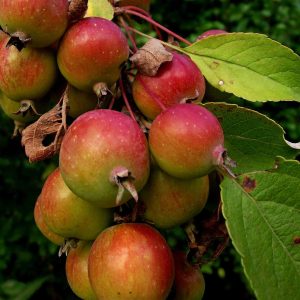
The fruit are small — about half an inch in diameter — and ripen to a bright red to maroon-red in September through October. Their size places them firmly in the ornamental-persistence category rather than fresh eating: the flesh is tart and astringent raw, with acidity that makes direct consumption unappealing to most palates without processing. Cooked applications work well; the high pectin content characteristic of crabapples makes them excellent for jellies, jams, and preserves without added pectin, and the rich color carries through into finished products. Syrup and shrubs are additional uses for growers willing to harvest at peak. The fruit's persistence on the branch after leaf drop is one of Profusion's most valued traits — the maroon-red clusters remain colorful through early winter and provide an important calorie source for migrating and overwintering bird species, particularly cedar waxwings, American robins, and various thrushes.
Ripening Season: Mid
Harvest Window: Mid Sep - Mid Oct
Fruit Size: 0.5 inch
Fruit Color: Bright red to maroon-red
Bearing Habit: Annual; fruit persists into winter
Culinary Uses: Jelly, jam, preserves, syrup; tart fresh eating
Profusion carries strong resistance across all five primary crabapple disease pressures. Apple scab (Venturia inaequalis) resistance is critical in humid regions where susceptible cultivars require repeated sprays; Profusion suits organic and low-input programs without that burden. Fire blight (Erwinia amylovora) resistance reduces shoot dieback risk — still, avoid pruning in wet weather and disinfect tools between cuts. Cedar apple rust (Gymnosporangium juniperi-virginianae) resistance allows planting near Eastern red cedar without gall or leaf damage. Powdery mildew (Podosphaeria leucotricha) and frogeye leaf spot (Botryosphaeria obtusa) round out a clean disease record.
Profusion is moderately susceptible to four key insects. Apple maggot (Rhagoletis pomonella) is managed with red sphere sticky traps deployed from late June. Woolly apple aphid (Eriosoma lanigerum) colonizes bark crevices; knock back colonies with a strong water spray or insecticidal soap. Codling moth (Cydia pomonella) warrants pheromone trap monitoring and kaolin clay applications when fruit is grown for preserves. Flatheaded appletree borer (Chrysobothris femorata) targets stressed trees; consistent irrigation through establishment reduces susceptibility.
Apple Scab: Resistant
Fire Blight: Resistant
Cedar Apple Rust: Resistant
Powdery Mildew: Resistant
Leaf Spot / Frogeye Leaf Spot: Resistant
Apple Maggot: Moderately Susceptible
Woolly Apple Aphid: Moderately Susceptible
Codling Moth: Moderately Susceptible
Flatheaded Appletree Borer: Moderately Susceptible
- Prune during dry, dormant conditions: Pruning cuts in wet spring weather create fire blight entry points; schedule structural work for late winter before bud swell and limit in-season cuts to dead wood only.
- Deploy apple maggot traps early: Hang red sphere sticky traps by late June to intercept egg-laying females before fruit is compromised; replace every 3–4 weeks through August.
- Protect new transplants from borers: Flatheaded appletree borer targets stressed trees; wrap trunks with guards in the first two seasons and maintain consistent irrigation to minimize stress.
- Let fruit persist for winter wildlife: The persistent maroon-red clusters feed cedar waxwings and overwintering birds November through January — avoid cleaning up until late winter.
- Plant a compatible companion within 100 feet: Any diploid crabapple or apple flowering in the mid-April to early-May window improves fruit set and persistence.
We ship in late winter or early spring based on your USDA hardiness zone.
We strive to ship orders on the scheduled dates listed in the table below. However, please note that the actual shipping date may be subject to change due to factors like weather conditions and order volume.
The specific date for shipping your order will be determined according to your zipcode at the time of checkout.
Our plants are shipped bare root, packed in moist sawdust, and securely wrapped in plastic to prevent the roots from drying out. We use USPS Ground Advantage for shipping, ensuring that your plants typically arrive within 2-5 days after packaging.
In case you're unable to plant the trees immediately upon arrival, we recommend soaking them in water for a few hours and temporarily heeling them in. Ideally, they should be planted within three days of receipt for optimal health.
See our full shipping policy and map here
| Zone | Ship Date |
|---|---|
| 11 - 8b | March 1st, 2027 |
| 8a - 7b | March 8th, 2027 |
| 7a | March 15th, 2027 |
| 6b | March 22nd, 2027 |
| 6a | March 29th, 2027 |
| 5b - 5a | April 12th, 2027 |
| 4b - 4a | April 26th, 2027 |
| 3b - 1a | May 3rd, 2027 |
Our 365-Day Plant Guarantee: We ensure that our plants are delivered to you alive and healthy. If your plant does not survive its first year, you're eligible for store credit under these conditions:
- Your location falls within the appropriate USDA hardiness zone for the plant variety (refer to our hardiness zone map).
- You maintain the roots' moisture and plant within three days of delivery, following the instructions in our Planting Guide.
If you're concerned about your plant's health, please consult our guide, How to Tell if Your Tree is Dead or Dormant. Remember, our plants are shipped in a dormant state and may leaf out at different times based on their species. To check for plant vital
Related products
- SOLD OUT

Sansa Apple
Checking fit 
Cortland Apple
Checking fit
Winesap Apple
Rated 5.00 out of 5$49.95 Select Rootstock This product has multiple variants. The options may be chosen on the product pageChecking fit
Siberian Crabapple
Checking fitRated 4.60 out of 5


Reviews
There are no reviews yet.