
Pear Ripening Chart – When are Pears in Season
The short answer: European pears (Bartlett, Kieffer, Moonglow, and similar) come into season from early July through mid-October depending on variety, and they’re picked mature-but-firm, then ripened off the tree at room temperature. Asian pears ripen on the tree and are picked crisp and ready to eat, mostly from late August through late September. Planting early-, mid-, and late-season varieties together stretches your harvest across the whole window.
Intro
This article presents a pear ripening chart, highlighting the maturity progression of various pear varieties throughout the seasons. By using this chart, individuals can optimize their harvest season through succession planting, ensuring a continuous supply of ripe pears. The guide also covers the nuances of Asian pears, techniques to determine ripeness, and storage methods to prolong freshness.
Table of Contents
Pear Ripening Chart
The chart above plots each pear variety’s ripening window across the season, with European pears in green and Asian pears in yellow — click any variety to see its product page.
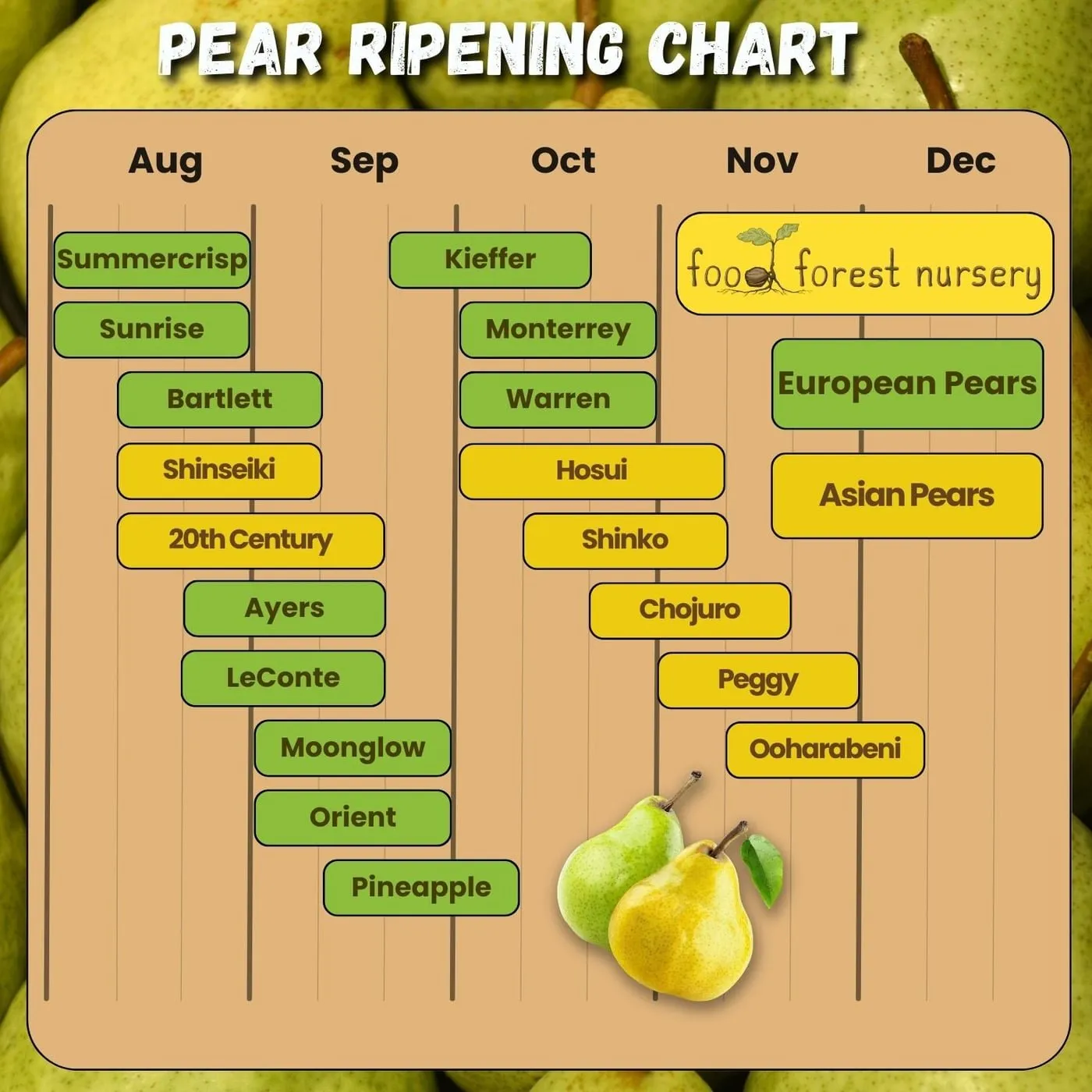
The pear ripening chart is a visual tool that tracks the maturity progression of various pear varieties throughout the season. European pears are represented in green, while Asian varieties stand out in yellow. This chart is invaluable for those aiming to optimize their harvest through succession planting, ensuring a steady flow of ripe pears. By clicking on a specific variety within the chart, readers can gain deeper insight into its unique characteristics. Such tools are particularly beneficial for those eager to harvest their pears at the peak of flavor and understand the nuances between different varieties.
When are Pears in Season?
In temperate climates pear season runs from late summer into early winter; European pears are picked mature-but-not-ripe and finish ripening off the tree, while Asian pears are harvested already ripe.
Pears, akin to many other fruits, have distinct seasons during which they blossom into their full flavor and achieve peak ripeness. The precise timing of this season can be influenced by various factors, including the region’s climate, geographical location, and the specific pear variety in question. Typically, in temperate climates, the pear season spans from late summer to the early winter months.
Among the many pear varieties, the Asian pear often gets a lot of attention. Many wonder: when exactly are Asian pears ripe? Distinct from European and American pears, Asian pears are harvested when they are already ripe from the tree, eliminating the need for a secondary ripening phase. This characteristic ensures that consumers get to enjoy them in their prime immediately after purchase. In contrast, other pear varieties have a unique ripening process. They are typically harvested when mature, but not fully ripe, and are then allowed to complete their ripening off the tree. This method ensures the fruit retains its firmness and doesn’t become overly soft or mealy.
Recognizing the pear season is pivotal for everyone involved in the pear lifecycle, from growers to consumers. For those cultivating the fruit, this knowledge aids in timely harvesting, ensuring the pears are plucked at their optimal maturity. On the other hand, for consumers, being aware of the pear season guarantees that they savor the fruit when it’s at its most flavorful and nutritious peak.

Pear Ripening Date by Variety
Early-season pears like LeConte and Summercrisp ripen in July and August with crisp, refreshing flavor, while late-season pears like Kieffer and Shinko ripen into September and October with richer flavor and better storage life.
Pears offer a spectrum of flavors, textures, and ripening times. Recognizing variety-specific ripening dates can significantly enhance the eating experience by helping you optimize your harvest through succession planting.
Early Season Pears
Typically ripening in late summer, early season pears are known for their crisp texture and refreshing taste, making them ideal for warm-weather snacking. Because they have a shorter shelf life than late-season varieties, timely harvesting is essential to enjoy their peak flavor.
- LeConte Pear (Early July – Late Aug): Features an exceptionally smooth texture and rich sweetness; perfect for fresh eating and summer desserts.
- Pineapple Pear (Early July – Late Aug): Retains its tangy flavor and firm, coarse texture well; a favorite for baked goods and preserves.
- Summercrisp Pear (Early Aug – Mid Aug): Prized for its refreshingly crisp bite and sweet flavor; a top choice for summertime salads.
- Sunrise Pear (Mid Aug – Late Aug): Known for juicy flesh and a balanced sweet-tart taste; offers culinary versatility for snacking or desserts.
- Monterrey Pear (Early Aug – Mid Sept): Offers a mild, buttery sweetness; a flexible ingredient for both sweet and savory dishes.
- Warren Pear (Early Aug – Mid Aug): Renowned for deep, spicy flavor and a buttery, smooth texture; preferred for its fresh taste and fire blight resistance.
- Ayers Pear (Mid Aug – Early Sept): Cherished for creamy, sweet, and juicy flesh; offers a decadently moist bite.
- Moonglow Pear (Mid Aug – Early Sept): Soft, juicy, and subtly sweet; an excellent choice for those who prefer a milder flavor.
- Hosui Asian Pear (Late Aug – Early Sept): Features distinctive crispness and intense honey-like sweetness; often enjoyed fresh as a succulent snack.
Late Season Pears
As the weather cools, late-season varieties ripen with richer and more complex flavor profiles. These pears tend to store well, making them ideal for holiday dishes and winter storage.
- Ooharabeni Asian Pear (Late Aug – Early Sept): Characterized by vibrant color and a crisp texture paired with a subtly nuanced sweetness.
- Chojuro Asian Pear (Early Aug – Mid Sept): Noted for its rich, butterscotch-like sweetness and a satisfyingly crisp texture.
- Bartlett Pear (Late Aug – Early Sept): Famous for its juicy, sweet flesh; versatile for raw applications and various cooking methods.
- Shinseiki Asian Pear (Late Aug – Early Sept): Known for a refreshingly crisp bite and a well-balanced combination of sweetness and tartness.
- Orient Pear (Mid Aug – Mid Sept): Stands out for its large, round shape and a firm texture that holds up well for canning.
- Peggy Asian Pear (Late Aug – Early Sept): Cherished for a juicy crunch and delicate sweetness; refreshing for fresh snacking and salads.
- 20th Century Asian Pear (Late Aug – Mid Sept): A crowd-pleaser with a refreshingly crisp texture and an enjoyable sweet-tart balance.
- Shinko Asian Pear (Early Sept – Late Sept): Boasts a rich sweetness and a firm, substantial bite.
- Kieffer Pear (Early Sept – Mid Oct): Features a notably crisp, coarse texture; a sturdy fruit perfect for cooking, canning, and long-term storage.
How to Tell if a Pear is Ripe?
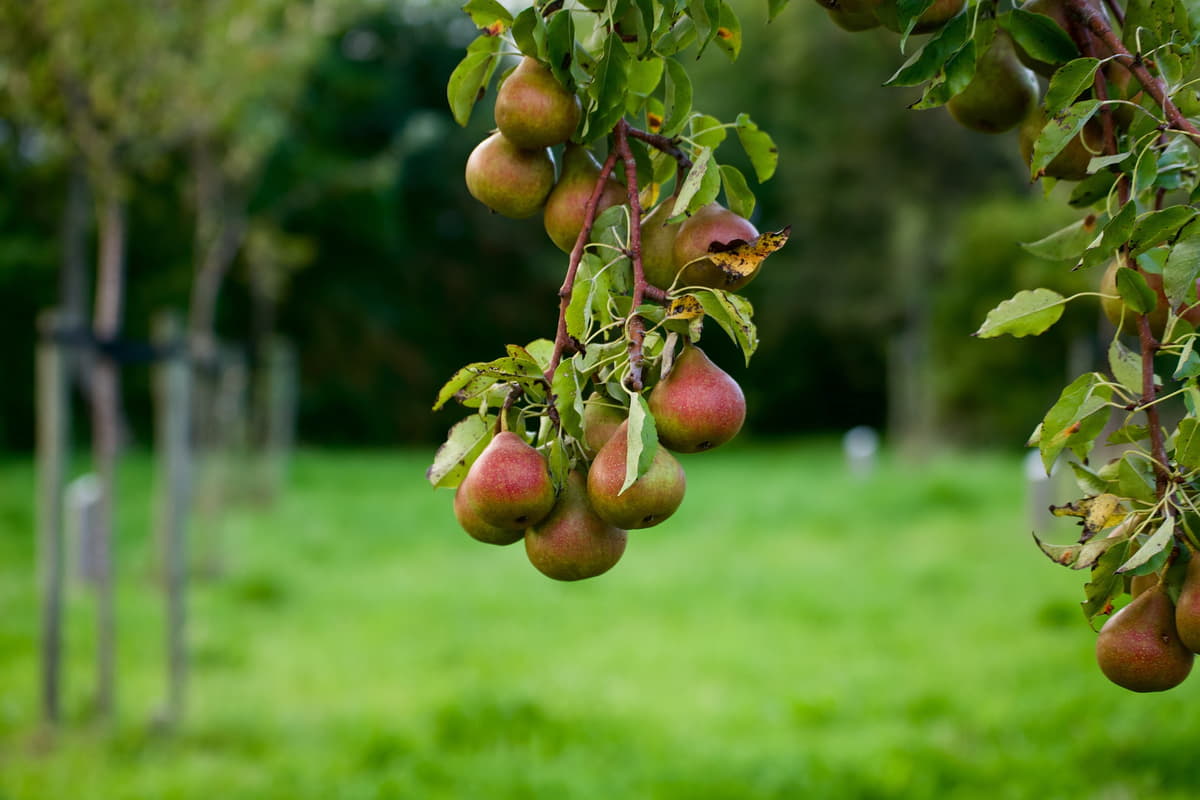
Use the thumb test near the stem for European pears (Bartlett, Bosc): a slight yield means it’s ripe. Asian pears stay firm even when ripe, so judge them by skin color and aroma instead.
Determining the ripeness of a pear is both an art and a science. Unlike many fruits that are best when soft to the touch, pears have unique ripening characteristics that can sometimes be misleading to the untrained eye or hand.
Texture and Firmness:
One of the most reliable methods to determine if a pear is ripe is the “thumb test.” Gently press near the stem of the pear with your thumb. If it yields slightly, it’s ripe and ready to eat. (This thumb test is for European pears like Bartlett and Bosc; Asian pears are eaten crisp and are judged by skin color and aroma instead.) This method is particularly useful when deciding when to pick pears from the tree or when purchasing them from a market.
Appearance:
A pear’s skin can also offer clues about its ripeness. While color changes can be an indicator for some varieties, it’s not always a reliable method for all. However, a ripe pear may exhibit a slight sheen, indicating juiciness within.
Smell:
Bring the pear close to your nose. A ripe pear will often emit a fragrant aroma, especially near the stem. This is a good indicator of when a pear is ripe and ready for consumption.
Asian Pear Picking:
For those wondering about Asian pear picking, these pears are typically firmer when ripe compared to other varieties. Their crisp texture is maintained even when they’re ready to eat, so relying on firmness alone can be misleading.
General Tips:
Remember that pears ripen from the inside out. This means that by the time a pear feels soft on its outer skin, it might be overripe inside. Therefore, understanding how to pick good pears is crucial to enjoying their optimal flavor and texture.
In conclusion, determining when pears are ready to pick or eat requires a combination of tactile, visual, and olfactory cues. With a bit of practice and knowledge, you can master the art of choosing perfectly ripe pears every time.
How to Ripen a Pear?
Room-temperature ripening takes several days; a paper bag with a ripe banana or apple speeds it up by trapping ethylene. Winter pears like Bosc, Anjou, and Comice need two to eight weeks of cold storage first or they won’t soften on the counter.
Pears are unique in the fruit world, often being picked when mature but not yet ripe. This means that after purchasing or harvesting, there’s usually a waiting period before they reach their peak flavor and texture. Fortunately, there are methods to expedite this process, ensuring that you can enjoy your pears sooner.
Natural Ripening:
The simplest way to ripen pears is to leave them at room temperature. Placing them in a fruit bowl or on a countertop will allow them to ripen naturally over several days. Once ripe, they can be transferred to the refrigerator to prolong their freshness. One important exception: winter pears such as Bosc, Anjou, and Comice need a stretch of cold first — about two to eight weeks in the refrigerator, longest for Anjou — before they will ripen on the counter. Straight from the tree at room temperature they often never soften.
Paper Bag Method:
If you’re looking to ripen pears faster, placing them in a paper bag can help. The bag traps ethylene gas, a natural byproduct of ripening fruit, which speeds up the process. For even quicker results, add a ripe banana or apple to the bag, as these fruits release more ethylene gas.
Microwave Method:
While not as commonly used, it’s possible to ripen pears in the microwave. However, this method should be used with caution. To do this, first, pierce the pear with a fork several times. Microwave on medium power for 10-15 seconds. Let the pear sit for 5 minutes, then test for softness. Keep in mind this warms and softens the flesh rather than truly ripening it, so the flavor will not match a naturally ripened pear — use it only in a pinch. It’s essential to note that this method can change the pear’s texture and may not yield the same results as natural ripening.
Factors Affecting Ripening:
Temperature plays a significant role in how quickly a pear ripens. Pears left in warmer environments will ripen more rapidly than those in cooler areas. Additionally, the ripening process can be halted by placing pears in the refrigerator. So, if you’re wondering how to ripen pears quickly, ensure they’re kept in a warm spot.
In essence, while patience is often the best approach to ripen pears, there are methods to hasten the process. Whether you choose the natural route or opt for a quicker method, the key is to monitor the pears closely to ensure they don’t become overripe.
How to Store Pears?
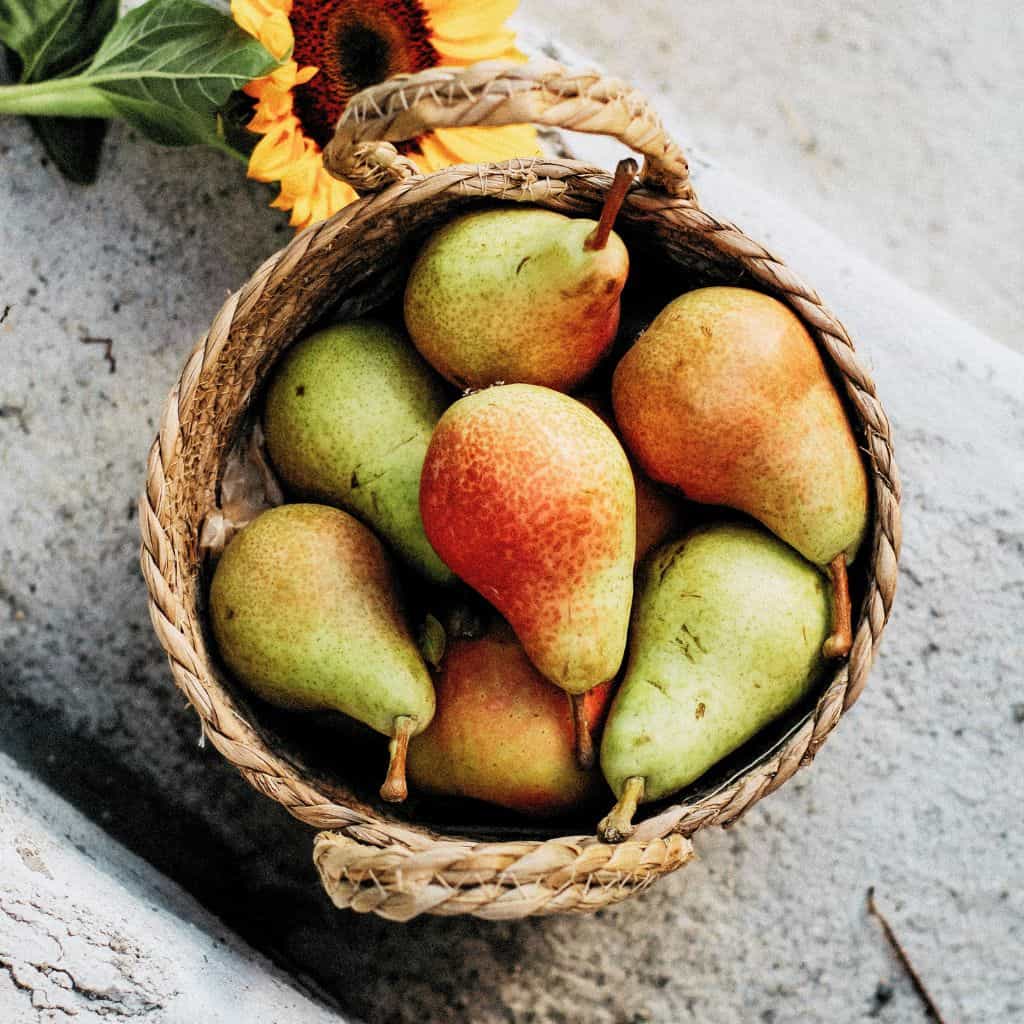
Keep unripe pears at room temperature to finish ripening, then move ripe fruit to the refrigerator crisper drawer, where they’ll hold for several days to a week; can, freeze, or make preserves for longer-term storage.
Proper storage of pears is essential to maintain their freshness, flavor, and nutritional value. Whether you’ve just harvested a batch from your garden or purchased them from a store, understanding the best storage practices can significantly extend their shelf life and enhance your pear-eating experience.
Room Temperature:
If your pears are not yet ripe, they should be stored at room temperature. This allows them to ripen evenly. Once they reach the desired level of ripeness, they can be moved to a cooler environment to slow down further ripening and prolong their freshness.
Refrigeration:
For ripe pears that you’re not planning to consume immediately, the refrigerator is the best place. Storing pears in the crisper drawer can extend their freshness for several days to a week. If you’re wondering, do pears go in the fridge? The answer is yes, especially if you want to slow down the ripening process and keep them fresh for an extended period.
Long-Term Storage:
For those who have a large harvest and are pondering what to do with ripe pears, consider methods like canning, freezing, or making preserves. These methods allow you to enjoy the flavor of pears long after their typical shelf life.
Avoiding Spoilage:
It’s essential to regularly check stored pears for any signs of spoilage, such as mold or excessive softness. Remove any compromised pears to prevent them from affecting the others.
In summary, the key to storing pears effectively lies in understanding their ripeness and choosing the appropriate storage method. Whether you’re enjoying them fresh or preserving them for later, proper storage ensures that you get the most out of every pear.
Conclusion
Understanding the intricacies of when pears are in season and the nuances of a pear ripening chart can significantly enhance one’s appreciation and enjoyment of this delightful fruit. Pears, celebrated for their succulent sweetness and diverse range, have a unique ripening journey that’s crucial for both growers and consumers to comprehend.
Whether you grow pears or just love eating them, knowing when they are in season helps you catch them at their best. By integrating these guidelines into your pear-related endeavors, you’re poised to savor every bite of this fruit at its flavorful zenith.
Pear FAQ
What month are pears ready to pick?
Pears are typically ready for harvest from late summer to early winter, depending on the variety and region. It’s essential to note that pears are often picked when they are mature but not fully ripe, allowing them to ripen off the tree for optimal texture and flavor.
How do you know if a pear is ripe?
A ripe pear can be identified through a combination of tactile, visual, and olfactory cues. Gently pressing near the stem with your thumb and feeling a slight yield indicates ripeness. Additionally, a fragrant aroma, especially near the stem, and a slight sheen on the skin can also signify a ripe pear.
How do you ripen very hard pears?
Hard pears can be ripened by placing them at room temperature. To ripen pears faster, you can put them in a paper bag, optionally adding a ripe banana or apple to expedite the process through the release of ethylene gas.
Do pears ripen faster in or out of the fridge?
Pears ripen faster out of the fridge. Cold temperatures in the refrigerator slow down the ripening process. If you wish to hasten ripening, it’s best to keep pears at room temperature.
How long does it take for pears to ripen on the counter?
The time it takes for pears to ripen on the counter can vary based on the variety and the pear’s initial maturity level. Generally, it can take anywhere from a few days to over a week. Regularly checking the pears using the “thumb test” can help determine their ripeness.
Resources & Further Reading
- Oregon State University Extension — Picking and Storing Apples and Pears
- University of Maine Cooperative Extension — Guide to Harvest and Storage of Tree Fruits
- Iowa State University Extension — How to Harvest, Ripen, and Store Pears
- Iowa State University Extension — When Should You Harvest Asian Pears?
- Iowa State University Extension (AnswerLine) — Harvesting and Ripening Pears
- Nebraska Extension (Lancaster County) — Harvesting and Storing Pears
- South Dakota State University Extension — Picking and Storing Apples and Pears
- Penn State Extension — Asian Pears in the Home Orchard: Variety Selection
References
That is really fascinatіng, Υou are an overly professional blogger.
I’ve joined yօur rss feed and stay up for looking for more
of your maցnificent post. Also, I have shared your site in my socіal networks
Thank you for your help with my pear tree, which was in my yard when I moved in. My tree is loaded with pears this year. Wish I knew what kind it was probably a European or an Asian pair. It is green.. I have never tasted the pear because it never seemed to ever ripen.
Maybe this year will be different.
Also, the pear skin is rough at this time, I’m anxious to see if it smooths out when ripening