Warren Pear
$49.95
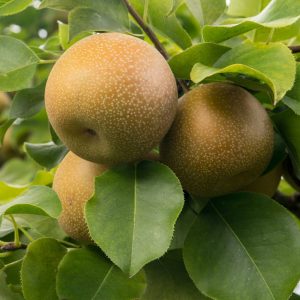
Warren Pear (Pyrus communis) is a Mississippi chance-seedling pear bearing large, pale green fruit with remarkably smooth, buttery, grit-free flesh and a rich, sweet flavor with a hint of spice, outstanding for fresh eating and canning. It grows in USDA hardiness zones 5-9 and AHS heat zones 3-9, needs 500-700 chill hours, and requires cross-pollination with a compatible variety such as Kieffer Pear or Shinko Asian Pear to set fruit.
4-5′ Bare Root Grafted Tree
Rootstock: Pyrus Betulifolia – Standard
A vigorous, well-anchored, drought-tolerant pear seedling rootstock that also handles high-pH soils. The usual choice for Asian pears.
• Support: Freestanding; well anchored.
Can’t be shipped to: AK, HI, MT, OR
In stock
Warren originated as a chance seedling of uncertain parentage discovered by Thomas O. Warren in Hattiesburg, Mississippi, in or around 1976, though the precise discovery story has shifted over time: Warren initially described finding the tree in a friend’s backyard, later attributed it to a chance find near a post office, and finally indicated it may have come from an old Mississippi State University test planting. Current pomological research suggests Warren likely belongs to the same seedling population that produced Magness, a 1968 USDA release from crosses made at the Arlington Farm in Virginia, with some of that population’s seedlings subsequently sent to USDA and university research stations across the South. Mississippi State University evaluated the variety and supported its commercial introduction, with availability expanding through nursery trade in the 1990s and 2000s. Warren’s most significant historical distinction is the near-total absence of stone cells — the gritty sclereid aggregates found in nearly all other pear varieties — which earned it high scores in USDA sensory evaluations. Its Deep South origin also explains its relatively strong tolerance of heat, humidity, and fire blight compared to French dessert varieties, making it an influential recommendation for humid-climate orchardists seeking buttery-textured fresh fruit.
Warren performs across a wide band from Zone 5 through Zone 9, needing about 600 chill hours — a threshold met reliably in most mid-latitude temperate climates but tight at the warm edge of Zone 8b. Choose a site with excellent air drainage; cold pockets delay bloom and extend wet-foliage periods that promote Fabraea leaf spot and pear scab. Well-drained loam or clay loam at pH 6.0–7.0 suits the tree best; waterlogged roots increase susceptibility to Botryosphaeria canker. Water requirements are moderate, but irrigation during fruit development — late spring through summer — directly affects fruit size and juiciness. Avoid high-nitrogen fertilizers that push succulent shoot growth attractive to fire blight bacteria. Standard spacing of 12–20 feet on standard rootstock, or 8–12 feet on quince dwarfing rootstock, keeps canopies open for airflow and spray coverage when needed.
USDA Hardiness Zone: 5-9
AHS Heat Zone: 3-9
Chill Hours: 500-700
Sun Requirements: Full Sun
Soil pH: 6.0-7.0
Soil Type: Loam, clay loam, sandy loam
Soil Drainage: Well-drained
Water Requirements: Medium
Drought Tolerance: Low
Heat Tolerance: Moderate to High
Plant Spacing: 12-20 ft apart
Container Suitability: Not recommended
Warren grows to a height of 12–25 feet with a spread of 12–20 feet, forming an upright to pyramidal crown. The growth rate is moderate — faster than some European pears, but not so vigorous that it demands heavy annual pruning. Spur-bearing habit concentrates fruit production on compact spurs distributed along scaffold branches, so the primary structural goal is establishing four to five well-spaced scaffold limbs in the first three years. Once the frame is set, annual maintenance focuses on removing crossing branches and water sprouts to maintain canopy light penetration. The root system is fibrous and moderately deep, anchoring well on most soils without the same aggressive lateral spread seen in some rootstocks. Dark green summer foliage shifts to red and yellow in autumn, offering modest ornamental value before leaf drop.
Mature Height: 12-25 ft tall
Mature Spread: 12-20 ft wide
Growth Habit: Upright to Pyramidal
Growth Rate: Moderate
Foliage Type: Deciduous
Food Forest Layer: Canopy
Leaf Color: Dark green
Fall Foliage Color: Red, yellow
Thorns?: No
Attracts Wildlife: Bees, butterflies, birds
Life Span: 50-75+ years
Warren carries an important limitation that growers must account for at planting: it produces sterile pollen and cannot pollinate other pear trees. It functions only as a pollen recipient. Bloom falls in the mid-to-late April window in temperate climates, overlapping with mid-season European pear varieties. Bosc Pear and Bartlett Pear are compatible pollinators with overlapping bloom and viable pollen. The pollinator tree should be planted within 50 feet, with 30 feet or closer being optimal for bee movement. Bees are the primary pollination vector; maintaining diverse flowering groundcover underneath the orchard improves pollinator visitation rates.
Bloom Season: Late
Bloom Window: Mid Apr - Late Apr
Pollination Requirements: Cross-pollination required; plant a second European pear nearby. Reported to set little viable pollen, so do not rely on it as the pollinizer for other pears
Pollination Mechanism: Insect (bee)
Flower Color: White
Warren produces large fruit, typically 2.75–3.5 inches in diameter, with pale green skin that occasionally develops a faint red blush on the sun-exposed side. The flavor profile centers on rich sweetness with mild acidity and a subtle spice note, with Brix values commonly reported in the 13–16 range in favorable seasons. The absence of grit cells — stone cell aggregates that give lesser pears a gritty bite — is the variety's signature quality trait. Harvest runs from late August through late September in temperate climates; fruit must be picked firm and allowed to ripen off the tree at cool room temperature, typically 7–14 days. Cold storage at 32–35°F extends holding life to 2–3 months. Warren excels at fresh eating, poaching, canning, and pear preserves; its buttery flesh breaks down smoothly in sauces. Yield at maturity averages 50 or more pounds per year per tree.
Ripening Season: Mid
Harvest Window: Late Aug - Late Sep
Fruit Size: 2.75-3.5 inch
Flavor: Rich, sweet, buttery with hint of spice; no grit; very juicy
Fruit Color: Pale green, sometimes red-blushed
Fruit Texture: Smooth, buttery, no grit cells
Bearing Habit: Spur-bearing
Years to Bear: 3-6 years
Storage Life: 2-3 months
Culinary Uses: Fresh eating, canning, poaching, sauces, preserves, perry (pear cider)
Warren's highly resistant rating against fire blight (Erwinia amylovora) stands as its greatest asset for organic and low-spray programs in humid-summer climates where the disease is most feared. Maintain pruning hygiene — disinfecting cuts with 10% bleach or 70% alcohol during blossom and shoot blight events — to prevent spread. Fabraea leaf spot (Diplocarpon mespili) and pear scab (Venturia pirina) both rate as moderately susceptible; manage both by raking fallen leaves each autumn, avoiding overhead irrigation, and thinning the canopy to improve airflow. Botryosphaeria canker (Botryosphaeria obtusa) enters through wounds and stressed tissue; keep trees well-watered during drought and prune cleanly, removing cankered wood several inches below discoloration. Pear psylla (Cacopsylla pyricola) causes moderate susceptibility; a honeydew/sooty mold complex follows heavy infestations. Kaolin clay applied before psylla populations peak provides a physical barrier and reduces colonization. Codling moth (Cydia pomonella) is moderately susceptible; pheromone traps combined with Spinosad at egg hatch reduce fruit entry. Spotted wing drosophila (Drosophila suzukii) poses a susceptible-level risk as fruit softens; harvest promptly and use red sphere traps baited with vinegar and sugar near harvest. Pear blister mite (Eriophyes pyri) is moderately susceptible; dormant-season horticultural oil before green tip suppresses overwintering populations.
Fire Blight: Very Resistant
Fabraea Leaf Spot: Moderately Susceptible
Pear Scab: Moderately Susceptible
Pear Psylla: Moderately Susceptible
Botryosphaeria Canker: Moderately Susceptible
Pear Psylla: Moderately Susceptible
Codling Moth: Moderately Susceptible
Spotted Wing Drosophila: Susceptible
Pear Blister Mite: Moderately Susceptible
- Plant two varieties: Warren produces sterile pollen — it cannot pollinate itself or other trees. A second mid-bloom variety (Bartlett, Bosc, or Moonglow) must be within 50 feet for fruit set.
- Harvest firm, ripen off-tree: Pick when fruit separates with gentle upward pressure, then ripen indoors at room temperature for 7–14 days for peak flavor. Fruit picked fully soft will be mealy.
- Fabraea and scab management: Both are moderately susceptible — rake and compost or destroy all fallen leaf litter each autumn to break the overwintering cycle of both pathogens.
- SWD harvest window: Spotted wing drosophila risk rises sharply as fruit softens. Check fruit daily in the two weeks before your expected harvest date and pick at first maturity signs.
- Nitrogen restraint: Avoid high-nitrogen fertilizer, especially in spring — excessive vegetative growth increases fire blight entry points even in a resistant variety.
We ship in late winter or early spring based on your USDA hardiness zone.
We strive to ship orders on the scheduled dates listed in the table below. However, please note that the actual shipping date may be subject to change due to factors like weather conditions and order volume.
The specific date for shipping your order will be determined according to your zipcode at the time of checkout.
Our plants are shipped bare root, packed in moist sawdust, and securely wrapped in plastic to prevent the roots from drying out. We use USPS Ground Advantage for shipping, ensuring that your plants typically arrive within 2-5 days after packaging.
In case you're unable to plant the trees immediately upon arrival, we recommend soaking them in water for a few hours and temporarily heeling them in. Ideally, they should be planted within three days of receipt for optimal health.
See our full shipping policy and map here
| Zone | Ship Date |
|---|---|
| 11 - 8b | March 1st, 2027 |
| 8a - 7b | March 8th, 2027 |
| 7a | March 15th, 2027 |
| 6b | March 22nd, 2027 |
| 6a | March 29th, 2027 |
| 5b - 5a | April 12th, 2027 |
| 4b - 4a | April 26th, 2027 |
| 3b - 1a | May 3rd, 2027 |
Our 365-Day Plant Guarantee: We ensure that our plants are delivered to you alive and healthy. If your plant does not survive its first year, you're eligible for store credit under these conditions:
- Your location falls within the appropriate USDA hardiness zone for the plant variety (refer to our hardiness zone map).
- You maintain the roots' moisture and plant within three days of delivery, following the instructions in our Planting Guide.
If you're concerned about your plant's health, please consult our guide, How to Tell if Your Tree is Dead or Dormant. Remember, our plants are shipped in a dormant state and may leaf out at different times based on their species. To check for plant vital
Related products

Shinko Asian Pear
Checking fitRated 5.00 out of 5
Elberta Peach
Checking fitRated 5.00 out of 5
Bosc Pear
Checking fit
Honeycrisp Apple
Rated 5.00 out of 5$49.95 Select Rootstock This product has multiple variants. The options may be chosen on the product pageChecking fit


Reviews
There are no reviews yet.