Shinko Asian Pear
$49.95
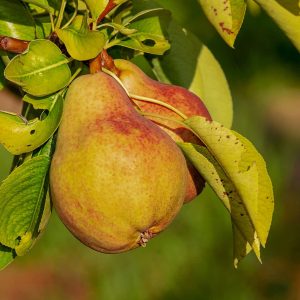
Shinko Asian Pear (Pyrus pyrifolia ‘Shinko’) is a large-fruited Japanese pear bearing golden-bronze, russet-overlaid fruit with dense, apple-crisp ivory flesh delivering rich, juicy flavor with butterscotch, citrus, and spice notes. It grows in USDA hardiness zones 5-9 and AHS heat zones 4-9, needs 400-550 chill hours, and benefits significantly from cross-pollination with compatible varieties such as Bartlett Pear or Summercrisp Pear to maximize yields.
4-5′ Bare Root Grafted Tree
Rootstock: OHxF333 – Semi Dwarf
About two-thirds of standard size, from the Old Home x Farmingdale program bred specifically for fire blight resistance, the disease that ends most pear trees.
• Support: Freestanding; well anchored.
Can’t be shipped to: AK, HI, MT, OR
In stock
Shinko is a Japanese Pyrus pyrifolia cultivar released in 1941 from the Niigata prefecture breeding program, one of two parallel pear breeding programs initiated in Japan (alongside the Okayama program) during the 1930s and 1940s. Its parentage was originally described as an open-pollinated seedling of Nijisseiki, but later research by Sawamura et al. (2008) clarified the cross as Nijisseiki x Amanogawa. The name Shinko translates roughly as “new light.” Among Pyrus pyrifolia cultivars, Shinko stands out for both large fruit size—consistently heavier than Hosui or 20th Century—and its status as one of the few Asian pear varieties with documented field tolerance to fire blight (Erwinia amylovora), a trait that has driven its adoption in humid-climate orchard regions. It earned strong ratings in Pacific Northwest and mid-Atlantic extension trials during the 1980s and is regarded as an improvement over Nijisseiki in both size and disease tolerance, though it stores poorly after harvest compared to cultivars like Chojuro.
Shinko settles into zones 5–9 on roughly 450 chill hours — a mid-range requirement suiting growers from the mid-Atlantic through the Pacific Northwest and into the Midwest's warmer fringe. Full sun (a minimum of six direct hours) is essential: shading suppresses sugar accumulation and weakens the canopy's ability to dry after humid summer rains, setting up conditions favorable to fungal disease. A well-drained soil in the pH 6.0–7.0 range supports steady growth; Shinko tolerates clay and sandy loam but struggles where water sits at the root zone after rain, increasing Phytophthora crown rot risk. Plan on about 15–20 feet of spacing to allow the canopy to develop its upright-to-rounded form without crowding. During the first two or three seasons, consistent moisture — roughly an inch per week — anchors establishment, after which the tree handles moderate dry spells. Thin fruit clusters to one or two per spur after natural drop in early summer; Shinko sets prolifically, and aggressive thinning directly translates to the large fruit size this variety is known for.
USDA Hardiness Zone: 5-9
AHS Heat Zone: 4-9
Chill Hours: 400-550
Sun Requirements: Full Sun (6+ hours direct sunlight)
Soil pH: 6.0-7.0
Soil Type: Clay, loam, or sandy loam; adaptable to heavy and light soils
Soil Drainage: Well-drained
Water Requirements: Medium; 1 inch per week over root zone; regular irrigation especially during establishment
Plant Spacing: 15-20 ft apart
How to Prune: Prune in late winter or early spring before bud break; thin canopy to improve air circulation and light penetration; thin fruit clusters after natural drop, removing 40-50% of fruit to improve size and quality
Shinko builds an upright-to-rounded canopy that reaches 12–20 feet tall and spreads 6–16 feet across, depending on rootstock selection and pruning intensity. A central taproot anchors the tree while spreading lateral scaffold roots extend into the top two feet of soil, so avoiding deep cultivation within the drip line protects feeder roots. The upright juvenile habit transitions toward a more spreading silhouette as spur systems develop with age, which naturally opens the canopy interior to light — a structural benefit that reduces the need for aggressive corrective pruning. Training to a modified central leader in the first three to five years rewards long-term management: it gives each scaffold limb space to develop productive spur wood while keeping the center accessible for thinning and harvest. Rapid growth is typical in the early years, particularly on vigorous Pyrus calleryana or OHxF rootstocks, so summer pruning of overly long water shoots helps maintain shape between the primary dormant-season cuts. Deciduous foliage emerges glossy green and produces warm red-orange fall color in cooler climates, adding ornamental interest beyond the edible harvest.
Mature Height: 12-20 ft tall
Mature Spread: 6-16 ft wide
Growth Habit: Upright to rounded; naturally well-formed
Growth Rate: Fast
Foliage Type: Deciduous
Food Forest Layer: Canopy
Attracts Wildlife: Pollinators (bees), songbirds, small mammals
Life Span: Perennial (long-lived tree, 50+ years)
Shinko blooms in early to mid-April, overlapping with most other Pyrus pyrifolia cultivars in the same zone. Although it carries some degree of self-fruitfulness, relying on it to set a full crop without a cross-pollinizer consistently underperforms — growers report markedly heavier fruit set and larger individual fruit when a second compatible variety blooms nearby. Shinseiki Asian Pear and Peggy Asian Pear both bloom in the same early-to-mid-April window and serve as effective cross-pollinizers; either one planted within 50 feet (or a single tree if grafted with a second variety) provides adequate pollen transfer by foraging bees. Bee activity is the primary transfer mechanism; avoid broad-spectrum insecticide applications during the two-week bloom period to protect the pollinator populations that drive fruit set.
Bloom Season: Mid
Bloom Window: Mid Apr
Pollination Requirements: Requires cross-pollination; partially self-fruitful but produces significantly heavier crops with a second compatible Asian pear variety
Pollination Mechanism: Insect-pollinated (bees)
Flower Color: White
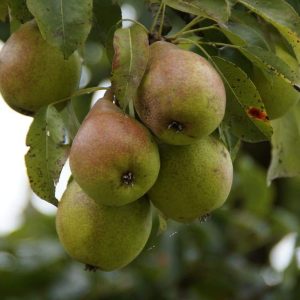
At 3–4 inches in diameter and 14–20 oz per fruit, Shinko stands among the largest-fruited Asian pears in home and commercial production. The skin is golden-bronze overlaid with a characteristic russet netting and small pale lenticels; the flesh is ivory-white, dense, and notably crisp — closer to a firm apple in snap than to a soft buttery European pear. Flavor is rich and multi-layered: very high sugar balanced by modest acidity, with pronounced notes of butterscotch and subtle citrus-spice aromatics that distinguish it from the milder, more neutral 20th Century or Shinseiki. Juice content is high, making Shinko well-suited to fresh eating, fruit salads, and Asian-style preparations where the crisp texture and flavor hold up to dressing or heat. The fruit also poaches and preserves well. Harvest runs from late August through mid-September, and properly cooled fruit (32°F with high humidity) stores two to three months without significant quality loss — a meaningful advantage over shorter-storing Asian pear varieties. Yield is consistently high at 50 or more pounds per mature tree in productive years.
Ripening Season: Mid
Harvest Window: Late Aug - Mid Sep
Fruit Size: 3-4 inch
Fruit Weight: 14-20 oz
Flavor: Very sweet and juicy; rich flavor with notes of butterscotch, citrus, and spice; crisp and refreshing
Fruit Color: Golden-bronze with russet overlay; ivory to white flesh
Fruit Texture: Dense, crisp, and very juicy; granular with crunchy consistency similar to an apple
Fruit Skin: Semi-thick, firm, lightly textured with russet; golden-bronze with small pale yellow lenticels
Bearing Habit: Annual bearer; extremely productive; consistent heavy crops
Years to Bear: 2-3 years
Yield: 50+ per tree
Storage Life: 2-3 months at 32°F
Culinary Uses: Fresh eating; salads; desserts; Asian cooking; preserves and jams; poaching; juicing
Shinko's most commercially significant resistance traits are its solid tolerance of fire blight (Erwinia amylovora) and pear scab (Venturia nashicola), both ranking resistant. Growers in humid climates can often manage both through cultural practices — prune out blighted wood with sterilized tools, remove infected material from the orchard, and avoid heavy nitrogen that drives the succulent growth fire blight colonizes. Fabraea leaf spot (Fabraea maculata) sits at moderately resistant, rarely reaching damaging levels; rake fallen leaves at season end to reduce overwintering inoculum. Pear trellis rust (Gymnosporangium sabinae) and crown rot (Phytophthora spp.) both fall in the moderately susceptible range. For trellis rust, remove nearby Juniperus hosts where feasible and apply copper sprays at bud swell in high-pressure seasons. Crown rot is best managed at planting — avoid low spots, keep graft unions above the soil line. On the pest side, codling moth (Cydia pomonella), pear psylla (Cacopsylla pyricola), plum curculio (Conotrachelus nenuphar), and spotted wing drosophila (Drosophila suzukii) are all moderately susceptible. Kaolin clay from petal fall through early fruitlet development deters codling moth and curculio; insecticidal soap or neem oil addresses pear psylla nymphs before populations build.
Fire Blight: Resistant
Pear Scab: Resistant
Fabraea Leaf Spot: Moderately Resistant
Pear Trellis Rust: Moderately Susceptible
Crown Rot: Moderately Susceptible
Codling Moth: Moderately Susceptible
Pear Psylla: Moderately Susceptible
Plum Curculio: Moderately Susceptible
Spotted Wing Drosophila: Moderately Susceptible
- Thin hard to unlock size: Shinko's large-fruit potential is only realized through aggressive thinning — remove all but one fruitlet per cluster after June drop, spacing retained fruit at least 6 inches apart on each spur. Trees left unthinned produce dozens of undersized fruit.
- Pair with a pollinizer of matching bloom timing: Plant Hosui, Chojuro, or Shinseiki within 50 feet; Shinko's partial self-fertility rarely delivers a full set without a cross-pollinizer in the same early-to-mid April window.
- Guard drainage to reduce crown rot risk: Avoid planting in low-lying or compacted sites, keep the graft union above soil level, and pull mulch back 6 inches from the trunk to limit Phytophthora pressure.
- Harvest by firmness, not color: Shinko's golden-bronze russet develops weeks before internal sugar and texture peak. Use a squeeze test — fruit is ready at 12–14 lbs of pressure, not when color deepens.
- Apply kaolin clay for codling moth and curculio: Start kaolin applications at petal fall and reapply after rain through the first 6–8 weeks of fruit development for protection without synthetic inputs.
We ship in late winter or early spring based on your USDA hardiness zone.
We strive to ship orders on the scheduled dates listed in the table below. However, please note that the actual shipping date may be subject to change due to factors like weather conditions and order volume.
The specific date for shipping your order will be determined according to your zipcode at the time of checkout.
Our plants are shipped bare root, packed in moist sawdust, and securely wrapped in plastic to prevent the roots from drying out. We use USPS Ground Advantage for shipping, ensuring that your plants typically arrive within 2-5 days after packaging.
In case you're unable to plant the trees immediately upon arrival, we recommend soaking them in water for a few hours and temporarily heeling them in. Ideally, they should be planted within three days of receipt for optimal health.
See our full shipping policy and map here
| Zone | Ship Date |
|---|---|
| 11 - 8b | March 1st, 2027 |
| 8a - 7b | March 8th, 2027 |
| 7a | March 15th, 2027 |
| 6b | March 22nd, 2027 |
| 6a | March 29th, 2027 |
| 5b - 5a | April 12th, 2027 |
| 4b - 4a | April 26th, 2027 |
| 3b - 1a | May 3rd, 2027 |
Our 365-Day Plant Guarantee: We ensure that our plants are delivered to you alive and healthy. If your plant does not survive its first year, you're eligible for store credit under these conditions:
- Your location falls within the appropriate USDA hardiness zone for the plant variety (refer to our hardiness zone map).
- You maintain the roots' moisture and plant within three days of delivery, following the instructions in our Planting Guide.
If you're concerned about your plant's health, please consult our guide, How to Tell if Your Tree is Dead or Dormant. Remember, our plants are shipped in a dormant state and may leaf out at different times based on their species. To check for plant vital
2 reviews for Shinko Asian Pear
Related products

Ayers Pear
Checking fit
Summercrisp Pear
Checking fitRated 5.00 out of 5
LeConte Pear
Checking fit
Kieffer Pear
Checking fitRated 5.00 out of 5


Kimberlie N. (verified owner) –
Looks like a healthy plant.
Anonymous (verified owner) –
Nice size both height and diameter.