Shinseiki Asian Pear
$49.95
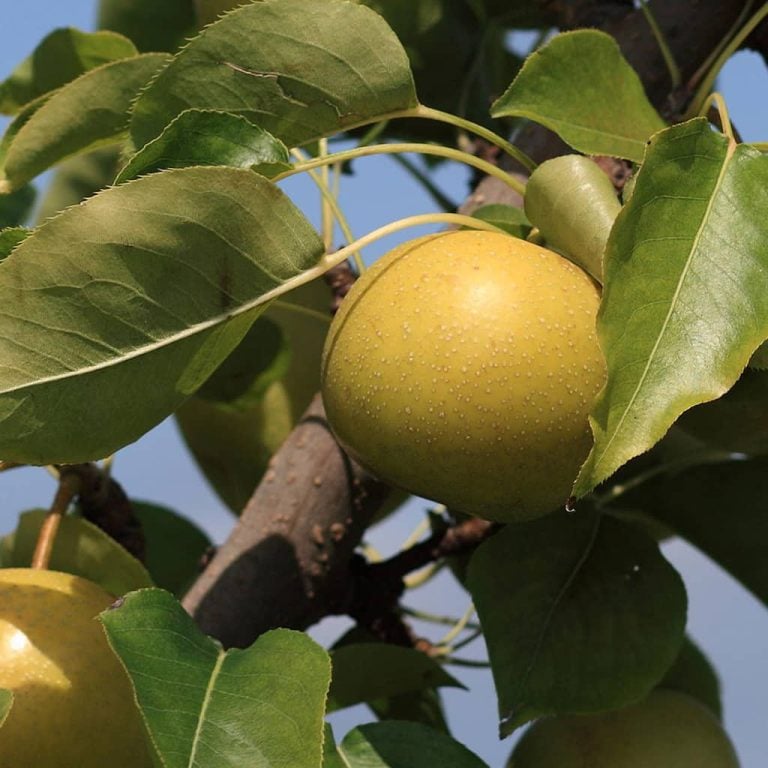
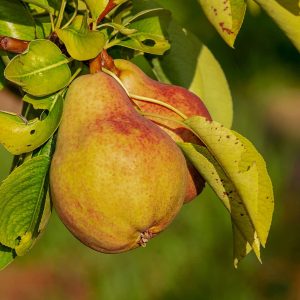
Shinseiki Asian Pear (also known as New Century Asian Pear; Pyrus pyrifolia ‘Shinseiki’) is a Japanese Asian pear released in 1945, bearing smooth bright yellow, largely russet-free 2.5–3.5 inch fruit with mild spiced sweetness and crisp, fine-grained, high-juice flesh. It grows in USDA hardiness zones 5-9 and AHS heat zones 4-9, needs 300-400 chill hours, and benefits significantly from cross-pollination with compatible varieties such as Bartlett Pear or Summercrisp Pear to maximize yields.
4-5′ Bare Root Grafted Tree
Rootstock: Pyrus calleryana – Standard
A vigorous pear seedling rootstock for a full-size tree, tolerant of heat and wet ground and resistant to fire blight. The standard choice for European and hybrid pears.
• Support: Freestanding; well anchored.
Can’t be shipped to: AK, HI, MT, OR
In stock
Shinseiki was released in 1945 from the Okayama prefecture breeding program in Japan, one of two regional programs—alongside Niigata—that drove mid-twentieth-century Japanese pear development. Its parentage is documented as a cross between Nijisseiki (20th Century) and Chojuro, inheriting Nijisseiki’s smooth yellow skin and Chojuro’s vigorous tree structure. The name translates from Japanese as “New Century.” Shinseiki entered U.S. extension trial programs in the postwar decades and gained commercial traction in the Pacific Northwest before spreading into home orchards across the Eastern and Southern United States as low-chill pear interest grew. It is distinguished from nearly all other Asian pears by a near-total absence of russet—the brown netting characteristic of cultivars like Chojuro or Hosui—yielding one of the cleanest, most uniform yellow presentations in the category. Its dual lineage through two of the most important pre-war Japanese cultivars makes Shinseiki a historically significant variety in the development of modern Pyrus pyrifolia breeding.
With a chill requirement in the 300–400 hour range, Shinseiki fits comfortably into zones 5 through 9 and suits growers in both standard temperate climates and mild-winter areas where European pears often fail to break dormancy reliably. Site selection should favor freely draining loam or clay loam soils; standing water during dormancy predisposes roots to Phytophthora and competes with fire blight management by weakening tree vigor. Soil pH between 6.0 and 7.0 keeps iron and manganese available, both important for shoot development. Water needs are moderate but not drought-tolerant — consistent moisture during the fruit-sizing window from late spring through July directly affects final fruit weight and prevents premature drop. In humid summer climates, spacing trees to allow air circulation through the canopy reduces foliage moisture and limits scab and leaf spot incidence. Fertilize conservatively: excess nitrogen drives the vegetative growth that makes young shoots maximally susceptible to fire blight.
USDA Hardiness Zone: 5-9
AHS Heat Zone: 4-9
Chill Hours: 300-400
Sun Requirements: Full Sun
Soil pH: 6.0-7.0
Soil Type: Loam, clay loam, sandy loam; well-drained
Soil Drainage: Well-drained
Water Requirements: Medium; regular irrigation during establishment and dry spells
Drought Tolerance: Low to Moderate
Heat Tolerance: Moderate to High
Plant Spacing: 15-20 ft apart
How to Prune: Prune during dormancy in late winter (February-March) to maintain an open center or modified central leader structure. Remove dead, diseased, and crossing branches. Thin flower clusters in spring to one fruitlet every 6 inches to prevent over-cropping and improve fruit size.
Shinseiki grows at a rapid rate, reaching 8–15 feet tall and 6–12 feet wide in typical orchard conditions, with the final size depending heavily on rootstock selection — standard seedling rootstock produces the larger end of that range, while semi-dwarf options keep trees more accessible for hand-thinning and harvest. The growth habit is upright to rounded with a dense branch structure, which means training at establishment is important: central leader or modified central leader both work, but lateral scaffolds need to be established early to prevent the dense interior from shading fruit spurs. Leaves emerge with a distinctive coppery-bronze cast before maturing to glossy green, and fall color progresses into red and burgundy. The root system combines a moderate taproot with lateral scaffold roots, making the tree reasonably stable in wind but sensitive to waterlogged subsoils. Spring bloom brings clusters of white fragrant flowers that attract bees reliably.
Mature Height: 8-15 ft tall
Mature Spread: 6-12 ft wide
Growth Habit: Upright to rounded, dense, multi-stemmed deciduous tree
Growth Rate: Fast
Foliage Type: Deciduous
Food Forest Layer: Canopy, Sub-canopy
Leaf Color: Green (emerging coppery-bronze, maturing to glossy green)
Fall Foliage Color: Red to burgundy
Attracts Wildlife: Bees, butterflies, birds
Life Span: 50+ years
Shinseiki blooms in early to mid-April, overlapping with most other Asian pear cultivars and with early-blooming European pears like Bartlett. The variety is partially self-fertile — isolated trees will produce some fruit — but cross-pollination with a compatible Asian pear cultivar increases fruit set substantially and improves the uniformity of fruit sizing. Chojuro, Hosui, and 20th Century (Nijisseiki) are reliable pollen partners given their overlapping bloom windows. European pears can also serve as cross-pollinators where Asian pear diversity is limited; Bartlett in particular is noted as a compatible companion. Spacing pollinators within 50 feet ensures adequate bee movement between trees during the brief bloom window. Given that fire blight entry often occurs through open blossoms, managing bloom-time irrigation and avoiding nitrogen flushes that push growth during bloom are practical steps that also improve set.
Bloom Season: Mid
Bloom Window: Mid Apr
Pollination Requirements: Partially self-fertile; cross-pollination with another Asian pear cultivar improves yield significantly. Plant a compatible Asian pear within 50 feet for best fruit set.
Pollination Mechanism: Insect (bee) pollinated
Flower Color: White
Shinseiki produces round to oblate fruit in the 2.5–3.5 inch range with bright, smooth yellow skin and minimal russet — a trait that stands out visually from the bronze or tan-skinned Asian pears most common in commercial markets. The flesh is creamy white, fine-grained, and notably crisp with high juice content. Flavor runs mild-sweet with a faint spice note and modest acidity, which makes it accessible to palates unfamiliar with Asian pears. Brix values in well-managed plantings typically fall in the 12–14 range at harvest. The fruit ripens in late July through late August, at the front end of the Asian pear season. Storage life is one of the variety's practical strengths: held at 32°F with high humidity, fruit keeps for 3–5 months, extending its market window well into winter. Culinary applications include fresh eating, fruit salads, grilling, dehydrating, and preserves; the firm texture holds shape well in cooked preparations.
Ripening Season: Very Early
Harvest Window: Late Jul - Late Aug
Fruit Size: 2.5-3.5 inch
Flavor: Mild, sweet with a hint of spice; crisp, juicy, and refreshing with creamy white flesh
Fruit Color: Bright yellow skin with little to no russet; creamy white flesh
Fruit Texture: Crisp, firm, fine-grained with high juice content
Fruit Skin: Thin, smooth yellow skin with minimal to no russet
Bearing Habit: Heavy and regular annual bearer; tends to over-produce requiring fruit thinning
Years to Bear: 2-4 years
Storage Life: 3-5 months at 32°F
Culinary Uses: Fresh eating, fruit salads, Asian cooking, grilling, drying/dehydrating, preserves
Fire blight (Erwinia amylovora) is moderately susceptible in Shinseiki, meaning growers in humid summer climates should build a proactive program around it. Prune during dry weather in dormancy, cutting at least 12 inches below any blighted wood and sterilizing tools between cuts. Avoid heavy nitrogen applications that push succulent shoot growth during bloom, when infection risk peaks. Pear scab (Venturia nashicola) is also moderately susceptible; vigilance in wet spring conditions is warranted. Canopy thinning and spacing for airflow reduce leaf wetness duration. Pseudomonas shoot blight (Pseudomonas syringae pv. syringae) shows moderate resistance. Fabraea leaf spot (Fabraea maculata) and pear rust (Gymnosporangium fuscum) are susceptible — collect and destroy fallen leaves in autumn to break the overwintering cycle for leaf spot; for rust, identify and remove Eastern red cedar (Gymnosporangium's alternate host) within 1,000 feet where feasible. Codling moth (Cydia pomonella) and pear aphid (Dysaphis pyri) are susceptible; monitor with pheromone traps for codling moth and use kaolin clay applications during fruit development as a physical barrier. Pear psylla (Cacopsylla pyricola) is moderately susceptible — reflective mulch reduces colonization, and dormant oil applied before bud break suppresses overwintering adults. Pear blister mite (Eriophyes pyri) is susceptible; dormant-season sulfur applications are OMRI-listed and effective.
Fire Blight: Moderately Susceptible
Pear Scab: Moderately Susceptible
Pseudomonas Shoot Blight: Moderately Resistant
Fabraea Leaf Spot: Susceptible
Pear Rust: Susceptible
Codling Moth: Susceptible
Pear Psylla: Moderately Susceptible
Pear Aphid: Susceptible
Pear Blister Mite: Susceptible
- Thin aggressively: Shinseiki is a heavy bearer that will over-crop without thinning. Remove fruitlets in spring to one per cluster, spaced roughly 6 inches apart — this prevents biennial bearing and pushes fruit into the 2.5-inch-plus size class.
- Manage nitrogen carefully: This variety is susceptible to fire blight, and excess nitrogen drives the succulent shoot growth the pathogen colonizes. Apply fertilizer based on soil test results; skip it in years of strong vegetative growth.
- Apply dormant oil before bud break: Pear psylla and pear blister mite both overwinter on bark and respond to a well-timed dormant oil application — one pass reduces pressure from two problematic pests simultaneously.
- Remove leaf litter in fall: Fabraea leaf spot and pear scab overwinter in fallen leaves. Raking and disposing of leaf debris in autumn meaningfully reduces inoculum for the following spring.
- Plant a pollinator partner: Yield and fruit uniformity improve noticeably with a second Asian pear in bloom at the same time. Chojuro or Hosui are reliable companions with matching bloom windows.
We ship in late winter or early spring based on your USDA hardiness zone.
We strive to ship orders on the scheduled dates listed in the table below. However, please note that the actual shipping date may be subject to change due to factors like weather conditions and order volume.
The specific date for shipping your order will be determined according to your zipcode at the time of checkout.
Our plants are shipped bare root, packed in moist sawdust, and securely wrapped in plastic to prevent the roots from drying out. We use USPS Ground Advantage for shipping, ensuring that your plants typically arrive within 2-5 days after packaging.
In case you're unable to plant the trees immediately upon arrival, we recommend soaking them in water for a few hours and temporarily heeling them in. Ideally, they should be planted within three days of receipt for optimal health.
See our full shipping policy and map here
| Zone | Ship Date |
|---|---|
| 11 - 8b | March 1st, 2027 |
| 8a - 7b | March 8th, 2027 |
| 7a | March 15th, 2027 |
| 6b | March 22nd, 2027 |
| 6a | March 29th, 2027 |
| 5b - 5a | April 12th, 2027 |
| 4b - 4a | April 26th, 2027 |
| 3b - 1a | May 3rd, 2027 |
Our 365-Day Plant Guarantee: We ensure that our plants are delivered to you alive and healthy. If your plant does not survive its first year, you're eligible for store credit under these conditions:
- Your location falls within the appropriate USDA hardiness zone for the plant variety (refer to our hardiness zone map).
- You maintain the roots' moisture and plant within three days of delivery, following the instructions in our Planting Guide.
If you're concerned about your plant's health, please consult our guide, How to Tell if Your Tree is Dead or Dormant. Remember, our plants are shipped in a dormant state and may leaf out at different times based on their species. To check for plant vital
Related products

Common Apple
Checking fit
Common Pear
Checking fit
Hosui Asian Pear
Checking fitRated 5.00 out of 5
Ayers Pear
Checking fit


Reviews
There are no reviews yet.