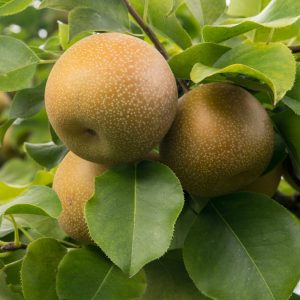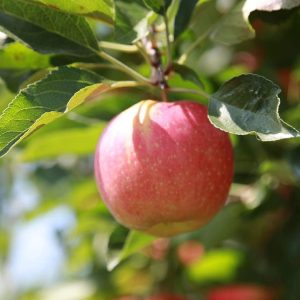
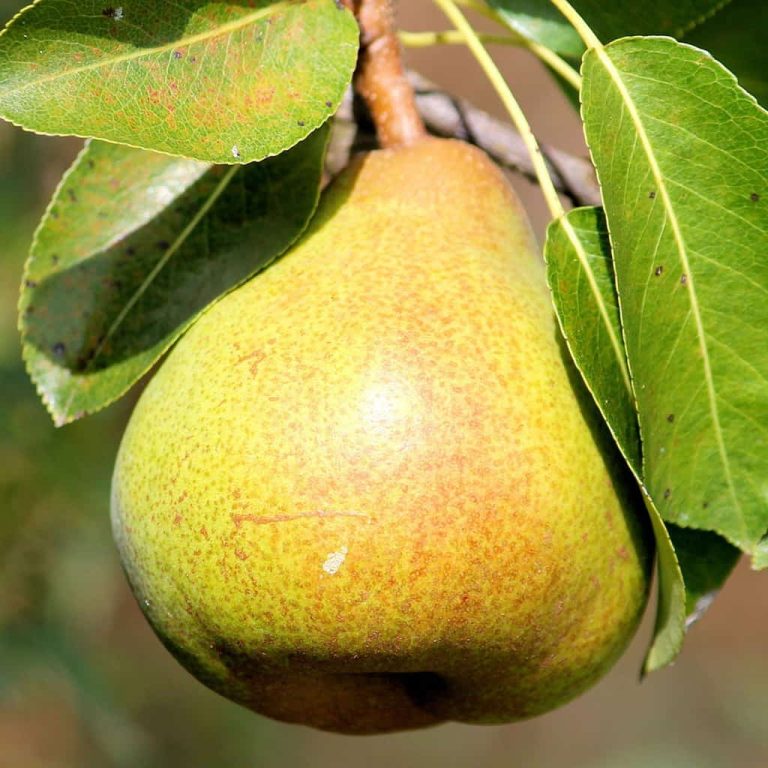
Pineapple Pear
$49.95
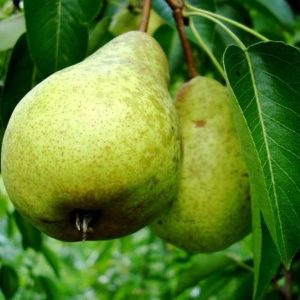
Pineapple Pear (Pyrus communis ‘Pineapple’) is an old American heirloom pear of uncertain southern origin, bearing crisp, juicy, yellow-skinned fruit with a distinctive tropical pineapple-like sweetness suited to fresh eating and canning. It grows in USDA hardiness zones 5-9 and AHS heat zones 7-9, needs 150-250 chill hours, and is self-fertile, fruiting reliably without a pollinator partner.
4-5′ Bare Root Grafted Tree
Rootstock: Pyrus Betulifolia – Standard
A vigorous, well-anchored, drought-tolerant pear seedling rootstock that also handles high-pH soils. The usual choice for Asian pears.
• Support: Freestanding; well anchored.
Can’t be shipped to: AK, HI, MT, OR
In stock
Pineapple Pear is an old American heirloom of uncertain origin, generally attributed to the southern United States or lower Midwest, where its low chilling requirement gave it a natural advantage in climates too warm for standard European varieties. Most authoritative horticultural sources treat it as a Pyrus communis × P. pyrifolia hybrid rather than a pure European selection, which would account for its early summer ripening, crunchy-to-moderately-firm texture, and reduced chilling need estimated at 150 to 250 hours. No documented controlled cross has been confirmed; the variety is consistently described as an open-pollinated seedling selection, most likely from the 19th century. The cultivar name reflects the fruit’s distinctive aromatic flavor — a sweet, pineapple-like finish not typical of mainstream European pears — rather than any botanical relationship to the tropical plant. Specific breeder, institution, or introduction date are not established in the available pomological record, and no patent was ever filed. The variety persisted in Southern dooryard orchards for generations before gaining any broader nursery distribution, sustained by its precocity, heat tolerance, and the flavor profile that set it apart from European standards of the era.
At 150–200 chill hours, Pineapple Pear sits at the low end of European pear requirements, making it viable in the warmest zones where most Pyrus communis cultivars fail to set fruit consistently. Full sun — at least six to eight hours daily — drives adequate fruit sugars; shade increases disease pressure and reduces the tropical flavor concentration. Soil pH between 6.0 and 7.0 supports nutrient availability; acidic soils below 5.8 limit calcium uptake and can worsen breakdown near the core. Well-drained loam or clay loam is preferred, though this variety shows reasonable tolerance of heavy clay as long as the planting site does not hold standing water through dormancy. Water evenly through fruit development, especially the six weeks following petal fall — irregular moisture during that window promotes irregular fruit size. Space trees 20 feet apart to maintain airflow, which reduces fungal pressure in humid climates.
USDA Hardiness Zone: 5-9
AHS Heat Zone: 7-9
Chill Hours: 150-250
Sun Requirements: Full Sun
Soil pH: 6.0-7.0
Soil Type: Loam, clay loam, sandy loam; tolerates heavy clay
Soil Drainage: Well-drained; tolerates seasonal wetness
Water Requirements: Medium; regular moisture, especially in first year
Drought Tolerance: Moderate
Plant Spacing: 20 ft apart
Container Suitability: Not Recommended
How to Prune: Central leader training; annual pruning to open canopy, remove crossing/dead branches, maintain spur productivity; prune in late winter while dormant
Pineapple Pear develops a naturally upright central-leader form, reaching 18–25 feet tall with a spread of 12–20 feet at maturity. Growth rate is medium to fast in the establishment years, slowing as the tree shifts energy into fruit production by years 2–3. The upright architecture suits central-leader training, where annual dormant-season pruning opens the canopy to light and air while preserving the productive spurs that carry the crop year after year. The deep taproot with lateral fibrous scaffold roots anchors the tree firmly and extends well beyond the drip line; avoid disturbing the soil in that zone once the tree is established. Fall foliage turns yellow to gold before leaf drop. Deciduous habit means the tree is fully bare through winter, which makes dormant-season pest and disease monitoring straightforward. No thorns are present, simplifying pruning and harvest operations.
Mature Height: 18-25 ft tall
Mature Spread: 12-20 ft wide
Growth Habit: Upright, Central Leader
Growth Rate: Moderate to Fast
Foliage Type: Deciduous
Food Forest Layer: Canopy
Leaf Color: Green
Fall Foliage Color: Yellow, Gold
Thorns?: No
Attracts Wildlife: Bees, Butterflies, Songbirds
Life Span: 50-75+ years
Bloom arrives very early for a European pear — Late February through Late March — which places flowers ahead of most orchard traffic and ahead of reliable pollinator flight in cold springs. Pineapple Pear is self-fertile and will set a usable crop alone, but yields improve measurably with a compatible cross-pollinator blooming in the same window. Any standard European pear (Pyrus communis) that blooms concurrently — Moonglow, Magness, Orient, or Kieffer are commonly available and bloom-compatible — will serve as a cross-pollinator. Honey bees and native bees are the primary pollination vectors. Because bloom opens so early, positioning the tree in a site protected from late-February frost events and near early-emerging native pollinator habitat is practical advice. No artificial pollination is required under normal conditions.
Bloom Season: Early
Bloom Window: Late Feb - Late Mar
Pollination Requirements: Self-fertile; cross-pollination with another pear variety improves yield
Pollination Mechanism: Insect (bee)
Flower Color: White
Pineapple Pear produces large fruit, averaging 2.5–3.5 inches in diameter, with yellow skin that develops a partial red blush at full ripeness. The flesh is crisp and firm with notable juiciness — unlike the soft-buttery texture of Bartlett — and carries gritty cells distributed through the flesh, typical of Pyrus communis. Flavor is genuinely distinct: high sugar content with a pineapple-adjacent aromatic profile rather than the spice or musk common in heirloom pears. Harvest runs Late July through Late August, making this one of the earlier European pear picks and reducing overlap with fall harvest workload. The tree bears heavily by years 2–3 on annual spur cycles. Refrigerated storage holds 2–4 weeks from harvest; the firm texture makes it one of the better European pears for home canning and preserving, where it holds shape well through the heat process. Fresh eating, baking, and jams are all well-suited uses.
Ripening Season: Very Early
Harvest Window: Late Jul - Late Aug
Fruit Size: 2.5-3.5 inch
Flavor: Sweet, tropical, pineapple-like; crisp, juicy flesh
Fruit Color: Yellow skin with red blush
Fruit Texture: Crisp, firm, juicy; gritty cells present
Bearing Habit: Spur-bearer; annual bearing
Years to Bear: 2-3 years
Storage Life: 2-4 weeks refrigerated; excellent for canning
Culinary Uses: Fresh eating, canning, baking, preserves, cooking
Pineapple Pear carries genuine resistance to fire blight (Erwinia amylovora), the most destructive bacterial disease of pears in humid climates — fire blight can kill entire scaffolds or whole trees in a single wet spring season, and resistant varieties sharply reduce the need for copper-based sprays and emergency pruning. Despite fire blight resistance, Pineapple Pear is susceptible to the four remaining tracked diseases. Fabraea leaf spot (Diplocarpon mespili) causes premature defoliation in humid summers; rake and remove fallen leaves promptly each autumn and thin the canopy to improve airflow. Pear scab (Venturia pirina) infects young fruit and leaves during wet spring periods; dormant-season sanitation — removing mummified fruit and pruning out congested wood — reduces overwintering inoculum. Powdery mildew (Podosphaera leucotricha) thrives in warm days and cool nights; avoid high-nitrogen fertilization, which encourages the succulent new growth the fungus prefers. Pear anthracnose (Neofabraea malicorticis) is managed through canker removal during dormant pruning. Pear psylla (Cacopsylla pyricola), codling moth (Cydia pomonella), oriental fruit moth (Grapholita molesta), and brown marmorated stink bug (Halyomorpha halys) all warrant monitoring. Kaolin clay applications deter psylla and stink bug during key feeding windows; codling moth and oriental fruit moth are managed with pheromone traps for timing, followed by OMRI-listed spinosad sprays at threshold.
Fire Blight: Resistant
Fabraea Leaf Spot: Moderately Susceptible
Pear Scab: Moderately Susceptible
Powdery Mildew: Moderately Susceptible
Pear Anthracnose: Moderately Susceptible
Pear Psylla: Moderately Susceptible
Codling Moth: Moderately Susceptible
Oriental Fruit Moth: Moderately Susceptible
Stink Bug: Moderately Susceptible
- Protect early bloom: Flowers open as early as late February — site on a north-facing slope or near a windbreak to delay bloom slightly and reduce late-frost crop loss.
- Harvest before full color: Pick firm and slightly underripe; Pineapple Pear finishes ripening off the tree. Leaving it on the branch until soft leads to internal breakdown and gritty texture.
- Leaf litter sanitation is essential: Fabraea leaf spot, pear scab, and anthracnose all overwinter in fallen debris. Composting or removing leaves and mummified fruit each autumn meaningfully reduces the following spring's disease pressure.
- Prune spurs regularly: As a spur-bearer, productivity depends on keeping spurs young. Thin overcrowded spur clusters every 3–4 years to maintain fruit size and air circulation through bearing wood.
- Kaolin clay for stink bug and psylla: Apply an OMRI-listed kaolin clay slurry at petal fall and repeat through mid-summer to physically deter brown marmorated stink bug and pear psylla feeding.
We ship in late winter or early spring based on your USDA hardiness zone.
We strive to ship orders on the scheduled dates listed in the table below. However, please note that the actual shipping date may be subject to change due to factors like weather conditions and order volume.
The specific date for shipping your order will be determined according to your zipcode at the time of checkout.
Our plants are shipped bare root, packed in moist sawdust, and securely wrapped in plastic to prevent the roots from drying out. We use USPS Ground Advantage for shipping, ensuring that your plants typically arrive within 2-5 days after packaging.
In case you're unable to plant the trees immediately upon arrival, we recommend soaking them in water for a few hours and temporarily heeling them in. Ideally, they should be planted within three days of receipt for optimal health.
See our full shipping policy and map here
| Zone | Ship Date |
|---|---|
| 11 - 8b | March 1st, 2027 |
| 8a - 7b | March 8th, 2027 |
| 7a | March 15th, 2027 |
| 6b | March 22nd, 2027 |
| 6a | March 29th, 2027 |
| 5b - 5a | April 12th, 2027 |
| 4b - 4a | April 26th, 2027 |
| 3b - 1a | May 3rd, 2027 |
Our 365-Day Plant Guarantee: We ensure that our plants are delivered to you alive and healthy. If your plant does not survive its first year, you're eligible for store credit under these conditions:
- Your location falls within the appropriate USDA hardiness zone for the plant variety (refer to our hardiness zone map).
- You maintain the roots' moisture and plant within three days of delivery, following the instructions in our Planting Guide.
If you're concerned about your plant's health, please consult our guide, How to Tell if Your Tree is Dead or Dormant. Remember, our plants are shipped in a dormant state and may leaf out at different times based on their species. To check for plant vital
1 review for Pineapple Pear
Related products

Shinko Asian Pear
Checking fitRated 5.00 out of 5
LeConte Pear
Checking fit
Winesap Apple
Rated 5.00 out of 5$49.95 Select Rootstock This product has multiple variants. The options may be chosen on the product pageChecking fit
Warren Pear
Checking fit

Anonymous (verified owner) –
Nice size both height and diameter.