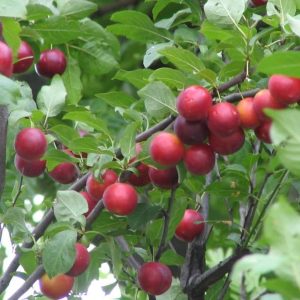
Red Mulberry
$16.95
Red Mulberry (also known as American Mulberry; Morus rubra) is the only mulberry species native to eastern North America, bearing abundant sweet, wine-like dark purple-black fruit used in pies, jams, juice, and wine, on a broad spreading tree that sustains birds, squirrels, deer, and dozens of other wildlife species. It grows in USDA hardiness zones 4-9 and AHS heat zones 3-9, needs 300-500 chill hours, and is self-fertile, fruiting reliably without a pollinator partner.
2-3′ Bare Root Seedling Tree
Propagation: Seedling (own-root)
In stock
Red Mulberry (Morus rubra) is the only mulberry species native to eastern North America, with a range extending from southern Ontario and Massachusetts west to Nebraska and south through Texas to Florida, growing naturally along creek bottoms, forest edges, and rich bottomland soils. The species was formally described by Carl Linnaeus in 1753. Archaeological records and historical accounts document its importance to Indigenous peoples across its full range — fruits were eaten fresh, dried for winter storage, and incorporated into pemmican; the De Soto expedition recorded consumption of dried fruits by Muskogee peoples as early as 1500. European colonists recognized its value early, and the species was subsequently noted to hybridize freely with the introduced White Mulberry (Morus alba), a hybridization now recognized as a conservation threat to wild Red Mulberry genetic integrity. No breeding program or institution is involved; this is the straight wild-type species, the ecological and genetic anchor of the mulberry complex in eastern North America.
Red Mulberry adapts broadly across zones 4-9 but performs best in sites that mirror its native bottomland habitat — deep, moist, fertile soils with good organic matter content. Its roughly 400-hour chilling requirement is low enough for warm-climate growers in the mid-South and Gulf Coast. Full sun maximizes fruit production and allows the dense crown to develop full canopy spread, though the tree tolerates light shade, particularly when young. Soil pH tolerance is wide, from 5.0 to 7.5, giving growers on both acidic sandy soils and near-neutral clay a workable range. Consistent soil moisture during fruit development prevents premature drop; however, the species tolerates brief flooding — an asset in low-lying sites that would stress most fruit trees. Avoid compacted subsoil, which causes surface rooting and increases drought sensitivity. Mulching the root zone with 3-4 inches of wood chips retains moisture and suppresses competing vegetation during establishment, which typically spans two to four seasons before the canopy begins asserting itself.
USDA Hardiness Zone: 4-9
AHS Heat Zone: 3-9
Chill Hours: 300-500
Sun Requirements: Full Sun to Partial Shade
Soil pH: 5.0-7.5
Soil Type: Clay, loam, sand, high organic matter; prefers rich moist loam
Soil Drainage: Moist, well-drained; tolerates occasional flooding
Water Requirements: Medium; prefers consistent moisture
Drought Tolerance: Low to Moderate
Container Suitability: Not recommended — large tree reaching 30-60 ft; better suited as landscape or food forest specimen
Red Mulberry grows rapidly into a large, spreading tree with a broad, rounded to irregular crown, reaching 30 to 60 feet tall and 25 to 40 feet wide at maturity — scale that earns it a canopy-layer designation in food forest design. The trunk develops a rough, furrowed bark over time, and the branching structure creates a dense interior that can become congested if not managed. Annual light pruning to remove crossing branches and open the canopy to airflow reduces disease pressure and makes harvest more accessible. Leaves are variable in shape — sometimes lobed, sometimes ovate — and turn clear yellow in fall before dropping. The moderately deep taproot with spreading laterals anchors the tree well on most sites, though lateral roots may surface in compacted or persistently wet soils. Because of its canopy size, site placement should account for 30-50 feet of clearance from structures, utilities, and smaller companion plants that need sun.
Mature Height: 30-60 ft tall
Mature Spread: 25-40 ft wide
Growth Habit: Spreading, rounded crown; dense irregular form
Growth Rate: Fast
Foliage Type: Deciduous
Food Forest Layer: Canopy
Permaculture Role: Canopy fruit tree; wildlife attractor; dynamic accumulator; understory shade provider
Leaf Color: Medium green
Fall Foliage Color: Yellow
Thorns?: No
Attracts Wildlife: Birds (songbirds, robins, orioles, woodpeckers, wood ducks, bluebirds), small mammals (squirrels, opossums, raccoons, foxes), deer; butterfly larval host (Mourning Cloak, Red Admiral)
Life Span: up to 125 years
Red Mulberry is typically dioecious, meaning individual trees carry either male flowers or female flowers — not both. Wind carries pollen from male catkins to female flower spikes during the bloom window of mid-April through late May in temperate climates. For reliable fruit set, growers should plant at least one male tree within 50-100 feet of female trees; wind does the rest. Some Red Mulberry individuals are monoecious and produce both flower types, which can make them self-fruitful, but this cannot be determined until a tree flowers, often four to ten years after planting. Planting multiple Red Mulberry trees — or pairing with another Morus species — removes the uncertainty. Illinois Everbearing Mulberry (Illinois Everbearing Mulberry), a Morus alba × rubra hybrid, can also provide cross-compatible pollen. Bee activity supplements wind pollination on still days.
Bloom Season: Late
Bloom Window: Mid Apr - Late May
Pollination Requirements: Usually dioecious — plant male and female trees for reliable fruit; some trees may be monoecious and self-fruitful
Pollination Mechanism: Wind-pollinated (anemophilous)
Flower Color: Greenish-yellow (catkins)
Fully ripe Red Mulberry fruit measures 0.75 to 1.5 inches long and shifts from red to dark purple-black as it reaches peak sugar. Flavor is rich and wine-like with pronounced aromatics — often described as deeper and less bland than White Mulberry, with higher tannin complexity in the skin. The fruit is soft and juicy with a delicate texture that means it falls from the tree at peak ripeness, making tarps or ground cloths under the canopy the most practical harvest method. Storage life is short — one to four days refrigerated — so fresh eating and immediate preservation are priority. Freezing extends usability for months without significant flavor loss. Common uses include pies, jams, jellies, juice, wine, and syrups; the fruit can also be dried into a powder for use in baked goods. Culinary tradition also includes young leaves brewed as tea and young shoots used as cooked greens. Harvest runs from late May through early August in temperate climates, with peak production varying by tree sex expression and annual conditions.
Ripening Season: Early
Harvest Window: Late May - Early Aug
Fruit Size: 0.75-1.5 inch
Flavor: Sweet and juicy with a rich wine-like flavor; highly aromatic when fully ripe
Fruit Color: Red to dark purple-black when fully ripe; green when unripe
Fruit Texture: Soft, juicy, delicate; falls when fully ripe
Bearing Habit: Annual; good crops every 2-3 years with light crops in between
Years to Bear: 4-10 years
Storage Life: 1-4 days (refrigerated); freeze for longer storage
Culinary Uses: Fresh eating, pies, jams, jellies, juice, wine, syrup, dried powder, baked goods (muffins, cakes, breads); traditional use in pemmican
Red Mulberry carries moderate susceptibility to several foliar and soil-borne issues that growers in humid climates should monitor proactively. Bacterial Blight (Pseudomonas syringae pv. mori) causes water-soaked lesions on young shoots that turn brown and die; prune infected tissue during dry weather and avoid overhead irrigation. Powdery Mildew (Phyllactinia guttata) develops on leaves in late summer; thinning interior branches for airflow and raking fallen leaves suppress overwintering inoculum. Leaf Spot (Cercospora moricola / Mycosphaerella mori) creates angular brown lesions managed by canopy airflow and autumn leaf sanitation. Popcorn Disease (Ciboria carunculoides) causes drupelets to swell and harden; remove and destroy affected fruit before spores spread. Armillaria Root Rot (Armillaria mellea) is resisted well — an advantage in forest-edge plantings where buried root debris is common. Mulberry Whitefly (Tetraleurodes mori) and Scale Insects — including European Fruit Lecanium (Parthenolecanium corni) and Comstock Mealybug (Pseudococcus comstocki) — can colonize stressed trees; insecticidal soap or neem oil at crawler stage are effective OMRI-listed options. Mulberry Borer (Dorcaschema wildii) is deterred by maintaining tree vigor through adequate moisture and fertility. Root-Knot Nematode (Meloidogyne spp.) can restrict uptake in sandy soils; incorporate organic matter and interplant nematode-suppressive cover crops such as marigolds.
Bacterial Blight: Moderately Susceptible
Powdery Mildew: Moderately Susceptible
Popcorn Disease: Moderately Resistant
Armillaria Root Rot: Resistant
Leaf Spot: Moderately Susceptible
Mulberry Whitefly: Moderately Susceptible
Scale Insects: Moderately Susceptible
Mulberry Borer: Moderately Resistant
Root-Knot Nematode: Moderately Susceptible
- Determine sex before planting alone: Most Red Mulberry trees are dioecious — buy from a nursery that can confirm a tree is female (fruit-bearing) before relying on it for production, or plant multiple trees to hedge.
- Plan for harvest logistics: Ripe fruit falls on contact; spread tarps under the canopy during peak ripening to collect fruit without stooping to pick from the ground one berry at a time.
- Prune for airflow every two to three years: Red Mulberry is moderately susceptible to Bacterial Blight, Powdery Mildew, and Leaf Spot — all benefit from an open canopy structure that reduces leaf wetness duration. Remove crossing branches and deadwood in late winter before bud break.
- Mulch generously during establishment: The species prefers consistent soil moisture; a 4-inch wood chip mulch ring extending to the drip line reduces moisture stress and competes down weeds without stressing this tree's moderately shallow lateral roots.
- Scout for scale insects on stems in spring: European Fruit Lecanium and Comstock Mealybug overwinter on bark; early detection lets you treat crawler emergence with insecticidal soap before populations establish, avoiding the harder task of controlling settled adults.
We ship in late winter or early spring based on your USDA hardiness zone.
We strive to ship orders on the scheduled dates listed in the table below. However, please note that the actual shipping date may be subject to change due to factors like weather conditions and order volume.
The specific date for shipping your order will be determined according to your zipcode at the time of checkout.
Our plants are shipped bare root, packed in moist sawdust, and securely wrapped in plastic to prevent the roots from drying out. We use USPS Ground Advantage for shipping, ensuring that your plants typically arrive within 2-5 days after packaging.
In case you're unable to plant the trees immediately upon arrival, we recommend soaking them in water for a few hours and temporarily heeling them in. Ideally, they should be planted within three days of receipt for optimal health.
See our full shipping policy and map here
| Zone | Ship Date |
|---|---|
| 11 - 8b | March 1st, 2027 |
| 8a - 7b | March 8th, 2027 |
| 7a | March 15th, 2027 |
| 6b | March 22nd, 2027 |
| 6a | March 29th, 2027 |
| 5b - 5a | April 12th, 2027 |
| 4b - 4a | April 26th, 2027 |
| 3b - 1a | May 3rd, 2027 |
Our 365-Day Plant Guarantee: We ensure that our plants are delivered to you alive and healthy. If your plant does not survive its first year, you're eligible for store credit under these conditions:
- Your location falls within the appropriate USDA hardiness zone for the plant variety (refer to our hardiness zone map).
- You maintain the roots' moisture and plant within three days of delivery, following the instructions in our Planting Guide.
If you're concerned about your plant's health, please consult our guide, How to Tell if Your Tree is Dead or Dormant. Remember, our plants are shipped in a dormant state and may leaf out at different times based on their species. To check for plant vital
18 reviews for Red Mulberry
Related products

Black Walnut
Checking fit
White Oak
Checking fitRated 5.00 out of 5
River Birch
Checking fit
American Plum
Checking fitRated 4.63 out of 5


William Parker (verified owner) –
Plant arrived with a well developed root system and strong branches. There was a tiny bit of damage to one branch, but nothing concerning. Well package, shipped fast, and well on its way to getting established in the landscape. Thanks Food Forest Nursery team!
myra louie (verified owner) –
The mulberry came quick in 2 days. The roots were full and health. Great Value.
sean russell (verified owner) –
Great looking bare root trees. Excited to add this mulberry variety to my mulberry orchard!
Maria S. (verified owner) –
Lovely looking baby tree with nice, healthy looking roots.
Katrina (verified owner) –
I was very impressed with the size and health of each item that I purchased. Happy customer.
Lee K. (verified owner) –
Sheryl S. (verified owner) –
Healthy looking bare root plants with strong root systems. It is about 18″ tall. Carefully packaged, but without a lot of wasteful packaging. Thank you!
Vinnie (verified owner) –
These taste like candy!!
Clint S. (verified owner) –
Darrell Fulcher (verified owner) –
Candice S. (verified owner) –
At least a foot tall tree with great roots. It’s been about 3 weeks since delivery and planted and I have growth every where.
Barbara W. (verified owner) –
Buds started to appear a few days after we planted it. Instructions were really clear.
Alisha (verified owner) –
Big beautiful plant ! Great looking roots ! And growing well
Bowman Moore (verified owner) –
Very pleased
Deborah Cook (verified owner) –
Just starting to leaf out
ANGELA (verified owner) –
Both plants look so healthy.
Neal N. (verified owner) –
Seemed a little frail, watching them closely.
Gayvonne (verified owner) –
Beautiful trees