$11.95Original price was: $11.95.$9.56Current price is: $9.56.
White Oak (also known as Quebec Oak; Quercus alba) is a long-lived native shade tree with the lowest-tannin acorns among Eastern oaks — requiring minimal leaching for acorn flour and milling — with a massive wide-spreading crown, wine-colored fall foliage that persists into winter, and acorn mast feeding deer, turkey, squirrels, and hundreds of moth and butterfly larvae. It grows in USDA hardiness zones 3-9 and AHS heat zones 3-9.
1-2′ Bare Root Seedling Tree Propagation: Seedling (own-root) Can’t be shipped to: CA, OR
White Oak is among the most ecologically and historically significant trees in North America. Carl Linnaeus described it in 1753 as Quercus alba — the species name alba, Latin for white, referencing the pale, deeply furrowed bark prominent at maturity. It belongs to the White Oak group, completing its acorn cycle in a single growing season. Native from southern Maine to northern Florida and west across the Great Plains, it dominated Eastern forest canopies for centuries and, by some historical estimates, formed roughly 40 percent of the canopy in parts of the Appalachian and Midwestern forest. Indigenous peoples ground its low-tannin acorns into flour or roasted them whole; European settlers applied the dense, ring-porous wood to shipbuilding and cooperage — applications that continue today, as White Oak staves remain standard for aging bourbon and wine. Documented specimens commonly reach 300 to 500 years, with some exceeding 600 years. No cultivar selection has produced named varieties in broad commerce; nursery stock is grown from seed.
White Oak establishes best from container stock planted young — the deep taproot that anchors mature specimens develops early and makes balled-and-burlapped transplants unreliable after the first few years. Choose a site with full sun and well-drained to moderately moist soil; this species tolerates a wide soil pH range of 5.5-8 and handles periodic drought once established. Growth rate is slow to medium — expect 12-15 inches per year under good conditions — so patience is the primary investment. The reward is a self-sufficient tree that rarely needs intervention once past the establishment window. Space at 40-60 feet from structures and other large trees to allow the broad, spreading crown to develop fully. In urban plantings, White Oak adapts to street tree conditions better than many large-canopy species, showing rated tolerance for salt exposure. Young trees benefit from a 3-inch mulch ring kept back from the trunk to retain moisture and suppress competition during the first 3-5 years. After that, the tree's canopy and root system largely manage their own environment.
USDA Hardiness Zone: 3-9 AHS Heat Zone: 3-9 Sun Requirements: Full Sun Soil pH: 5.5-8.0 Soil Type: Adapts to silty loam, clay loam, silty clay loam; best on deep, well-drained loamy soils Soil Drainage: Well-drained; sensitive to periodic flooding Water Requirements: Dry to Medium Drought Tolerance: Moderately tolerant once established Heat Tolerance: High; native range extends into USDA Zone 9 and humid southeastern US Plant Spacing: 40-60 ft apart Container Suitability: Not suitable; develops deep taproot requiring ground planting
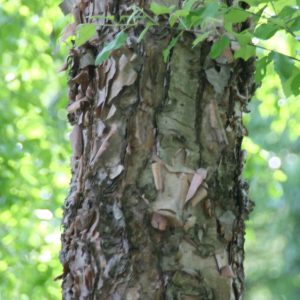
White Oak matures at 60-100 feet tall with a crown spread that routinely matches or exceeds height — a 70-foot tree may carry an 80-foot-wide canopy of layered horizontal branches. The silhouette is broadly rounded and open, one of the most architecturally distinctive profiles among Eastern hardwoods. Bark on mature trees is pale grayish-white with a plate-and-ridge texture identifiable from a distance. Leaves are deeply lobed with rounded tips — never pointed or bristle-tipped as in red oak relatives — turning rich wine-red to deep burgundy in fall, among the most vivid autumn color in the genus. New spring growth emerges pinkish-silver before hardening to dark green by early summer. Foliage is deciduous. Growth rate is slow; the species is classified medium maintenance given the leaf and acorn litter that is part of its ecology rather than a problem to solve. The wide, deep root system rarely causes pavement or foundation damage when sited correctly, and the canopy's shade meaningfully reduces cooling loads in proximate structures.
Mature Height: 50-100 ft tall Mature Spread: 50-80 ft wide Growth Habit: Pyramidal when young; broad, wide-spreading rounded crown at maturity Growth Rate: Slow Foliage Type: Deciduous Food Forest Layer: Canopy Permaculture Role: Canopy tree; mast producer; keystone wildlife habitat species; nitrogen cycler; long-term carbon sink Leaf Color: Pinkish-red when emerging in spring, maturing to dark green in summer Fall Foliage Color: Wine-colored; fades to brown; leaves persist through mid-winter Thorns?: No Attracts Wildlife: Yes — acorn mast for deer, turkey, squirrels, and many birds; host to hundreds of butterfly/moth larvae Life Span: typically 200-600 years; exceptional specimens can exceed 600 years
White Oak is monoecious and wind-pollinated — each tree carries both male and female flowers and requires no companion tree to produce acorns. Male catkins appear in April as the leaves are just beginning to unfurl, releasing pollen into the wind over a 2-3 week period. Female flowers are small and inconspicuous on the same tree. The wind-pollination system means no bees or other insects are required for acorn set, and planting a single specimen is fully sufficient. Acorns mature in one growing season — a defining characteristic of the White Oak group — and fall in mid-September through late October. Heavy mast years occur on irregular 4-10 year cycles, but even in off years, large healthy trees typically produce some acorns. As a larval host for more than 500 Lepidoptera species, the flowering period is less relevant to wildlife value than the continuous insect activity supported throughout the growing season.
Bloom Season: Early Bloom Window: Mid Apr Pollination Requirements: Cross-pollination by wind; monoecious (male and female flowers on same tree); does not require a separate pollinator tree Pollination Mechanism: Wind-pollinated (monoecious) Flower Color: Yellowish-green (male catkins); reddish-green (female flowers)
White Oak acorns are the gold standard of Eastern oak mast — roughly 0.75-1 inch long, borne in shallow fringed caps, and containing tannin levels of only 0.5-2.5% dry weight. That is the lowest tannin concentration of any major Eastern oak group and the reason both wildlife and human foragers have historically prioritized White Oak acorns above all others. Deer, turkey, wood duck, blue jay, wild hog, black bear, squirrel, and white-footed mouse all feed heavily on the fall drop. For human use, the low tannin content means flour can often be made with one or two cold-water soaks rather than the extended leaching required for red oak acorns. Indigenous peoples across the Eastern US ground White Oak acorns into flour for bread, porridge, and oil — a staple starch source in many nations. Annual masting in a single growing season distinguishes this group from red oaks; the crop is available every fall rather than only every other year, making White Oak a more consistent food-system component for both wildlife and foragers.
Ripening Season: Very Late Harvest Window: Mid Sep - Late Oct Fruit Size: 0.75-1 inch Flavor: Tannin 0.5-2.5%; low for oak acorns; edible with minimal processing Fruit Color: Tan to brown when ripe; acorn cap pale gray-brown Bearing Habit: Annual mast — one growing season maturation; irregular 4-10 year heavy mast cycles; only ~30% of large healthy trees produce in any given year Years to Bear: 20-50 years (open-grown); 50+ years (forest-grown) Culinary Uses: Acorn flour (after leaching); acorn meal; ground into porridge or bread; oil pressing; roasted acorn coffee substitute
White Oak's most important disease characteristic is its resistance to Oak Wilt (Bretziella fagacearum), the vascular pathogen that has devastated red oak populations across the Midwest and Mid-Atlantic. Resistance is conferred by the White Oak group's tylose-sealing mechanism — infected vessels are rapidly blocked, containing the fungus before it spreads systemically. This makes White Oak a sound choice wherever Oak Wilt pressure exists. Bacterial Leaf Scorch (Xylella fastidiosa), transmitted by leafhoppers, is also rated resistant; White Oak shows markedly lower infection rates than co-occurring red and pin oaks. White Oak is moderately resistant to Oak Decline complex — the interaction of Armillaria root rot, Two-Lined Chestnut Borer stress, and drought cycles — reflecting this species' ability to recover from individual stressors better than many associates. Anthracnose (Apiognomonia quercina) is the primary cosmetic concern, causing leaf browning and early drop in wet springs; it rarely threatens established trees and requires no intervention. Spongy Moth (Lymantria dispar) can defoliate White Oak in outbreak years, but healthy mature trees typically refoliate and survive. Planting in well-drained sites and avoiding wounds during the April-May oak wilt infection window are the two most effective cultural safeguards.
Plant young from containers: White Oak develops a deep taproot quickly — container stock at 1–3 feet establishes far more reliably than large balled-and-burlapped trees, which lose too much root mass at digging.
Avoid pruning April–May: Fresh wounds during peak beetle flight attract the vectors that spread disease. Prune in late summer or winter when beetle activity is lowest; watch for Anthracnose symptoms after wet springs and rake fallen leaves to limit spore carryover.
Monitor for Spongy Moth: In outbreak years, inspect foliage in late May. Repeated defoliation weakens mature trees significantly; apply Bt targeting early-instar larvae before populations peak.
Site for the long view: Space 40–60 feet from structures. Once established, White Oak rarely needs irrigation, fertilization, or pest management under normal conditions.
We ship in late winter or early spring based on your USDA hardiness zone.
We strive to ship orders on the scheduled dates listed in the table below. However, please note that the actual shipping date may be subject to change due to factors like weather conditions and order volume.
The specific date for shipping your order will be determined according to your zipcode at the time of checkout.
Our plants are shipped bare root, packed in moist sawdust, and securely wrapped in plastic to prevent the roots from drying out. We use USPS Ground Advantage for shipping, ensuring that your plants typically arrive within 2-5 days after packaging.
In case you're unable to plant the trees immediately upon arrival, we recommend soaking them in water for a few hours and temporarily heeling them in. Ideally, they should be planted within three days of receipt for optimal health.
Our 365-Day Plant Guarantee: We ensure that our plants are delivered to you alive and healthy. If your plant does not survive its first year, you're eligible for store credit under these conditions:
You maintain the roots' moisture and plant within three days of delivery, following the instructions in our Planting Guide.
If you're concerned about your plant's health, please consult our guide, How to Tell if Your Tree is Dead or Dormant. Remember, our plants are shipped in a dormant state and may leaf out at different times based on their species. To check for plant vital
1 review for White Oak
Rated 5 out of 5
Kerrin jr. Hester –
Received in very good condition and it is still living even though we are having a drought and very hot days
Kerrin jr. Hester –
Received in very good condition and it is still living even though we are having a drought and very hot days