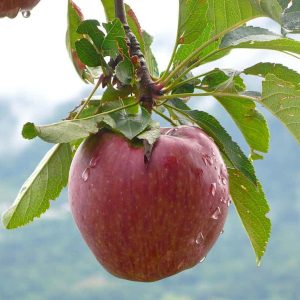
Callaway Crabapple
$39.95
Callaway Crabapple (Malus ‘Callaway’) is a Southern-adapted crabapple developed at Callaway Gardens in Georgia in 1954, bearing persistent bright-red fruit up to 1.5 inches across — sweeter than most crabapples and excellent for jelly, jam, sauce, and fresh eating. It grows in USDA hardiness zones 4-8 and AHS heat zones 3-8, and needs about 400-600 chill hours.
3-4′ Bare Root Grafted Tree
Rootstock: B118 – Semi Dwarf
A Budagovsky selection at roughly 85-90% of standard, so nearly full size. Exceptionally cold hardy and well anchored.
• Support: Freestanding; no staking required.
Can’t be shipped to: AK, HI
In stock
Callaway Crabapple was bred in 1954 by Fred Galle, head of horticulture at Callaway Gardens in Pine Mountain, Georgia, as part of a deliberate program to develop crabapple selections capable of thriving in the heat and humidity of the Deep South, where most cultivars of the period showed poor performance. The variety has also been listed under the cultivar name ‘Ida Cason,’ an apparent tribute to Ida Cason Callaway, in whose memory the Gardens were founded when they first opened in 1952. Exact parentage crosses are not documented in published pomological records. The cultivar is unpatented, which has facilitated broad propagation across southeastern and mid-Atlantic nurseries since its introduction. Its selection in a Georgia Piedmont climate imposed natural pressure for low chill requirement and fire blight tolerance, traits that have made it a regional landscape staple where those factors are limiting. Callaway is notable within the ornamental crabapple group for producing fruit large and sweet enough relative to most Malus selections to have practical value for jelly and preserve making, well beyond the typical wildlife-fodder role.
Callaway's 400–600 chill hour requirement sits at the lower end for crabapples, making it genuinely viable in USDA zones 6 through 8 where many northern crabapple selections fail to fruit adequately. In zone 4 and 5, the longer dormancy poses no problem; the concern there is late frost clipping early-April blooms, so a sheltered north-facing slope or an east-facing wall can delay bloom timing by several days and protect the crop. The tree handles a wide soil pH range from 5.8 to 7.0 and tolerates clay and sandy loam, but drainage quality matters more than texture — standing water after rain events invites Phytophthora root rot and weakens the tree's otherwise solid disease profile. Moderate moisture during the growing season suffices; once established, the tree manages short dry periods without irrigation support in most temperate climates. Spacing at 15–20 feet allows the rounded canopy to develop fully without crowding, which keeps interior branches open and reduces humidity-driven pressure from the diseases it is moderately susceptible to.
USDA Hardiness Zone: 4-8
AHS Heat Zone: 3-8
Sun Requirements: Full Sun
Soil pH: 5.8-7.0
Soil Type: Loam, clay, sand — adaptable; prefers well-drained, acidic loam
Soil Drainage: Well-drained
Water Requirements: Medium — moderate moisture; drought-tolerant once established
Drought Tolerance: Moderate — drought-tolerant once established
Plant Spacing: 15-20 ft apart
The rounded canopy of Callaway matures to 15–25 feet tall and equally wide, forming a symmetrical silhouette that works as a specimen tree in lawns or as an anchor in mixed shrub borders. The growth rate is medium — roughly 12–18 inches per year when young — so the tree reaches functional landscape size within six to eight years without the aggressive spread that complicates management of faster-growing fruiting trees. Green foliage holds cleanly through summer on this variety, unlike some crabapples whose leaves defoliate early under scab pressure; healthy canopy retention through September is a reliable sign that disease management is on track. Thornless branches simplify pruning, and the scaffold structure responds well to a modified central leader approach during the first three to five years. After the framework is established, annual thinning of crossing or inward-pointing branches in late winter maintains airflow and keeps fruit size consistent into maturity. The root system is fibrous and moderately deep, anchoring the tree well in wind-exposed sites and making transplanting at container size straightforward.
Mature Height: 15-25 ft tall
Mature Spread: 15-25 ft wide
Growth Habit: Rounded
Growth Rate: Moderate
Foliage Type: Deciduous
Food Forest Layer: Canopy, Sub-canopy
Leaf Color: Green
Thorns?: No
Attracts Wildlife: Bees, butterflies, birds (cedar waxwings, robins, mockingbirds), small mammals, deer
Life Span: 50-100+ years
Callaway opens pink buds to white flowers in early to mid-April in temperate climates, placing its bloom squarely in the mid-spring window shared by a wide range of compatible crabapples. As a self-fertile cultivar, it sets a reliable crop without a cross-pollinator, but fruit size and set density measurably improve when a second diploid crabapple blooms within 50 feet. Any crabapple with overlapping bloom timing serves as a functional pollen source; selections held in the inventory such as Prairie Fire Crabapple and Snowdrift Crabapple both bloom in the compatible mid-spring window. Bees are the primary pollination vector, so siting the tree away from windy corridors and near other spring-flowering plants supports strong insect activity during the brief two-week bloom period.
Bloom Season: Very Early
Bloom Window: Mid Apr
Pollination Requirements: Self-fertile; cross-pollination increases fruit set and size
Pollination Mechanism: Insect (bees primary)
Flower Color: White (pink buds opening to white)
At 1.0–1.5 inches in diameter, Callaway produces fruit at the larger end of the crabapple size spectrum — big enough to halve and seed for jam production without the tedium of processing dime-sized fruit. The flavor profile is sweet-tart with crisp yellow flesh, notably less astringent than wild-type or purely ornamental selections; this makes it palatable fresh off the tree, though most culinary applications concentrate on jelly, preserves, butter, and sauce where the natural pectin content accelerates gel formation without additional pectin additives. Fruit color is bright red at ripeness, typically reaching full color in late September through October in a temperate climate. The persistent fruiting habit extends the display well into November and sometimes December, providing sustained food resources for cedar waxwings, robins, and mockingbirds. Mature trees at full production yield 80–120 pounds or more annually. Seeds contain cyanogenic glycosides — the fruit flesh is safe, but seeds should not be consumed in quantity by humans or pets.
Ripening Season: Very Late
Harvest Window: Late Sep - Mid Nov
Fruit Size: 1-1.5 inch
Flavor: Sweet-tart; crisp yellow flesh; sweeter than most crabapples
Fruit Color: Bright red
Bearing Habit: Annual bearer
Years to Bear: 2-4 years
Yield: 80-120+
Culinary Uses: Jelly, jam, preserves, butter, sauce, pickling, fresh eating, pie filling
Callaway carries strong resistance to fire blight (Erwinia amylovora), apple scab (Venturia inaequalis), powdery mildew (Podosphaera leucotricha), and frogeye leaf spot (Botryosphaeria obtusa) — a combination that significantly reduces the spray program compared to susceptible crabapple selections. Cedar apple rust (Gymnosporangium juniperi-virginianae) is the one gap, showing moderate susceptibility in seasons with heavy juniper gall pressure nearby. Removing galls from junipers before they release spores in spring and raking fallen leaves in autumn breaks the cycle without sprays. On the pest side, codling moth (Cydia pomonella), apple aphid (Aphis pomi), Japanese beetle (Popillia japonica), and apple tree borer (Agrilus mali) all show moderate susceptibility. For codling moth, pheromone traps at pink stage alert growers to flight timing, and kaolin clay before first-generation egg hatch provides an OMRI-listed physical barrier. Apple aphid colonies respond to a strong water spray to dislodge nymphs, followed by insecticidal soap if populations persist. Hand-remove Japanese beetle adults into soapy water in the morning when beetles are sluggish; avoid beetle-bag traps as they attract more beetles than they catch. Keep the trunk free of mechanical injury and apply kaolin-based repellents at the base during the adult flight period to deter apple tree borer.
Fire Blight: Resistant
Apple Scab: Resistant
Cedar Apple Rust: Moderately Susceptible
Powdery Mildew: Resistant
Frogeye Leaf Spot: Resistant
Codling Moth: Moderately Susceptible
Apple Aphid: Moderately Susceptible
Japanese Beetle: Moderately Susceptible
Apple Tree Borer: Moderately Susceptible
- Site for frost protection: Callaway blooms in early to mid-April — position where a building, hill, or windbreak delays frost penetration on cold nights to protect the crop.
- Kaolin clay for codling moth: Begin applications at petal fall and reapply every 10–14 days through June; this physical barrier interrupts egg-laying without synthetic inputs.
- Manage cedar-apple rust nearby: Scout Eastern red cedars in early spring for orange gelatinous galls; remove and bag them before spores release to reduce rust pressure on susceptible foliage.
- Prune in late winter: Dormant pruning (February–early March) removes fire blight cankers before spring growth and avoids stimulating the succulent flushes most vulnerable to new infection.
- Leave fruit for wildlife: Persistent red fruit feeds songbirds through winter — delay harvest of the uppermost branches to sustain wildlife value into December.
We ship in late winter or early spring based on your USDA hardiness zone.
We strive to ship orders on the scheduled dates listed in the table below. However, please note that the actual shipping date may be subject to change due to factors like weather conditions and order volume.
The specific date for shipping your order will be determined according to your zipcode at the time of checkout.
Our plants are shipped bare root, packed in moist sawdust, and securely wrapped in plastic to prevent the roots from drying out. We use USPS Ground Advantage for shipping, ensuring that your plants typically arrive within 2-5 days after packaging.
In case you're unable to plant the trees immediately upon arrival, we recommend soaking them in water for a few hours and temporarily heeling them in. Ideally, they should be planted within three days of receipt for optimal health.
See our full shipping policy and map here
| Zone | Ship Date |
|---|---|
| 11 - 8b | March 1st, 2027 |
| 8a - 7b | March 8th, 2027 |
| 7a | March 15th, 2027 |
| 6b | March 22nd, 2027 |
| 6a | March 29th, 2027 |
| 5b - 5a | April 12th, 2027 |
| 4b - 4a | April 26th, 2027 |
| 3b - 1a | May 3rd, 2027 |
Our 365-Day Plant Guarantee: We ensure that our plants are delivered to you alive and healthy. If your plant does not survive its first year, you're eligible for store credit under these conditions:
- Your location falls within the appropriate USDA hardiness zone for the plant variety (refer to our hardiness zone map).
- You maintain the roots' moisture and plant within three days of delivery, following the instructions in our Planting Guide.
If you're concerned about your plant's health, please consult our guide, How to Tell if Your Tree is Dead or Dormant. Remember, our plants are shipped in a dormant state and may leaf out at different times based on their species. To check for plant vital
Related products

Honeycrisp Apple
Rated 5.00 out of 5$49.95 Select Rootstock This product has multiple variants. The options may be chosen on the product pageChecking fit
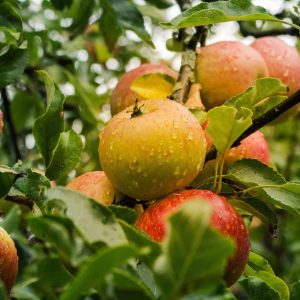
Ambrosia Apple
Checking fit
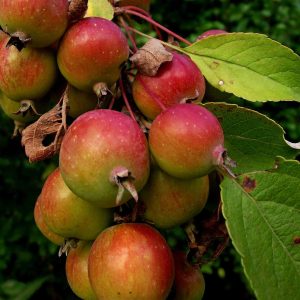
Siberian Crabapple
Checking fitRated 4.60 out of 5
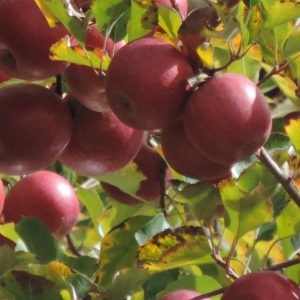
Pink Lady Apple
$49.95 Select Rootstock This product has multiple variants. The options may be chosen on the product pageChecking fit


Reviews
There are no reviews yet.