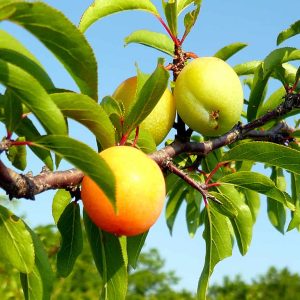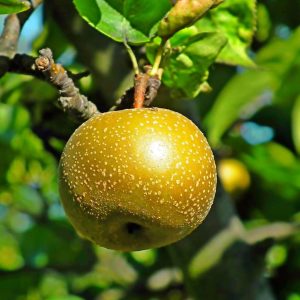
Santa Rosa Plum
$49.95
Santa Rosa Plum (Prunus salicina ‘Santa Rosa’) is a Luther Burbank introduction bearing large, dark red to purplish-red Japanese plum fruit with sweet-tart, honeyed flesh and tangy skin, valued for fresh eating, preserves, and wine with an ultra-low chill requirement. It grows in USDA hardiness zones 5-9 and AHS heat zones 5-9, needs 300-500 chill hours, and is self-fertile, fruiting reliably without a pollinator partner.
4-5′ Bare Root Grafted Tree
Rootstock: Mariana GF8-1 – Standard
A very vigorous plum rootstock for full-size trees, tolerant of heavy and wet ground.
• Support: Freestanding; good anchorage.
Can’t be shipped to: AK, CO, HI, MT, OR, WA
In stock
Luther Burbank developed Santa Rosa at his breeding grounds in Santa Rosa, California, drawing on Japanese plum (Prunus salicina) material he had imported from Japan beginning in 1885, which included early accessions such as Satsuma. The variety was commercially introduced in 1906 through George C. Roeding of Fancher Creek Nurseries in Fresno. Burbank never published formal parentage records — his practice was to track crosses mentally rather than in writing — and historical descriptions characterize Santa Rosa as a complex hybrid of Prunus salicina with probable contributions from P. simonii; twentieth-century genetic analyses have further suggested P. cerasifera involvement. Its commercial impact was immediate: by 1945 Santa Rosa accounted for 36 percent of California’s plum harvest, making it the most economically significant Japanese plum introduction of the twentieth century. It remains the baseline variety for low-chill plum evaluation across university trial programs from North Carolina to California.
With only 300 chill hours needed, Santa Rosa ripens successfully in climates where most stone fruit fails, making zone selection the first priority: it performs well from zone 5 through 9 but truly excels in the mid-Atlantic, Southeast, and similar humid-summer regions where winters are mild. Full sun drives fruit set and sugar development — six hours minimum, eight or more preferred. Well-drained loam or sandy loam at a pH between 5.5 and 6.5 supports consistent nutrient uptake; heavy clay slows drainage and raises the risk of crown-rot pathogens in wet seasons. Moderate, consistent irrigation during fruit sizing (roughly six weeks after petal fall) prevents the cracking and splitting that shortens storage life. Avoid excess nitrogen after midsummer, which delays hardening and can amplify bacterial canker entry points going into autumn. Thinning fruit to 3–4 inches apart at the marble stage redirects energy into larger, firmer plums and reduces limb breakage under the characteristically heavy crop loads this variety produces.
USDA Hardiness Zone: 5-9
AHS Heat Zone: 5-9
Chill Hours: 300-500
Sun Requirements: Full Sun
Soil pH: 5.5-6.5
Soil Type: Loam, sandy loam, clay loam
Soil Drainage: Well-drained
Water Requirements: Medium
Drought Tolerance: Low to Moderate
Plant Spacing: 18-20 ft apart
Santa Rosa grows with an upright-to-rounded form, typically reaching 15 to 20 feet tall and equally wide at maturity on standard rootstock, though semi-dwarfing understocks can hold it to 10–12 feet in managed orchards. The canopy densifies quickly — growth rates of 12 to 18 inches per year are common in the first decade — so annual dormant pruning is not optional; without it, the interior shades out, airflow drops, and disease pressure climbs. A modified central leader or open-vase training both work well; the open-vase approach is slightly preferred in humid climates because it maximizes light penetration and drying airflow. The root system combines a moderate taproot with lateral roots that spread roughly equal to the drip line, giving the tree good anchoring but also meaning it competes assertively with nearby plantings. Spacing at 18 to 20 feet accommodates mature spread without crowding and keeps maintenance pruning practical over the tree’s 20–40 year productive life.
Mature Height: 15-20 ft tall
Mature Spread: 15-20 ft wide
Growth Habit: Upright to rounded
Growth Rate: Moderate (12-18 inches per year)
Foliage Type: Deciduous
Food Forest Layer: Canopy, Sub-canopy
Leaf Color: Green
Attracts Wildlife: Bees, butterflies, birds
Life Span: 20-40 years
Santa Rosa Plum flowers in the mid relative window in the Zone 7 Ozarks planning model. Partially self-fruitful; cross-pollination improves set. Documented partners include Burbank, Shiro, Satsuma, and Elephant Heart.
Bloom Season: Mid
Bloom Window: Early - Mid Apr
Pollination Requirements: Partially self-fruitful; cross-pollination improves set. Documented partners include Burbank, Shiro, Satsuma, and Elephant Heart.
Pollination Mechanism: Insect (bee)
Flower Color: White to pale pink
Averaging 1.5 to 3 inches in diameter, fruit runs toward the heavier portion of that range under good thinning and consistent moisture. The skin is dark red to purplish-red with a natural waxy bloom; flesh is yellow to light amber, darkening to red-orange near the skin, with a firm yet tender bite and noticeably juicy texture. Flavor is the defining characteristic: a sweet-tart balance with rich plum depth, honeyed mid-palate sweetness, and a tangy skin that keeps the eating experience lively rather than cloying. Brix values in university trials typically range from 12 to 15, varying with crop load and irrigation management. Harvest runs from late June into mid-July, with a relatively compressed window that rewards close monitoring. Fresh eating is the primary use, though the flesh holds reasonable structure for jams, preserves, and baked goods. Yields commonly reach 30 to 60 pounds per mature tree annually. The tree begins fruiting within 2 to 4 years of planting.
Ripening Season: Early
Harvest Window: Late Jun - Mid Jul
Fruit Size: 1.5-3 inch
Flavor: Sweet-tart; rich plum flavor with honeyed sweetness and tangy skin
Fruit Color: Skin: dark red to purplish-red; Flesh: yellow to light amber, darkening to red-orange near skin
Fruit Texture: Firm, juicy, tender
Fruit Skin: Thin, smooth, with waxy bloom
Bearing Habit: Annual bearer
Years to Bear: 2-4 years
Yield: 30+ per tree
Culinary Uses: Fresh eating, jams, jellies, preserves, baked goods, wine, dried (prunes)
Brown rot (Monilinia fructicola) is Santa Rosa's most serious disease risk: susceptible fruit in humid-summer climates can be devastated within days during wet harvest weather. Remove all mummified fruit before bud break, collect dropped plums promptly, and combine canopy-opening pruning with OMRI-listed sulfur or copper sprays during wet bloom periods. Bacterial canker (Pseudomonas syringae) is equally concerning — it enters through pruning wounds and freeze cracks, so time dormant cuts for dry weather and apply copper at leaf drop and bud swell. Bacterial spot (Xanthomonas arboricola pv. pruni) rates moderately susceptible; early-season copper applications reduce bacterial load on foliage and young fruit. Black knot (Apiosporina morbosa) and shot hole (Wilsonomyces carpophilus) are both moderately resistant — a practical benefit; prune out any black knot galls on sight and keep the canopy open to limit shot hole spread. Among pests, plum curculio (Conotrachelus nenuphar), spotted wing drosophila (Drosophila suzukii), oriental fruit moth (Grapholita molesta), and black cherry aphid (Myzus cerasi) are all moderately susceptible. Kaolin clay at shuck split deters curculio and fruit moth; monitor for SWD with baited traps and harvest promptly. Aphids respond to directed water sprays and releases of lady beetles or parasitic wasps.
Brown Rot: Susceptible
Black Knot: Moderately Resistant
Bacterial Canker: Susceptible
Bacterial Spot: Moderately Susceptible
Shot Hole: Moderately Resistant
Plum Curculio: Moderately Susceptible
Spotted Wing Drosophila: Moderately Susceptible
Oriental Fruit Moth: Moderately Susceptible
Black Cherry Aphid: Moderately Susceptible
- Thin aggressively at marble stage: Santa Rosa sets heavy crops that will break scaffold limbs and produce undersized fruit without thinning to 3–4 inches between plums.
- Time pruning cuts for dry weather: The variety's susceptibility to bacterial canker means wet-weather pruning creates ideal infection sites; wait for a dry spell in late winter.
- Manage brown rot with sanitation first: No spray program substitutes for removing mummified fruit and dropped plums promptly; combine sanitation with an OMRI-listed sulfur or copper spray during wet bloom periods.
- Monitor harvest closely: The fruit window is compressed — check ripeness every 2–3 days once color turns, as overripe plums drop quickly and become spotted wing drosophila targets.
- Add a cross-pollinator for heavier yields: Methley or Ozark Premier planted within 50 feet will measurably increase set and fruit size compared to self-pollinated-only trees.
We ship in late winter or early spring based on your USDA hardiness zone.
We strive to ship orders on the scheduled dates listed in the table below. However, please note that the actual shipping date may be subject to change due to factors like weather conditions and order volume.
The specific date for shipping your order will be determined according to your zipcode at the time of checkout.
Our plants are shipped bare root, packed in moist sawdust, and securely wrapped in plastic to prevent the roots from drying out. We use USPS Ground Advantage for shipping, ensuring that your plants typically arrive within 2-5 days after packaging.
In case you're unable to plant the trees immediately upon arrival, we recommend soaking them in water for a few hours and temporarily heeling them in. Ideally, they should be planted within three days of receipt for optimal health.
See our full shipping policy and map here
| Zone | Ship Date |
|---|---|
| 11 - 8b | March 1st, 2027 |
| 8a - 7b | March 8th, 2027 |
| 7a | March 15th, 2027 |
| 6b | March 22nd, 2027 |
| 6a | March 29th, 2027 |
| 5b - 5a | April 12th, 2027 |
| 4b - 4a | April 26th, 2027 |
| 3b - 1a | May 3rd, 2027 |
Our 365-Day Plant Guarantee: We ensure that our plants are delivered to you alive and healthy. If your plant does not survive its first year, you're eligible for store credit under these conditions:
- Your location falls within the appropriate USDA hardiness zone for the plant variety (refer to our hardiness zone map).
- You maintain the roots' moisture and plant within three days of delivery, following the instructions in our Planting Guide.
If you're concerned about your plant's health, please consult our guide, How to Tell if Your Tree is Dead or Dormant. Remember, our plants are shipped in a dormant state and may leaf out at different times based on their species. To check for plant vital
3 reviews for Santa Rosa Plum
Related products

Chickasaw Plum
Checking fitRated 4.75 out of 5
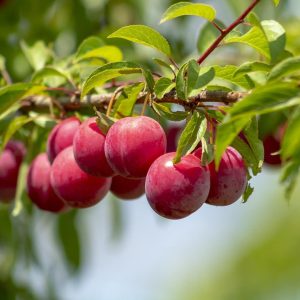
Ozark Premier Plum
Checking fit
20th Century Asian Pear
Checking fit
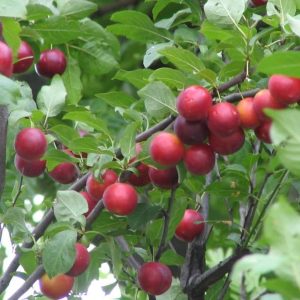
American Plum
Checking fitRated 4.63 out of 5


Reza Shabestari (verified owner) –
I got my tree on time and in a good shape. Better wrapping would help to keep it fresher.
Khammeth S. (verified owner) –
Tiny but looking forward to the future
Jenifer S. (verified owner) –
Bare root, great root system! Looking forward to plums in a few years!