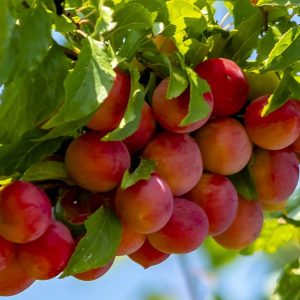
Ozark Premier Plum
$49.95
Ozark Premier Plum (Prunus salicina ‘Ozark Premier’) is a mid-century Missouri-bred Japanese plum yielding extra-large 2–2.5 inch fruit with bright red skin, firm fine-grained yellow flesh, and rich flavor for fresh eating and preserves. It grows in USDA hardiness zones 5-9 and AHS heat zones 5-8, needs 750-800 chill hours, and requires cross-pollination with a compatible variety such as Methley Plum or Hollywood Plum to set fruit.
4-5′ Bare Root Grafted Tree
Rootstock: Halford – Standard
A peach seedling rootstock giving a full-size, vigorous, well-anchored tree — the workhorse of eastern peach growing. It offers no nematode resistance, so avoid known nematode ground.
• Support: Freestanding; no staking required.
Can’t be shipped to: AK, CO, HI, MT, OR, WA
In stock
Ozark Premier was introduced in 1946 by the Missouri State Fruit Experiment Station at Mountain Grove, Missouri, with breeder P. S. Shepard credited in station records. Its parentage is documented as Methley crossed with Burbank, two mid-season Japanese plum selections that were prominent in mid-century breeding work. The cross was aimed at producing a large-fruited, heat-adapted variety suited to the humid continental and subtropical-transition climates of the mid-South and lower Midwest — a region underserved by the California-focused Japanese plum releases of the era. By the 1950s it had moved beyond Missouri and established itself as a reliable commercial variety across the Southeast and lower Plains, valued specifically for fruit size that routinely exceeds contemporaries like Methley and Shiro at harvest.
Ozark Premier's 700-to-800-hour chilling requirement puts it squarely in standard mid-belt territory — cold enough to break dormancy reliably in zone 6 and 7 winters, yet adaptable to warmer zone 8 and 9 sites where winters regularly deliver that accumulation. In zones 5 and 6, early bloom in early to mid-March creates genuine spring-frost vulnerability; low-lying frost pockets should be avoided. Elevated sites with good cold-air drainage reduce crop loss risk significantly. Soil should drain freely — standing water around the root zone after rains promotes Phytophthora infections and sucker proliferation from shallow, plate-like roots. A loamy to sandy-loam profile in the 6.0–7.0 pH range suits it well. Once established, about one inch of water per week through the growing season maintains fruit sizing and minimizes premature drop. Mulching conserves moisture and limits mower damage to the shallow root system, which can trigger suckering if nicked.
USDA Hardiness Zone: 5-9
AHS Heat Zone: 5-8
Chill Hours: 750-800
Sun Requirements: Full Sun (6+ hours direct sunlight daily)
Soil pH: 6.0-7.0
Soil Type: Loam, well-drained; tolerates sandy loam
Soil Drainage: Well-drained
Water Requirements: Medium, consistent moisture; approximately 1 inch per week
Drought Tolerance: Moderate
Plant Spacing: 18-20 ft apart
Ozark Premier develops an upright to irregularly spreading canopy reaching 15 to 20 feet tall and nearly as wide at maturity, though most growers manage it lower with annual structural pruning. The growth rate averages 13 to 24 inches per year once the tree is established, meaning a grafted tree typically fills its allotted space within 6 to 8 years. The root architecture is shallow and spreading — roots radiate outward in a plate-like pattern rather than penetrating deep — which makes surface cultivation beneath the canopy inadvisable. Thornless stems simplify pruning operations and reduce harvest injury compared to some native plum relatives. The upright growth habit means young trees need early scaffold training to avoid narrow crotch angles that split under heavy crop load. Allow at least 18 to 20 feet of spacing per tree to accommodate full canopy spread and ensure adequate airflow, which directly affects disease pressure.
Mature Height: 15-20 ft tall
Mature Spread: 15-20 ft wide
Growth Habit: Upright, irregular form
Growth Rate: Moderate (13-24 inches per year once established)
Foliage Type: Deciduous
Food Forest Layer: Canopy, Sub-canopy
Leaf Color: Green
Thorns?: No (thornless)
Attracts Wildlife: Bees, butterflies (Eastern Tiger Swallowtail larval host)
Life Span: Perennial
Ozark Premier Plum flowers in the early relative window in the Zone 7 Ozarks planning model. Most authoritative sources say cross-pollination is needed; use an overlapping Japanese or hybrid plum.
Bloom Season: Early
Bloom Window: Late Mar - Early Apr
Pollination Requirements: Most authoritative sources say cross-pollination is needed; use an overlapping Japanese or hybrid plum.
Pollination Mechanism: Insect (bee)
Flower Color: White
Ploidy: Diploid
The defining characteristic of Ozark Premier is fruit size: at 2.0 to 2.5 inches in diameter, these plums are extra-large for the Japanese class and conspicuous on the tree at harvest. Skin is bright red and comparatively tough, which aids handling during harvest and reduces bruising in transit. The yellow flesh is juicy with a tart-to-sweet flavor profile — acidity is noticeable early in the season but softens as the fruit approaches full maturity in late July to mid-August. Flesh texture is firm and fine-grained, holding up well for jam and preserves processing where mushiness in lesser varieties becomes a problem. The semi-freestone pit clings at full ripeness, requiring a knife for clean separation. Storage life refrigerated runs under one month, making fresh-market or rapid-processing use the practical pathway. Culinary applications span fresh eating, jams, jellies, canning, and baking. The fruit's size makes it well suited to halved-fruit preserving and whole-fruit presentation at markets.
Ripening Season: Late
Harvest Window: Late Jul - Mid Aug
Fruit Size: 2-2.5 inch (extra large)
Flavor: Juicy, tart to sweet, fine-grained yellow flesh; rich flavor
Fruit Color: Bright red skin; yellow flesh
Fruit Texture: Firm, fine-grained
Fruit Skin: Tough, bright red
Bearing Habit: Semi-freestone (pit clings)
Years to Bear: 3-6 years
Storage Life: Less than 1 month (refrigerated)
Culinary Uses: Fresh eating, jams, jellies, preserves, canning, baking, cooking
Ozark Premier carries moderate resistance to Brown Rot (Monilinia fructicola) and Bacterial Leaf Spot (Xanthomonas arboricola pv. pruni); a sanitation-first program — removing mummified fruit, pruning dead wood, and thinning the canopy — keeps these diseases manageable. Bacterial Canker (Pseudomonas syringae pv. syringae) resistance is moderate; avoid pruning cuts during wet weather and seal large wounds promptly. Black Knot (Apiosporina morbosa) warrants vigilance — the gall-forming fungus spreads on wind from nearby infected prunus. Prune out knots 4 inches below visible infection each winter, disinfecting tools between cuts. Plum Leaf Scald (Xylella fastidiosa) is insect-vectored, incurable, and significant in susceptibility; in high-risk areas, maintain weed control around the root zone and avoid sites adjacent to riparian corridors. All four primary pests — Plum Curculio (Conotrachelus nenuphar), Oriental Fruit Moth (Grapholita molesta), Spotted Wing Drosophila (Drosophila suzukii), and Peach Tree Borer (Synanthedon exitiosa) — require active management. Kaolin clay before petal fall deters Plum Curculio egg-laying; pheromone traps monitor Oriental Fruit Moth and SWD flights, with OMRI-listed spinosad applied when catches spike. Peach Tree Borer frass at the trunk base signals larval presence; beneficial nematodes (Steinernema carpocapsae) applied to the root crown in late summer provide suppression.
Brown Rot: Moderately Resistant
Black Knot: Moderately Susceptible
Bacterial Leaf Spot: Moderately Resistant
Bacterial Canker: Moderately Resistant
Plum Leaf Scald: Susceptible
Plum Curculio: Susceptible
Oriental Fruit Moth: Susceptible
Spotted Wing Drosophila: Susceptible
Peach Tree Borer: Susceptible
- Early thinning for size: Thin fruits to one per cluster, spaced 4–6 inches apart, within 4 weeks of petal fall — unthinned clusters risk limb breakage and smaller individual fruits at harvest.
- Black knot monitoring: Walk the tree each winter before bud break to find and remove black, elongated knots on branches. Dispose of removed wood off-site or burn; never compost infected material.
- Peach tree borer watch: Inspect the soil line and lower trunk each August for gummy, sawdust-like frass. Apply beneficial nematodes to the root crown area in late summer to suppress larvae before they overwinter.
- SWD harvest management: Spotted wing drosophila populations peak around the midsummer ripening window. Harvest promptly at maturity and refrigerate immediately; field fruit left beyond peak ripeness becomes an SWD breeding site.
- Pollinator proximity: Place a compatible Japanese plum pollinator — Methley is the standard choice — within 50 feet; Ozark Premier's early bloom window requires close bee-foraging overlap to maximize fruit set.
We ship in late winter or early spring based on your USDA hardiness zone.
We strive to ship orders on the scheduled dates listed in the table below. However, please note that the actual shipping date may be subject to change due to factors like weather conditions and order volume.
The specific date for shipping your order will be determined according to your zipcode at the time of checkout.
Our plants are shipped bare root, packed in moist sawdust, and securely wrapped in plastic to prevent the roots from drying out. We use USPS Ground Advantage for shipping, ensuring that your plants typically arrive within 2-5 days after packaging.
In case you're unable to plant the trees immediately upon arrival, we recommend soaking them in water for a few hours and temporarily heeling them in. Ideally, they should be planted within three days of receipt for optimal health.
See our full shipping policy and map here
| Zone | Ship Date |
|---|---|
| 11 - 8b | March 1st, 2027 |
| 8a - 7b | March 8th, 2027 |
| 7a | March 15th, 2027 |
| 6b | March 22nd, 2027 |
| 6a | March 29th, 2027 |
| 5b - 5a | April 12th, 2027 |
| 4b - 4a | April 26th, 2027 |
| 3b - 1a | May 3rd, 2027 |
Our 365-Day Plant Guarantee: We ensure that our plants are delivered to you alive and healthy. If your plant does not survive its first year, you're eligible for store credit under these conditions:
- Your location falls within the appropriate USDA hardiness zone for the plant variety (refer to our hardiness zone map).
- You maintain the roots' moisture and plant within three days of delivery, following the instructions in our Planting Guide.
If you're concerned about your plant's health, please consult our guide, How to Tell if Your Tree is Dead or Dormant. Remember, our plants are shipped in a dormant state and may leaf out at different times based on their species. To check for plant vital
Related products

Toka Plum
Checking fit- SOLD OUT
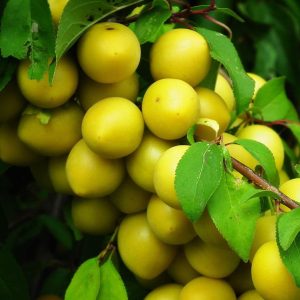
Shiro Plum
Checking fit 
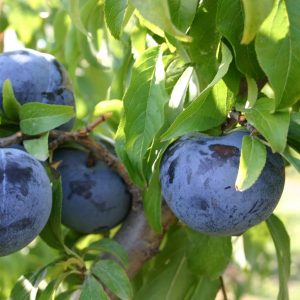
Black Ice Plum
Checking fit
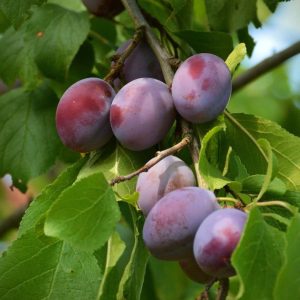
Hollywood Plum
Checking fit


Reviews
There are no reviews yet.