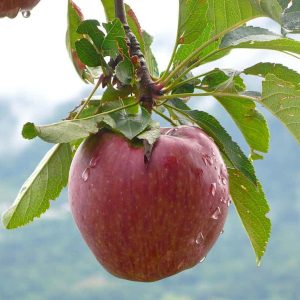
Shiro Plum
$49.95
Shiro Plum (also known as Yellow Plum; Prunus salicina ‘Shiro’) is a Luther Burbank introduction producing golden-yellow, translucent-fleshed plums with sweet, mild, low-acid flavor and tender, melting texture — an early-ripening Japanese type. It grows in USDA hardiness zones 5-9 and AHS heat zones 4-9, needs 450-500 chill hours, and benefits significantly from cross-pollination with compatible varieties such as Methley Plum or Ozark Premier Plum to maximize yields.
4-5′ Bare Root Grafted Tree
Rootstock: K86 – Standard
Vigorous with excellent anchorage and strong tolerance of heavy, wet ground. Not a match for sandy soils, and susceptible to root-knot and ring nematodes.
• Support: Freestanding; exceptional anchorage.
Can’t be shipped to: AK, CO, HI, MT, OR, WA
Out of stock
Out of stock — back next season
Spring 2027 inventory drops in June. Drop your email and we'll notify you the day this variety is back in stock.
You're on the list. Check your inbox for a confirmation link — click it to lock in your spot. We'll email you the day this variety is back in stock.
Shiro was introduced by Luther Burbank in 1899, making it one of his earlier Japanese plum releases from the Santa Rosa, California breeding program he had established using Prunus salicina material imported from Japan beginning in 1885. Burbank’s own records, which he kept informally, suggested Shiro was a seedling from Wickson — itself a P. triflora x P. simonii cross — though subsequent researchers have proposed alternative parentages including direct P. simonii x P. salicina crosses, and the exact lineage cannot be confirmed with certainty. The name Shiro means ‘white’ in Japanese, a reference to the near-translucent appearance of the fruit at full maturity, though it ripens to a clear golden yellow. It became one of Burbank’s most enduring introductions, adopted widely across the Southeast and mid-Atlantic for its adaptability to humid summers, consistent productivity, and low-acid flavor profile that distinguished it clearly from the red-fleshed Japanese plum mainstream.
Shiro performs well across a wide range of climates, needing 400 to 500 chill hours — enough to satisfy winter dormancy in zones 5 through 9 without the deep cold requirement that excludes many Japanese varieties from the South. Full sun is essential: at least six hours of direct light daily supports flower bud development and reduces the humidity-driven disease pressure that plagues plums grown in partial shade. Well-drained loamy soil with a pH of 6.0 to 7.0 suits this variety best; persistent waterlogging at the root zone predisposes trees to Cytospora canker and Phytophthora collar rot. Consistent moisture during fruit development in late spring and early summer improves fruit size and reduces pit-split. Thinning fruits to 3 to 4 inches apart after June drop is important for Shiro because its naturally heavy cropping tendency can cause limb breakage and biennial bearing if left unmanaged. Young trees benefit from nitrogen applied in early spring; avoid late-season fertilization, which promotes tender growth susceptible to bacterial canker.
USDA Hardiness Zone: 5-9
AHS Heat Zone: 4-9
Chill Hours: 450-500
Sun Requirements: Full Sun
Soil pH: 6.0-7.0
Soil Type: Loam, well-drained
Soil Drainage: Well-drained
Water Requirements: Medium; consistent moisture, especially during fruit development
Heat Tolerance: High; described as heat-tolerant
Plant Spacing: 15-20 ft.
Shiro develops an upright-spreading framework that typically reaches 12 to 20 feet in height and spread at maturity on standard rootstock — a size that fits comfortably into most home orchards and food forest canopy or sub-canopy positions. The branching structure is moderately dense, with a central tendency toward strong scaffold formation that responds well to open-center or modified central-leader training during the first few years. Fruit develops on both one-year wood and spurs on older branches, which means annual pruning to encourage new shoot growth is important for sustained yield. The deciduous foliage is medium green in summer, with modest autumn color. Bloom comes densely in early spring — sometimes before foliage fully emerges — creating a showy display of white flowers that also makes Shiro useful at the edge of a mixed planting. Mature trees have medium growth rate and a productive lifespan of 20 to 30 years with regular maintenance.
Mature Height: 12-20 ft tall
Mature Spread: 12-20 ft wide
Growth Habit: Upright-spreading
Growth Rate: Moderate
Foliage Type: Deciduous
Food Forest Layer: Canopy, Sub-canopy
Leaf Color: Green
Attracts Wildlife: Bees, butterflies, birds
Life Span: 20-30+ years
Shiro Plum flowers in the early relative window in the Zone 7 Ozarks planning model. Partially self-fruitful; cross-pollination is safer. Documented partners include Burbank, Early Golden, Methley, Ozark Premier, Santa Rosa, and Satsuma.
Bloom Season: Early
Bloom Window: Late Mar - Early Apr
Pollination Requirements: Partially self-fruitful; cross-pollination is safer. Documented partners include Burbank, Early Golden, Methley, Ozark Premier, Santa Rosa, and Satsuma.
Pollination Mechanism: Insect (bee)
Flower Color: White
Ploidy: Diploid (2n)
Shiro fruit ripens in early July through early August — among the earlier harvests in the Japanese plum calendar — and reaches 1.5 to 2 inches in diameter with a translucent golden-yellow skin and matching yellow flesh. The flavor profile is defined by high sugar content and very low acid, with a juicy, melting texture at peak ripeness that suits fresh eating more than prolonged cooking. The thin, slightly tart skin provides a contrasting edge to the sweet interior. Fruit is clingstone, which complicates pit removal for preservation, but does not detract from fresh eating quality. For processing, Shiro makes excellent jam and jelly where its sweetness reduces the amount of added sugar needed, and it can be canned whole or halved. Refrigerated storage extends shelf life to 2 to 4 weeks; flavor is best at room temperature after a day or two off the tree. Trees at maturity can yield 30 or more pounds annually, sometimes requiring thinning in heavy crop years.
Ripening Season: Mid
Harvest Window: Early Jul - Early Aug
Fruit Size: 1.5-2 inch
Flavor: Sweet, mild, low acid; juicy with thin, slightly tart skin
Fruit Color: Golden-yellow skin; translucent yellow flesh
Fruit Texture: Juicy, tender, melting
Fruit Skin: Clingstone; thin skin
Bearing Habit: Heavy bearer; bears on spurs and one-year wood
Years to Bear: 3-6 years
Storage Life: 2-4 weeks refrigerated
Culinary Uses: Fresh eating, jam, jelly, preserves, canning, baking, wine
Shiro carries meaningful resistance to black knot (Apiosporina morbosa), a fungal disease that causes hard, black galls on stems and can girdle branches if left uncut — reducing the intensive pruning program that susceptible Japanese plums require in humid, forested regions. However, the variety is susceptible to brown rot (Monilinia fructicola), the most damaging stone fruit disease in humid climates. Brown rot management should begin before bloom using kaolin clay on developing fruitlets, followed by sanitation — removing all mummified fruit promptly after harvest. Pruning for airflow is the single most impactful cultural tool against brown rot. Shiro is also moderately susceptible to bacterial canker (Pseudomonas syringae), Cytospora canker (Cytospora leucostoma), and shot hole (Wilsonomyces carpophilus); all three worsen with wounding or stress. Prune only during dry weather to reduce infection risk. Four pest species rate as susceptible: plum curculio (Conotrachelus nenuphar), oriental fruit moth (Grapholita molesta), peachtree borer (Synanthedon exitiosa), and brown marmorated stink bug (Halyomorpha halys). Kaolin clay from petal fall through late June controls curculio; pheromone traps time Spinosad applications for oriental fruit moth. Beneficial nematodes applied in early fall reduce peachtree borer populations. Exclusion netting during ripening limits stink bug damage.
Brown Rot: Susceptible
Black Knot: Resistant
Bacterial Canker: Moderately Susceptible
Cytospora Canker: Moderately Susceptible
Shot Hole: Moderately Susceptible
Plum Curculio: Susceptible
Oriental Fruit Moth: Susceptible
Peachtree Borer: Susceptible
Brown Marmorated Stink Bug: Susceptible
- Thin aggressively in heavy crop years: Shiro sets fruit prolifically and benefits from hand-thinning to 3–4 inches between fruits after June drop to prevent limb breakage and biennial bearing cycles.
- Start brown rot prevention before bloom: Brown rot susceptibility means copper-based organic sprays should begin at green tip stage, not after fruit shows symptoms — preventive timing is essential on this variety.
- Pair with a reliable cross-pollinator: Despite partial self-fertility, yields from solo-planted Shiro are lower; plant Methley or Santa Rosa within 50 feet for full crops.
- Prune only in dry weather: Bacterial canker and Cytospora canker both enter through pruning cuts; time all pruning for dry spells in late winter or mid-summer to reduce infection risk.
- Monitor curculio from petal fall: Plum curculio females lay eggs in developing fruitlets shortly after petal fall; starting kaolin clay applications within days of petal drop and reapplying after rain provides the strongest organic defense.
We ship in late winter or early spring based on your USDA hardiness zone.
We strive to ship orders on the scheduled dates listed in the table below. However, please note that the actual shipping date may be subject to change due to factors like weather conditions and order volume.
The specific date for shipping your order will be determined according to your zipcode at the time of checkout.
Our plants are shipped bare root, packed in moist sawdust, and securely wrapped in plastic to prevent the roots from drying out. We use USPS Ground Advantage for shipping, ensuring that your plants typically arrive within 2-5 days after packaging.
In case you're unable to plant the trees immediately upon arrival, we recommend soaking them in water for a few hours and temporarily heeling them in. Ideally, they should be planted within three days of receipt for optimal health.
See our full shipping policy and map here
| Zone | Ship Date |
|---|---|
| 11 - 8b | March 1st, 2027 |
| 8a - 7b | March 8th, 2027 |
| 7a | March 15th, 2027 |
| 6b | March 22nd, 2027 |
| 6a | March 29th, 2027 |
| 5b - 5a | April 12th, 2027 |
| 4b - 4a | April 26th, 2027 |
| 3b - 1a | May 3rd, 2027 |
Our 365-Day Plant Guarantee: We ensure that our plants are delivered to you alive and healthy. If your plant does not survive its first year, you're eligible for store credit under these conditions:
- Your location falls within the appropriate USDA hardiness zone for the plant variety (refer to our hardiness zone map).
- You maintain the roots' moisture and plant within three days of delivery, following the instructions in our Planting Guide.
If you're concerned about your plant's health, please consult our guide, How to Tell if Your Tree is Dead or Dormant. Remember, our plants are shipped in a dormant state and may leaf out at different times based on their species. To check for plant vital
Related products

Honeycrisp Apple
Rated 5.00 out of 5$49.95 Select Rootstock This product has multiple variants. The options may be chosen on the product pageChecking fit
Blue Damson Plum
Checking fit
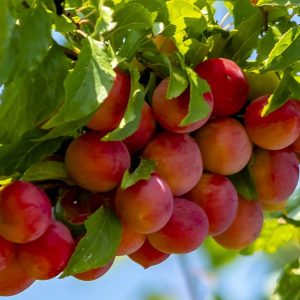
Toka Plum
Checking fit
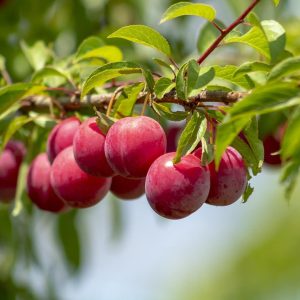
Ozark Premier Plum
Checking fit

Reviews
There are no reviews yet.