Korean Giant Asian Pear
$49.95
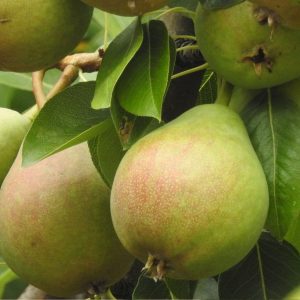
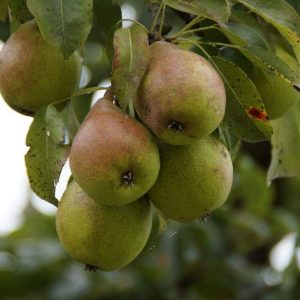
Korean Giant Asian Pear (also known as Olympic Asian Pear; Pyrus pyrifolia ‘Korean Giant’) is a Korean-origin Asian pear producing grapefruit-sized, 3–4-inch dark russet fruit with an apple-like crunch and high sugar content. It grows in USDA hardiness zones 5-9 and AHS heat zones 4-9, needs 500-700 chill hours, and requires cross-pollination with a compatible variety such as Shinko Asian Pear or Bartlett Pear to set fruit.
4-5′ Bare Root Grafted Tree
Rootstock: Pyrus calleryana – Standard
A vigorous pear seedling rootstock for a full-size tree, tolerant of heat and wet ground and resistant to fire blight. The standard choice for European and hybrid pears.
• Support: Freestanding; well anchored.
Can’t be shipped to: AK, HI, MT, OR
In stock
Korean Giant, also marketed as Olympic Asian Pear and known in Korea as Dan Bae, originated in South Korea as a Pyrus pyrifolia selection valued primarily for extraordinary fruit size. The variety entered North American markets through the late twentieth century and is listed in the USDA-NCGR pear collection, where A-Ri-Rang is recorded as a closely related Korean cultivar in the same large-fruited late-season group. Formal parentage documentation is limited in Western extension literature; the variety appears to have been selected within Korean Pyrus pyrifolia breeding programs targeting large fruit size combined with a late October harvest window. Its late ripening—significantly later than Shinseiki, Chojuro, or Hosui—extends the fresh Asian pear marketing season into fall and has made it attractive to diversified orchards seeking harvest-window spread. Korean Giant entered U.S. commercial and home orchard programs through Pacific Northwest nurseries, where its size and late timing distinguished it from the dominant Japanese-origin cultivars.
Korean Giant's fruit mass — up to 2 pounds per pear — puts genuine structural demand on scaffolding branches, so training to a modified central leader or open vase with wide-angled limbs is worth planning from year one. The tree performs across a range of soil textures, tolerating clay and sandy soils as long as drainage is adequate; standing water during bloom or fruit development invites fire blight and root problems. A soil pH of roughly 5.9 to 6.5 keeps iron and manganese available, which matters for foliage vigor during the long growing season this late-ripening variety needs. Roughly 500 to 700 chill hours positions it well for zones 6 through 8 in continental climates, though growers on the warmer edge of zone 9 should site it on north-facing slopes or where winter temperatures reliably dip below 45°F for at least 400 cumulative hours. Consistent moisture during the June-through-August cell-division period drives maximum fruit development; taper irrigation as harvest approaches to concentrate sugars and prevent cracking.
USDA Hardiness Zone: 5-9
AHS Heat Zone: 4-9
Chill Hours: 500-700
Sun Requirements: Full Sun (6+ hours direct sunlight daily)
Soil pH: 5.9-6.5
Soil Type: Well-drained loam; tolerates clay and sandy soils
Soil Drainage: Well-drained; does not tolerate waterlogged conditions
Water Requirements: Medium; drought tolerant once established
Drought Tolerance: Moderate to High once established
Heat Tolerance: High; tolerates heat and humidity
Plant Spacing: 10-15 ft apart
Korean Giant occupies a sub-canopy or canopy layer position in a food forest without dominating adjacent plantings, topping out at 12 to 15 feet tall and spreading 10 to 15 feet wide. Growth rate is moderate, and the upright rounded crown develops a fairly tidy form with annual dormant pruning. Spur productivity is central to this variety — Korean Giant bears heavily on short, stubby fruiting spurs that persist on older wood, so pruning strategy focuses on maintaining spur vigor by removing crowded wood and opening canopy to light rather than heavy heading cuts. The glossy green foliage transitions to yellow, orange, or red in fall, adding late-season landscape interest. No thorns make handling straightforward. Root architecture is typical of Pyrus pyrifolia on standard rootstock: a spreading lateral root system with moderate deep anchoring, suited to well-drained slopes or raised beds where water movement is predictable.
Mature Height: 12-15 ft tall
Mature Spread: 10-15 ft wide
Growth Habit: Upright, rounded crown
Growth Rate: Moderate
Foliage Type: Deciduous
Food Forest Layer: Canopy, Sub-canopy
Leaf Color: Green (glossy)
Fall Foliage Color: Yellow, orange, or red
Thorns?: No
Attracts Wildlife: Bees and pollinators (flowers); mammals and birds (fruit)
Life Span: 50+ years
Korean Giant is self-incompatible — it will not set fruit from its own pollen — so planting at least one other Asian pear variety within roughly 50 feet is a practical minimum, with two other varieties being more reliable under variable bee-flight conditions. Bloom falls in the early April to early May window, overlapping well with 20th Century Asian Pear and Ooharabeni Asian Pear, both of which are compatible pollinators with closely aligned bloom timing. European pear varieties with overlapping bloom, including Bartlett, also provide compatible pollen, though bee preference for intraspecific transfers can vary. Pollination is handled by bees, so sites with nearby wildflower forage or intentional companion plantings will support pollinator numbers during bloom. Thin fruit clusters to single fruitlets after natural drop to let the tree channel resources into Korean Giant's characteristically large fruit rather than producing a heavy crop of undersized pears.
Bloom Season: Mid
Bloom Window: Early Apr - Early May
Pollination Requirements: Requires cross-pollination; self-incompatible — plant at least two different Asian pear varieties
Pollination Mechanism: Insect (bee) pollinated
Flower Color: White
Korean Giant's defining characteristic is sheer size: fruit averaging 3 to 4 inches in diameter and 1 to 2 pounds each, with the russet-brown skin and white, granule-free flesh typical of premium Japanese-type Asian pears. Texture is crisp and apple-like, with substantial juiciness, and sugar levels are high — flavor profiles from Korean trial data describe it as sweet with mild subacidity, making it accessible for fresh eating without the tartness that some Asian pear cultivars carry. Harvest falls Early to Late October, making it one of the latest-ripening Asian pear varieties available. Cold-storage performance is a practical advantage: properly cooled fruit holds quality for up to 9 months, extending the marketing and consumption window well into late winter. Culinary applications include fresh eating, salads, juicing, baking, and use in Korean cuisine where the variety has a long traditional role as both a table fruit and a meat tenderizer due to its protease enzyme content.
Ripening Season: Very Late
Harvest Window: Early Oct - Late Oct
Fruit Size: 3-4 inch (grapefruit-sized)
Fruit Weight: 1-2 lbs per fruit
Flavor: Sweet, crisp, juicy with high sugar content
Fruit Color: Dark brown russet skin; white flesh
Fruit Texture: Crisp, juicy; apple-like crunch
Bearing Habit: Annual bearer; productive on spurs
Years to Bear: 1-3 years after planting
Yield: 50+ per tree at maturity
Storage Life: 9 months in cold storage
Culinary Uses: Fresh eating, salads, Asian cuisine, juicing, baking, preserves
Korean Giant carries moderate resistance to fire blight (Erwinia amylovora), the most damaging bacterial disease for pear growers in humid climates. This means the risk is reduced relative to highly susceptible cultivars, but not eliminated — inspect shoots after bloom periods with late frost or wet weather, and prune blighted wood at least 8 to 12 inches below visible infection into healthy tissue, sterilizing tools between cuts with 70% isopropyl. Pear scab (Venturia pirina) is similarly at moderate resistance, and good air circulation through annual canopy thinning reduces humidity in the canopy where scab inoculum builds. The remaining disease concerns — rust (Gymnosporangium spp.), Pseudomonas blossom blast (Pseudomonas syringae), and pear leaf spot (Fabraea maculata) — show moderate susceptibility, meaning attentive site management is the primary defense. Removing nearby juniper and cedar species reduces Gymnosporangium spore load. On the pest side, codling moth (Cydia pomonella), pear psylla (Cacopsylla pyricola), pear blister mite (Eriophyes pyri), and aphids (Dysaphis pyri) are all moderate concerns. Kaolin clay applications during early fruit development deter codling moth and psylla without disrupting beneficials. Dormant oil sprays in late winter address overwintering blister mite and aphid egg masses before populations build.
Fire Blight: Moderately Resistant
Pear Scab: Moderately Resistant
Rust Disease: Moderately Susceptible
Pseudomonas Blossom Blast: Moderately Susceptible
Pear Leaf Spot: Moderately Susceptible
Codling Moth: Moderately Susceptible
Pear Psylla: Moderately Susceptible
Pear Blister Mite: Moderately Susceptible
Aphids: Moderately Susceptible
- Fruit thinning is not optional: Thin clusters to a single fruit after natural drop; leaving multiple fruits per spur on a variety this size causes branch breakage and undersized pears that don't reach the 1–2 lb benchmark.
- Support heavy scaffolds early: Train wide-angled scaffold branches with spreaders or ties in years 1–3 to prevent acute-angled crotches that split under Korean Giant's substantial fruit load at maturity.
- Plant two pollinators, not one: Cross-pollination is required and yield security improves with two compatible varieties planted — if one blooms slightly off in a warm or cool year, the second catches the overlap window.
- Time dormant sprays for mite and psylla control: Apply dormant oil above 40°F before green tip in late February to early March to knock back pear blister mite and psylla egg populations before hatch.
- Rust management starts with neighbors: Gymnosporangium rust completes its life cycle on cedar and juniper hosts; removing susceptible junipers within 1,000 feet or choosing gall-resistant juniper species is the most effective organic rust control.
We ship in late winter or early spring based on your USDA hardiness zone.
We strive to ship orders on the scheduled dates listed in the table below. However, please note that the actual shipping date may be subject to change due to factors like weather conditions and order volume.
The specific date for shipping your order will be determined according to your zipcode at the time of checkout.
Our plants are shipped bare root, packed in moist sawdust, and securely wrapped in plastic to prevent the roots from drying out. We use USPS Ground Advantage for shipping, ensuring that your plants typically arrive within 2-5 days after packaging.
In case you're unable to plant the trees immediately upon arrival, we recommend soaking them in water for a few hours and temporarily heeling them in. Ideally, they should be planted within three days of receipt for optimal health.
See our full shipping policy and map here
| Zone | Ship Date |
|---|---|
| 11 - 8b | March 1st, 2027 |
| 8a - 7b | March 8th, 2027 |
| 7a | March 15th, 2027 |
| 6b | March 22nd, 2027 |
| 6a | March 29th, 2027 |
| 5b - 5a | April 12th, 2027 |
| 4b - 4a | April 26th, 2027 |
| 3b - 1a | May 3rd, 2027 |
Our 365-Day Plant Guarantee: We ensure that our plants are delivered to you alive and healthy. If your plant does not survive its first year, you're eligible for store credit under these conditions:
- Your location falls within the appropriate USDA hardiness zone for the plant variety (refer to our hardiness zone map).
- You maintain the roots' moisture and plant within three days of delivery, following the instructions in our Planting Guide.
If you're concerned about your plant's health, please consult our guide, How to Tell if Your Tree is Dead or Dormant. Remember, our plants are shipped in a dormant state and may leaf out at different times based on their species. To check for plant vital
Related products

LeConte Pear
Checking fit
Pineapple Pear
Checking fitRated 5.00 out of 5
Loring Peach
Checking fitRated 4.50 out of 5
Kieffer Pear
Checking fitRated 5.00 out of 5


Reviews
There are no reviews yet.