

Triple Crown Blackberry
$11.95
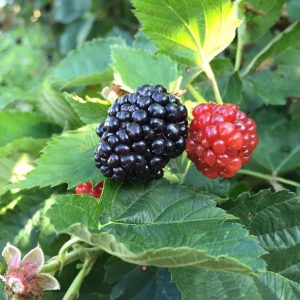
Triple Crown Blackberry (Rubus fruticosus ‘Triple Crown’) is a semi-erect, thornless blackberry released as an unpatented public variety by the USDA-ARS, producing firm, sweet, aromatic one-inch black fruit rated equal to the best commercial cultivars for flavor and color. It grows in USDA hardiness zones 5-9 and AHS heat zones 5-9, needs 300-500 chill hours, and is self-fertile, fruiting reliably without a pollinator partner.
12-18″ Bare Root Plant
Propagation: Own-root
Can’t be shipped to: AK, FL, HI, SC
In stock
Triple Crown was released in 1996 as an unpatented public variety by the USDA Agricultural Research Service small-fruit breeding program based in Beltsville, Maryland — the same ARS unit responsible for many of the semi-erect thornless types that dominate commercial mid-Atlantic blackberry production. The name was chosen to capture a three-part distinction: flavor ratings in Oregon and mid-Atlantic trials that equaled or exceeded the benchmark trailing Marion and the leading semi-erect Chester Thornless; documented yields in mature research plots reaching 30 or more pounds per plant; and reliable performance across the broad climate range from Zone 5 through Zone 9. Semi-erect cane habit sets it apart from the stiffly upright University of Arkansas releases — Triple Crown’s vigorous arching canes reach four to five feet and benefit from trellis support, a growth style consistent with its USDA Beltsville lineage. Its late-season window, running from late July through late August, positioned it from the outset as a season-extender to follow earlier-ripening erect types.
Triple Crown performs across a wide hardiness band — Zones 5 through 9 — and requires approximately 300 to 500 chill hours to break dormancy reliably. Plant in full sun on well-drained soil with a pH between 5.5 and 6.5; amend with sulfur if your soil runs alkaline. Space plants 5 to 6 feet apart in the row with rows 8 to 10 feet apart to accommodate the arching canes. A two-wire trellis — bottom wire at 3 feet, top wire at 5 feet — keeps canes manageable and improves air circulation. Tip primocanes at 3 to 4 feet in early summer to encourage lateral branching; cut those laterals to 12 to 18 inches in late winter. Remove all floricanes immediately after harvest to reduce disease carry-over. Consistent moisture during July and August fruit development significantly improves berry size and yield.
USDA Hardiness Zone: 5-9
AHS Heat Zone: 5-9
Chill Hours: 300-500
Sun Requirements: Full Sun
Soil pH: 5.5-6.5
Soil Type: Sandy loam to clay loam; fertile, moderate water-holding capacity
Soil Drainage: Well-drained
Water Requirements: Medium
Drought Tolerance: Moderate
Heat Tolerance: High
Plant Spacing: 5-6 ft apart
How to Prune: Remove floricanes after fruiting; tip primocanes at 36-42 inches in summer to encourage lateral branching; train laterals to trellis
Triple Crown is a semi-erect thornless blackberry — meaning its canes arch upward and outward rather than standing rigidly upright, but lack the sprawling habit of trailing types such as Marionberry. Canes are completely smooth and free of thorns, making harvest and pruning straightforward without protective gloves. Mature plants reach 4 to 5 feet tall, with canes spreading somewhat wider when grown without trellis support. The vigorous growth habit produces abundant primocanes each season; in Oregon trial plantings, eight-year-old plants regularly exceeded 30 pounds of fruit per season. Foliage is large and deep green through the growing season. The semi-erect form requires a two-wire trellis for best management, though plants will produce without one if space permits the sprawling canes. Compared with the compact erect University of Arkansas releases, Triple Crown commands more row space but rewards that investment with proportionally larger yields. The plant falls under the Rosaceae family as a Rubus hybrid.
Mature Height: 4-5 ft tall
Mature Spread: 3-5 ft wide
Growth Habit: Semi-erect; thornless
Growth Rate: Fast
Foliage Type: Deciduous
Food Forest Layer: Shrub
Permaculture Role: Food production; wildlife habitat and forage; living/thorny hedge and barrier
Leaf Color: Green
Fall Foliage Color: Red to orange-purple
Thorns?: No
Attracts Wildlife: Pollinators (bees); songbirds and game birds; small mammals
Life Span: canes biennial (floricanes fruit in year 2); plant lifespan 8-10+ years
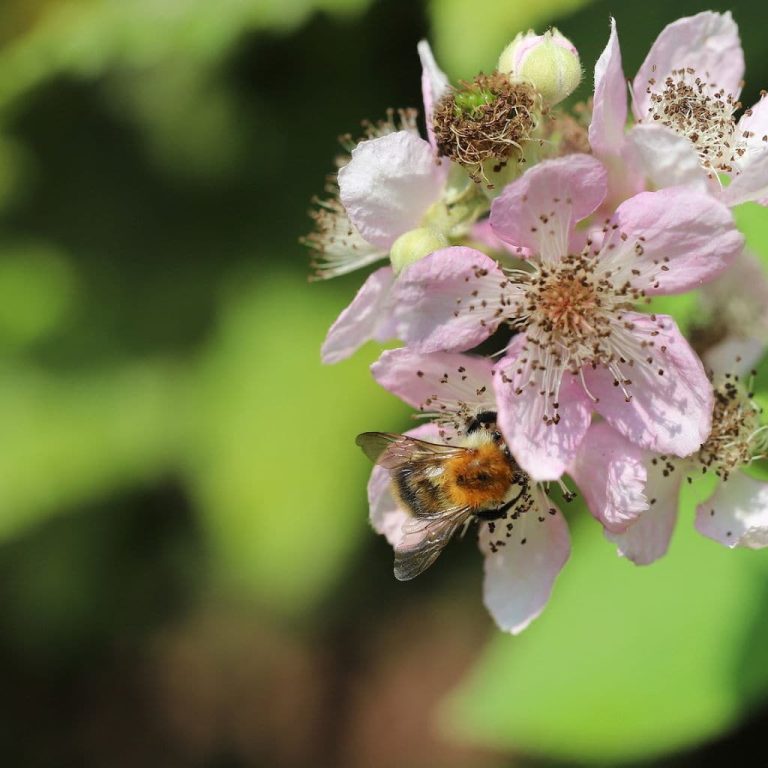
Triple Crown is self-fertile and does not require a second blackberry variety to set fruit. Flowers are insect-pollinated; honeybees and native bumblebees are the primary foragers. Bloom occurs in mid to late spring — typically May into early June across Zones 5 through 9 — after the chill requirement of roughly 700 to 900 hours has been met. Because Triple Crown is a late-season variety, its fruit development phase runs through the hottest weeks of summer; adequate soil moisture during this window directly affects berry size and sweetness. Planting near other brambles or flowering companion plants will support pollinator activity but is not required for a full crop. A single established Triple Crown planting is fully productive on its own.
Bloom Season: Early
Bloom Window: Late Apr - Late May
Pollination Requirements: Self-fertile
Pollination Mechanism: Self-fertile; insect-pollinated (bees improve fruit set and berry size)
Flower Color: White
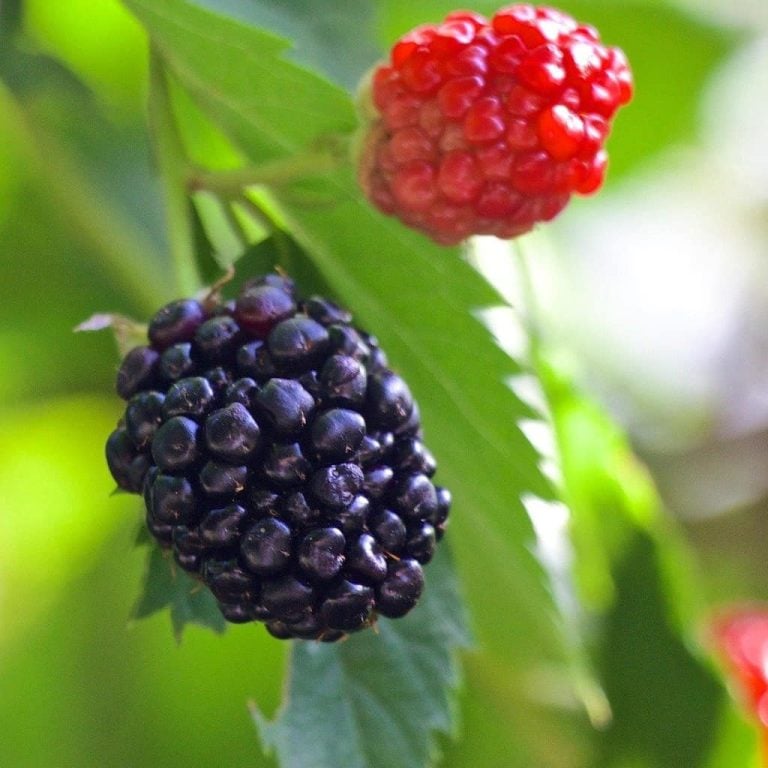
Triple Crown berries are firm, glossy black, and average approximately 1 inch in diameter — a size well suited for both fresh eating and processing. Flavor trials conducted through USDA ARS and Oregon State rated Triple Crown equal to Chester Thornless and the widely praised Marion in color, flavor, and overall quality — a meaningful benchmark given Marion's reputation as a flavor standard among trailing blackberries. The aromatic sweetness holds up well after refrigeration, and the firm texture gives the fruit a longer post-harvest window than softer varieties. Harvest runs from late July through late August, placing Triple Crown among the later-ripening thornless blackberries and extending the fresh-fruit season past most erect types. Culinary uses span fresh eating, preserves, cobblers, and freezing; the firm flesh freezes cleanly without turning to mush. High per-plant yields make Triple Crown efficient for anyone putting up large quantities of frozen or preserved fruit.
Ripening Season: Late
Harvest Window: Late Jul - Late Aug
Fruit Size: 1 inch
Fruit Weight: 7+ g per berry
Flavor: Sweet, aromatic; rated equal to Chester Thornless and Marion in color, flavor and overall quality
Fruit Color: Black
Fruit Texture: Firm
Bearing Habit: Floricane (second-year canes bear fruit); single annual crop
Years to Bear: 1-2 years after planting
Yield: 30+ per plant
Storage Life: 2-3 days fresh; suitable for local market/direct sale only
Culinary Uses: Fresh eating, juice, pies, jams, preserves, syrup, wine
Triple Crown carries no documented resistance to orange rust, rosette or double blossom, anthracnose, or cane blight — the four primary fungal and disease threats to blackberries in humid climates. Managing these begins with site selection: full sun, good air circulation, and prompt removal of floricanes after harvest reduce pressure from all four. Triple Crown is susceptible to botrytis fruit rot (gray mold), and late-August harvest timing coincides with the warm, humid conditions that favor botrytis; thin canopy and avoid overhead irrigation during fruit ripening to limit crop loss. On the pest side, Triple Crown is susceptible to spotted wing drosophila and brown marmorated stink bug — both peak in August, which aligns directly with this variety's harvest window. SWD infestation can render ripe fruit unmarketable within days; fine-mesh exclusion netting is the most reliable defense once berries begin to color. No cultivar-level resistance data exists for raspberry crown borer or Japanese beetle on Triple Crown specifically.
Orange Rust: Susceptible
Rosette / Double Blossom: Moderately Susceptible
Anthracnose: Moderately Susceptible
Cane Blight: Moderately Susceptible
Botrytis Fruit Rot / Gray Mold: Susceptible
Spotted Wing Drosophila: Susceptible
Raspberry Crown Borer: Susceptible
Brown Marmorated Stink Bug: Moderately Susceptible
Japanese Beetle: Moderately Susceptible
- Install SWD netting before color break: Triple Crown ripens during peak spotted wing drosophila season in August. Fine-mesh exclusion netting (less than 1 mm) deployed when berries are still green is your most reliable defense — waiting until you see damage is too late.
- Tip primocanes early: Pinch first-year canes at 3 to 4 feet in early summer to force strong lateral branches; those laterals carry the following year's fruit load.
- Cut floricanes immediately after harvest: Removing spent canes at ground level as soon as harvest ends reduces botrytis and anthracnose carry-over into the next season.
- Use a two-wire trellis: Bottom wire at 3 feet, top wire at 5 feet keeps the arching semi-erect canes organized and maximizes air circulation around developing fruit.
We ship in late winter or early spring based on your USDA hardiness zone.
We strive to ship orders on the scheduled dates listed in the table below. However, please note that the actual shipping date may be subject to change due to factors like weather conditions and order volume.
The specific date for shipping your order will be determined according to your zipcode at the time of checkout.
Our plants are shipped bare root, packed in moist sawdust, and securely wrapped in plastic to prevent the roots from drying out. We use USPS Ground Advantage for shipping, ensuring that your plants typically arrive within 2-5 days after packaging.
In case you're unable to plant the trees immediately upon arrival, we recommend soaking them in water for a few hours and temporarily heeling them in. Ideally, they should be planted within three days of receipt for optimal health.
See our full shipping policy and map here
| Zone | Ship Date |
|---|---|
| 11 - 8b | March 1st, 2027 |
| 8a - 7b | March 8th, 2027 |
| 7a | March 15th, 2027 |
| 6b | March 22nd, 2027 |
| 6a | March 29th, 2027 |
| 5b - 5a | April 12th, 2027 |
| 4b - 4a | April 26th, 2027 |
| 3b - 1a | May 3rd, 2027 |
Our 365-Day Plant Guarantee: We ensure that our plants are delivered to you alive and healthy. If your plant does not survive its first year, you're eligible for store credit under these conditions:
- Your location falls within the appropriate USDA hardiness zone for the plant variety (refer to our hardiness zone map).
- You maintain the roots' moisture and plant within three days of delivery, following the instructions in our Planting Guide.
If you're concerned about your plant's health, please consult our guide, How to Tell if Your Tree is Dead or Dormant. Remember, our plants are shipped in a dormant state and may leaf out at different times based on their species. To check for plant vital
3 reviews for Triple Crown Blackberry
Related products

Perfection Red Currant
Checking fitRated 4.90 out of 5
Ouachita Blackberry
Checking fitRated 5.00 out of 5
Goji Berry
Checking fitRated 4.88 out of 5
Navaho Blackberry
Checking fitRated 4.88 out of 5


Lois Holder (verified owner) –
Amy (verified owner) –
Dana McMaster (verified owner) –
This one hasn’t started growing leaves just yet but looks very healthy.