

Chester Blackberry
$11.95
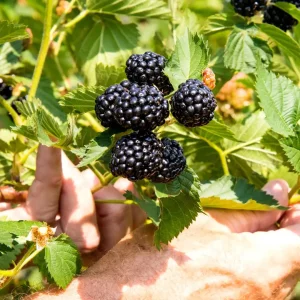
Chester Blackberry (Rubus hybrid ‘Chester’) is a thornless, semi-erect blackberry with very late-season ripening, bearing firm black fruit suitable for fresh eating, jams, jellies, wine, and processing. It grows in USDA hardiness zones 5-8 and AHS heat zones 4-8, needs 400-600 chill hours, and is self-fertile, fruiting reliably without a pollinator partner.
12-18″ Bare Root Plant
Propagation: Own-root
Can’t be shipped to: AK, FL, HI, SC
In stock
Chester Thornless Blackberry was developed cooperatively by the USDA Agricultural Research Service and Southern Illinois University, released in 1985 under the breeders G.J. Galletta and collaborators. Its parentage traces to a cross of SIUS 47 x Thornfree, two foundational semi-erect thornless lines developed through the Beltsville and Illinois cooperative programs of the late 1960s and early 1970s. The cross was made in 1964, with selection and evaluation continuing through the late 1970s before commercial release. Chester’s key breeding objective was cold hardiness: the program sought a thornless blackberry that could hold cane viability into USDA Zone 5, pushing the geographic ceiling well beyond the Zone 6 limit of earlier semi-erect thornless varieties. Chester achieved that target and remained for decades the hardiest thornless selection widely available. Its deliberately late ripening window — late August into September in mid-Atlantic climates — gave growers a valuable extension of the blackberry season after earlier varieties had finished. Chester became a commercial standard in Mid-Atlantic and Midwestern bramble plantings and remains in university extension recommendations for cold-climate regions.
Chester thrives in full sun on well-drained soil with a pH of 5.5–6.5. Its semi-erect canes reach considerable length and require a two- or three-wire trellis system for support and to keep fruit off the ground. Space plants 5–6 feet apart in the row to allow adequate air circulation, which is especially important given the humid conditions common across the Eastern US. Chester performs best in Zones 5–8, tolerating winters that eliminate most thornless competitors and handling summer heat with better composure than many semi-erect types. Approximately 400–600 chill hours are required to break dormancy correctly. Tip-prune primocanes in summer at 36–48 inches to encourage lateral branching; remove floricanes to the ground after harvest. Consistent soil moisture during fruit development is key to maximizing berry size, particularly during the long late-season ripening window.
USDA Hardiness Zone: 5-8
AHS Heat Zone: 4-8
Chill Hours: 400-600
Sun Requirements: Full Sun
Soil pH: 5.5-6.5
Soil Type: Sandy loam to clay loam; fertile, moderate water-holding capacity
Soil Drainage: Well-drained
Water Requirements: Medium
Drought Tolerance: Moderate
Heat Tolerance: High
Plant Spacing: 5-6 ft apart
Container Suitability: Not Recommended (requires trellis; vigor too large for most containers)
How to Prune: Remove floricanes (second-year canes) after harvest; tip primocanes at 3-4 feet to encourage lateral branching; train onto trellis
Chester is a semi-erect thornless blackberry with vigorous, arching canes that typically reach 6–8 feet before bending under their own weight without trellis support. The complete absence of thorns on both canes and petioles makes harvest and pruning tasks far more manageable than with thorned varieties, particularly during the extended picking season. Foliage is a deep, glossy green; the plant's sturdy root system establishes quickly and supports high annual cane production. Chester is classified as a deciduous shrub in the Rosaceae family, occupying the shrub layer in food forest and edible landscape designs. Growth rate is vigorous once established. The variety's cold hardiness to Zone 5 is a defining structural trait — canes and crown withstand temperatures that damage or kill most thornless blackberry cultivars, giving Chester a notably wider planting range than its semi-erect peers.
Mature Height: 4-5 ft tall
Mature Spread: 3-4 ft wide
Growth Habit: Semi-erect arching canes; requires trellis support
Growth Rate: Fast
Foliage Type: Deciduous
Food Forest Layer: Shrub
Permaculture Role: Food production; wildlife habitat and forage; living/thorny hedge and barrier
Leaf Color: Green
Fall Foliage Color: Red to orange-purple
Thorns?: No
Attracts Wildlife: Pollinators (bees); songbirds and game birds; small mammals
Life Span: 10-20+ years with proper management
Chester is fully self-fertile and does not require a second variety to set fruit. A single plant will produce a complete crop each season without a pollination partner. Flowers are insect-pollinated, and honeybee and native bee activity during bloom will improve fruit set and berry uniformity under most growing conditions. Bloom timing falls in late spring to early summer, consistent with other semi-erect blackberry types. Because Chester is thornless and the flowers are accessible, pollinators forage it freely. The very late ripening window — late August into mid-September — is a downstream consequence of the variety's fruit development pace, not its bloom timing; flowering occurs at a typical date for the species, but fruit maturation extends well beyond that of early and midseason varieties.
Bloom Season: Very Early
Bloom Window: Mid Apr - Mid May
Pollination Requirements: Self-fertile
Pollination Mechanism: Self-fertile; insect-pollinated (bees improve fruit set and berry size)
Flower Color: White to pinkish-white
Ploidy: Tetraploid (2n = 4x = 28)
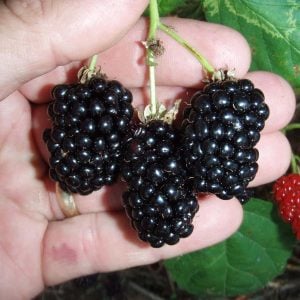
Chester produces jet-black, glossy berries of medium to large size with firm flesh that holds up through harvest, transport, and processing. Flavor is tart with moderate sweetness — a profile that works well for fresh eating but shines in cooked applications where acidity balances sugar: jams, jellies, pies, sauces, and fruit wines. The firm texture gives Chester a meaningful shelf-life advantage over softer varieties, making it especially attractive for u-pick operations and roadside markets where berries may sit for a day or two before consumption. Harvest runs from late August into mid-September, a window that opens 3–6 weeks after most erect and early semi-erect varieties have finished — extending the fresh-berry season for both growers and customers well into early fall. Berries ripen progressively across the cluster, so multiple picks through the patch are standard practice.
Ripening Season: Very Late
Harvest Window: Late Aug - Mid Sep
Fruit Size: 0.75-1 inch
Fruit Weight: 5-8 g
Flavor: Tart, average quality; suitable for fresh eating, jams, jellies, and processing
Fruit Color: Black
Fruit Texture: Firm
Bearing Habit: Floricane (second-year canes bear fruit)
Years to Bear: 1-2 years
Yield: 15-30 per plant at maturity
Storage Life: 3-5 days refrigerated; good shelf life for a blackberry
Culinary Uses: Fresh eating, jams, jellies, pies, cobblers, smoothies, wine, baking; suitable for fresh market and processing
Chester resists cane blight, one of the most damaging fungal diseases in humid blackberry plantings. Infected canes develop dark lesions and die back prematurely; Chester's resistance reduces the severity of this outcome and lowers the cost of managing the disease through the season. Gray mold (Botrytis) is a vulnerability — the very late harvest window coincides with cooler, wetter late-summer conditions that favor Botrytis development on ripe fruit. Maintaining wide row spacing, adequate trellis height, and prompt removal of spent floricanes all reduce gray mold pressure. Spotted wing drosophila targets soft, ripe fruit throughout the late-summer window; brown marmorated stink bug feeding causes internal damage that does not always show on the skin. Both pests require monitoring starting in late August. Orange rust and rosette (double blossom) are endemic risks across the Eastern US; roguing infected plants promptly limits spread. No data are available for anthracnose, crown borer, or Japanese beetle rating on Chester specifically.
Orange Rust: Susceptible
Rosette / Double Blossom: Moderately Susceptible
Anthracnose: Moderately Resistant
Cane Blight: Resistant
Botrytis Fruit Rot / Gray Mold: Moderately Susceptible
Spotted Wing Drosophila: Moderately Susceptible
Raspberry Crown Borer: Moderately Susceptible
Brown Marmorated Stink Bug: Moderately Susceptible
Japanese Beetle: Moderately Susceptible
- Trellis early: Install a two- or three-wire trellis before planting — semi-erect canes reach 6–8 feet and need support to keep fruit clean and air flow open.
- Tip-prune primocanes: Pinch new canes at 36–48 inches in early summer to force lateral branching and increase fruiting wood for next season.
- Stagger harvest checks: Berries ripen progressively across each cluster; plan multiple passes per week through the late August–September window to catch fruit at peak firmness.
- Monitor for SWD early: Set spotted wing drosophila traps before fruit begins to color — late-season crops overlap with peak SWD pressure in most Eastern states.
We ship in late winter or early spring based on your USDA hardiness zone.
We strive to ship orders on the scheduled dates listed in the table below. However, please note that the actual shipping date may be subject to change due to factors like weather conditions and order volume.
The specific date for shipping your order will be determined according to your zipcode at the time of checkout.
Our plants are shipped bare root, packed in moist sawdust, and securely wrapped in plastic to prevent the roots from drying out. We use USPS Ground Advantage for shipping, ensuring that your plants typically arrive within 2-5 days after packaging.
In case you're unable to plant the trees immediately upon arrival, we recommend soaking them in water for a few hours and temporarily heeling them in. Ideally, they should be planted within three days of receipt for optimal health.
See our full shipping policy and map here
| Zone | Ship Date |
|---|---|
| 11 - 8b | March 1st, 2027 |
| 8a - 7b | March 8th, 2027 |
| 7a | March 15th, 2027 |
| 6b | March 22nd, 2027 |
| 6a | March 29th, 2027 |
| 5b - 5a | April 12th, 2027 |
| 4b - 4a | April 26th, 2027 |
| 3b - 1a | May 3rd, 2027 |
Our 365-Day Plant Guarantee: We ensure that our plants are delivered to you alive and healthy. If your plant does not survive its first year, you're eligible for store credit under these conditions:
- Your location falls within the appropriate USDA hardiness zone for the plant variety (refer to our hardiness zone map).
- You maintain the roots' moisture and plant within three days of delivery, following the instructions in our Planting Guide.
If you're concerned about your plant's health, please consult our guide, How to Tell if Your Tree is Dead or Dormant. Remember, our plants are shipped in a dormant state and may leaf out at different times based on their species. To check for plant vital
Related products

Snowbank Blackberry
Checking fit
Ponca Blackberry
Checking fit
Prime Ark Freedom Blackberry
Checking fitRated 5.00 out of 5
Columbia Star Blackberry
Checking fit


Reviews
There are no reviews yet.