
Columbia Star Blackberry
$11.95
Columbia Star Blackberry (Rubus subg.) is a vigorous trailing thornless blackberry released by USDA-ARS in 2015, bearing firm, very sweet deep-black fruit measuring 12.80 Brix — suited to fresh eating, freezing, and processing. It grows in USDA hardiness zones 6-9 and AHS heat zones 4-8, needs 500-600 chill hours, and is self-fertile, fruiting reliably without a pollinator partner.
12-18″ Bare Root Plant
Propagation: Own-root
Can’t be shipped to: AK, FL, HI, SC
In stock
Columbia Star thornless trailing blackberry was developed by USDA-ARS scientists at the Small Fruits Research Station in Corvallis, Oregon, with Chad E. Finn as lead breeder, and released in 2015 under plant patent USPP25532 in cooperation with the Oregon State University Agricultural Experiment Station. The variety (tested as ORUS 3447-1) originated from a cross made in 2005 of NZ 9629-1 x ORUS 1350-2, the latter being a selection from Black Butte x ORUS 828-43. Marion accounts for approximately 20 percent of Columbia Star’s pedigree through the New Zealand and Oregon parentage lines, reflecting the deep influence of Marion on Pacific Northwest trailing blackberry development. The Corvallis program selected Columbia Star specifically for very high soluble-solids content (averaging 12.80 Brix) and strong fruit firmness, targeting fresh-market and pick-your-own operations where both eating quality and shelf life are commercial priorities. It belongs to the Oregon-type trailing blackberry lineage requiring trellis support, producing fruit from lateral shoots along floricane wood — the same growth architecture as Marion and Black Diamond, the regional industry standards it was bred to challenge.
Columbia Star performs reliably across USDA zones 6–9 with approximately 500–600 chill hours, making it adaptable to mild-winter climates from the mid-Atlantic to the Pacific Coast. Choose a site with full sun — at least eight hours per day — and well-drained soil with a pH between 5.5 and 6.5; low pH supports iron and manganese uptake essential for healthy cane development. Trailing types differ fundamentally from erect blackberries in their support requirements: Columbia Star's long canes cannot stand upright on their own and must be trained along a T-bar or horizontal wire trellis system (two to three wires at roughly 3 and 5 feet work well). Plant canes 4–6 feet apart in rows spaced 8–10 feet to allow adequate air circulation and equipment access. In colder Zone 6 winters, consider laying canes off the trellis and covering with mulch during dormancy for added protection. Drip irrigation is preferred over overhead watering; keeping foliage dry reduces fungal pressure during the fruiting season.
USDA Hardiness Zone: 6-9
AHS Heat Zone: 4-8
Chill Hours: 500-600
Sun Requirements: Full Sun
Soil pH: 5.5-6.5
Soil Type: Sandy loam to clay loam; fertile, moderate water-holding capacity
Soil Drainage: Well-drained
Water Requirements: Medium
Drought Tolerance: Moderate
Heat Tolerance: High
Plant Spacing: 3-6 ft apart; rows 6-8 ft apart
Container Suitability: Not Recommended
Columbia Star produces long, trailing canes that extend 6 feet or more in a single season. These are the vigorous primocanes that will, after a dormant period, become the fruit-bearing floricanes in year two — the classic biennial-cane growth cycle of all Rubus species. The canes are completely thornless, which simplifies training, tying, and harvest. Because floricanes bear fruit on lateral shoots, the trellising strategy matters: tie new primocanes to one side or vertically along a center wire while floricanes are fruiting on the horizontal wires, then cut floricanes to the ground after harvest and move primocanes into fruiting position. This two-wire management system keeps fruiting wood organized and maintains open canopy airflow. Mature plants spread to fill their allotted row space within two to three seasons. The thornless character comes from the cultivar's breeding, not from a post-harvest treatment, and is stable across vegetative propagation.
Mature Height: 6 ft tall
Mature Spread: 6-8 ft wide
Growth Habit: Trailing; vigorous; requires trellis
Growth Rate: Fast
Foliage Type: Deciduous
Food Forest Layer: Shrub
Permaculture Role: Food production; wildlife habitat and forage; living/thorny hedge and barrier
Leaf Color: Green
Fall Foliage Color: Red to orange-purple
Thorns?: No
Attracts Wildlife: Pollinators (bees); songbirds and game birds; small mammals
Life Span: 15-20+ years with proper management
Columbia Star is self-fertile and produces a reliable crop without a pollinator partner — every flower on the plant carries functional pollen and can set fruit from its own pollen. Bloom typically occurs in late spring, and the flower clusters are attractive to native bees and honeybees, which improve fruit set even in self-fertile cultivars by ensuring thorough pollen transfer to every blossom. No specific companion variety is needed, which simplifies garden planning when space is limited. Growers with multiple trailing varieties in production may plant Columbia Star alongside other Oregon-type selections without cross-compatibility concerns; it sets its own crop regardless. Where bee activity is low — in enclosed high tunnels, for instance — hand-pollination with a soft brush at peak bloom can improve berry size and uniformity. Harvest falls in the mid-season window, running from early July through early August depending on climate and elevation.
Bloom Season: Mid
Bloom Window: Early May - Mid Jun
Pollination Requirements: Self-fertile
Pollination Mechanism: Self-fertile; insect-pollinated (bees improve fruit set and berry size)
Flower Color: White
Columbia Star produces medium to large blackberries with very firm flesh — a texture attribute that holds up through handling, transport, and refrigerated storage better than softer trailing types. The flavor is intensely sweet, registering 12.80 Brix on a refractometer; for comparison, many trailing blackberries test in the 9–11 Brix range, making Columbia Star noticeably richer in soluble sugars. Seeds are present but not coarse. The fruit's combination of sweetness and firmness suits it to fresh eating, farmers' market sales, and pick-your-own operations where customers want a berry that doesn't crush in the container. It also performs well for freezing — firm berries retain shape when thawed, making them useful for smoothies and baked goods where texture matters. Harvest the berries fully black and slightly soft at the stem end for peak sweetness; under-ripe fruit is tart and does not ripen further off the cane.
Ripening Season: Mid
Harvest Window: Early Jul - Early Aug
Fruit Size: 0.75-0.78 inch
Fruit Weight: 7.6-9.7 g
Flavor: Excellent; sweet; high soluble solids (12.80 Brix)
Fruit Color: Deep black (deep red-black when fully ripe)
Fruit Texture: Very firm
Fruit Skin: Medium glossy to dull; good for processing; limited fresh-shipping durability
Bearing Habit: Floricane (second-year canes bear fruit; biennial bearing cycle)
Years to Bear: 2-3 years
Yield: 13-19
Storage Life: 2-14 days at 31-32 F (short; suited for fresh local sales and processing, not long-distance shipping)
Culinary Uses: Fresh eating, processing (IQF frozen, purees, juices, jams, jellies, pies, cobblers, wine)
Columbia Star's disease resistance profile reflects its Oregon trailing genetics and the specific pathogen pressures of humid-summer climates. The variety carries no documented resistance to orange rust (Gymnoconia nitens), rosette or double blossom (Cercosporella rubi), anthracnose (Elsinoe veneta), or cane blight (Leptosphaeria coniothyrium); growers in the eastern United States or other humid regions should manage these proactively. The primary cultural defenses are pruning out dead or infected canes immediately after harvest, maintaining wide row spacing for canopy airflow, and avoiding overhead irrigation that splashes soil-borne spores onto foliage. Columbia Star is susceptible to botrytis gray mold (Botrytis cinerea) during wet fruit-ripening periods; harvesting fully ripe berries promptly and not leaving overripe fruit on the canes reduces inoculum load. Spotted wing drosophila (Drosophila suzukii) is a consistent threat to all soft fruits and Columbia Star is susceptible; fine-mesh exclusion netting deployed at color break is the most effective organic barrier. Brown marmorated stink bug (Halyomorpha halys) feeding causes cat-facing and internal damage; perimeter trap crops and kaolin clay applications deter adults during fruit swell. OMRI-listed sulfur or copper applied at bud break addresses overwintering fungal spores on cane surfaces.
Orange Rust: Moderately Susceptible
Rosette / Double Blossom: Moderately Susceptible
Anthracnose: Moderately Susceptible
Cane Blight: Moderately Susceptible
Botrytis Fruit Rot / Gray Mold: Moderately Susceptible
Spotted Wing Drosophila: Susceptible
Raspberry Crown Borer: Moderately Susceptible
Brown Marmorated Stink Bug: Susceptible
Japanese Beetle: Moderately Susceptible
- Install trellis before planting: Columbia Star's trailing canes cannot support themselves — a two-wire T-bar system at 3 ft and 5 ft is standard; retrofitting support after canes reach full length risks snapping them.
- Segregate primocanes during fruiting: Tie new first-year canes vertically or to a separate wire while floricanes fruit on horizontal wires; mixing them creates a tangled mass that doubles harvest time.
- Act fast on botrytis: Pick fully ripe berries every two to three days during humid weather and remove any soft, discolored fruit immediately to break the gray mold spore cycle.
- Deploy SWD netting at color break: Fine-mesh exclusion netting (1 mm or smaller) installed before full color provides reliable spotted-wing drosophila exclusion — monitor traps weekly to time deployment.
- Stink bug patrol in late summer: Hand-removal at dawn when bugs are sluggish, combined with kaolin clay applications, keeps brown marmorated stink bug damage manageable without synthetic controls.
We ship in late winter or early spring based on your USDA hardiness zone.
We strive to ship orders on the scheduled dates listed in the table below. However, please note that the actual shipping date may be subject to change due to factors like weather conditions and order volume.
The specific date for shipping your order will be determined according to your zipcode at the time of checkout.
Our plants are shipped bare root, packed in moist sawdust, and securely wrapped in plastic to prevent the roots from drying out. We use USPS Ground Advantage for shipping, ensuring that your plants typically arrive within 2-5 days after packaging.
In case you're unable to plant the trees immediately upon arrival, we recommend soaking them in water for a few hours and temporarily heeling them in. Ideally, they should be planted within three days of receipt for optimal health.
See our full shipping policy and map here
| Zone | Ship Date |
|---|---|
| 11 - 8b | March 1st, 2027 |
| 8a - 7b | March 8th, 2027 |
| 7a | March 15th, 2027 |
| 6b | March 22nd, 2027 |
| 6a | March 29th, 2027 |
| 5b - 5a | April 12th, 2027 |
| 4b - 4a | April 26th, 2027 |
| 3b - 1a | May 3rd, 2027 |
Our 365-Day Plant Guarantee: We ensure that our plants are delivered to you alive and healthy. If your plant does not survive its first year, you're eligible for store credit under these conditions:
- Your location falls within the appropriate USDA hardiness zone for the plant variety (refer to our hardiness zone map).
- You maintain the roots' moisture and plant within three days of delivery, following the instructions in our Planting Guide.
If you're concerned about your plant's health, please consult our guide, How to Tell if Your Tree is Dead or Dormant. Remember, our plants are shipped in a dormant state and may leaf out at different times based on their species. To check for plant vital
Related products

Blueray Blueberry
Checking fit
Natchez Blackberry
Checking fitRated 4.25 out of 5
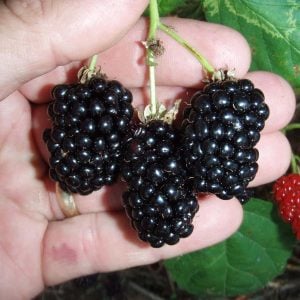
Prime Ark Freedom Blackberry
Checking fitRated 5.00 out of 5
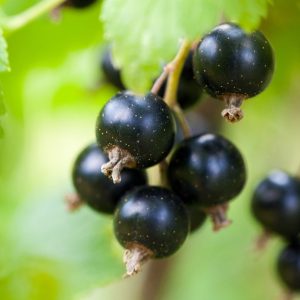
Consort Black Currant
Checking fitRated 4.88 out of 5


Reviews
There are no reviews yet.