
Arapaho Blackberry
$11.95
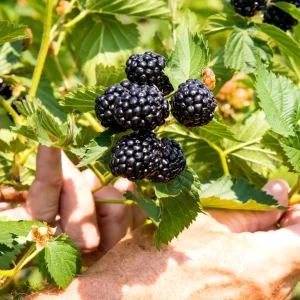
Arapaho Blackberry (Rubus fruticosus ‘Arapaho’) is the first erect thornless blackberry released by the University of Arkansas program, bearing glossy-black berries with a prominently aromatic wild-blackberry flavor on firm, self-supporting canes. It grows in USDA hardiness zones 6-9 and AHS heat zones 6-9, needs 400-500 chill hours, and is self-fertile, fruiting reliably without a pollinator partner.
12-18″ Bare Root Plant
Propagation: Own-root
Can’t be shipped to: AK, FL, HI, SC
In stock
Arapaho holds a landmark place in American caneberry history as the first erect thornless blackberry ever released by the University of Arkansas fruit breeding program. Released in 1993 under plant patent USPP8510 (now expired), it was developed by Dr. James N. Moore, founder of the UA program, which began systematic blackberry improvement in 1964. Arapaho originated from a hand-pollinated cross of Arkansas Selection 631 x Arkansas Selection 883 made in 1982 at the Clarksville, Arkansas experiment station. The resulting seedlings fruited in 1985, and one selection, designated Ark. 1536, was chosen for its early ripening, thornless canes, erect habit, and high fruit quality. At the time of release, Arapaho ripened 10 to 14 days earlier than Navaho, the program’s only other thornless erect release, and 2 days earlier than the thorny Shawnee variety, making it the earliest thornless blackberry available. That early-season slot, combined with the first-ever thornless erect cane structure in the UA portfolio, established Arapaho as both a commercial milestone and the template the program would refine in all subsequent thornless erect releases.
Plant Arapaho in full sun with well-drained soil in USDA zones 6–8, where its estimated 300–500 chill hour requirement is comfortably met across most of its hardiness range. Soil pH of 5.5–6.5 keeps nutrient availability in the optimal window for brambles; amend with sulfur or peat if your native soil reads above 6.5. Good air circulation between rows matters — Arapaho shares the orange rust susceptibility common to erect blackberry types, and dense planting slows the leaf drying that limits spore germination after rain.
Erect canes benefit from a simple trellis or fence to keep the planting manageable, though the naturally upright habit means Arapaho needs less support than trailing types. Tip the primocanes at 3–4 ft in midsummer to encourage lateral branching, which multiplies the floricane fruiting wood for the following season. Floricanes fruit once, then die; remove them at the soil line after harvest to redirect energy to the next flush of primocanes. Mulching to 3–4 inches suppresses the weeds that compete most aggressively with shallow-rooted brambles.
USDA Hardiness Zone: 6-9
AHS Heat Zone: 6-9
Chill Hours: 400-500
Sun Requirements: Full Sun
Soil pH: 5.5-6.5
Soil Type: Sandy loam to clay loam; fertile, moderate water-holding capacity
Soil Drainage: Well-drained
Water Requirements: Medium
Drought Tolerance: Moderate
Heat Tolerance: High
Plant Spacing: 3-4 ft in-row; 8-10 ft between rows
How to Prune: Summer-tip primocanes at 36-42 inches to encourage branching; remove floricanes to ground after harvest; prune laterals to 12-18 inches in late winter
Arapaho produces erect, self-supporting canes that reach 4–5 ft tall with a spread of 3–4 ft — a more compact footprint than later UA selections such as Natchez or Ouachita, which can run considerably wider. All canes are completely thornless, making pruning, tipping, and harvest straightforward work without heavy gloves or protective gear.
The plant follows the standard Rubus biennial cane cycle: primocanes emerge from the crown each spring, growing vegetatively through the first season. Those canes overwinter and become floricanes the following year, flowering and fruiting before dying back naturally. Because Arapaho is self-fertile, no second variety is needed to set fruit — a single planting produces a full crop through insect pollination alone. Canes show good heat tolerance, maintaining fruiting performance even in the warmer end of zone 8 conditions. The erect habit and compact spread make Arapaho well suited to hedgerow plantings, home gardens, and food forest shrub-layer positions where lateral spread is limited.
Mature Height: 4-5 ft tall
Mature Spread: 3-4 ft wide
Growth Habit: Erect, thornless floricane; self-supporting canes
Growth Rate: Fast
Foliage Type: Deciduous
Food Forest Layer: Shrub
Permaculture Role: Food production; wildlife habitat and forage; living/thorny hedge and barrier
Leaf Color: Green
Fall Foliage Color: Red to orange-purple
Thorns?: No
Attracts Wildlife: Pollinators (bees); songbirds and game birds; small mammals
Life Span: individual canes biennial (floricane); crown perennial 15-20+ years
Arapaho is fully self-fertile, meaning a planting of this variety alone sets fruit without a pollinator partner. Flowers open in mid-to-late spring, with bloom timing that aligns with the early-season pattern typical of UA erect types. Bees and other native pollinators visit the open white flowers readily, and good insect activity supports heavier fruit set even when the variety does not strictly require cross-pollination.
Because all blackberries in a planting flower at similar times, mixed plantings with other UA thornless varieties — Natchez, Ouachita, or Von — do not create pollination problems, but they are not necessary for Arapaho to crop fully. Gardeners running a single-variety planting can rely on Arapaho's self-fertility with confidence. The erect, open canopy structure allows pollinators to move freely through the planting, which benefits fruit set across the entire cane length.
Bloom Season: Very Early
Bloom Window: Mid Apr - Mid May
Pollination Requirements: Self-fertile
Pollination Mechanism: Self-fertile; insect-pollinated (bees improve fruit set and berry size)
Flower Color: White
Ploidy: Hexaploid (2n=6x=42)
Arapaho produces medium-sized berries with a flavor profile that stands out from many cultivated blackberries: sweet with a mild subacid edge and a prominent aroma that closely echoes wild blackberry character. The fragrance is noticeable at harvest and carries through to fresh-eating, making Arapaho a particularly rewarding variety for garden-to-table use.
Berries ripen early to mid-July in a temperate climate — ahead of most other UA releases — which concentrates the harvest window and means fruit comes off the canes before peak summer heat sets in. That early timing also reduces the overlap with late-season spotted-wing drosophila population peaks, an advantage that improves fruit quality at harvest without additional management steps. Arapaho works well fresh, in preserves, and in baked applications; the firm berry structure holds up better than soft wild types when cooked. Canes fruit prolifically along their length, and the thornless habit makes picking efficient enough for extended harvest sessions.
Ripening Season: Very Early
Harvest Window: Early Jun - Late Jun
Fruit Size: 0.75 inch (medium)
Fruit Weight: 5 g average
Flavor: Sweet, mildly subacid with a prominent aroma reminiscent of wild blackberries
Fruit Color: Glossy black
Fruit Texture: Firm; excellent post-harvest handling; small seeds
Bearing Habit: Floricane (fruit on second-year canes only)
Years to Bear: 1-2 years
Storage Life: Good; comparable to Navaho; superior to Shawnee; 3-5 days refrigerated
Culinary Uses: Fresh eating; jam; jelly; pies; cobblers; wine; freezing; smoothies
Orange rust is the primary disease concern for Arapaho. This pathogen — caused by Gymnoconia nitens — infects Rubus hybrids through systemic spread and has no cure once established; infected canes must be removed and destroyed promptly. Cultural prevention is the primary defense: site Arapaho where air moves freely, avoid overhead irrigation, and inspect new primocane growth each spring for bright orange spore masses on leaf undersides. Rosette (double blossom), caused by Cercosporella rubi, and anthracnose (Elsinoe veneta) are additional fungal threats in humid summers; wide row spacing and prompt floricane removal after harvest reduce the leaf wetness periods both pathogens depend on. Cane blight (Leptosphaeria coniothyrium) enters through pruning wounds — disinfect cutting tools between plants. Botrytis gray mold threatens fruit in wet harvest weather; harvest on dry mornings and refrigerate promptly.
Spotted-wing drosophila is attracted to soft ripening fruit; Arapaho's early harvest window reduces — though does not eliminate — exposure. Monitor with cider-vinegar traps starting two weeks before anticipated ripeness. Brown marmorated stink bug is a recurring late-season feeder; row covers or kaolin clay applications can reduce feeding damage during peak adult movement. Japanese beetle damage is best managed by hand-picking adults in the morning and using floating row covers during the brief peak emergence period.
Orange Rust: Very Resistant
Rosette / Double Blossom: Resistant
Anthracnose: Moderately Resistant
Cane Blight: Moderately Susceptible
Botrytis Fruit Rot / Gray Mold: Moderately Susceptible
Spotted Wing Drosophila: Susceptible
Raspberry Crown Borer: Moderately Susceptible
Brown Marmorated Stink Bug: Moderately Susceptible
Japanese Beetle: Susceptible
- Tip primocanes at 3–4 ft: Pinching the growing tip in early summer forces lateral branching and multiplies the fruiting nodes available on floricanes the following year.
- Inspect for orange rust each spring: Walk the planting when new growth is 6–8 inches tall and pull any cane showing orange pustules on leaf undersides immediately — the fungus is systemic and spreads plant-to-plant if left in place.
- Harvest early in the morning: Berry quality degrades quickly in afternoon heat; morning picking when fruit is cool extends shelf life and reduces spotted-wing drosophila egg deposition on freshly picked fruit.
- Remove floricanes promptly after harvest: Dead canes left standing harbor cane blight inoculum and block airflow; cut them at the soil line in late summer to reduce disease carryover.
- Monitor for spotted-wing drosophila at color break: Hang cider-vinegar traps to track adult flight beginning two weeks before first color and time any protective measures accordingly.
We ship in late winter or early spring based on your USDA hardiness zone.
We strive to ship orders on the scheduled dates listed in the table below. However, please note that the actual shipping date may be subject to change due to factors like weather conditions and order volume.
The specific date for shipping your order will be determined according to your zipcode at the time of checkout.
Our plants are shipped bare root, packed in moist sawdust, and securely wrapped in plastic to prevent the roots from drying out. We use USPS Ground Advantage for shipping, ensuring that your plants typically arrive within 2-5 days after packaging.
In case you're unable to plant the trees immediately upon arrival, we recommend soaking them in water for a few hours and temporarily heeling them in. Ideally, they should be planted within three days of receipt for optimal health.
See our full shipping policy and map here
| Zone | Ship Date |
|---|---|
| 11 - 8b | March 1st, 2027 |
| 8a - 7b | March 8th, 2027 |
| 7a | March 15th, 2027 |
| 6b | March 22nd, 2027 |
| 6a | March 29th, 2027 |
| 5b - 5a | April 12th, 2027 |
| 4b - 4a | April 26th, 2027 |
| 3b - 1a | May 3rd, 2027 |
Our 365-Day Plant Guarantee: We ensure that our plants are delivered to you alive and healthy. If your plant does not survive its first year, you're eligible for store credit under these conditions:
- Your location falls within the appropriate USDA hardiness zone for the plant variety (refer to our hardiness zone map).
- You maintain the roots' moisture and plant within three days of delivery, following the instructions in our Planting Guide.
If you're concerned about your plant's health, please consult our guide, How to Tell if Your Tree is Dead or Dormant. Remember, our plants are shipped in a dormant state and may leaf out at different times based on their species. To check for plant vital
9 reviews for Arapaho Blackberry
Related products

White Imperial Currant
Checking fitRated 4.92 out of 5
Blueray Blueberry
Checking fit
Ponca Blackberry
Checking fit
Kiowa Blackberry
Checking fit


Dennis P. (verified owner) –
packaged perfect
Candice S. (verified owner) –
Nice size with great roots. Still waiting for growth to show but plants arrived well packaged and haven’t been in ground but 3 weeks.
Katherine K. (verified owner) –
Good quality plant and roots and it was shipped well protected.
Amy (verified owner) –
Margaret Martin-McLain (verified owner) –
Seem to be healthy. Waiting for leaves to emerge.
millie clark (verified owner) –
The stem is partly green with no growth yet.
Michael S. –
I am very happy with this plant! It arrived much larger than similarly priced blackberry plants I have purchased over the Internet from other nurseries! It leafed out nicely, is growing vigorously and is also already flowering profusely! It also arrived pest and disease free which has not always been the case when I have purchased from other nurseries.
Marisa Feathers (verified owner) –
Came in terrific condition, bundled with all our other plants, and it is thriving. Even has blooms.
Brittaney N. (verified owner) –
Arrived with good roots but haven’t seen any growth yet.