

Sweetheart Cherry
$59.95
Sweetheart Cherry (Prunus avium ‘Sweetheart’) is a self-fertile sweet cherry bred in British Columbia from a Van × Newstar cross, producing large, very firm bright red fruit with a sugary-sweet flavor and a well-balanced tart finish late in the season. It grows in USDA hardiness zones 5-8 and AHS heat zones 2-8, needs 800-1000 chill hours, and is self-fertile, fruiting reliably without a pollinator partner.
4-5′ Bare Root Grafted Tree
Rootstock: K5 – Semi Dwarf
Reduces tree size 20-30% against Mazzard. Precocious, compatible with all cherries, and adapted to both cold and hot climates on heavier soils. Plant certified virus-free stock — it is hypersensitive to ringspot and prune dwarf viruses.
• Support: Freestanding; well anchored with wide crotch angles.
Can’t be shipped to: AK, CA, CO, HI, ID, OR, WA
In stock
Sweetheart originated at the Pacific Agri-Food Research Centre in Summerland, British Columbia, where breeders W. D. Lane and R. A. MacDonald crossed Van and Newstar in 1975. The original seedling first fruited in 1982 and was evaluated at the Research Centre through the 1980s; five grafted trees were planted for further testing in 1985. The variety was officially released in 1993, making it one of the later-ripening self-fertile sweet cherries to emerge from the Summerland program. Van contributes firm, crack-resistant flesh and reliable productivity; Newstar, itself a Summerland release with self-fruitful character, passed the self-compatibility trait to Sweetheart. Washington State University extension programs have highlighted its position as one of the latest-ripening selections in Pacific Northwest commercial production, a slot that also suits home growers seeking fresh sweet cherries after Bing, Lapins, and earlier mid-season varieties have finished.
Sweetheart cherry thrives in USDA Zones 5–7 and requires 750–850 chill hours to break dormancy reliably. Trees settle into a naturally open form that rewards annual pruning: heading all new shoots each year controls the variety's strong tendency to overset, which on a neglected tree causes small, soft fruit even before any disease pressure. Plant in well-drained soil at pH 6.0–7.0 and avoid low-lying frost pockets — late freezes can damage open blooms. Sweetheart is easiest to manage on a semi-vigorous rootstock such as Mazzard; highly dwarfing stocks amplify the overcropping problem and should be paired with rigorous thinning. Expect first fruit in 2–5 years from planting. The variety is susceptible to powdery mildew during cool, humid springs, so improving air circulation through pruning reduces disease pressure without any sprays. Fruit hold well on the tree after color-up, giving a flexible harvest window, but avoid delays that push harvest past peak firmness if shipping to distant buyers.
USDA Hardiness Zone: 5-8
AHS Heat Zone: 2-8
Chill Hours: 800-1000
Sun Requirements: Full Sun
Soil pH: 6.0-7.0
Soil Type: Loam
Soil Drainage: Well-drained
Water Requirements: Medium
Drought Tolerance: Moderate (once established, but prefers consistent moisture)
Sweetheart cherry reaches 10–15 ft tall on standard rootstock when managed with annual pruning, making it one of the more compact standard sweet cherries. The canopy is open and naturally well-branched, which promotes good light penetration and air movement through the fruiting wood. Leaves are the broad, glossy dark-green typical of Prunus avium, turning yellow-orange in autumn before drop. Bark is smooth and silver-gray on young wood, becoming furrowed with age. Spring bloom produces clusters of white five-petaled flowers that open early to early-mid in the cherry bloom sequence — before most of the fruit has sized up — so the tree functions simultaneously as a productive crop variety and a pollen source for nearby cross-pollinated varieties sharing that bloom window. The tree is precocious, often showing first fruit within two to three years on productive rootstocks, and it is rated as a heavy bearer under proper management.
Mature Height: 10-15 ft tall
Mature Spread: 12-20 ft wide
Growth Habit: Upright to spreading; vigorous, precocious
Growth Rate: Moderate to Fast
Foliage Type: Deciduous
Food Forest Layer: Canopy, Sub-canopy
Permaculture Role: Pollinator support, wildlife food
Leaf Color: Green
Fall Foliage Color: Red to orange
Attracts Wildlife: Bees and butterflies (pollinators); birds and small mammals (fruit)
Life Span: Perennial; long-lived tree (20-50+ years productive life)
Sweetheart is fully self-fertile and sets a commercial-sized crop without any cross-pollinator present. This is one of the most practical advantages the variety offers home growers with limited space — a single tree will produce fruit reliably every year. Beyond its own crop, Sweetheart functions as a near-universal pollen donor for sweet cherry varieties that share its early-to-early-mid bloom window, so planting it near cross-pollinated varieties like Bing or Rainier improves their set as well. Bloom opens early in the cherry season in a temperate climate, typically mid-spring, well ahead of fruit sizing. The early flower timing means late frost is the main pollination risk in colder years; locating the tree on a slight slope or elevated site reduces cold-air pooling around the blossoms. No special pollination management is needed for Sweetheart to crop heavily on its own.
Bloom Season: Early
Bloom Window: Mid Apr
Pollination Requirements: Self-fertile
Pollination Mechanism: Insect-pollinated (primarily bees)
Flower Color: White (with pink tinge when in bud)
Ploidy: Diploid (2n = 2x = 16)
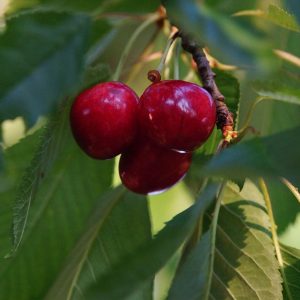
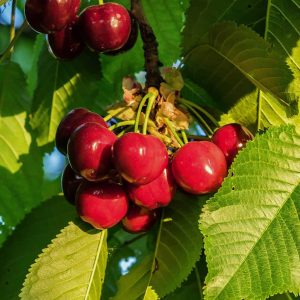
Sweetheart cherries are bright red, moderately large, and very firm — a combination that makes them a well-regarded choice among sweet cherries for fresh eating and storage. Flavor is sugary sweet with a well-balanced tart finish that keeps the fruit from tasting flat, and the flesh is juicy without being watery. The skin is crack-resistant, a practical advantage during periods of wet weather near harvest. Fruit cling tightly to the stem and hold on the tree after full color develops, giving growers a flexible multi-day harvest window. Ripening occurs late in the sweet cherry season — up to three weeks after Bing in temperate climate — which extends the fresh-cherry season when earlier varieties are finished. Primary use is fresh eating out of hand; the firm texture also holds up well in pies, preserves, and frozen applications where softer varieties turn mushy.
Fruit Size: 0.9-1.1 inch (large; ~8.5 g mean fruit weight)
Fruit Weight: 8.5 g (moderate; some sources list as large)
Flavor: Sugary sweet with well-balanced tart finish; firm and juicy flesh
Fruit Color: Bright red
Fruit Texture: Very firm, crisp, meaty, juicy
Bearing Habit: Crack-resistant fruit; extended hang time on tree
Years to Bear: 2-5 years
Storage Life: 3-7 days fresh at home; 4-6 weeks under commercial cold storage/CA conditions
Culinary Uses: Fresh eating; pies; jams and preserves; sauces; baking; drying/dehydrating
Sweetheart carries moderate resistance to brown rot (Monilinia fructicola), which is the most damaging fungal disease of sweet cherries in humid climates. Resistance is not immunity: fruit set tight in clusters and left past peak ripeness will still rot in wet weather, so timely harvest and good air circulation through annual pruning are the primary defenses. Against cherry leaf spot (Blumeriella jaapii), bacterial canker (Pseudomonas syringae), black knot (Apiosporina morbosa), and X-disease phytoplasma, resistance data specific to Sweetheart is limited; growers in humid regions should follow a preventive cultural program — remove and destroy prunings, disinfect tools between cuts, and maintain tree vigor through balanced fertility rather than pushing excessive growth. Sweetheart is notably susceptible to powdery mildew during cool, damp springs; open pruning to maximize airflow is the most effective organic control. For insect pressure — plum curculio, cherry fruit fly, black cherry aphid, and spotted wing drosophila — kaolin clay applications, sticky monitoring traps, row covers over small trees, and timely harvest before SWD populations peak in late summer all reduce damage without synthetic inputs.
Brown Rot: Moderately Resistant
Cherry Leaf Spot: Moderately Susceptible
Bacterial Canker: Susceptible
Black Knot: Moderately Susceptible
X-Disease / Cherry Buckskin: Susceptible
Plum Curculio: Moderately Susceptible
Cherry Fruit Fly: Moderately Susceptible
Black Cherry Aphid: Moderately Susceptible
Spotted Wing Drosophila: Susceptible
- Head every new shoot annually: Sweetheart's high productivity is also its main weakness — skip a pruning year and the tree oversets, producing small, soft fruit across the whole crop.
- Harvest at firm-ripe, not dead-ripe: Fruit holds well on the tree, but delaying past peak firmness increases pitting during handling and softens shelf life.
- Use Sweetheart as a pollinator: Its early-to-mid bloom and self-fertile pollen make it a productive neighbor for cross-pollinated sweet cherries like Bing or Rainier planted nearby.
We ship in late winter or early spring based on your USDA hardiness zone.
We strive to ship orders on the scheduled dates listed in the table below. However, please note that the actual shipping date may be subject to change due to factors like weather conditions and order volume.
The specific date for shipping your order will be determined according to your zipcode at the time of checkout.
Our plants are shipped bare root, packed in moist sawdust, and securely wrapped in plastic to prevent the roots from drying out. We use USPS Ground Advantage for shipping, ensuring that your plants typically arrive within 2-5 days after packaging.
In case you're unable to plant the trees immediately upon arrival, we recommend soaking them in water for a few hours and temporarily heeling them in. Ideally, they should be planted within three days of receipt for optimal health.
See our full shipping policy and map here
| Zone | Ship Date |
|---|---|
| 11 - 8b | March 1st, 2027 |
| 8a - 7b | March 8th, 2027 |
| 7a | March 15th, 2027 |
| 6b | March 22nd, 2027 |
| 6a | March 29th, 2027 |
| 5b - 5a | April 12th, 2027 |
| 4b - 4a | April 26th, 2027 |
| 3b - 1a | May 3rd, 2027 |
Our 365-Day Plant Guarantee: We ensure that our plants are delivered to you alive and healthy. If your plant does not survive its first year, you're eligible for store credit under these conditions:
- Your location falls within the appropriate USDA hardiness zone for the plant variety (refer to our hardiness zone map).
- You maintain the roots' moisture and plant within three days of delivery, following the instructions in our Planting Guide.
If you're concerned about your plant's health, please consult our guide, How to Tell if Your Tree is Dead or Dormant. Remember, our plants are shipped in a dormant state and may leaf out at different times based on their species. To check for plant vital
Related products

Royal Ann Cherry
Checking fit
Yoshino Cherry
Checking fit
Stella Cherry
Rated 5.00 out of 5$59.95 Select Rootstock This product has multiple variants. The options may be chosen on the product pageChecking fit
Lapins Cherry
Checking fitRated 5.00 out of 5


Reviews
There are no reviews yet.