

Deciduous Holly
$11.95
Deciduous Holly (also known as Possumhaw; Ilex decidua) is a native deciduous holly of the southeastern US whose bright orange-red berries cling to bare branches through winter, feeding songbirds, opossums, and raccoons, with white flowers that support specialized native bees in spring. It grows in USDA hardiness zones 5-9 and AHS heat zones 1-9.
1-2′ Bare Root Seedling Plant
Propagation: Seedling (own-root)
In stock
Possumhaw is a native deciduous holly distributed throughout the southeastern United States, from Virginia west through southern Indiana, Illinois, and eastern Kansas, and south through Florida, the Gulf Coast states, central Texas, and into northeastern Mexico. The USDA Fire Effects Information System records it as a native large shrub or small tree of floodplain margins, stream banks, pond edges, and open woodlands across this range, where it has been part of the North American landscape through millennia of succession and disturbance. The species was documented in colonial-era botanical surveys of the Southeast and has been grown ornamentally since at least the nineteenth century, primarily as a wildlife planting for its persistent fruit, which is consumed by eastern bluebirds, wild turkeys, quail, white-tailed deer, and small mammals through the winter months. No formal breeding program developed this plant; it is offered either as a straight species or under named female cultivars selected for berry color, berry density, and reliable fruiting. Possumhaw is state-listed as threatened in Florida, reflecting its reduced abundance near the edge of its native range. It differs from its close relative Winterberry Holly (Ilex verticillata) in showing stronger heat tolerance and drought adaptability once established.
Soil acidity is the foundation of successful possumhaw culture — pH between 4.5 and 6.0 supports iron and manganese availability and mimics the plant's native floodplain chemistry. Plants established in neutral or alkaline soil show interveinal chlorosis within a season. Full sun maximizes berry production; part shade is tolerated but reduces fruit set on female plants. Possumhaw's tolerance for periodic flooding — including occasional standing water — makes it one of the few ornamental shrubs suited to rain gardens and poorly drained low spots. Once rooted in, drought tolerance is moderate, but consistent soil moisture during the spring flowering window (mid-April through mid-May) improves fruit set. Mulching with two to three inches of wood chips conserves moisture, moderates soil temperature, and suppresses weeds without interfering with the fibrous root system.
USDA Hardiness Zone: 5-9
AHS Heat Zone: 1-9
Sun Requirements: Full Sun to Partial Shade
Soil pH: 4.5-6.0
Soil Type: Adaptable to clay, loam, or sandy soils; prefers moist, acidic, organic soils
Soil Drainage: Well-drained to wet; tolerates occasional flooding
Water Requirements: Medium; tolerates wet conditions and occasional flooding
Drought Tolerance: Moderate
Heat Tolerance: High; heat tolerant across zones 5-9
Plant Spacing: 8-12 ft apart
Container Suitability: Not recommended; large mature size unsuitable for containers
How to Prune: Prune in late winter to early spring before new growth; remove dead or crossing branches; can be shaped lightly after fruiting season; avoid heavy pruning that removes berry-bearing wood
Possumhaw develops as an upright, multi-stemmed shrub or small tree reaching seven to fifteen feet tall and five to twelve feet wide at maturity, with a spreading, rounded crown. The medium growth rate means a newly planted specimen fills its allotted space in four to seven years. Stems are grey-brown and slender; the overall silhouette is open and arching rather than dense. Foliage is dark green and glossy through summer, turning yellow to gold — occasionally flushing purplish — before leaf drop. The lack of thorns makes the plant safe to site near foot traffic areas. Its fibrous, moderately deep root system is non-aggressive and will not heave pavement or compete with shallow-rooted neighbors. Pruning is straightforward: remove dead or crossing branches in late winter before new growth, and lightly shape after the fruiting season ends. Avoid heavy cuts that remove berry-bearing lateral wood.
Mature Height: 7-15 ft tall
Mature Spread: 5-12 ft wide
Growth Habit: Upright shrub or small tree with spreading, rounded crown; multi-stemmed
Growth Rate: Moderate
Foliage Type: Deciduous
Food Forest Layer: Shrub
Permaculture Role: Wildlife attractor; edge plant; windbreak component; understory shrub
Leaf Color: Dark green (glossy)
Fall Foliage Color: Yellow to gold; sometimes purplish
Thorns?: No
Attracts Wildlife: Songbirds; bees; butterflies (Henry's Elfin); specialized native bees (Colletes bankski); small mammals (opossums, raccoons)
Life Span: Long-lived; perennial woody shrub/small tree (decades)
Possumhaw is dioecious — individual plants are either male or female, and only females produce berries. A single male planted within forty feet can pollinate up to nine or ten female plants. Without a male nearby, female plants flower but set no fruit. The small white to greenish-white flowers open from mid-April through mid-May and are insect-pollinated, primarily by native bees, bumble bees, and Henry's Elfin butterfly (Callophrys henrici), which uses Ilex species as a larval host. Male cultivar 'Red Escort' (Ilex decidua) is the most widely recommended pollen donor for female possumhaw selections; male Ilex decidua seedlings work equally well. Male Ilex verticillata cultivars may also provide pollen if bloom windows overlap in a given year, though consistent overlap is not guaranteed across all climates. Deciduous Holly is offered as compatible companion stock.
Bloom Season: Mid
Bloom Window: Mid Apr - Mid May
Pollination Requirements: Cross-pollination required; dioecious — plant male and female plants; one male pollinates up to 9-10 females within 40 ft
Pollination Mechanism: Insect-pollinated (bees, native bees, butterflies)
Flower Color: White to greenish-white
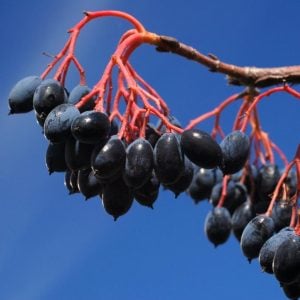
The berry display — not edible fruit production — is possumhaw's principal ornamental asset. Berries ripen to bright orange-red from early September through mid-October and persist on the bare stems through winter, sometimes remaining into February or March in colder zones. Some cultivars produce yellow or red berries rather than the typical orange-red. Berry size is small (roughly pea-sized), borne in dense clusters along the previous year's wood. The persistent display is driven by the fact that berries contain saponins, which make them mildly toxic to humans and pets (dogs, cats) but palatable to birds after repeated freeze-thaw cycles partially break down the compounds. Over forty songbird species have been documented consuming Ilex berries, including cedar waxwings, bluebirds, American robins, hermit thrushes, and mockingbirds. The plant carries no landscape food-production value; its value is entirely in wildlife support and winter visual interest.
Ripening Season: Mid
Harvest Window: Early Sep - Mid Oct
Fruit Color: Bright orange-red (some cultivars produce yellow or red berries)
Possumhaw carries moderate resistance to Holly Leaf Spot (Coniothyrium ilicinum and Phacidium multivalve), the most common foliar disease on Ilex in humid climates. Good air circulation and cleaning up fallen leaves in autumn remove overwintering spore sources and keep infection pressure low. Powdery Mildew (Microsphaera penicillata) is similarly handled well by this species; siting plants where morning sun dries foliage quickly is the key cultural defense. Phytophthora Root Rot (Phytophthora cinnamomi) represents the main vulnerability — possumhaw is moderately susceptible, and wet, poorly drained soils increase risk substantially. Despite the plant's tolerance for periodic flooding, sustained waterlogging around the root crown invites infection; planting on a slight grade or amending the backfill to improve drainage mitigates this. Black Root Rot (Thielaviopsis basicola) and Tar Spot (Macroderma curtisii) show moderate resistance; neither typically requires intervention in landscape settings. Holly Leafminer (Phytomyza ilicicola) is the primary pest concern — larvae tunnel inside leaves from May onward, leaving distinctive serpentine mines. Remove and destroy heavily mined foliage; insecticidal soap or neem oil applied when adult flies are active in spring reduces larval populations organically. Scale Insects, Southern Red Mite (Oligonychus ilicis), and Two-lined Spittlebug (Prosapia bicincta) are moderately resisted and rarely cause economic damage in established landscape plants.
Holly Leaf Spot: Moderately Resistant
Powdery Mildew: Moderately Resistant
Phytophthora Root Rot: Moderately Susceptible
Black Root Rot: Moderately Resistant
Tar Spot: Moderately Resistant
Holly Leafminer: Moderately Susceptible
Scale Insects: Moderately Resistant
Southern Red Mite: Moderately Resistant
Two-lined Spittlebug: Moderately Resistant
- Plant in Pairs (or More): Because possumhaw is dioecious, always plant at least one male within forty feet of every group of females — one male per nine to ten females is sufficient for full berry set.
- Manage Drainage to Reduce Root Rot Risk: Although possumhaw tolerates flooding, sustained waterlogging near the root crown invites Phytophthora root rot. Plant on a gentle slope or add coarse organic matter to the backfill to encourage drainage away from the crown.
- Target Leafminer in Spring: Holly Leafminer adults emerge when possumhaw is in active growth; apply neem oil spray at this window to reduce egg-laying before larvae tunnel into leaves. Remove visibly mined leaves promptly to lower the local population.
- Mulch for Moisture Retention and Acidity: A two- to three-inch layer of pine bark or leaf mulch conserves soil moisture during summer dry spells and gradually lowers pH as it breaks down — both benefits for a species that prefers pH 4.5–6.0.
- Use in Wet Spots Other Shrubs Can't Tolerate: Rain gardens, seasonal swales, and low-lying areas where other ornamentals struggle are ideal sites — possumhaw handles periodic inundation while still producing a full berry crop in drier years.
We ship in late winter or early spring based on your USDA hardiness zone.
We strive to ship orders on the scheduled dates listed in the table below. However, please note that the actual shipping date may be subject to change due to factors like weather conditions and order volume.
The specific date for shipping your order will be determined according to your zipcode at the time of checkout.
Our plants are shipped bare root, packed in moist sawdust, and securely wrapped in plastic to prevent the roots from drying out. We use USPS Ground Advantage for shipping, ensuring that your plants typically arrive within 2-5 days after packaging.
In case you're unable to plant the trees immediately upon arrival, we recommend soaking them in water for a few hours and temporarily heeling them in. Ideally, they should be planted within three days of receipt for optimal health.
See our full shipping policy and map here
| Zone | Ship Date |
|---|---|
| 11 - 8b | March 1st, 2027 |
| 8a - 7b | March 8th, 2027 |
| 7a | March 15th, 2027 |
| 6b | March 22nd, 2027 |
| 6a | March 29th, 2027 |
| 5b - 5a | April 12th, 2027 |
| 4b - 4a | April 26th, 2027 |
| 3b - 1a | May 3rd, 2027 |
Our 365-Day Plant Guarantee: We ensure that our plants are delivered to you alive and healthy. If your plant does not survive its first year, you're eligible for store credit under these conditions:
- Your location falls within the appropriate USDA hardiness zone for the plant variety (refer to our hardiness zone map).
- You maintain the roots' moisture and plant within three days of delivery, following the instructions in our Planting Guide.
If you're concerned about your plant's health, please consult our guide, How to Tell if Your Tree is Dead or Dormant. Remember, our plants are shipped in a dormant state and may leaf out at different times based on their species. To check for plant vital
Related products

Redbud
Checking fitRated 4.33 out of 5
Blackhaw
Checking fitRated 4.85 out of 5
Bur Oak
Checking fit
Kentucky Coffeetree
Checking fitRated 5.00 out of 5


Reviews
There are no reviews yet.