$11.95Original price was: $11.95.$9.56Current price is: $9.56.
Kentucky Coffeetree (Gymnocladus dioicus) is a native Midwestern canopy tree with an irregularly open crown and exceptional tolerance of urban soils and drought, whose roasted seeds were historically ground as a caffeine-free coffee substitute. It grows in USDA hardiness zones 3-8 and AHS heat zones 1-9.
1-2′ Bare Root Seedling Tree Propagation: Seedling (own-root)
Kentucky Coffeetree (Gymnocladus dioicus) is the sole North American representative of its genus and has no cultivated parentage; all commercial stock traces to wild-type seed. The species is native to scattered bottomlands and woodland edges from southern Ontario and New York west through the Midwest and south to Oklahoma, Tennessee, and Arkansas, though it has always occurred in disjunct, limited populations throughout its range. Indigenous peoples of the region used the seeds medicinally and, after extensive roasting, as a food source; early European settlers in Kentucky and the Ohio Valley followed this practice and prepared roasted, ground seeds as a caffeine-free coffee substitute, giving the tree its common name — though raw seeds, pods, and young shoots are toxic. The species was recorded in horticultural cultivation by the late eighteenth century and has long held a place in North American landscape tradition. The bipinnately compound leaves are the largest of any native eastern North American tree, and the combination of extreme urban soil tolerance, drought adaptability, and rugged winter silhouette has driven renewed interest among municipal arborists seeking alternatives to disease-prone street trees.
Kentucky Coffeetree adapts to a wider range of urban soil conditions than almost any comparable native tree of its size. It tolerates compacted clay, alkaline soils up to pH 8.0, periodic flooding, and prolonged drought once established — a combination that makes it especially suited to disturbed urban sites, parking lot margins, and street tree pits where other species fail. Full sun drives the densest canopy and best growth; shaded specimens develop a more open, less structurally stable crown. Young trees establish slowly, devoting early energy to deep taproot development before accelerating shoot growth, so patience through the first two to three seasons pays off with a highly self-sufficient tree. Irrigation during the first full growing season improves establishment significantly. Once settled, the tree requires no supplemental water in most temperate climates with moderate summer rainfall. The species' broad pH tolerance (6.0–8.0) removes the soil amendment burden common with many native trees.
USDA Hardiness Zone: 3-8 AHS Heat Zone: 1-9 Sun Requirements: Full Sun Soil pH: 6.0-8.0 Soil Type: Adaptable to most well-drained soils; prefers deep, rich loam; tolerates clay, sand, alkaline, and compacted urban soils Soil Drainage: Well-drained; tolerates occasional wet periods and drought Water Requirements: Low to Medium Drought Tolerance: High Heat Tolerance: High Plant Spacing: 40-55 ft apart Container Suitability: Not Suitable
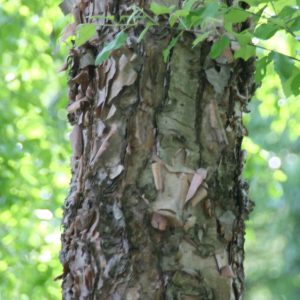
At maturity, Kentucky Coffeetree reaches 60 to 80 feet tall with a 40- to 55-foot spread, forming an oval to irregularly open crown with coarse, ascending branches. The branching architecture is notably sparse compared to other canopy trees, creating an open silhouette that remains striking in winter when the stout, twisting branches and persistent dark seed pods provide significant visual interest. The bipinnate leaves — sometimes 3 feet long and 2 feet wide — emerge pinkish-bronze in early spring before transitioning to blue-green through summer, then turning yellow in fall before drop. Bark is dark gray with interlacing ridges and furrows that deepen attractively with age. The taproot system anchors the tree firmly, and occasional root suckers can develop at the base; these are manageable with simple removal. The lack of thorns and the coarse, open branching pattern make the tree easy to maintain and limb up for clearance.
Mature Height: 60-80 ft tall Mature Spread: 40-55 ft wide Growth Habit: Oval to irregular open crown; upright with coarse branching Growth Rate: Slow to Moderate Foliage Type: Deciduous Food Forest Layer: Canopy Permaculture Role: Canopy Tree Leaf Color: Blue-green (summer); pinkish-bronze at emergence Fall Foliage Color: Yellow Thorns?: No Attracts Wildlife: Insects (larval host for honey locust moths); birds (nesting habitat) Life Span: 100+ years
Kentucky Coffeetree is strictly dioecious: individual trees are either male or female, and seed pod production requires at least one of each sex within insect and wind-pollination distance. Bloom occurs from mid-May through late June, with small greenish-white flowers carried in terminal panicles. Female flowers are fragrant, reaching up to 12 inches in length; male panicles are shorter and less conspicuous. Pollination occurs through a combination of insect activity — primarily bees — and wind dispersal. Nursery stock sold as seedlings may be either sex and will not reveal its sex until first flowering, typically at 10 to 15 years of age. Grafted or cutting-propagated male and female selections from specialty native plant nurseries allow deliberate pairing. Planting a minimum of one male for every three to five female trees ensures adequate pollination. Growers interested only in the tree's ornamental branching and foliage can plant male trees to avoid seed pod litter entirely.
Bloom Season: Mid Bloom Window: Mid May - Late Jun Pollination Requirements: Cross-pollination required (dioecious — separate male and female trees needed for fruit/seed production) Pollination Mechanism: Insect-pollinated (bees and other insects) and wind-aided Flower Color: Greenish-white
Female trees produce large, leathery seed pods that mature in late summer and persist through winter, reaching 4 to 10 inches in length and 1.5 to 2 inches in width. The pods contain three to six large, hard, dark brown seeds embedded in a thick, sweetish greenish-brown pulp. All parts of the raw plant — seeds, leaves, and pod pulp — contain the alkaloid cytisine and gymnocladosapponins, making them toxic when consumed raw. Seeds require thorough roasting at minimum 150°F for at least three hours to neutralize toxins before consumption. When properly processed, ground roasted seeds produce a caffeine-free beverage that resembles coffee in color and was widely used as such by Indigenous peoples and early settlers. The persistent winter pods provide structural wildlife habitat and modest seed-dispersal opportunities for small mammals that can tolerate the compounds. The tree is not cultivated for commercial food production; its culinary history is ethnobotanical rather than commercial.
Culinary Uses: Roasted seeds historically ground as a coffee substitute (no caffeine); seed pod pulp used as sweetener
Kentucky Coffeetree carries moderate susceptibility to Verticillium Wilt (Verticillium dahliae), a soil-borne pathogen that can cause sudden wilting, branch dieback, and vascular streaking. The most effective cultural defense is planting in well-drained soil with good organic matter, avoiding wounding the trunk or major roots, and keeping the surrounding soil free of competing plants that may share the pathogen. If early wilt symptoms appear on individual branches, prune well below the affected tissue during dry weather, sterilizing tools between cuts. Wood Rot (various Ganoderma and Phellinus species) presents similarly moderate risk, most commonly entering through old wounds or basal damage. Preventing mechanical injury from mowers and string trimmers at the base is the single most effective cultural mitigation. Leaf Spot, caused by various fungal species, is one area where Kentucky Coffeetree performs well — the tree shows good resistance, and infections are typically cosmetic without warranting intervention. For Leafroller caterpillars (Choristoneura spp. / Archips spp.), monitoring in early spring and applying Bacillus thuringiensis var. kurstaki (Bt-k) when larvae are small provides effective organic control. Spider Mite (Tetranychus urticae) pressure increases under drought and heat stress; maintaining adequate soil moisture, improving air circulation, and directing a strong jet of water at foliage during dry spells reduces mite populations without chemical intervention.
Source known-sex plants if pods matter: Seedling trees don't reveal sex until first flowering at 10–15 years; source grafted or cutting-propagated male/female pairs from a specialty native nursery if pod production is a goal.
Avoid Verticillium-prone planting sites: Given susceptibility to Verticillium Wilt, avoid ground previously occupied by tomatoes, potatoes, strawberries, or other susceptible hosts; improve drainage and organic matter before planting.
Protect the trunk base permanently: Keep a 3- to 4-foot mulched ring clear of mowers and trimmers from day one — trunk wounds are the primary entry point for wood rot.
Scout for Leafroller in May–June: Apply Bt-k when larvae are small; larger larvae are harder to manage with organic controls.
Pod toxicity awareness: Raw seeds and pod pulp are toxic to dogs, cats, and livestock; site with this in mind or choose a male tree (no pods) for sensitive areas.
We ship in late winter or early spring based on your USDA hardiness zone.
We strive to ship orders on the scheduled dates listed in the table below. However, please note that the actual shipping date may be subject to change due to factors like weather conditions and order volume.
The specific date for shipping your order will be determined according to your zipcode at the time of checkout.
Our plants are shipped bare root, packed in moist sawdust, and securely wrapped in plastic to prevent the roots from drying out. We use USPS Ground Advantage for shipping, ensuring that your plants typically arrive within 2-5 days after packaging.
In case you're unable to plant the trees immediately upon arrival, we recommend soaking them in water for a few hours and temporarily heeling them in. Ideally, they should be planted within three days of receipt for optimal health.
Our 365-Day Plant Guarantee: We ensure that our plants are delivered to you alive and healthy. If your plant does not survive its first year, you're eligible for store credit under these conditions:
You maintain the roots' moisture and plant within three days of delivery, following the instructions in our Planting Guide.
If you're concerned about your plant's health, please consult our guide, How to Tell if Your Tree is Dead or Dormant. Remember, our plants are shipped in a dormant state and may leaf out at different times based on their species. To check for plant vital
John B. (verified owner) –
Healthy seedling and prompt delivery
Mike Parks (verified owner) –
Budding