Bounty Peach
$49.95
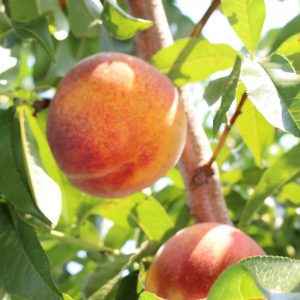
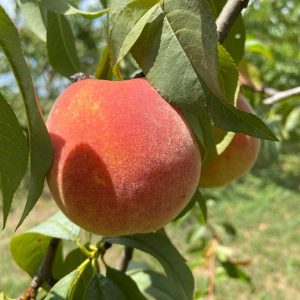
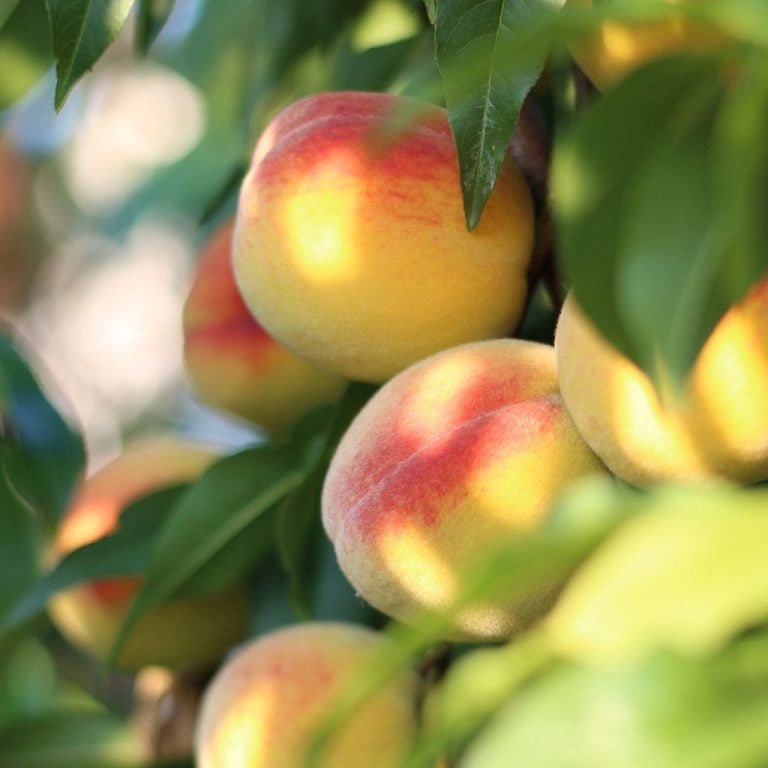
Bounty Peach (Prunus persica) is a vigorous USDA-bred freestone peach producing heavy annual crops of very large fruit — up to 3.5 inches across — with 40 to 70% crimson blush over yellow skin and firm yellow flesh. It grows in USDA hardiness zones 5-9 and AHS heat zones 3-8, needs 800-1000 chill hours, and requires cross-pollination with a compatible variety such as Contender Peach or Elberta Peach to set fruit.
3-4′ Bare Root Grafted Tree
Rootstock: Halford – Standard
A peach seedling rootstock giving a full-size, vigorous, well-anchored tree — the workhorse of eastern peach growing. It offers no nematode resistance, so avoid known nematode ground.
• Support: Freestanding; no staking required.
Can’t be shipped to: WA
Out of stock
Out of stock — back next season
Spring 2027 inventory drops in June. Drop your email and we'll notify you the day this variety is back in stock.
You're on the list. Check your inbox for a confirmation link — click it to lock in your spot. We'll email you the day this variety is back in stock.
Bounty was developed at the USDA-ARS Appalachian Fruit Research Station in Kearneysville, West Virginia, in collaboration with the Texas A&M Agricultural Experiment Station, and released in 1989. Its documented parentage is [(Halberta open pollinated) x Redskin] x [Loring x [(Hiley x Fireglow) x Fireglow]] — a multi-generation cross drawing on established Eastern firmness-and-yield breeding lines. Breeders targeted the mid-Atlantic and upper South, seeking a mid-season variety with greater cold hardiness than the widely grown Loring while matching or exceeding it in fruit size and commercial quality. That goal — dependable annual bearing across a broad climate range — was achieved, and Bounty became a practical replacement for Loring in regions prone to fluctuating late-winter temperatures. Its unpatented public-domain status means nurseries and home orchardists can propagate freely, which has helped it remain commercially available for more than three decades after release. Bounty fills a reliable mid-season slot between the earlies and the late-August cultivars.
Bounty performs best in full sun on deep, well-drained loam with a soil pH between 6.0 and 7.0. Plant trees 15–20 feet apart to allow adequate air circulation, which reduces fungal pressure in humid growing regions. Chill hour demand of 750–850 hours places Bounty firmly in the mid-chill range — well suited to zones 5 through 9 but likely to underperform in areas where winters regularly fall short of that threshold. Trees reach bearing age in 2–4 years and produce best on a modified central-leader or open-center frame. Because Bounty has a biennial-bearing tendency, aggressive fruit thinning in early summer — removing fruit to one every 6–8 inches — is essential for maintaining annual heavy crops and preventing limb damage from overloaded branches. Fast-growing trees benefit from annual dormant pruning to keep canopies open and productive.
USDA Hardiness Zone: 5-9
AHS Heat Zone: 3-8
Chill Hours: 800-1000
Sun Requirements: Full Sun
Soil pH: 6.0-7.0
Soil Type: Loam, well-drained
Soil Drainage: Well-drained
Water Requirements: Medium
Drought Tolerance: Moderate; established trees tolerate short dry periods but benefit from consistent irrigation during fruit development
Heat Tolerance: Performs well in mid-Atlantic; greater winter hardiness than Loring
Plant Spacing: 15-20 ft apart
Container Suitability: Yes on dwarfing rootstock; standard rootstock too vigorous for containers
How to Prune: Open vase system; select 4-6 outward-facing scaffold branches; annual dormant heading cuts in late winter; remove water sprouts, crossing branches, and deadwood
Bounty is a fast-growing, deciduous peach that reaches standard size on seedling rootstock, typically 15–20 feet tall and wide at maturity. On dwarfing rootstock it can be kept compact enough for container culture, though standard-rooted trees are too vigorous for pots. The canopy is upright to spreading with the dense branching typical of productive peach varieties. Fragrant pink flowers emerge in early spring before leaf-out, providing a nectar source for early-season bees and butterflies. Foliage is mid-green and lance-shaped; the tree is fully deciduous and drops leaves cleanly in autumn. Wildlife value includes foraging by songbirds and larval-host function. Thorns are absent, making harvest and pruning easier than on some stone-fruit relatives. Growth rate is fast, so young trees establish quickly but require consistent training to direct vigor into fruit-producing wood.
Mature Height: 12-15 ft tall
Mature Spread: 12-15 ft wide
Growth Habit: Vigorous, spreading
Growth Rate: Fast
Foliage Type: Deciduous
Food Forest Layer: Canopy, Sub-canopy
Permaculture Role: Pollinator support, wildlife food, edible fruit producer
Leaf Color: Green
Fall Foliage Color: Yellow to orange
Thorns?: No
Attracts Wildlife: Bees and butterflies (pollinators); birds and small mammals (fruit)
Life Span: 10-15 years
Bounty requires cross-pollination to produce a full crop — plant at least one compatible variety within 50 feet for reliable fruit set. Well-matched companions that share Bounty's mid-season bloom timing and chill-hour range include Contender Peach (PCH-11), Elberta Peach (PCH-23), and Reliance Peach (PCH-68). Flowers open in early-to-mid spring and attract bees reliably; avoid planting near frost pockets, as late freezes can damage open blossoms and reduce the season's set. Two-variety plantings are standard for Bounty — adding a third variety increases insurance against a single bloom-night frost.
Bloom Season: Early
Bloom Window: Early Mar - Late Mar
Pollination Requirements: Cross-pollination required
Pollination Mechanism: Insect-pollinated (primarily bees)
Flower Color: Pink
Ploidy: Diploid (2n)
Bounty produces large, round freestone peaches averaging roughly 175 grams, with skin coloring of 40–70% crimson red blushed over a light greenish-yellow ground. The yellow flesh is firm at picking and softens quickly once fully ripe, so harvest timing is critical — pick when the ground color shifts from green to cream-yellow and the flesh gives slightly at the seam. Flavor is rich and very good, with a classic peach balance of sugar and acid that holds up well in cooked preparations. The freestone pit separates cleanly, making Bounty practical for fresh eating, canning, freezing, and baking. Harvest runs mid-August through mid-September in a temperate climate. Yields are heavy when trees are properly thinned, making Bounty productive for home preserving and small-scale market harvest.
Ripening Season: Late
Harvest Window: Mid Aug - Mid Sep
Fruit Size: 2.75-3.5 inch (large to very large)
Fruit Weight: 175 g
Flavor: Firm flesh with very good flavor
Fruit Color: 40-70% crimson red over light greenish-yellow ground; yellow flesh; freestone
Fruit Texture: Firm, softens quickly when fully ripe
Fruit Skin: Fuzzy (characteristic of Prunus persica; nectarines are the smooth-skinned variant)
Bearing Habit: Annual (with thinning to prevent biennial tendency)
Years to Bear: 2-4 years
Storage Life: Short; 1-5 days at room temperature, up to 1-2 weeks refrigerated
Culinary Uses: Fresh eating, canning, freezing, preserves, baking, dried fruit
Bounty carries moderate susceptibility to brown rot (Monilinia fructicola), bacterial spot (Xanthomonas arboricola pv. pruni), peach leaf curl (Taphrina deformans), and peach scab (Cladosporium carpophilum) — ratings typical for mid-Atlantic-bred peaches rather than standout resistance. Its susceptibility to cytospora canker (Leucostoma persoonii / Leucostoma cincta) makes clean pruning cuts and wound management important: always prune during dry weather and remove diseased wood promptly. On the pest side, Bounty is susceptible to plum curculio (Conotrachelus nenuphar), oriental fruit moth (Grapholita molesta), peachtree borer (Synanthedon exitiosa), and brown marmorated stink bug (Halyomorpha halys). Manage plum curculio and oriental fruit moth by maintaining clean ground cover beneath trees and applying kaolin clay or OMRI-listed spinosad sprays at petal fall. Protect the trunk from peachtree borer with sticky trunk wraps and beneficial nematode drenches at the base. For stink bug pressure in late summer, row cover or fine mesh netting over ripening clusters is the most effective non-chemical option.
Brown Rot: Moderately Susceptible
Bacterial Spot: Moderately Susceptible
Peach Leaf Curl: Moderately Susceptible
Peach Scab: Moderately Susceptible
Cytospora Canker: Susceptible
Plum Curculio: Susceptible
Oriental Fruit Moth: Susceptible
Peachtree Borer: Susceptible
Brown Marmorated Stink Bug: Susceptible
- Thin to one fruit every 6–8 inches: Drop excess fruitlets in early June when marble-sized to size up the remaining crop and prevent branches from splitting under heavy loads.
- Prune only in dry weather: Every pruning cut is a potential Cytospora Canker entry site. Schedule dormant pruning for dry winter days and apply an organic copper-based sealant to large wounds.
- Apply kaolin clay at petal fall: OMRI-listed kaolin clay applied immediately after bloom and reapplied after rain physically deters Plum Curculio and Oriental Fruit Moth without disrupting beneficial insects.
- Watch for Peachtree Borer and Brown Marmorated Stink Bug: Inspect the base of the trunk in late summer for borer entry points; monitor fruit for stink bug feeding damage in the weeks before harvest and use exclusion netting where pressure is high.
- Monitor ripening by ground color, not blush: The crimson blush develops well before the fruit is ready. Harvest when background skin shifts from green to warm cream-yellow and flesh near the stem yields to gentle thumb pressure.
We ship in late winter or early spring based on your USDA hardiness zone.
We strive to ship orders on the scheduled dates listed in the table below. However, please note that the actual shipping date may be subject to change due to factors like weather conditions and order volume.
The specific date for shipping your order will be determined according to your zipcode at the time of checkout.
Our plants are shipped bare root, packed in moist sawdust, and securely wrapped in plastic to prevent the roots from drying out. We use USPS Ground Advantage for shipping, ensuring that your plants typically arrive within 2-5 days after packaging.
In case you're unable to plant the trees immediately upon arrival, we recommend soaking them in water for a few hours and temporarily heeling them in. Ideally, they should be planted within three days of receipt for optimal health.
See our full shipping policy and map here
| Zone | Ship Date |
|---|---|
| 11 - 8b | March 1st, 2027 |
| 8a - 7b | March 8th, 2027 |
| 7a | March 15th, 2027 |
| 6b | March 22nd, 2027 |
| 6a | March 29th, 2027 |
| 5b - 5a | April 12th, 2027 |
| 4b - 4a | April 26th, 2027 |
| 3b - 1a | May 3rd, 2027 |
Our 365-Day Plant Guarantee: We ensure that our plants are delivered to you alive and healthy. If your plant does not survive its first year, you're eligible for store credit under these conditions:
- Your location falls within the appropriate USDA hardiness zone for the plant variety (refer to our hardiness zone map).
- You maintain the roots' moisture and plant within three days of delivery, following the instructions in our Planting Guide.
If you're concerned about your plant's health, please consult our guide, How to Tell if Your Tree is Dead or Dormant. Remember, our plants are shipped in a dormant state and may leaf out at different times based on their species. To check for plant vital
Related products

Majestic Peach
Checking fit- SOLD OUT
Red Mulberry
Checking fitRated 4.89 out of 5 
Harvester Peach
Checking fit
Bonanza Peach
Checking fit

Reviews
There are no reviews yet.