Bonanza Peach
$49.95
Bonanza Peach (Prunus persica ‘Bonanza’) is a genetic dwarf peach prized for producing full-size 3-inch freestone fruit on a tree that stays naturally 5 to 6 feet tall. Thriving in USDA hardiness zones 7-9 with just 200-300 chill hours, this self-fertile variety ripens mid-August to mid-September.
3-4′ Bare Root Grafted Tree
Rootstock: Halford – Standard
A peach seedling rootstock giving a full-size, vigorous, well-anchored tree — the workhorse of eastern peach growing. It offers no nematode resistance, so avoid known nematode ground.
• Support: Freestanding; no staking required.
Can’t be shipped to: WA
In stock
Bonanza set a milestone when it was developed in the 1960s as one of the first commercially successful genetic dwarf peaches — not a standard tree on a dwarfing rootstock, but a variety whose own genetics limit its size to 5 to 6 feet. This distinction matters practically: Bonanza in a container or small garden stays compact for the tree’s life rather than slowly pushing against its rootstock ceiling.
The variety produces 3-inch freestone fruit with sweet, mild, refreshing flavor — full commercial size despite the dwarf tree. Its very low chill requirement of 200 to 300 hours opened the Gulf Coast and lower South to reliable peach production at a time when most available cultivars needed 600 to 900 hours. Bonanza remains one of the benchmark low-chill genetic dwarfs for zones 6 through 9.
Bonanza performs reliably in USDA hardiness zones 6 through 9, where it satisfies its 200 to 300 chill hours easily even in the warmest parts of zone 7. That low threshold is the variety's defining site advantage — growers in the Gulf Coast, lower mid-Atlantic, and inland South who lose most standard peach varieties to insufficient winter cold can plant Bonanza with confidence.
Full sun — at minimum six hours, ideally eight or more — drives fruit sizing and sugar accumulation. Soil pH between 6.0 and 7.0 in average to medium-moisture, well-drained ground suits Bonanza well; it tolerates average soil fertility and doesn't require the elevated, slope-drained sites that full-size peach trees need for drainage. Bloom opens mid to late April in a Zone 7 temperate climate. In containers, use a quality potting mix and ensure the container has adequate drainage holes — Bonanza's roots tolerate brief drought better than wet feet.
USDA Hardiness Zone: 7-9
AHS Heat Zone: 1-9
Chill Hours: 200-300
Sun Requirements: Full Sun
Soil pH: 6.0-7.0
Soil Type: Average, medium moisture, well-drained
Soil Drainage: Well-drained
Water Requirements: Medium
Drought Tolerance: Moderate; established trees tolerate short dry periods but benefit from consistent irrigation during fruit development
Heat Tolerance: High
Plant Spacing: 15-20 ft apart
Container Suitability: Excellent (stays smaller when container-grown)
How to Prune: Open vase system; select 4-6 outward-facing scaffold branches; annual dormant heading cuts in late winter; remove water sprouts, crossing branches, and deadwood
Bonanza reaches 5 to 6 feet in both height and spread through genetic compactness rather than rootstock dwarfing — an important distinction that keeps container and small-garden plants stable in size across the tree's full lifespan. Standard peaches on dwarfing rootstocks may be held compact for a few years but gradually push their rootstock ceiling; Bonanza's size is baked into its genetics.
The dense, compact habit produces heavy crops relative to the tree's size: a mature Bonanza in full production can hold 30 to 40 peaches per branch in a good year, which makes aggressive fruit thinning mandatory. Remove fruit to 5 to 6 inches of spacing by late May each year — overthinning is almost impossible on a genetic dwarf, and underthinning leads to small, underflavored fruit and limb stress. Prune annually after harvest or during dormancy to remove crossing wood, maintain open airflow, and keep the productive wood young.
Mature Height: 5-6 ft tall
Mature Spread: 5-6 ft wide
Growth Habit: Upright spreading
Growth Rate: Fast
Foliage Type: Deciduous
Food Forest Layer: Canopy / Sub-canopy
Permaculture Role: Pollinator support, wildlife food, edible fruit producer
Leaf Color: Green
Fall Foliage Color: Yellow to orange
Thorns?: No
Attracts Wildlife: Bees and butterflies (pollinators); birds and small mammals (fruit)
Life Span: 10-15 years
Bonanza is self-fertile and produces a reliable crop without a companion variety. In blocks with other low-chill peaches such as Early Amber or June Gold, cross-pollination activity from visiting bees can increase fruit set and improve uniformity in years with reduced bloom density.
Bloom opens mid to late April in a temperate climate. The genetic dwarf habit concentrates bloom on a compact canopy, making the spring flower display proportionally impressive for the tree's size. Late-frost risk is moderate at this bloom timing — neither as early as Bonfire's late-March bloom nor as late-protected as a high-chill variety that delays opening until early May. In zones 6 and 7, site Bonanza on slightly elevated, frost-draining ground if late frost events are regular in your location.
Bloom Season: Early
Bloom Window: Early Mar - Late Mar
Pollination Requirements: Self-fertile
Pollination Mechanism: Insect-pollinated (primarily bees)
Flower Color: Pink
Ploidy: Diploid (2n)
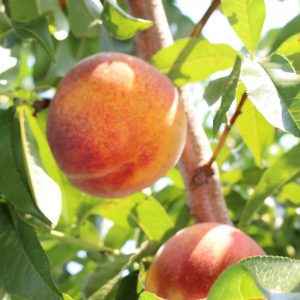
Bonanza produces 3-inch freestone fruit with yellow flesh carrying sweet, low-acid, mild flavor — the refreshing eating-quality profile that made it a home-orchard favorite across the Gulf Coast and lower South. The skin shows yellow ground with red flecks, streaks, mottling, and blush at full maturity; the freestone pit separates cleanly from the flesh, making slicing and processing easy.
Fruit ripens mid-August to mid-September in a temperate climate. At room temperature, tree-ripe Bonanza holds 3 to 5 days; refrigerated at 32 to 36°F, firm-ripe harvested fruit stores 1 to 2 months. The mild, low-acid flavor profile suits fresh eating and light preserving — jams and syrups where a less intense peach character is preferred. Thinning fruit to 5 to 6 inches of spacing improves both size and flavor concentration significantly; Bonanza on the same branch that has been properly thinned versus left to overbear produces measurably different eating quality.
Ripening Season: Mid
Harvest Window: Mid Aug - Mid Sep
Fruit Size: 3 inch
Fruit Weight: 150g
Flavor: Sweet, low-acid, mild, refreshing
Fruit Color: Yellow with red flecks, streaks, mottling, and blush; yellow flesh; freestone
Fruit Texture: Freestone
Fruit Skin: Fuzzy (characteristic of Prunus persica; nectarines are the smooth-skinned variant)
Bearing Habit: Annual (with thinning to prevent biennial tendency)
Years to Bear: 2-4 years
Storage Life: 1-2 weeks fresh
Specific disease and pest resistance ratings for Bonanza are not well documented in published university trials. As a genetic dwarf variety widely grown across zone 6 to 9 climates, Bonanza encounters the full Eastern peach pathogen suite and benefits from the same cultural management strategies as standard varieties.
Peach Leaf Curl (Taphrina deformans) is the most reliably preventable disease through a single dormant copper application — apply OMRI-listed copper at bud swell before any green tissue shows. Brown Rot (Monilinia fructicola) pressure builds in warm, humid harvest seasons; remove mummified fruit each winter and collect fallen fruit weekly during the season to reduce the available inoculum. Bacterial Spot (Xanthomonas arboricola pv. pruni) is common across warm, humid zones 6 through 9 — prune for airflow and avoid overhead irrigation that splashes bacteria onto leaves.
Plum Curculio (Conotrachelus nenuphar) affects Bonanza as it does all Eastern stone fruits; apply kaolin clay at petal fall and maintain sanitation. Peachtree Borer (Synanthedon exitiosa) larvae attack the trunk base; install wire mesh guards from ground level to 18 inches at planting.
Brown Rot: Moderately Susceptible
Bacterial Spot: Moderately Susceptible
Peach Leaf Curl: Moderately Susceptible
Peach Scab: Moderately Susceptible
Cytospora Canker: Susceptible
Plum Curculio: Susceptible
Oriental Fruit Moth: Susceptible
Peachtree Borer: Susceptible
Brown Marmorated Stink Bug: Susceptible
- Thin aggressively: Remove fruit to 5-6 inch spacing by late May — on a genetic dwarf this step makes a bigger difference in fruit size and flavor than on a standard tree because the dense branching concentrates fruit heavily.
- Copper at bud swell: A single OMRI-listed copper application before green tissue appears prevents Peach Leaf Curl for the season; skip it and you risk severe defoliation by June.
- Container growing: Use a 15-25 gallon pot with drainage holes; avoid clay pots that hold moisture. Fertilize lightly in spring — Bonanza in a container blooms and fruits reliably without heavy feeding.
- Low-chill edge: If you are in zone 9, Bonanza's 200-300 hour requirement fits well; in zone 9b or warmer, verify local chill accumulation before planting.
We ship in late winter or early spring based on your USDA hardiness zone.
We strive to ship orders on the scheduled dates listed in the table below. However, please note that the actual shipping date may be subject to change due to factors like weather conditions and order volume.
The specific date for shipping your order will be determined according to your zipcode at the time of checkout.
Our plants are shipped bare root, packed in moist sawdust, and securely wrapped in plastic to prevent the roots from drying out. We use USPS Ground Advantage for shipping, ensuring that your plants typically arrive within 2-5 days after packaging.
In case you're unable to plant the trees immediately upon arrival, we recommend soaking them in water for a few hours and temporarily heeling them in. Ideally, they should be planted within three days of receipt for optimal health.
See our full shipping policy and map here
| Zone | Ship Date |
|---|---|
| 11 - 8b | March 1st, 2027 |
| 8a - 7b | March 8th, 2027 |
| 7a | March 15th, 2027 |
| 6b | March 22nd, 2027 |
| 6a | March 29th, 2027 |
| 5b - 5a | April 12th, 2027 |
| 4b - 4a | April 26th, 2027 |
| 3b - 1a | May 3rd, 2027 |
Our 365-Day Plant Guarantee: We ensure that our plants are delivered to you alive and healthy. If your plant does not survive its first year, you're eligible for store credit under these conditions:
- Your location falls within the appropriate USDA hardiness zone for the plant variety (refer to our hardiness zone map).
- You maintain the roots' moisture and plant within three days of delivery, following the instructions in our Planting Guide.
If you're concerned about your plant's health, please consult our guide, How to Tell if Your Tree is Dead or Dormant. Remember, our plants are shipped in a dormant state and may leaf out at different times based on their species. To check for plant vital
Related products

Honeycrisp Apple
Rated 5.00 out of 5$49.95 Select Rootstock This product has multiple variants. The options may be chosen on the product pageChecking fit
Contender Peach
Checking fit
Loring Peach
Checking fitRated 4.50 out of 5
Majestic Peach
Checking fit

Reviews
There are no reviews yet.