


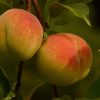

Early Amber Peach
$39.96
Early Amber Peach (Prunus persica) is an extra-early low-chill freestone peach from the Gulf South breeding tradition, ripening in June with 2- to 2.5-inch fruit featuring yellow skin blushed dark red and sweet, rich, juicy yellow flesh. It grows in USDA hardiness zones 7-9 and AHS heat zones 5-9, needs 250-350 chill hours, and is self-fertile, fruiting reliably without a pollinator partner.
3-4′ Bare Root Grafted Tree
Rootstock: Halford – Standard
A peach seedling rootstock giving a full-size, vigorous, well-anchored tree — the workhorse of eastern peach growing. It offers no nematode resistance, so avoid known nematode ground.
• Support: Freestanding; no staking required.
Can’t be shipped to: WA
Out of stock
Out of stock — back next season
Early Amber belongs to the Gulf South low-chill peach tradition — varieties bred specifically for coastal and inland warm-winter regions where standard cultivars accumulate insufficient chilling to crop reliably. The variety’s parentage and institutional origin are not fully documented in accessible public sources, though it aligns with the low-chill breeding work that characterized university and USDA programs in the Gulf states from the 1950s onward. Early Amber is typically grouped in the same foundational Gulf South low-chill lineage as Flordaking and La Feliciana. Its chill requirement — widely cited at approximately 250 to 350 hours — places it squarely in the low-chill category suited to the Gulf Coast, Deep South, and mild inland zones. It earned its place as a grower staple in Texas, Louisiana, and adjacent states for consistent annual bearing under warm-winter conditions that defeat standard-chill varieties. Where specific breeder attribution and cross records exist in the original program files, they have not been published in widely accessible form; this entry hedges accordingly rather than assigning unverified institutional credit.
Related products
- SOLD OUT
Red Mulberry
Checking fit 
Redskin Peach
Checking fit
Bonfire Peach
Checking fit
Red Baron Peach
Checking fit
Reviews
There are no reviews yet.