Blenheim Apricot
$49.95
Blenheim Apricot (also known as Royal Apricot; Prunus armeniaca) is a golden-orange apricot of contested nineteenth-century European origin, bearing tender, very juicy fruit with an exceptionally sweet, honey-sweet, floral-aromatic flavor considered among the finest of any apricot. It grows in USDA hardiness zones 5-9 and AHS heat zones 4-9, needs 500-700 chill hours, and is self-fertile, fruiting reliably without a pollinator partner.
4-5′ Bare Root Grafted Tree
Rootstock: Nemaguard
A vigorous peach seedling rootstock resistant to root-knot nematodes, the reason to choose it on sandy southern ground. Less cold hardy than Lovell and susceptible to peach tree short life.
• Support: Freestanding; no staking required.
Can’t be shipped to: OR, WA
Out of stock
Out of stock — back next season
Spring 2027 inventory drops in June. Drop your email and we'll notify you the day this variety is back in stock.
You're on the list. Check your inbox for a confirmation link — click it to lock in your spot. We'll email you the day this variety is back in stock.
Blenheim’s origins are contested even among dedicated pomologists. The most widely accepted account traces a variety called Royal to the Luxembourg Gardens of Paris, introduced around 1815; approximately twenty years later, a seed from that tree was reportedly planted in the garden of Blenheim Palace in Oxfordshire, England, where the resulting tree came to be called Shipley’s Blenheim after the palace’s head gardener. The two names — Royal and Blenheim — likely share a common lineage and were eventually marketed interchangeably. Parentage is not formally documented; the variety is believed to be an open-pollinated seedling selection introduced from continental Europe. Blenheim was established in California’s Santa Clara Valley by the 1880s and became the backbone of the state’s commercial apricot industry by the 1920s, when orchards blanketing Santa Clara and Alameda counties and the Sacramento Valley supplied fresh and dried apricot markets nationwide. Its thin skin and short postharvest window eventually displaced it from commercial shipping channels, but those same traits concentrate the honey sweetness and floral aromatics that made it the flavor benchmark for more than a century.
Blenheim performs best where soils drain freely; its susceptibility to Cytospora canker and Bacterial canker accelerates sharply in wet, compacted ground, making drainage the single most important site variable. Loamy or sandy loam soils at pH 6.0–7.0 support healthy spur development and minimize root stress. Chill requirements of roughly 400–500 hours place it in mid-range territory — accessible to growers across USDA zones 5–9 — but early bloom (late February through late March in a temperate climate) creates frost-exposure risk on valley floors. Siting on a gentle slope or elevated ground, or against a south-facing structure, delays frost contact on open blossoms. Consistent, deep watering from bloom through fruit development supports size and flavor without waterlogging the root zone; ease off irrigation as fruit approaches harvest to concentrate sugars and reduce brown rot pressure. Mulching to a 3-inch depth beyond the drip line stabilizes soil moisture, moderates root temperature, and reduces splash dispersal of fungal spores.
USDA Hardiness Zone: 5-9
AHS Heat Zone: 4-9
Chill Hours: 500-700
Sun Requirements: Full Sun
Soil pH: 6.0-7.0
Soil Type: Deep loam or sandy loam; well-drained, fertile soil
Soil Drainage: Well-drained; will not tolerate wet or waterlogged soils
Water Requirements: Medium; regular deep watering during growing season; allow soil to dry slightly between waterings
Drought Tolerance: Low to Moderate; established trees tolerate brief dry periods but fruit quality declines without adequate moisture
Plant Spacing: 15-20 ft apart
Container Suitability: Yes (on dwarfing rootstock; 20-30 gallon container with excellent drainage)
Blenheim grows with an upright-to-spreading vase form, typically reaching 15–20 feet tall and equally wide at maturity on standard rootstock. Dwarfing rootstocks hold it to 10–12 feet and also suit container culture in 20–30-gallon pots with excellent drainage. The open vase shape — naturally branching away from a central leader — is exactly what apricot growers want: interior light penetration directly reduces brown rot incidence and improves spur productivity. Annual heading cuts on scaffold branches and selective thinning of interior growth maintain this openness. A moderately deep taproot with wide lateral surface roots anchors the tree well on slope sites but competes for surface moisture; keep a generous mulch ring and avoid heavy competing ground cover within the drip line. Deciduous foliage turns yellow to orange in fall, adding brief seasonal interest before leaf drop. Spring flowers open white from pink buds and are lightly fragrant, appearing before foliage emerges in late February through late March.
Mature Height: 15-20 ft tall
Mature Spread: 15-20 ft wide
Growth Habit: Upright to spreading, open vase-shaped
Growth Rate: Moderate; slow to establish, then moderate growth of 1-2 feet per year
Foliage Type: Deciduous
Food Forest Layer: Canopy, Sub-canopy
Leaf Color: Medium green
Fall Foliage Color: Yellow to orange
Thorns?: No
Attracts Wildlife: Bees, butterflies (pollinators attracted to spring flowers); birds and small mammals eat fallen fruit
Life Span: 20-50 years (productive for 20-30 years)
Blenheim is self-compatible and will set fruit without a pollinizer, though cross-pollination reliably boosts both fruit set and total yield. Blossoms open in late February through late March in a temperate climate — among the earliest of any tree fruit, which concentrates frost risk but also delivers an early harvest. Effective pollinizers must share that early bloom window; Moorpark Apricot and Tilton Apricot both overlap reliably and extend chill-hour diversity in the block. Insect pollination, primarily by honeybees, drives fruit set — cold snaps during bloom depress bee activity even when frost itself doesn’t kill blossoms. Planting bee-attracting early-blooming companions (willows, early crocus) near the orchard increases pollinator presence during the critical window.
Bloom Season: Very Early
Bloom Window: Late Feb - Late Mar
Pollination Requirements: Self-fertile; cross-pollination improves yield
Pollination Mechanism: Insect (bee) pollination; self-compatible
Flower Color: White (pink in bud)
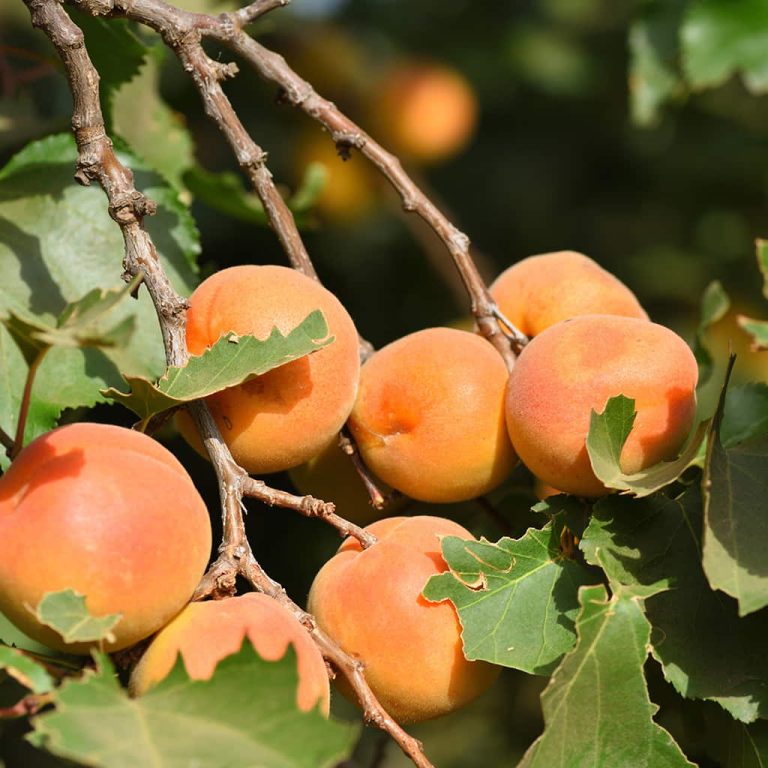
Blenheim fruit runs 1.5–2 inches in diameter with golden-yellow to orange skin carrying a red blush; the flesh is pale orange, fine-grained, and very tender at full ripeness. Flavor is the variety’s defining attribute: intensely sweet with documented high Brix, a honeyed aromatic profile, and enough background acidity to give structure — a balance that newer firm-fleshed commercial cultivars seldom replicate. Mature trees yield 100–200 lbs annually. The short storage window — three to seven days refrigerated at peak ripeness — is the principal trade-off. Harvest slightly under-ripe if transport is needed; fully ripe fruit bruises within hours. Blenheim’s thin skin and high sugar content make it the premier drying apricot in American production history: dried halves retain aromatic depth that thicker-skinned varieties lose in the dehydrator. Culinary applications span fresh eating, preserves, jam, baking, canning, and apricot liqueur. The kernel contains amygdalin and should not be consumed in quantity.
Ripening Season: Very Early
Harvest Window: Mid Jun - Mid Jul
Fruit Size: 1.5-2 inch
Flavor: Exceptionally sweet, aromatic, honey-sweet with floral notes and bright acidity; considered best-flavored apricot
Fruit Color: Golden yellow-orange skin with red blush; pale orange to orange flesh
Fruit Texture: Tender, very juicy; fine-grained flesh; soft when fully ripe
Fruit Skin: Thin, tender skin with light fuzz; not tough
Bearing Habit: Bears on spurs and 1-year-old wood; annual bearing when frost does not damage blossoms
Years to Bear: 2-4 years
Storage Life: 3-7 days refrigerated at peak ripeness; short shelf life - harvest near-ripe for best transport
Culinary Uses: Fresh eating; drying; jam and preserves; canning; baking; liqueurs
With its thin, tender skin providing minimal barrier during humid ripening periods, Blenheim is particularly vulnerable to Brown Rot (Monilinia fructicola). Management centers on three practices: canopy thinning and annual pruning to maximize airflow, prompt removal of mummified fruit before they overwinter in the tree, and harvest at the correct maturity stage rather than letting fruit soften on the branch. OMRI-listed copper fungicides applied at shuck-fall and during wet springs provide additional protection without synthetic residues. Cytospora Canker (Cytospora leucostoma) and Bacterial Canker (Pseudomonas syringae) both show moderate susceptibility; avoiding pruning wounds during wet weather is the primary cultural defense, combined with clean cuts and immediate sealing of large wounds. Shot Hole (Wilsonomyces carpophilus) causes foliar spotting and defoliation in wet springs; copper applications at dormancy reduce overwintering inoculum. Powdery Mildew (Podosphaera pannosa) is comparatively mild, with moderate resistance offering some practical advantage. On the pest side, Plum Curculio (Conotrachelus nenuphar), Oriental Fruit Moth (Grapholita molesta), and Peachtree Borer (Synanthedon exitiosa) all require active management: kaolin clay barriers deter curculio egg-laying, pheromone traps provide moth flight monitoring, and beneficial nematode soil drenches around the trunk base reduce borer populations. Green Peach Aphid (Myzus persicae) is moderately susceptible; insecticidal soap and reflective mulches suppress early-season colonization.
Brown Rot: Susceptible
Bacterial Canker: Moderately Susceptible
Shot Hole: Moderately Susceptible
Cytospora Canker: Moderately Susceptible
Powdery Mildew: Moderately Resistant
Plum Curculio: Susceptible
Oriental Fruit Moth: Susceptible
Peachtree Borer: Susceptible
Black Cherry Aphid / Green Peach Aphid: Moderately Susceptible
- Prune for an open vase: Remove inward-facing and crossing branches each winter to maximize light penetration — the most effective structural defense against brown rot in the humid canopy interior.
- Deploy kaolin clay early: Apply OMRI-listed kaolin clay at petal fall and repeat after rain events to create a physical barrier against plum curculio egg-laying before the pest population peaks in early summer.
- Monitor for peachtree borer: Inspect the trunk base each August for gummosis and frass; apply beneficial nematodes (Steinernema carpocapsae) as a trunk drench in late summer to target larvae before they establish in the cambium.
- Reduce irrigation before harvest: Cut watering in the final 2-3 weeks to concentrate sugars and limit surface moisture that accelerates brown rot on ripening fruit.
We ship in late winter or early spring based on your USDA hardiness zone.
We strive to ship orders on the scheduled dates listed in the table below. However, please note that the actual shipping date may be subject to change due to factors like weather conditions and order volume.
The specific date for shipping your order will be determined according to your zipcode at the time of checkout.
Our plants are shipped bare root, packed in moist sawdust, and securely wrapped in plastic to prevent the roots from drying out. We use USPS Ground Advantage for shipping, ensuring that your plants typically arrive within 2-5 days after packaging.
In case you're unable to plant the trees immediately upon arrival, we recommend soaking them in water for a few hours and temporarily heeling them in. Ideally, they should be planted within three days of receipt for optimal health.
See our full shipping policy and map here
| Zone | Ship Date |
|---|---|
| 11 - 8b | March 1st, 2027 |
| 8a - 7b | March 8th, 2027 |
| 7a | March 15th, 2027 |
| 6b | March 22nd, 2027 |
| 6a | March 29th, 2027 |
| 5b - 5a | April 12th, 2027 |
| 4b - 4a | April 26th, 2027 |
| 3b - 1a | May 3rd, 2027 |
Our 365-Day Plant Guarantee: We ensure that our plants are delivered to you alive and healthy. If your plant does not survive its first year, you're eligible for store credit under these conditions:
- Your location falls within the appropriate USDA hardiness zone for the plant variety (refer to our hardiness zone map).
- You maintain the roots' moisture and plant within three days of delivery, following the instructions in our Planting Guide.
If you're concerned about your plant's health, please consult our guide, How to Tell if Your Tree is Dead or Dormant. Remember, our plants are shipped in a dormant state and may leaf out at different times based on their species. To check for plant vital
2 reviews for Blenheim Apricot
Related products

Orient Pear
Checking fitRated 5.00 out of 5
Shinseiki Asian Pear
Checking fit
Arkansas Black Apple
Rated 4.67 out of 5$49.95 Select Rootstock This product has multiple variants. The options may be chosen on the product pageChecking fit
Anna Apple
Checking fit

Kyle Johnson (verified owner) –
Awakening!
maryam Sadeghi (verified owner) –
good quality