
Sweet Cherry Pie Cherry
$59.95
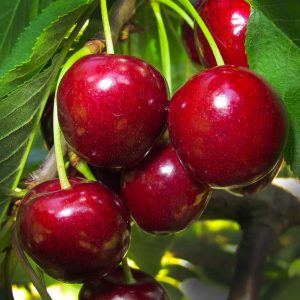
Sweet Cherry Pie Cherry (Prunus cerasus ‘Eubank’) is a tart cherry developed by Wisconsin orchardist Bill Eubank and introduced by Bailey Nurseries in 2014, bearing bright dark-red fruit with firm flesh and elevated sugar levels that make it the sweetest-tasting tart cherry available for pies, jams, and baking. It grows in USDA hardiness zones 4-7 and AHS heat zones 3-8, needs 800-1000 chill hours, and is self-fertile, fruiting reliably without a pollinator partner.
4-5′ Bare Root Grafted Tree
Rootstock: K6 – Semi Dwarf
Reduces tree size 20-30% against Mazzard and tolerates water stress well. Plant certified virus-free stock — it is hypersensitive to ringspot and prune dwarf viruses.
• Support: Freestanding; well anchored, with low to moderate suckering.
Can’t be shipped to: AK, CA, CO, HI, ID, OR, WA
In stock
Sweet Cherry Pie is a tart cherry cultivar developed by Wisconsin orchardist Bill Eubank, from whom the registered cultivar name ‘Eubank’ derives. Bailey Nurseries introduced it to the retail market through its First Editions program in 2014, a collaboration between Bailey and university-tested regional selections aimed at bringing reliably trialed edible and ornamental trees to the nursery trade. The variety’s parentage within Prunus cerasus is not publicly documented; no patent publication is currently on record, and breeder selection records have not been released into pomological literature. Eubank developed it with the goal of producing a sour cherry whose sugar-acid balance sits closer to the sweet-cherry end of the spectrum than traditional pie cherries allow — tart enough for baking and preserves while approaching fresh-eating character off the tree. That positioning between standard pie cherry sharpness and full sweet-cherry sweetness was the primary commercial distinction at introduction. Cold hardiness to Zone 4 reflects the Wisconsin provenance of its selection.
Drainage is the site variable that matters most for Sweet Cherry Pie. Prunus cerasus roots are sensitive to prolonged saturation, and standing water after spring rains accelerates crown rot regardless of other inputs. A loamy or sandy loam profile with a pH between 6.0 and 7.0 suits the tree well; heavy clay should be amended with organic matter or avoided. The 900-to-1,100-hour chilling requirement places this variety in USDA zones 4 through 7, though growers at the warmer end of that range benefit from positioning the tree on a north-facing slope that holds cold air longer through winter. Full sun—at least six to eight hours daily—is required for adequate fruit sugar development and to keep foliage dry enough to limit fungal pressure. Consistent soil moisture through fruit development in late spring improves sizing and prevents premature drop, but irrigation should taper off in the final two to three weeks before harvest to concentrate flavor and reduce skin cracking. At maturity the tree reaches 15 feet tall and 12 feet wide; adequate air movement around the canopy is an important siting consideration.
USDA Hardiness Zone: 4-7
AHS Heat Zone: 3-8
Chill Hours: 800-1000
Sun Requirements: Full Sun
Soil pH: 6.0-7.0
Soil Type: Sandy loam, loam, well-drained; avoid heavy clay and shallow/sandy soils
Soil Drainage: Well-drained; intolerant of wet/waterlogged soils
Water Requirements: Medium; consistent moisture, especially during fruit development
Container Suitability: Not recommended (reaches 15 feet; not suited to containers)
How to Prune: Prune in late winter while dormant; remove crossing branches, maintain open center or modified central leader form; avoid heavy summer pruning to reduce disease risk
Sweet Cherry Pie grows at a moderate rate into an upright, spreading tree with strong scaffold branching that adapts well to either an open-center or modified central-leader training system. At maturity the canopy fills roughly 15 feet tall and 12 feet wide, placing it in the sub-canopy layer of a food forest design or as a productive specimen in a small home orchard. The fibrous root system anchors well in loamy soils but is sensitive to compaction; maintaining a mulched root zone out to the drip line and avoiding soil disturbance near the trunk preserves root health across the tree's expected 40-plus-year lifespan. Deciduous dark green foliage provides dense summer shade and transitions to yellow and orange in autumn before leaf drop. The spring bloom—white flowers opening from early to mid-May in temperate climates within USDA zones 4 through 7—is ornamentally significant and reliably attracts bees and other pollinators. Growers in zones 4 and 5 should be aware that late frosts during the bloom window can reduce fruit set; slightly elevated planting sites reduce cold-air pooling around the canopy during the critical pollination period.
Mature Height: 15 ft tall
Mature Spread: 12 ft wide
Growth Habit: Upright, spreading
Growth Rate: Moderate
Foliage Type: Deciduous
Food Forest Layer: Canopy, Sub-canopy
Leaf Color: Dark green
Fall Foliage Color: Yellow to orange
Attracts Wildlife: Robins, mockingbirds, flickers, woodpeckers, orioles, bluebirds, grosbeaks, and numerous other bird species; deer, raccoons, foxes, and other mammals
Life Span: 40+ years
Sweet Cherry Pie is self-fertile and sets fruit from its own pollen without a cross-pollinator. As a Prunus cerasus selection, it produces viable pollen compatible with other tart cherry cultivars that share the same bloom window. Flowers open from early to mid-May in temperate climates and are serviced by bees as the primary vector, with flies, beetles, and butterflies contributing at lower rates. Planting a compatible tart companion—such as Montmorency Cherry or North Star Cherry—within 50 feet typically improves fruit set and can meaningfully increase total yield, particularly in cool or wet springs when bee foraging is limited. Sweet cherries (Prunus avium) are not compatible cross-pollinators for tart cherry types; cross-pollination pairings should be limited to other Prunus cerasus cultivars or P. cerasus hybrids with overlapping bloom timing.
Bloom Season: Mid
Bloom Window: Early May - Mid May
Pollination Requirements: Self-fertile
Pollination Mechanism: Insect (bees, butterflies, flies, beetles)
Flower Color: White
Ploidy: Tetraploid (4x)
Fruit ripens from late June through mid-July in temperate climates, presenting as bright dark red cherries with firm flesh that holds structure through cooking—a characteristic that separates Sweet Cherry Pie from softer tart varieties that turn mushy in pie filling. The flavor profile is genuinely distinct for a Prunus cerasus cultivar: sugar levels are elevated relative to standards like Montmorency, producing a sweet-tart balance that makes the fruit palatable for fresh eating while retaining enough acidity to perform in baked applications, jams, and canning. Yield is heavy by tart cherry standards, with this variety placing consistently among the higher-producing cultivars in comparative trials. Fruit should be harvested at full dark red color; the firm flesh allows brief refrigerated storage but cherries for preserves or baked goods keep best when processed promptly. Culinary uses include pies, tarts, jams, jellies, and cakes. Leaves, pits, stems, and bark contain cyanogenic glycosides and should not be consumed by humans, dogs, cats, horses, or livestock.
Ripening Season: Early
Harvest Window: Late Jun - Mid Jul
Flavor: Sweet-tart; richly flavored with good tang; considered the sweetest-tasting tart cherry
Fruit Color: Bright dark red
Fruit Texture: Firm flesh; does not get mushy during cooking
Bearing Habit: Annual bearer
Years to Bear: 3-5 years
Culinary Uses: Pies, tarts, jams, jellies, cakes, baking, canning; limited fresh eating
Sweet Cherry Pie is moderately susceptible to the primary cherry diseases and pests, so growers in humid climates should establish a proactive program early. Brown rot (Monilinia fructicola) is the most damaging pre-harvest threat: remove mummified fruit after harvest, prune for an open canopy that dries quickly after rain, and apply OMRI-listed copper fungicide at petal fall during wet springs. Cherry leaf spot (Blumeriella jaapii) causes early defoliation if neglected; rake and destroy fallen leaves in autumn and avoid overhead irrigation. Bacterial canker (Pseudomonas syringae) enters through pruning wounds—limit dormant cuts to dry weather and sterilize tools between cuts. Black knot (Apiosporina morbosa) galls must be removed with six to eight inches of clean wood and burned or bagged, never composted. X-disease (Candidatus Phytoplasma pruni) spreads via leafhopper vectors; kaolin clay during the growing season reduces feeding and transmission. Plum curculio (Conotrachelus nenuphar) and cherry fruit fly (Rhagoletis cingulata) are controlled with kaolin clay barriers and yellow sticky traps from petal fall through shuck split. Black cherry aphid (Myzus cerasi) responds to a strong water spray or insecticidal soap before colonies establish. Spotted wing drosophila (Drosophila suzukii) is the top harvest pest; fine mesh netting under 1 mm, deployed at color break, is the most reliable organic defense.
Brown Rot: Moderately Susceptible
Cherry Leaf Spot: Moderately Susceptible
Bacterial Canker: Moderately Susceptible
Black Knot: Moderately Susceptible
X-Disease / Cherry Buckskin: Moderately Susceptible
Plum Curculio: Moderately Susceptible
Cherry Fruit Fly: Moderately Susceptible
Black Cherry Aphid: Moderately Susceptible
Spotted Wing Drosophila: Susceptible
- Confirm drainage before planting: Water standing more than 24 hours after heavy rain signals inadequate drainage; amend with organic matter or choose a better-drained site, as wet soil leads to rapid decline regardless of other care.
- Two-spray brown rot window: Apply OMRI-listed copper fungicide at petal fall and again at shuck split during wet springs to cover the highest-risk infection window for brown rot and cherry leaf spot.
- SWD exclusion at color break: Install fine mesh netting (under 1 mm) as cherries begin turning red — Spotted Wing Drosophila females oviposit in ripening fruit one to two weeks before harvest, so early deployment is critical.
- Black knot winter patrol: Walk the canopy each late winter before bud swell to identify and prune out black knot galls; dormant removal reduces spore spread during the growing season.
- Cross-pollinator pairing: Even though Sweet Cherry Pie is self-fertile, planting Montmorency or North Star within 50 feet consistently increases crop load — plan both trees from the start so they reach bearing age together.
We ship in late winter or early spring based on your USDA hardiness zone.
We strive to ship orders on the scheduled dates listed in the table below. However, please note that the actual shipping date may be subject to change due to factors like weather conditions and order volume.
The specific date for shipping your order will be determined according to your zipcode at the time of checkout.
Our plants are shipped bare root, packed in moist sawdust, and securely wrapped in plastic to prevent the roots from drying out. We use USPS Ground Advantage for shipping, ensuring that your plants typically arrive within 2-5 days after packaging.
In case you're unable to plant the trees immediately upon arrival, we recommend soaking them in water for a few hours and temporarily heeling them in. Ideally, they should be planted within three days of receipt for optimal health.
See our full shipping policy and map here
| Zone | Ship Date |
|---|---|
| 11 - 8b | March 1st, 2027 |
| 8a - 7b | March 8th, 2027 |
| 7a | March 15th, 2027 |
| 6b | March 22nd, 2027 |
| 6a | March 29th, 2027 |
| 5b - 5a | April 12th, 2027 |
| 4b - 4a | April 26th, 2027 |
| 3b - 1a | May 3rd, 2027 |
Our 365-Day Plant Guarantee: We ensure that our plants are delivered to you alive and healthy. If your plant does not survive its first year, you're eligible for store credit under these conditions:
- Your location falls within the appropriate USDA hardiness zone for the plant variety (refer to our hardiness zone map).
- You maintain the roots' moisture and plant within three days of delivery, following the instructions in our Planting Guide.
If you're concerned about your plant's health, please consult our guide, How to Tell if Your Tree is Dead or Dormant. Remember, our plants are shipped in a dormant state and may leaf out at different times based on their species. To check for plant vital
Related products

Van Cherry
Checking fit
Okame Cherry
Checking fit
North Star Cherry
Checking fit
Sweetheart Cherry
Checking fit


Reviews
There are no reviews yet.