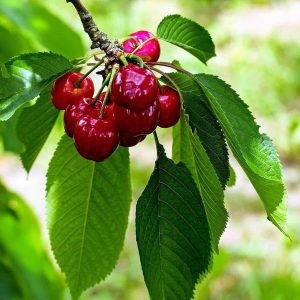

Okame Cherry
$49.95
Okame Cherry (Prunus x okame) is a hybrid ornamental cherry bred by Captain Collingwood Ingram around 1930, lighting up late winter with masses of deep carmine-pink flowers on bare branches before any leaves emerge, and maturing to a graceful rounded canopy with warm yellow-orange fall color. It grows in USDA hardiness zones 6-9 and AHS heat zones 4-10, needs about 300-400 chill hours, and is self-fertile, fruiting reliably without a pollinator partner.
4-5′ Bare Root Grafted Tree
Rootstock: Colt – Standard
Vigorous but slightly smaller than Mazzard, and comfortable on heavier clay loams. Note it is not especially cold hardy.
• Support: Freestanding; good anchorage.
Can’t be shipped to: AK, CA, CO, HI, ID, OR, WA
In stock
Okame Cherry is a hybrid species bred by Captain Collingwood Ingram at his Benenden estate in Kent, England. Ingram initiated the cross around 1930, using Prunus incisa (Fuji cherry, native to the slopes of Mount Fuji and valued for cold hardiness and very early bloom) as the female parent and Prunus campanulata (Taiwan or bellflower cherry, prized for its vivid carmine-rose flower color but sensitive to hard frost) as the pollen donor. His goal was to capture campanulata’s intense color without its cold-climate limitations. The resulting hybrid, which Ingram formally named Okame in 1947, inherited incisa’s cold tolerance and early flowering habit while expressing campanulata’s deep pink-to-carmine blossom color. Ingram, who dedicated much of his life to preserving Japanese flowering cherry cultivars at risk of extinction in their homeland, regarded Okame as among his most successful Western-bred hybrids. The Royal Horticultural Society awarded Okame its Award of Garden Merit in 1993. Now classified under the hybrid epithet Prunus x incam, it has become one of the most widely planted early-blooming ornamental cherries in North American and European horticulture.
Okame Cherry thrives in full sun and well-drained soils with a pH of 6.0–7.0. It shows above-average tolerance of urban conditions — heat, reflected light, and variable soil moisture — compared to many ornamental Prunus selections, a trait inherited from its Prunus campanulata parent. Established trees handle moderate drought but perform best with consistent moisture through the first two seasons. In humid climates, plant in an open location with good air circulation to reduce fungal disease pressure. Hardy in Zones 6–8, Okame blooms early enough that late frosts in colder zones can occasionally damage open flowers — a site with some wind protection or slightly elevated positioning helps in marginal areas. Mulch the root zone to retain moisture and moderate soil temperature. Okame is one of the better ornamental cherries for Southeastern and mid-Atlantic gardens where summer heat and humidity limit the performance of many Japanese cherry cultivars.
USDA Hardiness Zone: 6-9
AHS Heat Zone: 4-10
Sun Requirements: Full Sun
Soil pH: 6.0-7.0
Soil Type: Loam
Soil Drainage: Well-drained
Water Requirements: Medium
Drought Tolerance: Moderate drought tolerance once established
Heat Tolerance: More tolerant of heat and urban stress than many other ornamental cherries
Plant Spacing: 15-20 ft apart
Container Suitability: Yes (with adequate drainage and moisture monitoring)
How to Prune: Prune in spring after flowering finishes; remove suckers below graft union at base
A medium ornamental tree reaching 20–30 feet tall with a spread of 15–25 feet wide, with an upright oval to rounded crown that becomes more open with age. Bark is smooth, dark reddish-brown with horizontal lenticels typical of the genus. Foliage is small and finely textured, emerging green in spring and turning orange to bronze-red in autumn — one of the better Prunus selections for fall color in warm climates. The tree's proportions are well-suited to residential yards and street-side planting, fitting under utility lines at maturity with appropriate clearance. Okame is considered more tolerant of heat and urban stress than many other ornamental cherry selections.
Mature Height: 20-30 ft tall
Mature Spread: 15-25 ft wide
Growth Habit: Upright to vase-shaped when young, maturing to rounded canopy with fine-textured branching
Growth Rate: Moderate (1-2 feet per year)
Foliage Type: Deciduous
Food Forest Layer: Canopy, Sub-canopy
Permaculture Role: Pollinator support, wildlife food
Leaf Color: Green
Fall Foliage Color: Yellow to orange with occasional red tones
Thorns?: No
Attracts Wildlife: Bees and butterflies (pollinators); birds and small mammals (fruit)
Life Span: 20-40 years
Okame Cherry is self-fertile and produces its full ornamental flower display without a pollinator partner. Bloom opens in late winter to early spring — commonly late February to mid-March in temperate climates, sometimes while frost is still possible, making it one of the earliest ornamental cherries to flower. The carmine-rose flower buds are striking even before fully open; flowers expand to single pink blooms in dense clusters along bare branches before leaf emergence, creating a full branch-to-branch floral effect. Bloom duration is typically two to three weeks and can occasionally extend longer in cool springs. Early bloom timing means pollinators such as native bees and early butterflies actively forage the flowers during a period when few other nectar sources are available.
Pollination Requirements: Self-fruitful (ornamental; fruit rarely sets under normal conditions); attracts pollinators
Pollination Mechanism: Insect-pollinated (primarily bees)
Flower Color: Deep carmine-pink to rosy pink with red calyces and reddish flower stalks
Okame Cherry is grown entirely for its ornamental early-spring flower display. Small dark cherries form after bloom but are not a culinary or commercial feature of this cultivar. Those small dark fruits support local songbirds and late-season pollinators during the summer months, adding quiet ecological value to a tree planted purely for its ornamental qualities; no harvest is intended or needed from this cultivar. The tree's primary value lies in its very early bloom timing, its carmine-rose to pink floral color, its autumn foliage display, and its adaptability to warm humid climates where many ornamental cherries struggle. Birds may visit the small fruits through summer, providing incidental wildlife benefit during the growing season.
Fruit Color: Dark (small, dark cherries)
Culinary Uses: N/A - ornamental flowering cherry
Okame Cherry carries resistance to bacterial canker (Pseudomonas syringae) — a meaningful advantage in humid regions where this pathogen causes significant dieback in susceptible ornamental cherries. Brown rot (Monilinia fructicola) can affect flowers and twigs during wet spring weather; as this cultivar blooms very early when temperatures are still cool and wet, monitoring during bloom is worthwhile. Cherry leaf spot (Blumeriella jaapii) causes yellow-spotted foliage and early leaf drop in humid summers; avoid overhead irrigation and ensure good airflow. Black knot (Apiosporina morbosa) galls should be pruned promptly when detected, cutting several inches below visible gall tissue and disinfecting tools. Black cherry aphid (Myzus cerasi) tends toward moderate susceptibility — inspect new growth in spring and address colonies early with a water jet or insecticidal soap before populations establish. Spotted wing drosophila (Drosophila suzukii) is present across the range but remains low-impact on a non-commercial ornamental planting. Plum curculio (Conotrachelus nenuphar) and cherry fruit fly (Rhagoletis cingulata) are of minor concern for a purely ornamental tree.
Brown Rot: Moderately Susceptible
Cherry Leaf Spot: Moderately Susceptible
Bacterial Canker: Resistant
Black Knot: Moderately Resistant
X-Disease / Cherry Buckskin: Resistant
Plum Curculio: Moderately Susceptible
Cherry Fruit Fly: Moderately Susceptible
Black Cherry Aphid: Moderately Susceptible
Spotted Wing Drosophila: Susceptible
- Site for visual impact: Plant where early spring bloom is visible from indoors — a window-facing position maximizes the display during late winter when little else is flowering.
- Valuable for early pollinators: The early bloom provides a critical nectar source for native bees emerging before most flowering trees open.
- Avoid frost pockets: Choose a planting site with good cold-air drainage to protect early buds from late-season frosts.
We ship in late winter or early spring based on your USDA hardiness zone.
We strive to ship orders on the scheduled dates listed in the table below. However, please note that the actual shipping date may be subject to change due to factors like weather conditions and order volume.
The specific date for shipping your order will be determined according to your zipcode at the time of checkout.
Our plants are shipped bare root, packed in moist sawdust, and securely wrapped in plastic to prevent the roots from drying out. We use USPS Ground Advantage for shipping, ensuring that your plants typically arrive within 2-5 days after packaging.
In case you're unable to plant the trees immediately upon arrival, we recommend soaking them in water for a few hours and temporarily heeling them in. Ideally, they should be planted within three days of receipt for optimal health.
See our full shipping policy and map here
| Zone | Ship Date |
|---|---|
| 11 - 8b | March 1st, 2027 |
| 8a - 7b | March 8th, 2027 |
| 7a | March 15th, 2027 |
| 6b | March 22nd, 2027 |
| 6a | March 29th, 2027 |
| 5b - 5a | April 12th, 2027 |
| 4b - 4a | April 26th, 2027 |
| 3b - 1a | May 3rd, 2027 |
Our 365-Day Plant Guarantee: We ensure that our plants are delivered to you alive and healthy. If your plant does not survive its first year, you're eligible for store credit under these conditions:
- Your location falls within the appropriate USDA hardiness zone for the plant variety (refer to our hardiness zone map).
- You maintain the roots' moisture and plant within three days of delivery, following the instructions in our Planting Guide.
If you're concerned about your plant's health, please consult our guide, How to Tell if Your Tree is Dead or Dormant. Remember, our plants are shipped in a dormant state and may leaf out at different times based on their species. To check for plant vital
Related products

Montmorency Cherry
$59.95 Select Rootstock This product has multiple variants. The options may be chosen on the product pageChecking fit
Black Tartarian Cherry
Checking fitRated 5.00 out of 5
White Gold Cherry
Checking fit
Glacier Cherry
Checking fit


Reviews
There are no reviews yet.