Shellbark Hickory
$11.95
Shellbark Hickory (also known as King Nut; Carya laciniosa) is a native bottomland shade tree valued for producing the largest nuts of any native hickory, 1.5–2.5 inches across, with sweet, rich flavor suited for eating raw, baking, and nut butter. It grows in USDA hardiness zones 5-8 and AHS heat zones 4-8, and requires cross-pollination with a compatible variety such as McAlester Hican to set fruit.
1-2′ Bare Root Seedling Tree
Propagation: Seedling (own-root)
In stock
Shellbark Hickory is a native bottomland species distributed from western New York and Pennsylvania west through Ohio, Indiana, Illinois, and Iowa, south through Missouri, Kentucky, and Tennessee, and into northeastern Oklahoma and Kansas. The species is sometimes called King Nut hickory in reference to its nuts, which are the largest produced by any native hickory — thick-shelled fruits typically reach 1.5 to 2.5 inches in diameter, outmassing shagbark hickory nuts by a substantial margin. Shellbark is a wild-type species with no formal breeding history; it is offered in the nursery trade as straight species or as regionally collected seedlings. It occupies a distinct ecological niche in moist river-bottom and terrace forests alongside bur oak, sycamore, and cottonwood, tolerating shallow seasonal flooding that excludes most other hickories. Indigenous communities throughout its range gathered the sweet kernels as a calorie-dense winter food, and early American settlers valued the exceptionally hard wood for tool handles, wagon wheels, and structural timbers. The species also hybridizes naturally with pecan (C. illinoinensis) where their ranges overlap, producing the hican hybrids prized for large nut size.
Shellbark Hickory is adapted to moist, periodically wet bottomland soils, and its site requirements reflect that origin. Unlike most nut trees that demand sharp drainage, Shellbark tolerates occasional flooding and performs well in low-lying areas where other hickories would fail. That said, standing water during active growth can promote root disease, so soils that drain between flood events are preferable to permanently saturated ground. A pH range of 6.0 to 7.5 covers most suitable soils; strongly acidic sites below pH 5.5 should be amended before planting. Shellbark demands full sun for productive nut set — canopy gaps of less than 60–70 percent light measurably reduce yield. Deep taproot development depends on loosened subsoil; compacted clay subsoil restricts root penetration and increases drought stress during dry summers, even on otherwise moist sites. Once established, medium-to-high water availability supports the heavy nut crop. Drought tolerance is only low to moderate, so supplemental irrigation during severe dry spells protects kernel fill in the first decade.
USDA Hardiness Zone: 5-8
AHS Heat Zone: 4-8
Sun Requirements: Full Sun
Soil pH: 6.0-7.5
Soil Type: Loam, silt loam, clay loam
Soil Drainage: Moist to wet, tolerates occasional flooding
Water Requirements: Medium to High
Drought Tolerance: Low to Moderate
Container Suitability: Not Suitable
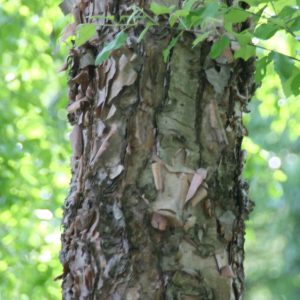
At maturity Shellbark Hickory reaches 60 to 80 feet tall with a 40 to 60 foot crown spread, making it one of the larger native hickories at landscape scale. The crown is upright with a narrowly rounded form in youth, broadening with age into a more open silhouette as lateral scaffold branches develop. Growth rate is slow — growers should plan on decades of patience before the tree hits structural maturity. The deep taproot system anchors the tree against wind throw and mines subsoil moisture, but it also makes transplanting after the first few years nearly impossible; siting decisions are permanent. Bark on mature stems sheds in thick, loose plates reminiscent of Shagbark, though the plates on Shellbark tend to be wider and less tightly curled. Fall foliage turns yellow to golden brown before leaf drop. The long compound leaves — typically seven leaflets per leaf on Shellbark versus the five on Shagbark — provide reliable species-level identification and create a coarse, bold summer texture in the canopy. Life span exceeds 200 years under favorable site conditions.
Mature Height: 60-80 ft tall
Mature Spread: 40-60 ft wide
Growth Habit: Upright, Narrow Rounded Crown
Growth Rate: Slow
Foliage Type: Deciduous
Food Forest Layer: Canopy
Leaf Color: Dark Green
Fall Foliage Color: Yellow to Golden Brown
Thorns?: No
Attracts Wildlife: Deer, Bears, Foxes, Squirrels, Chipmunks, Rabbits, Wild Turkey, Songbirds
Life Span: 200-500+ years
Shellbark Hickory is monoecious and wind-pollinated, bearing separate male catkins and female flowers on the same tree. Catkins emerge mid-April through mid-May as new leaves are expanding — a phenological cue that keeps wind-borne pollen moving efficiently through the partially open canopy. Despite bearing both flower types on a single tree, hickories are protandrous: pollen sheds before female flowers on the same individual are fully receptive, which means a solitary planting rarely achieves reliable cross-pollination. Planting at least two genetically distinct individuals — or pairing with McAlester Hican or Bitternut Hickory (Carya cordiformis) — substantially improves nut set. Trees should be sited within 50 to 100 feet of each other when possible, though pollen can travel farther in open, unobstructed landscapes. No insect vector is required; plantings near open fields or forest edges benefit from ambient air movement.
Bloom Season: Mid
Bloom Window: Mid Apr - Mid May
Pollination Requirements: Cross-Pollination Required (wind-pollinated monoecious species)
Pollination Mechanism: Wind (Anemophilous)
Flower Color: Yellow-Green (catkins)
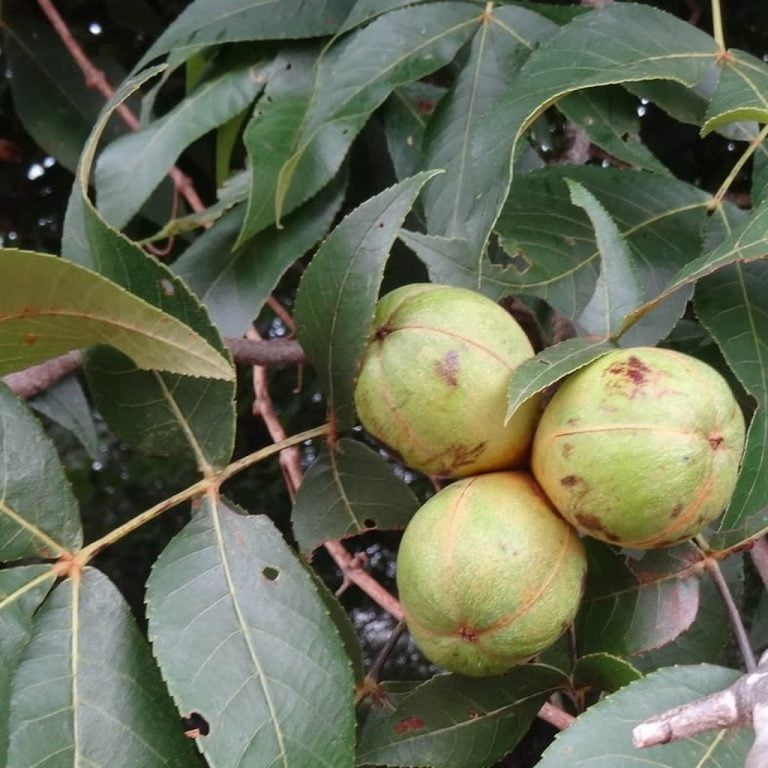
The nut is the defining trait of this species: 1.5 to 2.5 inches in diameter, enclosed in a thick husk that splits at maturity in fall between late September and late October. The shell is notably thick relative to Shagbark, which lowers the kernel-to-total-weight ratio, but the kernel itself is sweet, mildly rich, and carries a clean hickory flavor without the bitterness found in Bitternut. The flavor profile is less intense than Mockernut or Pignut but sweeter and more approachable, making it the preferred raw-eating hickory for most tasters. Culinary applications span raw snacking, baking, nut butter production, and traditional rendering for hickory nut oil — a high-fat, calorie-dense product valued in indigenous foodways. Kernels store well in-shell in a cool, dry location for two to four months; shelled kernels should be refrigerated or frozen for longer storage. Wildlife value is very high: deer, bears, foxes, squirrels, chipmunks, rabbits, wild turkey, and a range of songbirds all consume the nuts. First bearing typically begins 10 to 40 years from planting, with mast production irregular in early years.
Ripening Season: Mid
Harvest Window: Late Sep - Late Oct
Fruit Size: 1.5-2.5 inch
Flavor: Sweet, Rich, Mild Hickory Flavor
Fruit Color: Brown (nut); Green husk ripening to tan/brown
Bearing Habit: Annual (with occasional biennial masting)
Years to Bear: 10-40 years
Culinary Uses: Raw eating; Baking; Nut butter; Cooking; Traditional Native American food; Nut oil
Shellbark Hickory carries moderate susceptibility across all five tracked disease categories. Canker Rot (Poria spiculosa) enters through bark wounds; minimize mechanical injury during mowing and sterilize cutting tools between trees. Anthracnose (Gnomonia caryae) causes irregular leaf blotches and early defoliation in wet springs — raking and removing fallen leaves each autumn breaks the overwintering cycle. Powdery Mildew (Microsphaera alni) develops in humid, low-airflow conditions; canopy pruning and avoiding excess nitrogen reduce incidence. Leaf Blotch (Mycosphaerella dendroides) responds to the same fall sanitation routine as anthracnose. White Heart Rot (Hericium erinaceus complex and related wood-rot fungi) is a long-term structural concern; protecting the root zone from compaction supports vigorous wound callusing. On the pest side, Pecan Weevil (Curculio caryae) and Hickory Shuckworm (Cydia caryana) are the two most damaging insects, attacking developing nuts directly. Collecting and destroying fallen infested nuts each fall reduces overwintering populations, and kaolin clay applied to husks before peak weevil flight is an OMRI-listed physical deterrent. Hickory Bark Beetle (Scolytus quadrispinosus) and Twig Girdler (Oncideres cingulata) are secondary concerns; tree vigor through adequate soil moisture is the primary defense.
Canker Rot: Moderately Susceptible
Anthracnose: Moderately Susceptible
Powdery Mildew: Moderately Susceptible
Leaf Blotch: Moderately Susceptible
White Heart Rot: Moderately Susceptible
Hickory Bark Beetle: Moderately Susceptible
Pecan Weevil: Susceptible
Hickory Shuckworm: Susceptible
Twig Girdler: Moderately Susceptible
- Plant Two or More Individuals: Shellbark is protandrous — pollen sheds before female flowers are receptive on the same tree. A second genetically distinct hickory within 50–100 feet reliably boosts nut set.
- Prioritize Moist, Deep Soils: Unlike most nut trees, Shellbark tolerates seasonal flooding; avoid sites with compacted subsoil or permanent saturation, which restrict taproot development and invite root rot.
- Control Fall Nut Litter for Pest Reduction: Collect and destroy fallen nuts promptly each autumn to break the Pecan Weevil and Hickory Shuckworm overwintering cycle before populations build.
- Plan for a Long Establishment Window: First nut crops typically appear 10 to 40 years from planting. Treat early years as infrastructure investment and prioritize root zone moisture during the establishment decade.
- Fall Sanitation for Foliar Fungal Diseases: Anthracnose and Leaf Blotch overwinter in leaf litter; a thorough raking and removal program each fall materially reduces inoculum pressure the following spring.
We ship in late winter or early spring based on your USDA hardiness zone.
We strive to ship orders on the scheduled dates listed in the table below. However, please note that the actual shipping date may be subject to change due to factors like weather conditions and order volume.
The specific date for shipping your order will be determined according to your zipcode at the time of checkout.
Our plants are shipped bare root, packed in moist sawdust, and securely wrapped in plastic to prevent the roots from drying out. We use USPS Ground Advantage for shipping, ensuring that your plants typically arrive within 2-5 days after packaging.
In case you're unable to plant the trees immediately upon arrival, we recommend soaking them in water for a few hours and temporarily heeling them in. Ideally, they should be planted within three days of receipt for optimal health.
See our full shipping policy and map here
| Zone | Ship Date |
|---|---|
| 11 - 8b | March 1st, 2027 |
| 8a - 7b | March 8th, 2027 |
| 7a | March 15th, 2027 |
| 6b | March 22nd, 2027 |
| 6a | March 29th, 2027 |
| 5b - 5a | April 12th, 2027 |
| 4b - 4a | April 26th, 2027 |
| 3b - 1a | May 3rd, 2027 |
Our 365-Day Plant Guarantee: We ensure that our plants are delivered to you alive and healthy. If your plant does not survive its first year, you're eligible for store credit under these conditions:
- Your location falls within the appropriate USDA hardiness zone for the plant variety (refer to our hardiness zone map).
- You maintain the roots' moisture and plant within three days of delivery, following the instructions in our Planting Guide.
If you're concerned about your plant's health, please consult our guide, How to Tell if Your Tree is Dead or Dormant. Remember, our plants are shipped in a dormant state and may leaf out at different times based on their species. To check for plant vital
2 reviews for Shellbark Hickory
Related products

River Birch
Checking fit
Pecan
Checking fitRated 4.33 out of 5
Red Mulberry
Checking fitRated 4.89 out of 5
White Oak
Checking fitRated 5.00 out of 5


Bryan R. (verified owner) –
Happy with my order for Shellbark Hickory trees! They arrived safely packaged, correctly sized, alive and healthy (green stems and buds), put them in the ground right away, looking forward to seeing their progress as they grow.
Jenifer S. (verified owner) –
Nice bare root starter trees! Great root system!