Ohio Buckeye
$11.95
Ohio Buckeye (also known as American Buckeye; Aesculus glabra) is a native Eastern woodland tree with an oval-rounded crown, greenish-yellow flowers that attract hummingbirds and native bees, and bright orange to red fall color, valued primarily as a wildlife habitat and naturalized-area planting. It grows in USDA hardiness zones 3-7 and AHS heat zones 1-7.
1-2′ Bare Root Seedling Plant
Propagation: Seedling (own-root)
In stock
Ohio buckeye is a straight wild species native to the interior of eastern North America, not a cultivated selection. Its native range runs from western Pennsylvania and southern Michigan west to central Iowa and south through eastern Kansas, Oklahoma, central Texas, Arkansas, Tennessee, and central Alabama, with its densest occurrence in the Ohio River valley — the landscape that gave both the species and the state their common names. Ohio became the Buckeye State in part because of the tree’s abundance there, and the legislature formally designated Aesculus glabra as the state tree in 1953. The species grows on mesic bottomland sites, wooded slopes, and stream margins — habitually the first tree to leaf out in spring across its range. Indigenous peoples leached the seeds to neutralize their toxic saponins and prepared them as an edible flour; the bark was used medicinally, and frontier settlers carried a buckeye nut in the pocket as a folk remedy for rheumatism. The species is closely related to Yellow Buckeye (Aesculus flava) but is distinguished by its notably pungent foliage when crushed — the source of the folk name ‘fetid buckeye’ — and a preference for moist bottomland soils over upland sites.
Ohio Buckeye roots into moist soil most readily — drought stress causes early and premature leaf drop that weakens the tree over successive seasons and worsens susceptibility to leaf diseases, so reliable soil moisture is the single most important site factor. Soils in the 5.5–7.0 pH range suit it well, but the more critical variable is drainage: the tree wants moist soils, not waterlogged ones. Full sun drives maximum flower and nut production; part shade is tolerated and actually reduces leaf scorch intensity in regions with intense afternoon heat. Wind exposure is a meaningful stressor, particularly on young trees, so siting in a sheltered position — near a windbreak or forest edge — pays dividends. Because Ohio Buckeye develops a strong taproot early, transplanting is most successful from small container stock; balled-and-burlapped larger specimens establish slowly and often suffer. Spacing of 20–40 feet reflects the tree's eventual spread; crowding restricts airflow and worsens fungal disease pressure.
USDA Hardiness Zone: 3-7
AHS Heat Zone: 1-7
Sun Requirements: Full Sun to Partial Shade
Soil pH: 5.5-7.0 (slightly acidic to neutral)
Soil Type: Loam, clay loam, sandy loam; prefers rich moist soils
Soil Drainage: Well-drained to moist; does not tolerate prolonged drought
Water Requirements: Medium to High; consistent moisture preferred
Drought Tolerance: Low
Plant Spacing: 20-40 ft apart
Container Suitability: Not suitable; tap-rooted large tree
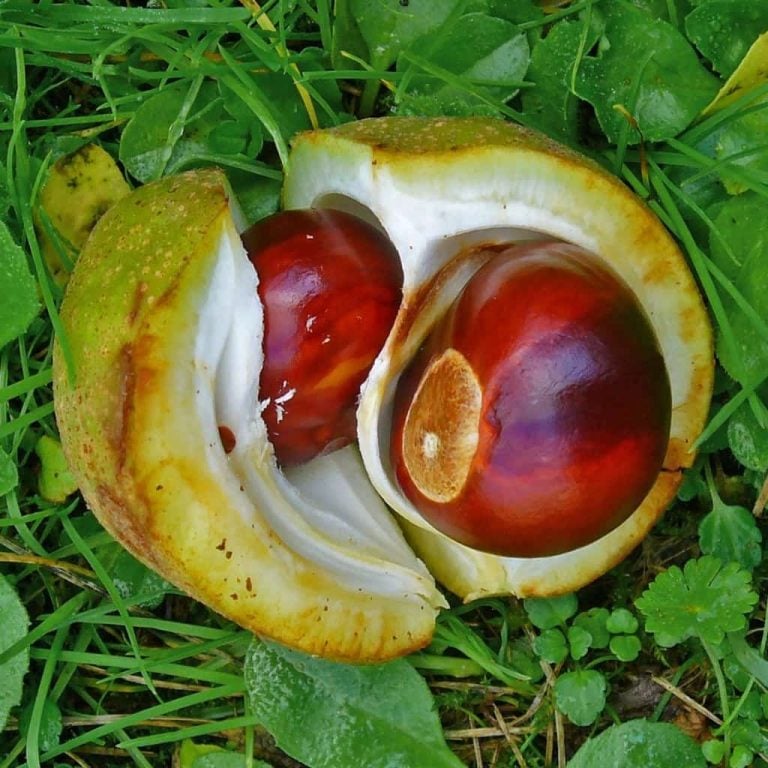
At maturity, Ohio Buckeye forms a broadly rounded to oval crown 20–40 feet tall and nearly as wide, with low branching that creates dense shade beneath. The palmately compound leaves — five leaflets radiating from a central point — are among the first to emerge in spring, typically several weeks ahead of most co-occurring hardwoods, giving the tree a distinctive early-spring presence in the woodland. That early leaf-out also comes with early senescence: drought or disease pressure often triggers leaf drop by late August, well before neighboring trees show fall color. When conditions allow, fall foliage turns yellow to orange-red before drop. The upright-to-arching flower panicles appear in late April through May, reaching 4–7 inches tall and bearing greenish-yellow blossoms attractive to native long-tongued bees and hummingbirds. The smooth, spiny-husked nuts (the 'buckeyes') ripen in September and are eagerly collected by squirrels. The taproot system that makes transplanting challenging also confers excellent anchorage and some resistance to windthrow once established.
Mature Height: 20-40 ft tall
Mature Spread: 20-40 ft wide
Growth Habit: Rounded; dense oval-rounded crown; low-branching
Growth Rate: Moderate; 1-2 ft per year
Foliage Type: Deciduous
Food Forest Layer: Canopy
Leaf Color: Bright green (palmately compound; 5 leaflets)
Fall Foliage Color: Yellow to orange-red
Thorns?: No
Attracts Wildlife: Squirrels (seeds); hummingbirds (flowers); native bees; butterflies
Life Span: 60-100 years
Ohio Buckeye flowers bloom from late April through May, producing upright panicles of greenish-yellow blossoms that attract native long-tongued bees and hummingbirds. Individual trees are capable of setting some seed without a companion plant, but cross-pollination from a nearby Aesculus generally improves nut production. It is worth noting that while the flowers provide valuable forage for native bees and hummingbirds, the pollen and nectar are toxic to European honeybees (Apis mellifera) and should be considered when siting the tree near managed hives. Red Buckeye (Aesculus pavia) blooms slightly earlier and can serve as a compatible companion species in zones where both are adapted. Because this tree is primarily planted for its ecological and landscape value rather than nut harvest, precise cross-pollinator scheduling is less critical than site selection and proximity to other Aesculus species.
Bloom Season: Mid
Bloom Window: Late Apr - Mid May
Pollination Requirements: Cross-pollinated by insects; self-fertile trees produce some seed
Pollination Mechanism: Insect-pollinated (bees, hummingbirds)
Flower Color: Greenish-yellow
Ohio Buckeye produces the smooth, leathery-husked nuts that give the Aesculus genus its common name. Each husk contains one to three shiny brown seeds — the 'buckeyes' — typically ripening in September. All plant parts, including the seeds, bark, leaves, and flowers, contain toxic saponins (esculin and fraxin) and narcotic glucosides that are poisonous to humans, livestock, and dogs if ingested. Seeds are not practically edible without extensive leaching, a multi-step process that Indigenous peoples historically employed to produce a palatable flour, but this is not recommended without expert guidance. Ecologically, the nuts serve as a critical late-season mast resource: squirrels actively cache Ohio Buckeye seeds as a winter food store, and seed predation by squirrels drives natural dispersal across the landscape. The flowers preceding the nuts provide early spring nectar and pollen for native bumblebees, mining bees, and Ruby-throated Hummingbirds — a wildlife value that persists regardless of nut set. The seeds also have documented historical use as a saponin source for soap-making, and polished seeds are commonly carried as good-luck tokens in Midwestern folk tradition.
Culinary Uses: Seeds historically leached and ground into flour by Indigenous peoples; not recommended for modern culinary use without expert preparation
Ohio Buckeye faces susceptibility across several foliar diseases that growers should anticipate and manage culturally. Leaf Blotch (Guignardia aesculi) is the most common concern — this fungal pathogen causes brown lesions with yellow margins and can defoliate trees by late summer. Rake and destroy fallen leaves each autumn to reduce overwintering inoculum; space trees at full recommended distances for airflow. Powdery Mildew (Erysiphe flexuosa) produces a white coating on foliage; trees in open, sunny positions are far less affected than crowded specimens. Leaf Scorch — driven by Xylella fastidiosa infection and abiotic drought stress — causes brown, crispy leaf margins that worsen through summer; consistent soil moisture and root-zone mulch are the primary mitigation. Anthracnose (Colletotrichum gloeosporioides) causes moderate damage in wet springs but rarely threatens long-term tree health. Bagworm (Thyridopteryx ephemeraeformis) and Japanese Beetle (Popillia japonica) are the primary pest concerns. Hand-remove bagworm cases in late winter before egg hatch in May; for Japanese Beetles, hand-pick in early morning when adults are sluggish and drop them into soapy water. Flatheaded Borer (Agrilus spp.) poses a moderate risk in stressed trees — maintaining vigor through adequate irrigation and avoiding trunk wounds is the most effective prevention.
Leaf Blotch: Susceptible
Powdery Mildew: Susceptible
Anthracnose: Moderately Susceptible
Leaf Scorch: Susceptible
Bagworm: Susceptible
Japanese Beetle: Susceptible
Flatheaded Borer: Moderately Susceptible
- Leaf Blotch Sanitation: Rake and bag or hot-compost fallen leaves every autumn — the Guignardia fungus overwinters in leaf litter and reinfects foliage the following spring without this step.
- Moisture Management: Ohio Buckeye's susceptibility to leaf scorch and early defoliation traces directly to water stress; apply a 3–4 inch organic mulch ring out to the drip line, kept away from the trunk, to buffer soil moisture through dry spells.
- Powdery Mildew Airflow: Site with good air circulation and avoid overhead irrigation to reduce powdery mildew pressure on foliage through summer.
- Bagworm Early Intervention: Scout for bagworm cases in late winter before eggs hatch in May — hand-removal at this stage eliminates the entire summer's infestation without any spray program.
- Japanese Beetle Timing: Adult beetles are most active from dawn to mid-morning; hand-pick at this window and drop into soapy water for effective reduction without impacting native pollinators foraging later in the day.
We ship in late winter or early spring based on your USDA hardiness zone.
We strive to ship orders on the scheduled dates listed in the table below. However, please note that the actual shipping date may be subject to change due to factors like weather conditions and order volume.
The specific date for shipping your order will be determined according to your zipcode at the time of checkout.
Our plants are shipped bare root, packed in moist sawdust, and securely wrapped in plastic to prevent the roots from drying out. We use USPS Ground Advantage for shipping, ensuring that your plants typically arrive within 2-5 days after packaging.
In case you're unable to plant the trees immediately upon arrival, we recommend soaking them in water for a few hours and temporarily heeling them in. Ideally, they should be planted within three days of receipt for optimal health.
See our full shipping policy and map here
| Zone | Ship Date |
|---|---|
| 11 - 8b | March 1st, 2027 |
| 8a - 7b | March 8th, 2027 |
| 7a | March 15th, 2027 |
| 6b | March 22nd, 2027 |
| 6a | March 29th, 2027 |
| 5b - 5a | April 12th, 2027 |
| 4b - 4a | April 26th, 2027 |
| 3b - 1a | May 3rd, 2027 |
Our 365-Day Plant Guarantee: We ensure that our plants are delivered to you alive and healthy. If your plant does not survive its first year, you're eligible for store credit under these conditions:
- Your location falls within the appropriate USDA hardiness zone for the plant variety (refer to our hardiness zone map).
- You maintain the roots' moisture and plant within three days of delivery, following the instructions in our Planting Guide.
If you're concerned about your plant's health, please consult our guide, How to Tell if Your Tree is Dead or Dormant. Remember, our plants are shipped in a dormant state and may leaf out at different times based on their species. To check for plant vital
1 review for Ohio Buckeye
Related products

Bald Cypress
Checking fit
Kentucky Coffeetree
Checking fitRated 5.00 out of 5
White Oak
Checking fitRated 5.00 out of 5
Bur Oak
Checking fit


William (verified owner) –
They look great! Exactly as advertised! Thank you much!