
Kiowa Blackberry
$11.95
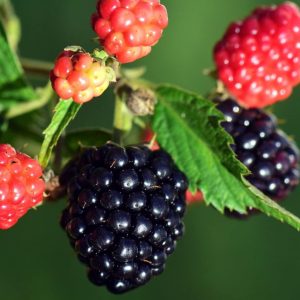
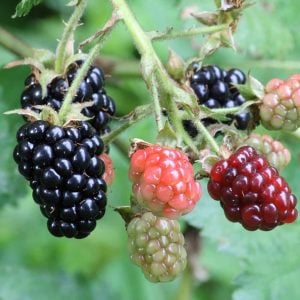
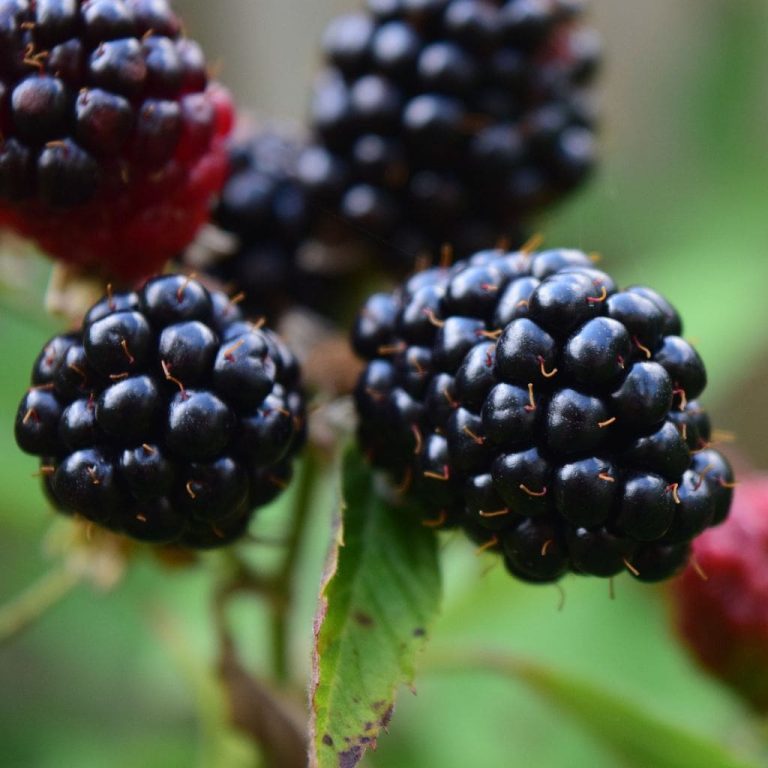
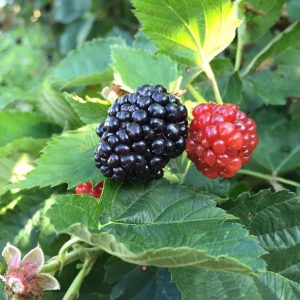
Kiowa Blackberry (Rubus, predominantly Rubus allegheniensis) is an erect Arkansas-bred blackberry bearing large, glossy-black, 1-inch berries with sweet, mildly subacid flavor and firm texture superior to Shawnee and Choctaw, making it an excellent choice for fresh eating, pies, and preserves. It grows in USDA hardiness zones 6-9 and AHS heat zones 7-10, needs 300-500 chill hours, and is self-fertile, fruiting reliably without a pollinator partner.
12-18″ Bare Root Plant
Propagation: Own-root
Can’t be shipped to: AK, FL, HI, SC
In stock
Kiowa blackberry was released in 1996 by the University of Arkansas fruit breeding program, with James N. Moore and John R. Clark as co-breeders, under plant patent USPP9861 (granted April 1997; expired approximately 2017). It originated from a hand-pollinated cross of Arkansas Selection 791 x Arkansas Selection 1058 made in 1980 at the Clarksville, Arkansas experiment station — both parents non-patented, unreleased program selections unavailable in commerce. Kiowa represents the culmination of the UA thorny erect series: released near the end of the program’s thorned-variety work before Clark’s leadership pivoted toward thornless types, it was selected to maximize berry size, with individual fruits averaging around 10 grams — among the heaviest of any UA erect release. The variety’s thorned canes provide the structural stiffness that supports large, heavy berry clusters without requiring the structural modifications the program would later engineer into thornless lines. Moore and Clark jointly developed Kiowa as one of the last collaborative releases before Moore’s retirement, making it a transitional variety between the program’s founding era under Moore and the Clark-led thornless expansion that followed.
Plant Kiowa in full sun on well-drained soil with a pH of 5.5–6.5; readings above 6.5 restrict iron and manganese uptake and slow cane development. Because Kiowa sends up stiff erect canes rather than trailing arching canes, a simple two-wire trellis at 3 and 5 feet is adequate — canes support themselves once laterals fill in, but wires prevent storm tipping on heavy-fruiting floricanes. Space primocanes 3–5 feet apart within the row and allow 8–10 feet between rows to keep air moving through the canopy, reducing the humid conditions that favor Botrytis gray mold during fruit fill. A 2–3 inch layer of straw or wood-chip mulch around the base moderates soil temperature and retains moisture during the heat spikes that arrive mid-harvest. Kiowa's good heat tolerance holds productivity through late-July picking, though supplemental irrigation during dry spells helps berry size hold. Fertilize in early spring before new cane emergence; excessive nitrogen late in the season encourages lush growth that hardens slowly before first frost.
USDA Hardiness Zone: 6-9
AHS Heat Zone: 7-10
Chill Hours: 300-500
Sun Requirements: Full Sun
Soil pH: 5.5-6.5
Soil Type: Sandy loam to clay loam; fertile, moderate water-holding capacity
Soil Drainage: Well-drained
Water Requirements: Medium
Drought Tolerance: Moderate
Heat Tolerance: High
Plant Spacing: 3-5 ft apart
Container Suitability: Poor (vigorous erect canes require in-ground planting for best performance)
How to Prune: Tip primocanes to 3-4 feet in summer to encourage branching; remove spent floricanes to ground after harvest; laterals pruned to 12-18 inches in late winter
Kiowa forms stiff upright primocanes that typically reach 5–7 feet, armed with sharp recurved thorns along their full length — gloves and long sleeves are practical for every row entry, whether for training, tying, or picking. Floricanes (second-year canes) branch freely and carry fruit laterals with clusters concentrated in the mid-cane zone, producing medium yields that are consistent year to year. After harvest, cut floricanes at ground level and remove them from the row entirely; leaving spent canes harbors cane-disease inoculum and overwintering pest eggs. New primocanes are robust and fast-growing under adequate moisture and nutrition, often reaching full height by midsummer. The erect shrub habit — typically 5–7 feet tall and 3–4 feet wide at full development — fits a food forest shrub layer or a dedicated bramble row along a fence or field edge.
Mature Height: 4-6 ft tall
Mature Spread: 3-4 ft wide
Growth Habit: Erect; moderately erect canes, not as rigidly erect as Shawnee; biennial cane cycle on a perennial crown
Growth Rate: Fast
Foliage Type: Deciduous
Food Forest Layer: Shrub
Permaculture Role: Food production; wildlife habitat and forage; living/thorny hedge and barrier
Leaf Color: Green
Fall Foliage Color: Red to orange-purple
Thorns?: Yes
Attracts Wildlife: Pollinators (bees); songbirds and game birds; small mammals
Life Span: Perennial (canes biennial; crown/root system long-lived)
Kiowa is self-fertile and sets a full crop without a companion blackberry planted nearby. Flowers are pollinated primarily by bees and other native pollinators that visit during bloom, which typically falls in mid-spring for zones 5–7. Because no cross-pollination partner is required, a single-variety planting is fully productive — a practical advantage for gardeners with limited space who want only one blackberry. However, planting two or more blackberry varieties in proximity can increase overall pollinator activity in the block, which may improve fruit set and berry uniformity when conditions are wet and bee flight is intermittent. Kiowa blooms after most late-frost risk has passed across its zone range, reducing the flower-damage risk that affects some early-blooming bramble types. The extended bloom period, spanning several weeks rather than a concentrated flush, spreads crop risk across multiple pollination events and contributes to the variety's characteristically long harvest window.
Bloom Season: Early
Bloom Window: Mid Apr - Late May
Pollination Requirements: Self-fertile
Pollination Mechanism: Self-fertile; insect-pollinated (bees improve fruit set and berry size)
Flower Color: White
Kiowa berries are glossy black at full maturity, averaging 1 inch in diameter and 10g in weight — among the heaviest individual fruits in the UA erect thorny series. Flavor is sweet and mildly subacid with a faint wild-blackberry aroma that distinguishes it from the cleaner-sweet profile of many thornless varieties. The combination of size and flavor makes Kiowa well suited to fresh eating straight from the cane, where the berry's weight is immediately apparent in hand. Berries also hold shape through cooking, making them a solid choice for jams, pies, cobblers, and preserves where intact fruit structure matters. The harvest window runs from mid-June through late July — a span of roughly six weeks — giving home gardeners an extended picking season without daily urgency. For best fresh flavor, harvest berries when fully dull-black rather than glossy-shiny; slight softening at the tip signals peak sugar. Fresh-picked berries store 2–3 days refrigerated; surplus freezes well for later use in smoothies or baked goods.
Ripening Season: Early
Harvest Window: Mid Jun - Late Jul
Fruit Size: 1 inch
Fruit Weight: 10 g (range 10-13 g)
Flavor: Sweet and mildly subacid, with a faint aroma reminiscent of wild blackberries
Fruit Color: Glossy black
Fruit Texture: Moderately firm; superior firmness to Shawnee and Choctaw
Bearing Habit: Floricane (fruiting on second-year canes)
Years to Bear: 2 years (first harvest in second season after planting)
Storage Life: 3-5 days refrigerated; good postharvest handling quality
Culinary Uses: Fresh eating, jams, jellies, pies, cobblers, smoothies, wine
Kiowa carries no documented resistance to orange rust (Gymnoconia nitens), the most structurally damaging disease in Eastern blackberry plantings. Orange rust is systemic — it colonizes the entire plant once established — so removing and destroying infected canes at first symptom, before spores spread, is the primary cultural control. Rosette or double blossom (Cercosporella rubi) has no rated resistance for Kiowa; a strict floricane removal schedule after harvest reduces the overwintering tissue where this pathogen persists. Anthracnose (Elsinoe veneta) and cane blight (Leptosphaeria coniothyrium) share no resistance rating for this variety; both are reduced by pruning for airflow and avoiding overhead irrigation during cane development. Botrytis gray mold (Botrytis cinerea) is a universal susceptibility across blackberries; wide row spacing, weed management, and harvesting fruit at peak maturity without leaving overripe berries on canes are the primary controls. Spotted wing drosophila and brown marmorated stink bug are both nationally present pests to which all soft-fruited brambles are susceptible; fine-mesh row covers at color break offer the most effective mechanical barrier. Japanese beetle feeding on foliage and flowers can be managed by hand-picking adults into soapy water in the early morning when they are least active.
Orange Rust: Very Resistant
Rosette / Double Blossom: Susceptible
Anthracnose: Moderately Resistant
Cane Blight: Moderately Susceptible
Botrytis Fruit Rot / Gray Mold: Susceptible
Spotted Wing Drosophila: Susceptible
Raspberry Crown Borer: Susceptible
Brown Marmorated Stink Bug: Susceptible
Japanese Beetle: Susceptible
- Gear up for harvest: Kiowa's thorns run the full cane length — wear leather or thorn-proof gloves and long sleeves every time you enter the row for training, tying, or picking.
- Scout for orange rust early: Check new primocane leaves for pale yellow spots on upper surfaces and orange pustules below. Remove infected plants root and all at first sign — the disease is systemic with no in-place cure.
- Time your floricane cut: Remove spent floricanes as soon as harvest finishes rather than waiting until dormancy. Removing them while still green reduces Botrytis and cane blight inoculum before fall wet weather arrives.
- Protect with row covers at color break: Deploy fine-mesh insect netting when berries first show color to deter spotted-wing drosophila and brown marmorated stink bug before fruit softens.
- Harvest every few days: The six-week season rewards consistent picking; leaving overripe berries on floricanes invites Botrytis and draws spotted-wing drosophila pressure to the whole row.
We ship in late winter or early spring based on your USDA hardiness zone.
We strive to ship orders on the scheduled dates listed in the table below. However, please note that the actual shipping date may be subject to change due to factors like weather conditions and order volume.
The specific date for shipping your order will be determined according to your zipcode at the time of checkout.
Our plants are shipped bare root, packed in moist sawdust, and securely wrapped in plastic to prevent the roots from drying out. We use USPS Ground Advantage for shipping, ensuring that your plants typically arrive within 2-5 days after packaging.
In case you're unable to plant the trees immediately upon arrival, we recommend soaking them in water for a few hours and temporarily heeling them in. Ideally, they should be planted within three days of receipt for optimal health.
See our full shipping policy and map here
| Zone | Ship Date |
|---|---|
| 11 - 8b | March 1st, 2027 |
| 8a - 7b | March 8th, 2027 |
| 7a | March 15th, 2027 |
| 6b | March 22nd, 2027 |
| 6a | March 29th, 2027 |
| 5b - 5a | April 12th, 2027 |
| 4b - 4a | April 26th, 2027 |
| 3b - 1a | May 3rd, 2027 |
Our 365-Day Plant Guarantee: We ensure that our plants are delivered to you alive and healthy. If your plant does not survive its first year, you're eligible for store credit under these conditions:
- Your location falls within the appropriate USDA hardiness zone for the plant variety (refer to our hardiness zone map).
- You maintain the roots' moisture and plant within three days of delivery, following the instructions in our Planting Guide.
If you're concerned about your plant's health, please consult our guide, How to Tell if Your Tree is Dead or Dormant. Remember, our plants are shipped in a dormant state and may leaf out at different times based on their species. To check for plant vital
Related products

Sweetie Pie Blackberry
Checking fit
Navaho Blackberry
Checking fitRated 4.88 out of 5
Ouachita Blackberry
Checking fitRated 5.00 out of 5
Hull Blackberry
Checking fitRated 5.00 out of 5


Reviews
There are no reviews yet.