


Sweetie Pie Blackberry
$11.95
Sweetie Pie Blackberry (Rubus) is a compact, thornless USDA-bred blackberry with an exceptionally sweet, high-Brix flavor and tender, juicy texture ideal for fresh eating, jams, and baking on a manageable 3–4 foot semi-erect plant. It grows in USDA hardiness zones 7-9 and AHS heat zones 6-10, needs 400-600 chill hours, and is self-fertile, fruiting reliably without a pollinator partner.
12-18″ Bare Root Plant
Propagation: Own-root
Can’t be shipped to: AK, FL, HI, SC
In stock
Sweetie Pie is a USDA-ARS release from the Thad Cochran Southern Horticultural Laboratory in Poplarville, Mississippi, bred by Dr. Stephen Stringer building on foundational work by Dr. Creighton Gupton. The cultivar, tested under the experimental designation MSUS119, originated from a cross between Navaho and the intermediate selection MSUS29, where MSUS29 itself was derived from [Humble x Brazos] x Navaho — giving Sweetie Pie a pedigree rooted heavily in the University of Arkansas erect thornless lineage. Selected in Poplarville in 1996 and subsequently trialed at McNeill, Mississippi and in Louisiana and Arkansas, it was formally released around 2017. It holds distinction as the first thornless blackberry released from the TCSHL breeding program. The program’s priorities for this cross were heat tolerance, rosette (double blossom) disease resistance, and a mid-to-late ripening window to fill a market gap in the southern U.S. where most erect thornless releases peak earlier in the season.
Plant Sweetie Pie where it receives full sun — a minimum of six to eight hours of direct light daily — because shaded canes produce fewer flowers and measurably lower fruit Brix. Well-drained soil with a pH between 5.5 and 6.5 gives the root system the acid environment brambles prefer; soils above pH 7.0 lock up iron and manganese, causing interveinal chlorosis that stunts new growth. Work compost into the planting site to improve drainage in heavier soils before establishing.
Space plants 3–5 ft apart in the row. Because Sweetie Pie tops out at 3–4 ft — shorter than most erect blackberry types — it integrates well into tighter spaces and needs a single trellis wire rather than the full two-wire system required by taller cultivars. Hardy from Zone 5 through 9, it adapts to a wide temperature range, though new primocanes benefit from a light mulch layer in the first winter to protect the crown in the coldest end of its range.
USDA Hardiness Zone: 7-9
AHS Heat Zone: 6-10
Chill Hours: 400-600
Sun Requirements: Full Sun
Soil pH: 5.5-6.5
Soil Type: Sandy loam to clay loam; fertile, moderate water-holding capacity
Soil Drainage: Well-drained
Water Requirements: Medium
Drought Tolerance: Moderate
Heat Tolerance: High
Plant Spacing: 3-5 ft apart
Container Suitability: Yes — container friendly
Sweetie Pie produces stiff, self-supporting erect canes that reach 3–4 ft at maturity — making it the most compact erect thornless type in the lineup and noticeably shorter than University of Arkansas standards such as Natchez or Osage. All canes are smooth and entirely spineless, so routine maintenance — tipping, thinning, and harvest — can be done bare-handed, a practical benefit in family gardens.
The growth habit follows the standard biennial primocane/floricane cycle: new primocanes emerge in spring, overwinter, then flower and fruit the following season as floricanes. After harvest, those spent floricanes are cut to the ground; tip new primocanes at 36–42 inches in midsummer to encourage lateral branching and maximize the fruiting surface. The compact frame keeps the plant well within reach without a ladder, reducing the physical effort of annual pruning and picking. Scientific name: Rubus hybrid; Family: Rosaceae.
Mature Height: 3-4 ft tall
Mature Spread: 4-5 ft wide
Growth Habit: Semi-erect to trailing thornless floricanes on a vigorous perennial crown; requires trellising
Growth Rate: Fast
Foliage Type: Deciduous
Food Forest Layer: Shrub
Permaculture Role: Food production; wildlife habitat and forage; living/thorny hedge and barrier
Leaf Color: Green
Fall Foliage Color: Red to orange-purple
Thorns?: No
Attracts Wildlife: Pollinators (bees); songbirds and game birds; small mammals
Life Span: 15-20+ years with proper management
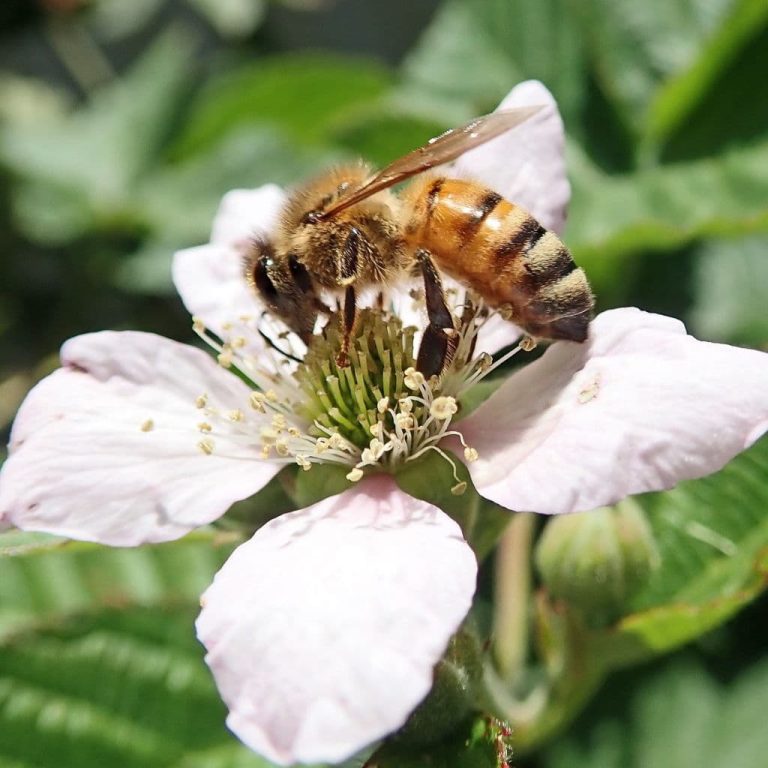
Sweetie Pie is fully self-fertile: a single plant sets a complete crop through insect-carried self-pollination, with no companion variety required. Bees are the primary agents, and even moderate native bee activity is sufficient for good fruit set in a home garden setting.
Bloom typically opens in the early part of the blackberry flowering window, consistent with the cultivar's early ripening season. Flowers appear on lateral shoots of second-year floricanes and are white to pale pink, attractive to bumblebees and honeybees alike. Because all blackberries in a planting overlap in bloom, Sweetie Pie can be interplanted with other self-fertile varieties for extended harvest without any cross-pollination requirement. No triploid or pollinator-dependency considerations apply.
Bloom Season: Very Early
Bloom Window: Early Apr - Late Apr
Pollination Requirements: Self-fertile
Pollination Mechanism: Self-fertile; insect-pollinated (bees improve fruit set and berry size)
Flower Color: White to pale pink
Berries measure approximately 0.75 inch in diameter — smaller than the 1-inch-plus fruits of large-fruited UA releases — but the reduced size concentrates sugars to a high Brix level that makes them among the sweetest-flavored compact blackberries available. Texture is semi-soft and juicy rather than the firm, shipping-grade texture of commercial cultivars, which means they bruise more readily but deliver a fuller, fresher flavor right off the cane.
The mid-season harvest runs from mid-June through late July in a temperate climate, yielding ripe fruit over several weeks as the cluster ripens sequentially. Fresh eating is the primary use: the high sugar content and soft texture shine in fruit salads, yogurt toppings, and quick jams. They also freeze well when spread on a sheet pan first. Small berry size makes them particularly popular with children picking directly from the garden.
Ripening Season: Early
Harvest Window: Mid Jun - Late Jul
Fruit Size: 0.75 inch
Flavor: Exceptionally sweet; high Brix; semi-soft, juicy texture
Fruit Color: Glossy black
Fruit Texture: Tender, juicy; too soft for commercial shipping but excellent for fresh eating
Bearing Habit: Floricane-fruiting (second-year canes bear fruit)
Years to Bear: 1-2 years after planting
Storage Life: 2-3 days fresh; soft fruit limits shelf life - best for fresh eating, local market, or U-pick
Culinary Uses: Fresh eating, jams, jellies, pies, juice, baking, freezing
Sweetie Pie shows consistent resistance to rosette/double blossom disease (Cercosporella rubi), an advantage that matters in humid regions of the Eastern US where this fungal pathogen causes vegetative proliferation of infected flowers and can devastate susceptible plantings. No fungicide program is needed for this disease on resistant canes.
Orange rust (Gymnoconia nitens) and anthracnose (Elsinoe veneta) carry no published resistance data for this cultivar; manage both with good air circulation through proper cane thinning and prompt removal of any infected tissue. Cane blight (Leptosphaeria coniothyrium) is similarly uncharacterized — clean pruning cuts and sterilized tools reduce entry points. Botrytis fruit rot (Botrytis cinerea) is a risk at harvest given the semi-soft texture; pick promptly when ripe and avoid leaving overripe berries on the cane.
For insect pressure, spotted wing drosophila and brown marmorated stink bug are the primary concerns at ripening. Use fine-mesh row cover during the harvest window as the most effective physical barrier for both. Kaolin clay and OMRI-listed spinosad applications reduce SWD infestation on exposed fruit.
Orange Rust: Resistant
Rosette / Double Blossom: Resistant
Anthracnose: Moderately Susceptible
Cane Blight: Moderately Susceptible
Botrytis Fruit Rot / Gray Mold: Susceptible
Spotted Wing Drosophila: Susceptible
Raspberry Crown Borer: Moderately Susceptible
Brown Marmorated Stink Bug: Moderately Susceptible
Japanese Beetle: Moderately Susceptible
- Tip primocanes at 36–42 inches: Pinch in midsummer to force lateral branching and maximize next year's fruiting wood.
- Pick every 2–3 days at ripeness: Semi-soft berries succumb quickly to botrytis in wet weather; never leave overripe fruit on the cane.
- Use fine-mesh netting at color break: Draping netting over the planting blocks spotted wing drosophila and stink bugs without any spray program.
- Mulch crowns in Zone 5: Apply 3–4 inches of straw before the first freeze to protect roots at the cold edge of the hardiness range.
We ship in late winter or early spring based on your USDA hardiness zone.
We strive to ship orders on the scheduled dates listed in the table below. However, please note that the actual shipping date may be subject to change due to factors like weather conditions and order volume.
The specific date for shipping your order will be determined according to your zipcode at the time of checkout.
Our plants are shipped bare root, packed in moist sawdust, and securely wrapped in plastic to prevent the roots from drying out. We use USPS Ground Advantage for shipping, ensuring that your plants typically arrive within 2-5 days after packaging.
In case you're unable to plant the trees immediately upon arrival, we recommend soaking them in water for a few hours and temporarily heeling them in. Ideally, they should be planted within three days of receipt for optimal health.
See our full shipping policy and map here
| Zone | Ship Date |
|---|---|
| 11 - 8b | March 1st, 2027 |
| 8a - 7b | March 8th, 2027 |
| 7a | March 15th, 2027 |
| 6b | March 22nd, 2027 |
| 6a | March 29th, 2027 |
| 5b - 5a | April 12th, 2027 |
| 4b - 4a | April 26th, 2027 |
| 3b - 1a | May 3rd, 2027 |
Our 365-Day Plant Guarantee: We ensure that our plants are delivered to you alive and healthy. If your plant does not survive its first year, you're eligible for store credit under these conditions:
- Your location falls within the appropriate USDA hardiness zone for the plant variety (refer to our hardiness zone map).
- You maintain the roots' moisture and plant within three days of delivery, following the instructions in our Planting Guide.
If you're concerned about your plant's health, please consult our guide, How to Tell if Your Tree is Dead or Dormant. Remember, our plants are shipped in a dormant state and may leaf out at different times based on their species. To check for plant vital
Related products

Snowbank Blackberry
Checking fit
Prime Ark Freedom Blackberry
Checking fitRated 5.00 out of 5
Chester Blackberry
Checking fit
Navaho Blackberry
Checking fitRated 4.88 out of 5


Reviews
There are no reviews yet.