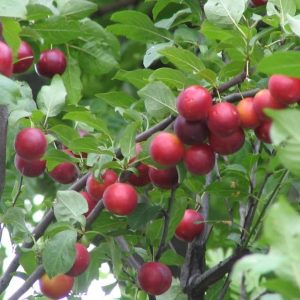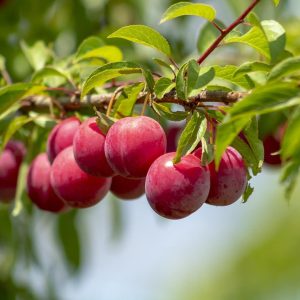
Fantasia Nectarine
$49.95
Fantasia Nectarine (Prunus persica ‘Fantasia’) is a late-season USDA-bred freestone nectarine with bright yellow skin blushed in red, yielding large 2.5- to 3.25-inch fruit with firm yellow flesh that turns sweet and juicy as it fully ripens. It grows in USDA hardiness zones 5-9 and AHS heat zones 5-9, needs 500-700 chill hours, and is self-fertile, fruiting reliably without a pollinator partner.
3-4′ Bare Root Grafted Tree
Rootstock: MP-29 – Standard
A University of Arkansas release that reduces tree vigor and resists both peach tree short life and Armillaria root rot — the two problems that shorten peach plantings in the South.
• Support: Freestanding; no staking required.
Can’t be shipped to: WA
Only 1 left in stock
Only 1 left in stock!
Fantasia nectarine was developed by the USDA Agricultural Research Service at the Horticultural Crops Research Laboratory in Fresno, California, and introduced in 1969. The cross — Gold King x an open-pollinated seedling of Red King (designated P121-24) — was made by USDA stone fruit breeder John H. Weinberger. The resulting cultivar quickly became one of the benchmark late-season freestone nectarines for commercial production in California’s Central Valley and remained widely planted across the mid-Atlantic stone-fruit belt. Its parentage from two yellow-fleshed, commercially proven nectarines produced a fruit that was larger than most existing varieties at introduction, with firm flesh that could withstand commercial handling without bruising — a key requirement for the fresh market. Fantasia’s wide zone adaptation from 5 through 9 extended its commercial reach well beyond its California origin, and the variety set the standard for large-fruited, high-color, late freestone nectarines for decades after its release.
Fantasia performs reliably across USDA zones 5–9 in a full-sun site with at least six hours of direct exposure daily. Well-drained loam or sandy loam is the preferred soil type; heavy clay that stays waterlogged after rain invites root disease and weakens the tree's ability to push fruit through its peak summer cropping load. Moderately drought-tolerant once established, Fantasia still benefits from consistent irrigation during fruit sizing in June and early July — water stress at that stage directly reduces fruit diameter and Brix.
Space trees 15 to 20 feet apart to allow adequate airflow, which reduces the canopy humidity that favors brown rot and bacterial spot. Annual pruning to an open-vase form is the standard approach: it lets sunlight penetrate the canopy, keeps spray coverage manageable, and makes fruit thinning practical. Thin to one fruit per six inches of shoot length by early June so the tree can size remaining fruit to its characteristic large diameter rather than splitting the crop across too many undersized nectarines.
USDA Hardiness Zone: 5-9
AHS Heat Zone: 5-9
Chill Hours: 500-700
Sun Requirements: Full Sun
Soil pH: 6.0-7.0
Soil Type: Sandy loam to sandy clay loam; well-drained; rich in organic matter
Soil Drainage: Well-drained
Water Requirements: Medium
Drought Tolerance: Moderate; established trees tolerate short dry periods but benefit from consistent irrigation during fruit development
Heat Tolerance: High
Plant Spacing: 15-20 ft apart
Container Suitability: Yes on dwarfing rootstock; standard rootstock too vigorous for containers
How to Prune: Open vase system; select 4-6 outward-facing scaffold branches; annual dormant heading cuts in late winter; remove water sprouts, crossing branches, and deadwood
Fantasia develops into a mid-sized deciduous tree reaching roughly 15 to 20 feet at maturity on standard rootstock, with a moderately spreading canopy that responds well to open-vase training. The framework branches are sturdy and upright in the first few years, then begin to arch outward under crop load — which is why annual heading cuts matter. On dwarfing rootstock the tree stays compact enough for container culture, though productivity per tree is reduced and irrigation management in pots requires closer attention during fruit development.
Trees come into bearing two to four years from planting, a typical timeline for Prunus persica varieties on non-dwarfing rootstock. Fantasia flowers in early to mid-spring before full leaf-out, the pink blooms emerging on one-year wood — a pattern that reinforces the importance of retaining adequate shoot growth each season through proper pruning. Foliage is glossy mid-green through summer, transitioning to yellow in autumn before leaf drop.
Mature Height: 12-15 ft tall
Mature Spread: 12-15 ft wide
Growth Habit: Upright spreading
Growth Rate: Fast
Foliage Type: Deciduous
Food Forest Layer: Canopy, Sub-canopy
Permaculture Role: Pollinator support, wildlife food, edible fruit producer
Leaf Color: Green
Fall Foliage Color: Yellow to orange
Thorns?: No
Attracts Wildlife: Bees and butterflies (pollinators); birds and small mammals (fruit)
Life Span: 10-15 years
Fantasia is self-fertile: a single tree sets a full commercial-grade crop without a cross-pollinator in the planting. This is a practical advantage in home orchards and narrow planting spaces where dedicating space to a second variety just for pollination is not an option.
Flowers appear on one-year wood in early to mid-spring, opening over a window of roughly ten to fourteen days depending on temperature. Because the blooms precede or overlap with early leaf-out, a late frost during that window can damage open flowers and reduce fruit set. Planting on a gentle north-facing slope or in a site with good cold-air drainage can delay bloom by a few days and reduce that frost exposure in zones 5 and 6. No pollen compatibility issues affect this cultivar — standard self-fertile genetics mean no S-allele incompatibility concerns, and any insect activity in the orchard during bloom further improves fruit set consistency.
Bloom Season: Very Early
Bloom Window: Mid Mar - Early Apr
Pollination Requirements: Self-fertile
Pollination Mechanism: Insect-pollinated (primarily bees)
Flower Color: Pink
Ripe Fantasia nectarines measure 2.5 to 3.25 inches in diameter, placing them among the larger nectarine cultivars in commercial and home production. The skin is smooth and fuzz-free — the defining trait of Prunus persica var. nucipersica — displaying a bright yellow base overlaid with a vivid red blush that deepens as the fruit approaches full maturity in late July through early August. Flesh is yellow, firm, and freestone when fully ripe, separating cleanly from the pit.
Flavor starts sweet with a lively tang when the fruit is firm-ripe and eaten straight from the tree; as fruit softens over the following two to three days, acidity recedes and sweetness becomes more pronounced. This flavor arc makes Fantasia versatile: firm-ripe fruit holds up well in canning, preserves, and tarts where structure matters, while fully soft-ripe fruit is prized for fresh eating and juice. Storage life runs one to two months under refrigerated conditions.
Ripening Season: Very Early
Harvest Window: Late Jul - Early Aug
Fruit Size: 2.5-3.25 inch
Flavor: Sweet; tangy when firm-ripe, sweeter when fully soft-ripe; scores high in taste tests
Fruit Color: Brighter yellow skin with red blush; yellow flesh, firm and smooth
Fruit Texture: Firm, smooth; becomes juicy when fully ripe
Fruit Skin: Smooth (fuzz-free; defining trait of Prunus persica var. nucipersica — nectarines lack the trichomes that give peaches their fuzz)
Bearing Habit: Annual (with thinning to prevent biennial tendency)
Years to Bear: 2-4 years
Storage Life: 1-2 months
Culinary Uses: Fresh eating; pies; cobblers; canning; preserves; jams; frozen; dried
Fantasia is susceptible to brown rot (Monilinia fructicola), the most damaging fungal disease on stone fruit in humid climates. Canopy airflow through open-vase pruning, prompt removal of mummified fruit, and copper-based or sulfur OMRI-listed sprays at petal fall are the core organic management tools. Peach leaf curl (Taphrina deformans) requires a single copper or lime-sulfur application at bud swell before green tissue emerges; miss that narrow window and distorted foliage follows for the season.
Bacterial spot (Xanthomonas arboricola pv. pruni) is addressed with copper hydroxide from bud swell through shuck split. Peach scab (Cladosporium carpophilum) and Cytospora canker (Leucostoma spp.) respond to the same pruning-hygiene-and-copper program; canker wood is cut well below discolored tissue with disinfected tools between cuts.
Plum curculio and Oriental fruit moth are the primary insect threats at pit hardening. Kaolin clay applied at petal fall and renewed after rain reduces curculio egg-laying on the smooth nectarine skin. Peachtree borer targets the crown; inspect for frass at the soil line in late summer. Brown marmorated stink bug causes corky flesh patches and is managed with fine-mesh netting during the August ripening window.
Brown Rot: Susceptible
Bacterial Spot: Moderately Resistant
Peach Leaf Curl: Susceptible
Peach Scab: Susceptible
Cytospora Canker: Moderately Susceptible
Plum Curculio: Susceptible
Oriental Fruit Moth: Susceptible
Peachtree Borer: Susceptible
Brown Marmorated Stink Bug: Susceptible
- Thin early: Remove excess fruitlets by early June, leaving one fruit per six inches of shoot length — Fantasia's large fruit size depends on this step.
- Kaolin clay for curculio: Apply kaolin at petal fall and reapply after each rain to protect smooth nectarine skin from plum curculio egg-laying scars.
- Time the leaf curl spray: A single copper or lime-sulfur spray at bud swell before green tissue emerges is the entire organic program for Taphrina deformans — miss it and the season is set.
- Prune for airflow: Open-vase cuts each dormant season reduce the canopy humidity that drives brown rot into ripe fruit in late July.
- Container growers: Use a dwarfing rootstock and increase irrigation frequency during fruit sizing — pots dry out faster than ground soil during the July heat peak.
We ship in late winter or early spring based on your USDA hardiness zone.
We strive to ship orders on the scheduled dates listed in the table below. However, please note that the actual shipping date may be subject to change due to factors like weather conditions and order volume.
The specific date for shipping your order will be determined according to your zipcode at the time of checkout.
Our plants are shipped bare root, packed in moist sawdust, and securely wrapped in plastic to prevent the roots from drying out. We use USPS Ground Advantage for shipping, ensuring that your plants typically arrive within 2-5 days after packaging.
In case you're unable to plant the trees immediately upon arrival, we recommend soaking them in water for a few hours and temporarily heeling them in. Ideally, they should be planted within three days of receipt for optimal health.
See our full shipping policy and map here
| Zone | Ship Date |
|---|---|
| 11 - 8b | March 1st, 2027 |
| 8a - 7b | March 8th, 2027 |
| 7a | March 15th, 2027 |
| 6b | March 22nd, 2027 |
| 6a | March 29th, 2027 |
| 5b - 5a | April 12th, 2027 |
| 4b - 4a | April 26th, 2027 |
| 3b - 1a | May 3rd, 2027 |
Our 365-Day Plant Guarantee: We ensure that our plants are delivered to you alive and healthy. If your plant does not survive its first year, you're eligible for store credit under these conditions:
- Your location falls within the appropriate USDA hardiness zone for the plant variety (refer to our hardiness zone map).
- You maintain the roots' moisture and plant within three days of delivery, following the instructions in our Planting Guide.
If you're concerned about your plant's health, please consult our guide, How to Tell if Your Tree is Dead or Dormant. Remember, our plants are shipped in a dormant state and may leaf out at different times based on their species. To check for plant vital
Related products

American Plum
Checking fitRated 4.63 out of 5
Common Apple
Checking fit
Ozark Premier Plum
Checking fit
Red Gold Nectarine
Checking fit


Reviews
There are no reviews yet.