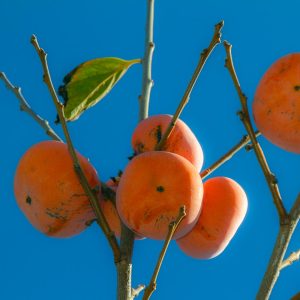
Eureka Persimmon
$59.95
Eureka Persimmon (also known as Japanese Persimmon; Diospyros kaki) is a heavy-bearing astringent kaki persimmon introduced through the USDA’s late-19th-century Asian introduction program, producing bright orange to orange-red 2.5- to 3.5-inch fruit with honey-smooth, creamy flesh when fully soft-ripe. It grows in USDA hardiness zones 7-10 and AHS heat zones 5-10, needs 200-400 chill hours, and is self-fertile, fruiting reliably without a pollinator partner.
4-5′ Bare Root Grafted Tree
Rootstock: Diospyros virginiana
Grafted onto American persimmon seedling roots — full natural size, very cold hardy, drought tolerant once established. Expect occasional root suckers.
• Support: Freestanding; the deep taproot gives excellent anchorage.
Can’t be shipped to: CA
Out of stock
Out of stock — back next season
Spring 2027 inventory drops in June. Drop your email and we'll notify you the day this variety is back in stock.
You're on the list. Check your inbox for a confirmation link — click it to lock in your spot. We'll email you the day this variety is back in stock.
Eureka is an astringent cultivar of Diospyros kaki with roots in the USDA’s late-nineteenth-century program of persimmon introduction to the United States. Asian persimmon seeds were first imported in 1863 by William Saunders of the USDA, and grafted trees followed in 1870 when Japanese and Chinese cultivars were distributed to California, Georgia, and other Southern states; major introductions of named kaki cultivars continued through about 1920. Eureka emerged from early California seedling trials during this introduction era and gained commercial footing in Southern California by the early 1900s. Its parentage is not formally documented — it is presumed to be an open-pollinated seedling of Japanese origin rather than a controlled cross. As a fully astringent cultivar (pollination-constant astringent class), it requires complete tannin conversion at the jelly-soft stage before the fruit is palatable. Its public-domain status means grafted trees are widely available without royalty obligations. Reliable annual bearing, low chill requirements, and broad heat adaptability made it a standard commercial and home-orchard choice along the Gulf Coast and in California’s Central Valley through much of the twentieth century.
Eureka asks for full sun — a minimum of six to eight hours of direct light daily — and responds best in loamy, well-drained soil with a pH between 6.0 and 7.0. The shallow surface feeder roots benefit from mulching out to the drip line, which moderates soil temperature and conserves moisture during the critical fruit-sizing period in summer. Once established, the tree handles dry spells better than most fruit crops, but consistent moisture from bloom through mid-summer significantly reduces fruit drop and supports maximum fruit size. Clay soils are workable provided drainage is adequate; standing water around the root zone invites Phytophthora root rot, the most difficult disease problem to manage after infection begins. Raised planting beds or sloped sites solve drainage issues where clay is heavy. Soil amendments at planting should target organic matter rather than immediate nutrient loading — kaki roots are sensitive to fertilizer salts in their first season. Zones 7 through 10 cover the bulk of viable growing territory, and the tree's high heat tolerance means it performs well through hot, humid summers.
USDA Hardiness Zone: 7-10
AHS Heat Zone: 5-10
Chill Hours: 200-400
Sun Requirements: Full Sun
Soil pH: 6.0-7.0
Soil Type: Loam, well-drained; tolerates clay if drainage is adequate; avoid sandy or waterlogged soils
Soil Drainage: Well-drained
Water Requirements: Low to Medium; drought tolerant once established
Drought Tolerance: High
Heat Tolerance: High
Plant Spacing: 15-20 ft apart
Container Suitability: Not recommended; too large at maturity for containers
How to Prune: Train to central leader or modified central leader with 6-8 scaffold branches; prune young trees annually to develop strong framework; minimal pruning needed once established
At maturity, Eureka develops a rounded, spreading canopy typically reaching 15 to 25 feet tall and 15 to 20 feet wide — proportions that suit it to orchard spacing of 15 to 20 feet. The trunk is short and the branch architecture naturally broad, which keeps the fruiting wood accessible without heavy scaffolding work. Training to a central leader or modified central leader with six to eight scaffold branches in the first two to three years establishes a framework strong enough to support the heavy crop loads this variety produces. Once that framework is in place, Eureka needs only light maintenance pruning — removing dead, crossing, or inward-facing wood — rather than annual structural cuts. The deep taproot system anchors the tree well and aids drought survival once established, though it also means Eureka resents transplanting after the first few seasons. Fall foliage transitions through yellow, orange, and scarlet before leaf drop, leaving the bright orange-red fruit hanging on bare branches — a striking ornamental display that extends well into December.
Mature Height: 15-25 ft tall
Mature Spread: 15-20 ft wide
Growth Habit: Rounded, spreading; deciduous tree with short trunk and broad crown
Growth Rate: Moderate
Foliage Type: Deciduous
Food Forest Layer: Canopy, Sub-canopy
Leaf Color: Dark green, glossy
Fall Foliage Color: Yellow, orange, red to scarlet
Thorns?: No
Attracts Wildlife: Birds; deer; small mammals
Life Span: 60+ years; some specimens live 300+ years
Eureka is parthenocarpic, meaning it sets fruit without pollination entirely through its own developmental mechanism — no cross-pollinator is required for a full crop. Blooms appear from mid-April through late May, with small creamy-white female flowers and pinkish-white male flowers sometimes present on the same tree. Insect activity (primarily bees) and wind both assist pollen transfer when male flowers are available. While Eureka fruits reliably as a solo tree, planting it near another Diospyros kaki cultivar with overlapping bloom timing tends to increase fruit set and average fruit size in years when male flower production is low. Compatible companions include other astringent kaki types or non-astringent cultivars such as Fuyu or Hachiya. Because the variety sets fruit parthenocarpically, the seeds per fruit vary widely depending on pollination — seeded fruit is typically slightly larger, though seedless fruit from parthenocarpic set is fully edible and often preferred for fresh eating.
Bloom Season: Very Early
Bloom Window: Mid Apr - Late May
Pollination Requirements: Self-fertile; parthenocarpic; cross-pollination improves yield but not required for fruit set
Pollination Mechanism: Insects (bees) and wind; parthenocarpic fruit set without pollination
Flower Color: Creamy white (female flowers); pinkish-white (male flowers)
Fruit measures 2.5 to 3.5 inches in diameter, weighing 150 to 250 grams at maturity. Skin is thin, smooth, and bright orange to orange-red at ripeness; it is edible and softens with the flesh. Eureka is an astringent-type persimmon, so tannin levels remain high until the fruit is fully soft — eating it firm produces an intense mouth-puckering sensation. Once the flesh has jelled to a creamy consistency, flavor is very sweet with a honey-like character, low acidity, and a smooth, almost pudding-like texture that distinguishes it from non-astringent types. Mature trees bear heavily on an annual cycle, yielding 48 to 100 pounds under typical conditions and up to 300 pounds on old established specimens. Ripe fruit holds at room temperature for one to two weeks and up to five weeks refrigerated. Freezing extends shelf life to six to eight months with minimal quality loss. Culinary applications include fresh eating, dried hoshigaki-style preparation, baked goods (breads, muffins, pudding), jams, and smoothies. Late-hanging fruit softens on the tree after leaf drop, providing food for birds and small mammals.
Ripening Season: Very Late
Harvest Window: Mid Oct - Mid Dec
Fruit Size: 2.5-3.5 inch
Flavor: Very sweet, honey-like, smooth and creamy when fully ripe; highly astringent if eaten before fully soft
Fruit Color: Bright orange to orange-red when ripe
Fruit Texture: Smooth, creamy, and jelly-like when fully ripe (astringent type; must be fully soft to eat)
Fruit Skin: Thin, smooth, orange to red; edible
Bearing Habit: Annual bearer; heavy producer
Years to Bear: 3-5 years (grafted trees may bear in 3 years)
Yield: 100-300
Storage Life: 1-2 weeks at room temperature once ripe; 4-5 weeks refrigerated; 6-8 months frozen
Culinary Uses: Fresh eating (when fully soft); dried persimmons (hoshigaki); baked goods (bread, muffins, puddings, cookies); smoothies; jams; wine
Eureka shows moderate susceptibility to three diseases. Anthracnose (Colletotrichum horii) causes dark fruit lesions and twig dieback in wet springs; prune for canopy airflow, remove infected wood promptly, and rake fallen fruit in autumn to break the spore cycle. OMRI-listed copper fungicides at early bud swell reduce primary infection in high-pressure seasons. Crown gall (Agrobacterium tumefaciens) enters through wounds; keep pruning tools disinfected and protect the root crown from mechanical injury. Excise infected tissue and remove it from the site — no systemic cure exists. Phytophthora root rot (Phytophthora spp.) establishes rapidly in waterlogged soil and affected trees typically cannot recover; site drainage is the only reliable prevention. Leaf spot (Cercospora kaki) and powdery mildew (Podosphaera kaki) respond well to good airflow and avoiding late irrigation that leaves foliage wet overnight. Among pests, persimmon borer (Sannina uroceriformis) is the primary structural threat; larvae tunnel the root crown and lower trunk. Inspect each spring for frass and entry holes and remove larvae physically with a stiff wire. Comstock mealybug (Pseudococcus comstocki), scale insects (Asiacornococcus kaki), and redhumped caterpillar (Schizura concinna) are moderate in impact; a thorough dormant horticultural oil application controls overwintering crawlers and mealybug eggs before spring beneficial insect activity begins.
Cercospora Leaf Spot: Moderately Resistant
Persimmon Wilt: Moderately Susceptible
Botryosphaeria Canker and Dieback: Moderately Susceptible
Anthracnose: Moderately Susceptible
Powdery Mildew: Moderately Resistant
Persimmon Borer: Moderately Susceptible
White Peach Scale: Moderately Resistant
- Wait for true softness: Eureka is an astringent type — allow it to soften completely before eating. A firm Eureka is unpleasantly astringent; a fully ripe one is flavorful and sweet.
- Drainage is a key site requirement: Phytophthora root rot kills quickly in waterlogged soil. If your site has heavy clay and slow drainage, build a raised planting mound 12–18 inches high before setting the tree.
- Borer inspection in spring: Check the root crown and lower trunk each April for sawdust-like frass. Early detection allows physical removal of larvae before tunneling becomes extensive.
- Dormant oil for scale: A single thorough horticultural oil application while the tree is fully dormant, before bud swell, covers overwintering scale and mealybug crawlers without harming beneficial insects.
- Light pruning after framework is set: Heavy annual pruning triggers excessive vegetative regrowth at the expense of fruit buds. Once the scaffold is established, remove only dead, crossing, or downward-hanging branches.
We ship in late winter or early spring based on your USDA hardiness zone.
We strive to ship orders on the scheduled dates listed in the table below. However, please note that the actual shipping date may be subject to change due to factors like weather conditions and order volume.
The specific date for shipping your order will be determined according to your zipcode at the time of checkout.
Our plants are shipped bare root, packed in moist sawdust, and securely wrapped in plastic to prevent the roots from drying out. We use USPS Ground Advantage for shipping, ensuring that your plants typically arrive within 2-5 days after packaging.
In case you're unable to plant the trees immediately upon arrival, we recommend soaking them in water for a few hours and temporarily heeling them in. Ideally, they should be planted within three days of receipt for optimal health.
See our full shipping policy and map here
| Zone | Ship Date |
|---|---|
| 11 - 8b | March 1st, 2027 |
| 8a - 7b | March 8th, 2027 |
| 7a | March 15th, 2027 |
| 6b | March 22nd, 2027 |
| 6a | March 29th, 2027 |
| 5b - 5a | April 12th, 2027 |
| 4b - 4a | April 26th, 2027 |
| 3b - 1a | May 3rd, 2027 |
Our 365-Day Plant Guarantee: We ensure that our plants are delivered to you alive and healthy. If your plant does not survive its first year, you're eligible for store credit under these conditions:
- Your location falls within the appropriate USDA hardiness zone for the plant variety (refer to our hardiness zone map).
- You maintain the roots' moisture and plant within three days of delivery, following the instructions in our Planting Guide.
If you're concerned about your plant's health, please consult our guide, How to Tell if Your Tree is Dead or Dormant. Remember, our plants are shipped in a dormant state and may leaf out at different times based on their species. To check for plant vital
1 review for Eureka Persimmon
Related products

Rosseyanka Persimmon
Checking fit
Chocolate Persimmon
Checking fit
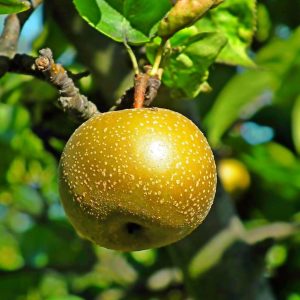
20th Century Asian Pear
Checking fit
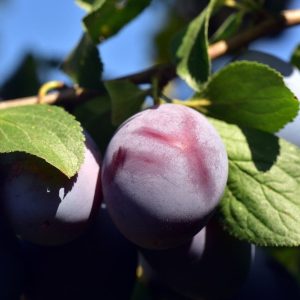
Methley Plum
Checking fitRated 5.00 out of 5

kevin mcmahon (verified owner) –
Decent diameter, decent roots. A few buds looking like they are about to swell.