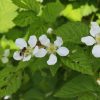

Boysenberry
$11.95
Boysenberry (Rubus ursinus x idaeus) is a trailing hybrid caneberry with complex Rubus parentage including raspberry, Pacific blackberry, American dewberry, and loganberry, producing large, deep maroon to purple-black fruit with a sweet-tart, raspberry-inflected flavor — soft, juicy, and best enjoyed fresh or in preserves. It grows in USDA hardiness zones 5-9 and AHS heat zones 5-8, needs 400-600 chill hours, and is self-fertile, fruiting reliably without a pollinator partner.
12-18″ Bare Root Plant
Propagation: Own-root
Can’t be shipped to: AK, FL, HI, SC
In stock
Boysenberry is a trailing caneberry hybrid developed in the early 1920s by Rudolph Boysen, a Swedish-born horticulturist experimenting with berry crosses on his Napa Valley, California farm. The genetic parentage involves European raspberry (Rubus idaeus), a trailing Pacific blackberry (Rubus ursinus), American dewberry, and loganberry (Rubus x loganobaccus) — a complex hexaploid combination that places Boysenberry at the intersection of nearly every major trailing caneberry lineage of its era. Boysen’s vines languished after his farm failed, and the variety would likely have disappeared entirely had USDA researcher George Darrow not located surviving plants and alerted berry farmer Walter Knott, who rescued and propagated them beginning in 1932 at what became Knott’s Berry Farm in Buena Park, California. Knott introduced the fruit commercially under Boysen’s name, and by 1940 California growers had planted nearly 600 acres. Boysenberry’s historical significance extends beyond its own commercial career: it is a direct ancestor of subsequent hybrid berries including Marionberry and Tayberry. The traditional thorned form predates the separate thornless selection now sold alongside it; as a public-domain variety originating in 1881 and commercialized before 1940, both forms are freely propagated without licensing.
Plant Boysenberry Blackberry in full sun with well-drained loam; trailing canes need a sturdy trellis or wire system to keep fruit off the ground and simplify harvest. Space plants 4 feet apart along the trellis row to allow adequate airflow between canes — crowded plantings trap humidity and accelerate fungal pressure. Soil pH should fall between 6.0 and 7.5, which is notably higher than the 5.5–6.5 optimum for standard eastern blackberries; growers on naturally acidic ground may need to lime before planting rather than acidify. Low chill requirements of 200–400 hours make this cultivar well suited to mild-winter climates across USDA zones 5–9, and the wide range means it also performs in colder inland areas that would challenge other low-chill trailing types. Mulch the root zone to maintain soil moisture, moderate temperature swings, and suppress weeds that compete with shallow roots. Irrigate through drip or soaker hose rather than overhead sprinklers; keeping foliage dry reduces orange rust and anthracnose pressure without sacrificing moisture delivery to the crown.
USDA Hardiness Zone: 5-9
AHS Heat Zone: 5-8
Chill Hours: 400-600
Sun Requirements: Full Sun
Soil pH: 6.0-7.5
Soil Type: Sandy loam to clay loam; fertile, moderate water-holding capacity
Soil Drainage: Well-drained
Water Requirements: Medium
Drought Tolerance: Moderate
Heat Tolerance: High
Plant Spacing: 4 ft apart
Container Suitability: Poor; trailing canes require large containers with trellis; not recommended
How to Prune: Remove all fruited floricanes (second-year canes) immediately after harvest; train primocanes (new growth) onto trellis wires in late summer; tip primocanes at 4-5 feet in early spring to encourage lateral branching
Boysenberry Blackberry grows as a vigorous, fast-establishing trailing cane plant whose long, arching canes require training to a trellis from the first season. The canes of this traditional form carry prickles — the original Boysen genetics before thornless selections were bred separately — so thick gloves and long sleeves make routine management more comfortable. Like all floricanes, first-year canes (primocanes) produce vegetative growth; those same canes flower and fruit in their second year (floricanes), then die and should be removed at the base immediately after harvest to redirect plant energy to new cane development. The trailing growth habit keeps the plant low and wide rather than upright, so the pruning system focuses on tying new primocanes to the upper trellis wire through the season, then cutting spent floricanes after fruiting. Fast growth rate means new canes can reach trellis height within a single growing season under adequate moisture and fertility.
Mature Height: 3-6 ft tall (trailing; on trellis)
Mature Spread: 4-6 ft wide
Growth Habit: Trailing; vigorous biennial canes (primocanes year 1, floricanes fruit year 2) requiring trellis support; canes can reach 15-20 feet if not managed
Growth Rate: Fast
Foliage Type: Deciduous
Food Forest Layer: Shrub
Permaculture Role: Food production; wildlife habitat and forage; living/thorny hedge and barrier
Leaf Color: Green
Fall Foliage Color: Red to orange-purple
Thorns?: Yes
Attracts Wildlife: Pollinators (bees); songbirds and game birds; small mammals
Life Span: plant crown lives 10-20+ years; individual canes biennial
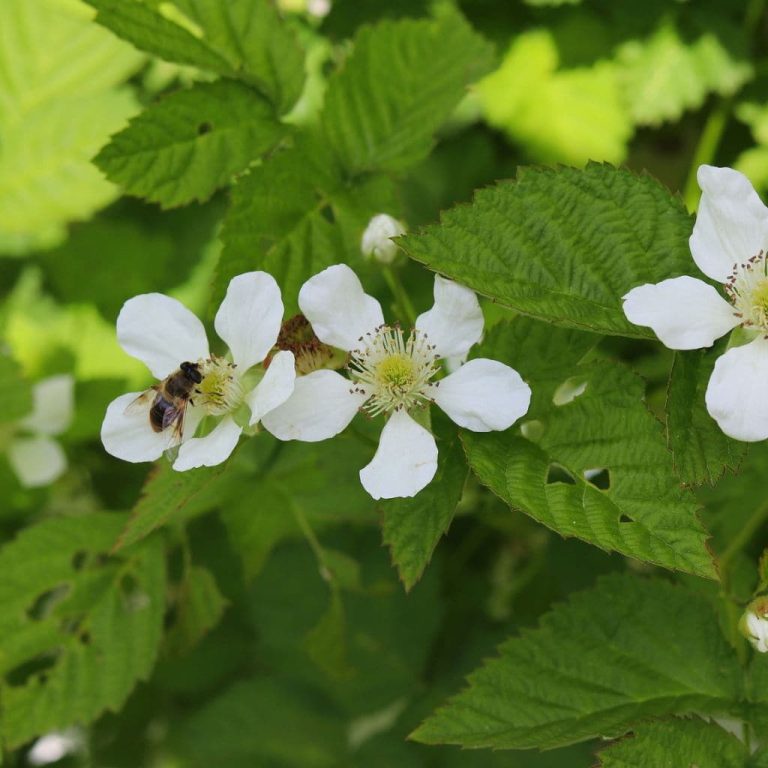
Boysenberry Blackberry is self-fertile, setting fruit reliably from its own pollen without requiring a second cultivar nearby. Single-plant planting is fully productive, which makes this variety well suited to smaller gardens where space for multiple caneberry types is limited. Bloom typically runs mid-spring in temperate climate, with white to pale pink flowers appearing on second-year floricanes. While no cross-pollinator is required for fruit set, native bee activity during bloom does support more uniform berry sizing across the cluster — so a garden environment with diverse flowering plants nearby benefits overall yield quality. The low chill requirement of 200–400 hours means dormancy breaks relatively early in mild winters; in zones near the warmer edge of the range, monitor bloom timing against late frost dates, as an exposed flower cluster can lose a portion of the crop to a late freeze even when the plant itself is zone-hardy.
Bloom Season: Very Early
Bloom Window: Mid Apr - Mid May
Pollination Requirements: Self-fertile
Pollination Mechanism: Self-fertile; insect-pollinated (bees improve fruit set and berry size)
Flower Color: White to pale pink
Ploidy: Heptaploid (2n = 7x = 49)
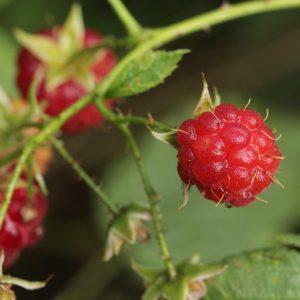
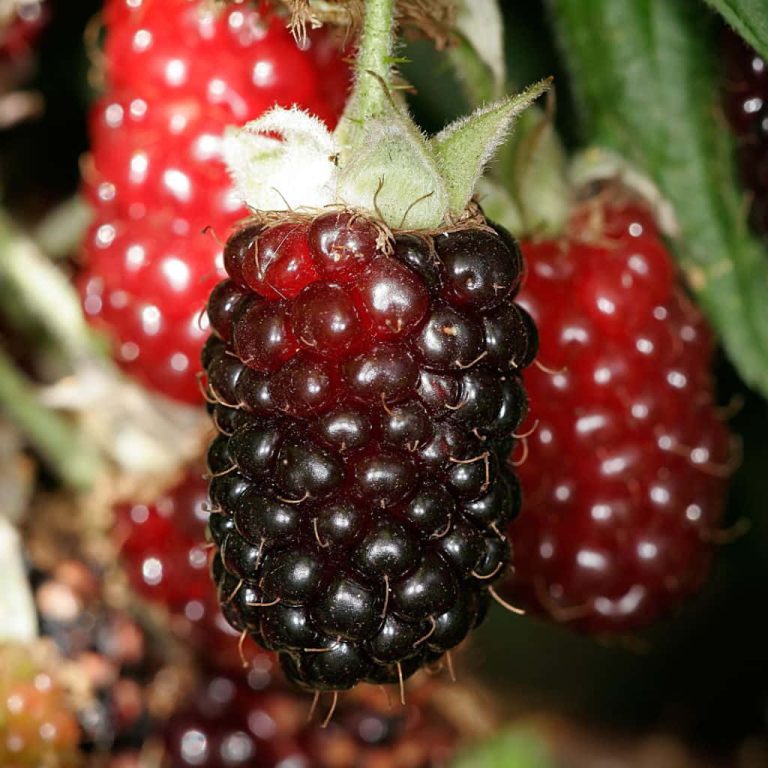
Boysenberry fruit is large — notably bigger than most standard blackberry cultivars — with a deep reddish-purple to near-black skin at full ripeness and a soft, juice-forward texture that does not hold up well to rough handling. Flavor is sweet-tart with a pronounced raspberry character that makes Boysenberries taste distinctly different from straight blackberry varieties; the hybrid parentage comes through clearly in every bite. Harvest runs mid June through mid August in temperate climate, an earlier start and longer season than many upright blackberry types, and ripe berries must be picked frequently as they soften quickly on the vine. Fresh eating, jam, preserves, pie filling, and fruit-forward sauces are all natural applications. The intense flavor holds well through freezing, making home-frozen Boysenberries a practical way to extend the season. Knott’s Berry Farm’s original Boysenberry preserves established the variety’s culinary reputation, and home-grown fruit fully delivers on that legacy.
Ripening Season: Mid
Harvest Window: Mid Jun - Mid Aug
Fruit Size: 1-1.5 inch
Flavor: Sweet-tart; flavor profile suggestive of raspberry
Fruit Color: Deep dark maroon to purple-black at ripeness
Fruit Texture: Soft, juicy; delicate; does not ship well fresh
Bearing Habit: Floricane-bearing (fruit on second-year canes only); one crop per season
Years to Bear: 1-2 years after planting
Storage Life: 1-3 days fresh; freezes well (up to 12 months); best used quickly after harvest
Culinary Uses: Fresh eating; jam; jelly; pies; cobblers; juice; wine; syrup; baked goods; freezing
Boysenberry Blackberry is susceptible to orange rust, caused by Gymnoconia nitens, the most serious disease threat for trailing Rubus types; infected canes show distorted leaves and bright orange spore pustules and must be removed and destroyed immediately — there is no recovery for affected canes. The hybrid is also susceptible to anthracnose (Elsinoe veneta), which causes sunken lesions on canes and fruit; pruning out infected canes during dormancy and maintaining canopy airflow through proper trellis spacing are the primary cultural controls. Botrytis fruit rot (Botrytis cinerea) is a third susceptibility, developing rapidly in humid conditions during and after harvest; picking frequently, avoiding overhead irrigation, and removing overripe fruit from the planting all reduce gray mold losses. Spotted wing drosophila (Drosophila suzukii) is the principal harvest-window pest; fine-mesh exclusion netting draped over ripening canes and prompt removal of soft or damaged berries are the most effective organic strategies. Rosette/double blossom (Cercosporella rubi), cane blight (Leptosphaeria coniothyrium), crown borer, BMSB, and Japanese beetle have not been assigned resistance ratings for Boysenberry specifically; standard cultural sanitation and monitoring practices apply across all of these.
Orange Rust: Susceptible
Rosette / Double Blossom: Moderately Susceptible
Anthracnose: Moderately Susceptible
Cane Blight: Moderately Susceptible
Botrytis Fruit Rot / Gray Mold: Susceptible
Spotted Wing Drosophila: Susceptible
Raspberry Crown Borer: Moderately Susceptible
Brown Marmorated Stink Bug: Moderately Susceptible
Japanese Beetle: Moderately Susceptible
- Trellis first: Install a two-wire trellis before planting; trailing canes become unmanageable quickly.
- Lime before planting: Boysenberry needs pH 6.0–7.5 — higher than standard blackberries; acidic soils need lime first.
- Remove orange rust immediately: Pull and destroy any cane showing orange pustules at the crown; no recovery is possible once infected.
- Drip only: Overhead irrigation drives anthracnose and botrytis; drip or soaker hose keeps foliage dry.
- Net and pick frequently: Deploy fine-mesh row cover as berries color to exclude SWD; pick every two to three days to cut botrytis losses simultaneously.
We ship in late winter or early spring based on your USDA hardiness zone.
We strive to ship orders on the scheduled dates listed in the table below. However, please note that the actual shipping date may be subject to change due to factors like weather conditions and order volume.
The specific date for shipping your order will be determined according to your zipcode at the time of checkout.
Our plants are shipped bare root, packed in moist sawdust, and securely wrapped in plastic to prevent the roots from drying out. We use USPS Ground Advantage for shipping, ensuring that your plants typically arrive within 2-5 days after packaging.
In case you're unable to plant the trees immediately upon arrival, we recommend soaking them in water for a few hours and temporarily heeling them in. Ideally, they should be planted within three days of receipt for optimal health.
See our full shipping policy and map here
| Zone | Ship Date |
|---|---|
| 11 - 8b | March 1st, 2027 |
| 8a - 7b | March 8th, 2027 |
| 7a | March 15th, 2027 |
| 6b | March 22nd, 2027 |
| 6a | March 29th, 2027 |
| 5b - 5a | April 12th, 2027 |
| 4b - 4a | April 26th, 2027 |
| 3b - 1a | May 3rd, 2027 |
Our 365-Day Plant Guarantee: We ensure that our plants are delivered to you alive and healthy. If your plant does not survive its first year, you're eligible for store credit under these conditions:
- Your location falls within the appropriate USDA hardiness zone for the plant variety (refer to our hardiness zone map).
- You maintain the roots' moisture and plant within three days of delivery, following the instructions in our Planting Guide.
If you're concerned about your plant's health, please consult our guide, How to Tell if Your Tree is Dead or Dormant. Remember, our plants are shipped in a dormant state and may leaf out at different times based on their species. To check for plant vital
Related products

Prelude Raspberry
Checking fit
Osage Blackberry
Checking fit
Triple Crown Blackberry
Checking fitRated 5.00 out of 5
Caroline Raspberry
Checking fitRated 4.71 out of 5


Reviews
There are no reviews yet.