
Osage Blackberry
$9.56
Osage Blackberry (Rubus) is a University of Arkansas erect blackberry that is immune to orange rust, ripening early in the season with very firm, bright glossy-black fruit rated very good for flavor and fresh-market quality. It grows in USDA hardiness zones 6-9 and AHS heat zones 5-9, needs 400-600 chill hours, and is self-fertile, fruiting reliably without a pollinator partner.
12-18″ Bare Root Plant
Propagation: Own-root
Can’t be shipped to: AK, FL, HI, SC
In stock
Osage blackberry was released in 2015 by the University of Arkansas fruit breeding program under plant patent USPP26120, with John R. Clark as lead breeder. It originated from a hand-pollinated cross of Arkansas Selection A-1719T x Arkansas Selection A-2108T, both non-patented, unreleased program genotypes, with the cross made in 2000 at the Clarksville, Arkansas experiment station. Clark selected Osage for mid-early season ripening, high flavor scores, even drupelet development, and strong postharvest storage potential — a combination the UA program had not previously achieved simultaneously in a single erect thornless cultivar. A-2108T also appears in the parentage of Caddo (released 2018), indicating its value as a recurring contributor of thornless cane architecture and productivity within Clark’s breeding population. The variety is named for the Osage Nation, whose ancestral territory includes the Ozarks region where the UA program operates — continuing the program’s practice of honoring Indigenous peoples with each new release. Taste-panel evaluations at release rated fruit quality very good, the program’s highest consistent designation, applied only to varieties meeting defined flavor thresholds across multiple harvest seasons and trial sites.
Osage performs reliably across USDA zones 6–9, with an estimated chill requirement of 300–500 hours — a range that suits temperate climates through the warm-summer South. Plant in full sun; reduced light delays ripening and softens the very early harvest window that makes Osage commercially appealing. Well-drained soil with a pH of 5.5–6.5 keeps the root zone from waterlogging between rain events, which erect thornless canes tolerate poorly once established.
Space canes 3–4 feet apart in the row to accommodate the 2-foot lateral spread without crowding, keeping the canopy open for air circulation — an important cultural defense against botrytis in humid regions. Top primocanes at 36–42 inches to encourage lateral branching and increase the fruiting surface area without sacrificing the compact footprint. Apply 2–3 inches of wood-chip mulch over the root zone to moderate soil temperature and reduce moisture stress during the critical June ripening window.
USDA Hardiness Zone: 6-9
AHS Heat Zone: 5-9
Chill Hours: 400-600
Sun Requirements: Full Sun
Soil pH: 5.5-6.5
Soil Type: Sandy loam to clay loam; fertile, moderate water-holding capacity
Soil Drainage: Well-drained
Water Requirements: Medium
Drought Tolerance: Moderate
Heat Tolerance: High
Plant Spacing: 3-4 ft apart, rows 6-8 ft apart
How to Prune: Summer-tip primocanes at 3-4 feet to encourage lateral branching; remove floricanes to ground level after harvest; select 3-5 vigorous primocanes per crown
Compact in stature at 4–5 feet tall and only 2 feet wide, Osage fits hedgerows, kitchen gardens, and small-scale production rows where wider UA varieties like Natchez would require more lateral management. The narrow spread means fewer training hours per plant and tighter row spacing without cane interference — a practical benefit on sloped or irregularly shaped sites.
Canes are fully thornless, smooth-stemmed, and grow in an erect, self-supporting habit that requires minimal trellising compared to trailing or semi-erect types. The family is Rosaceae; scientific name is Rubus hybrid. Two-year cane cycling applies: primocanes grow vegetatively in year one, then fruit as floricanes in year two and are cut to the ground after harvest. New primocane growth from the crown replaces them automatically, maintaining the compact form year after year without the cane sprawl common in semi-erect or trailing types.
Mature Height: 4-5 ft tall
Mature Spread: 2 ft wide
Growth Habit: Erect
Growth Rate: Fast
Foliage Type: Deciduous
Food Forest Layer: Shrub
Permaculture Role: Food production; wildlife habitat and forage; living/thorny hedge and barrier
Leaf Color: Green
Fall Foliage Color: Red to orange-purple
Thorns?: No
Attracts Wildlife: Pollinators (bees); songbirds and game birds; small mammals
Life Span: Perennial
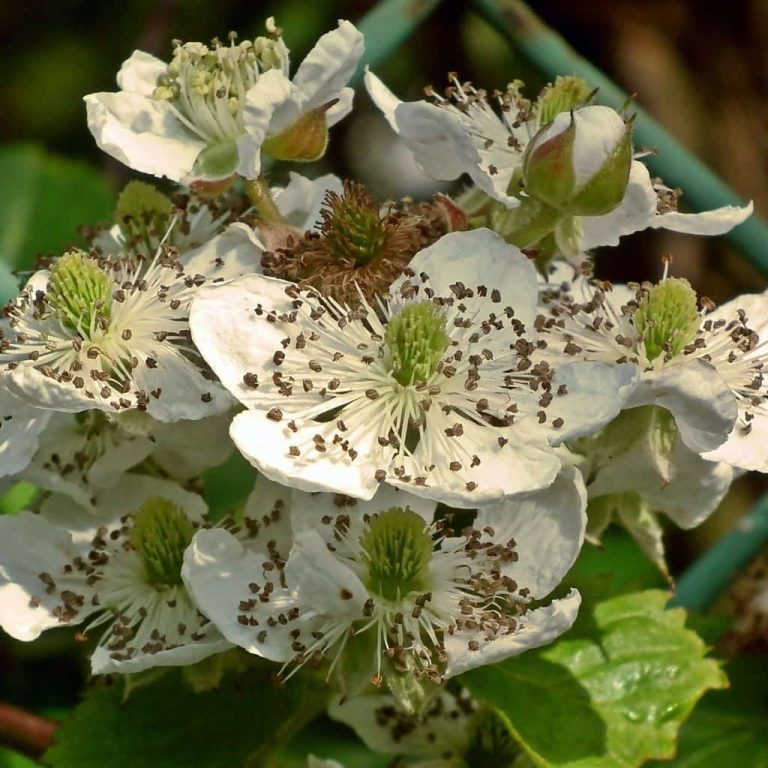
Osage is self-fertile and sets a full crop from its own pollen without a cross-pollinator nearby. Bees and other native pollinators visit the white flowers to improve set and fruit uniformity, but their absence does not prevent fruiting — a meaningful advantage in isolated plantings or sites with low pollinator pressure early in the season.
Bloom timing falls in the very early season, consistent with Osage's early ripening phenology. in temperate climates, flowers typically open in late April to early May. The early bloom period may occasionally coincide with late frost events in cooler microclimates; planting on a slight south-facing slope or near a windbreak can reduce frost interception on the flower clusters without altering the variety's inherent season advantage.
Bloom Season: Very Early
Bloom Window: Late Apr - Early May
Pollination Requirements: Self-fertile
Pollination Mechanism: Self-fertile; insect-pollinated (bees improve fruit set and berry size)
Flower Color: White
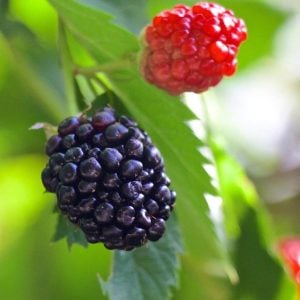
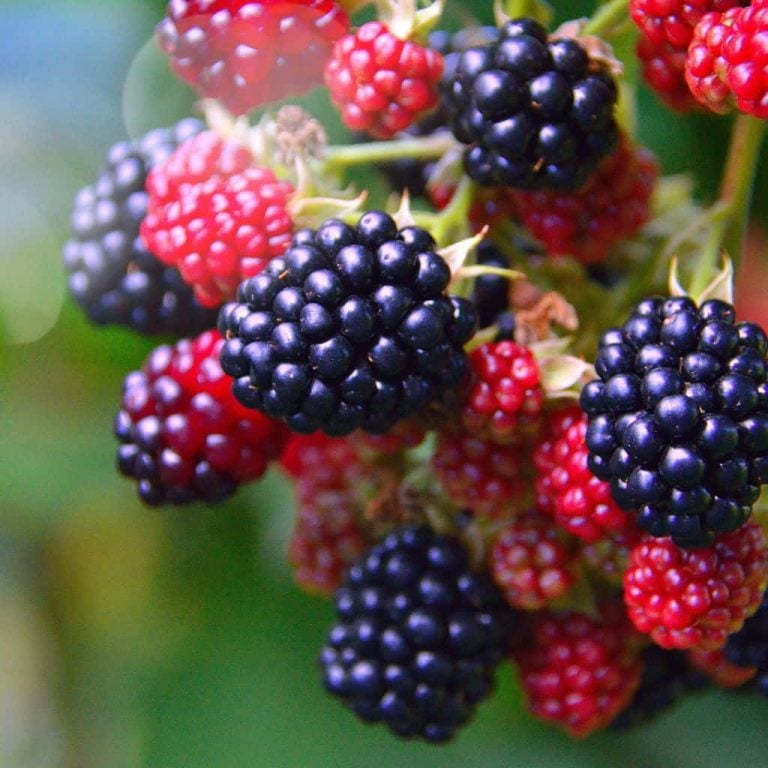
Osage produces glossy, medium-to-large black drupelets arranged in firm, well-shaped clusters. Flavor is sweet and mildly acidic with a distinct blackberry aroma — a profile the UA tasting panel rated very good, placing it among the better-flavored releases in the thornless erect series. Fruit holds firmness at peak ripeness longer than some early-season types, which reduces the urgency of the harvest window on small operations.
The very early ripening season — beginning in early June in temperate climates and running through mid-July — allows fresh-market sales weeks ahead of mid-season competitors like Navaho or Ouachita. Culinary applications follow standard blackberry uses: fresh eating, jam, preserves, cobblers, and frozen storage. The firm texture also suits u-pick operations where rough handling during picking is common and soft fruit would bruise before reaching a pint container.
Ripening Season: Early
Harvest Window: Early Jun - Mid Jul
Fruit Size: 0.9 inch
Fruit Weight: 5 g (0.18 oz)
Flavor: Sweet and mildly acidic, with a distinct blackberry aroma; rated very good
Fruit Color: Bright glossy black
Fruit Texture: Very firm
Bearing Habit: Floricane (second-year canes)
Years to Bear: 2 years
Yield: 6-9
Storage Life: 7-10 days refrigerated; excellent postharvest shelf life
Culinary Uses: Fresh eating, pies, jams, jellies, baked goods, smoothies, wine, juice; excellent fresh market quality
Osage carries complete, documented immunity to orange rust (Gymnoconia nitens), the most destructive systemic disease in blackberry production in the eastern United States. Orange rust colonizes the root system and cannot be cured once a plant is infected; planting an immune variety eliminates the disease as a management concern entirely. Erect thorny species like Rubus allegheniensis serve as wild reservoirs nearby, making immunity especially valuable in mixed-landscape settings.
Botrytis fruit rot (Botrytis cinerea) and Spotted Wing Drosophila (Drosophila suzukii) are susceptibility risks. For botrytis, maintain open canopy spacing, remove overripe fruit promptly, and apply OMRI-listed copper-based or potassium bicarbonate sprays during extended wet periods at flowering and early fruit set. Osage's very early harvest window reduces SWD pressure compared to mid- and late-season cultivars, since SWD populations are still building in early June; harvest frequently — every two to three days at peak — to pull fruit before infestation escalates. Brown Marmorated Stink Bug (Halyomorpha halys) causes mechanical damage; row covers or perimeter trap crops can reduce impact without synthetic inputs.
Orange Rust: Very Resistant
Rosette / Double Blossom: Resistant
Anthracnose: Moderately Resistant
Cane Blight: Moderately Susceptible
Botrytis Fruit Rot / Gray Mold: Moderately Susceptible
Spotted Wing Drosophila: Susceptible
Raspberry Crown Borer: Moderately Susceptible
Brown Marmorated Stink Bug: Susceptible
Japanese Beetle: Moderately Susceptible
- Pick every 2–3 days: Frequent harvest is the primary control for both Spotted Wing Drosophila and botrytis — ripe fruit left on the cane becomes the entry point for both.
- Open the canopy: Thin overlapping canes and clear row-base debris to maintain airflow; this reduces gray mold pressure more reliably than any spray program in humid summers.
- Use row covers for stink bug pressure: Install fine-mesh row covers at early color change and remove at harvest to limit Brown Marmorated Stink Bug feeding without chemical inputs.
We ship in late winter or early spring based on your USDA hardiness zone.
We strive to ship orders on the scheduled dates listed in the table below. However, please note that the actual shipping date may be subject to change due to factors like weather conditions and order volume.
The specific date for shipping your order will be determined according to your zipcode at the time of checkout.
Our plants are shipped bare root, packed in moist sawdust, and securely wrapped in plastic to prevent the roots from drying out. We use USPS Ground Advantage for shipping, ensuring that your plants typically arrive within 2-5 days after packaging.
In case you're unable to plant the trees immediately upon arrival, we recommend soaking them in water for a few hours and temporarily heeling them in. Ideally, they should be planted within three days of receipt for optimal health.
See our full shipping policy and map here
| Zone | Ship Date |
|---|---|
| 11 - 8b | March 1st, 2027 |
| 8a - 7b | March 8th, 2027 |
| 7a | March 15th, 2027 |
| 6b | March 22nd, 2027 |
| 6a | March 29th, 2027 |
| 5b - 5a | April 12th, 2027 |
| 4b - 4a | April 26th, 2027 |
| 3b - 1a | May 3rd, 2027 |
Our 365-Day Plant Guarantee: We ensure that our plants are delivered to you alive and healthy. If your plant does not survive its first year, you're eligible for store credit under these conditions:
- Your location falls within the appropriate USDA hardiness zone for the plant variety (refer to our hardiness zone map).
- You maintain the roots' moisture and plant within three days of delivery, following the instructions in our Planting Guide.
If you're concerned about your plant's health, please consult our guide, How to Tell if Your Tree is Dead or Dormant. Remember, our plants are shipped in a dormant state and may leaf out at different times based on their species. To check for plant vital
Related products

Chester Blackberry
Checking fit
Navaho Blackberry
Checking fitRated 4.88 out of 5
Hull Blackberry
Checking fitRated 5.00 out of 5
Triple Crown Blackberry
Checking fitRated 5.00 out of 5


Reviews
There are no reviews yet.