Autumn Bliss Raspberry
$12.95
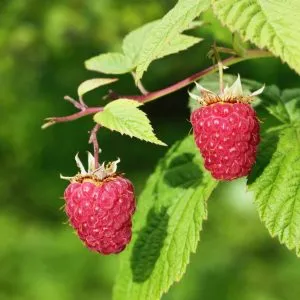
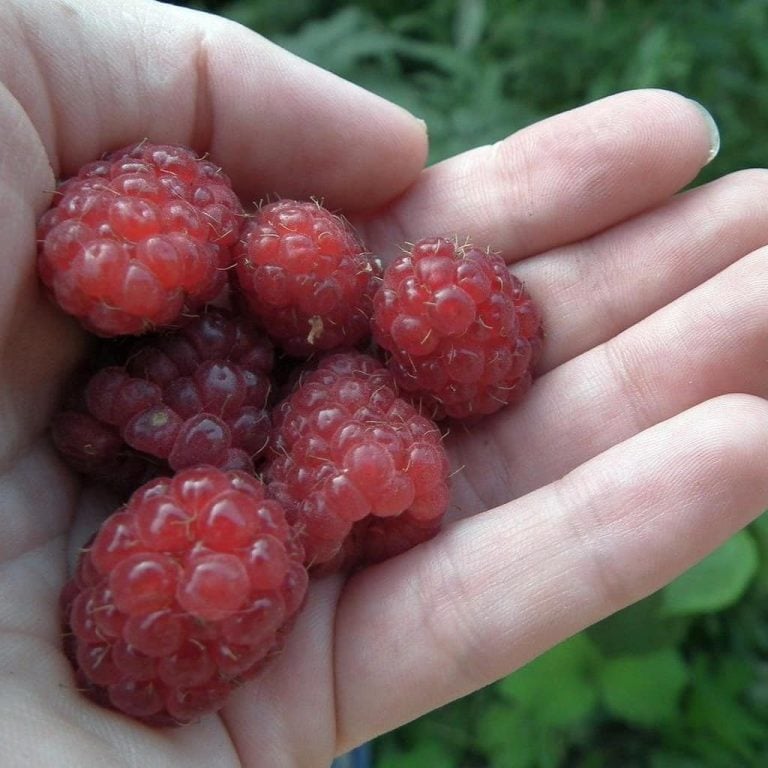
Autumn Bliss Raspberry (Rubus idaeus) is an East Malling–bred primocane raspberry delivering an early fall harvest of mid-to-dark-red, sweet, mildly flavored berries on compact, upright canes. It grows in USDA hardiness zones 4-9 and AHS heat zones 2-7, needs 800-1000 chill hours, and is self-fertile, fruiting reliably without a pollinator partner.
1-2′ Bare Root Plant
Propagation: Own-root
Out of stock
Out of stock — back next season
Spring 2027 inventory drops in June. Drop your email and we'll notify you the day this variety is back in stock.
You're on the list. Check your inbox for a confirmation link — click it to lock in your spot. We'll email you the day this variety is back in stock.
Autumn Bliss was developed at the East Malling Research Station in Kent, England, where the founding cross was made in 1973. The original plant was selected from a family of seedlings produced by crossing two unnamed hybrid selections within the station’s red raspberry program; the maternal line traced back to complex ancestry including Rubus arcticus, R. occidentalis, and the floricane varieties Lloyd George, Norfolk Giant, Pynes Royal, Malling Landmark, Malling Promise, and Burnetholm, while the paternal line descended from a R. idaeus strigosus selection. East Malling formally released the variety in 1983, making it the first primocane-fruiting raspberry bred in the United Kingdom to achieve wide commercial distribution — the variety holds Royal Horticultural Society Award of Garden Merit recognition. The breeding objective was early primocane ripening combined with large berry size and adequate fruit firmness; Autumn Bliss met those targets by beginning harvest in mid-August, two to three weeks ahead of Heritage, and producing yields that in early trials more than doubled those of Heritage and Zeva Herbsternte. Its early ripening relative to other primocane varieties is its primary historical contribution and remains the defining characteristic separating it from later fall-bearing introductions.
Autumn Bliss produces reliably across zones 4–9, fitting climates from cold-winter northern states through warm southern growing regions, with a chill requirement of roughly 800 to 1,000 hours placing it in standard mid-belt territory. It performs best in full sun with well-drained loam or sandy loam; heavy clay soils should be avoided because persistently wet root zones accelerate Phytophthora Root Rot, the disease this cultivar is most likely to encounter in low-lying or compacted sites. Soil pH between 6.0 and 6.8 supports maximum nutrient availability — values below 5.8 reduce phosphorus uptake and tip burn, while above 7.0 triggers iron chlorosis. Consistent moisture during the mid-July to late-August bloom and early fruit-set period is the single biggest yield driver; drought stress during fruit development shrinks berry size and accelerates softening at harvest. A 3- to 4-inch layer of wood chip or straw mulch conserves moisture, moderates soil temperature, and reduces splash-dispersal of Botrytis spores from infected debris onto developing fruit.
USDA Hardiness Zone: 4-9
AHS Heat Zone: 2-7
Chill Hours: 800-1000
Sun Requirements: Full Sun
Soil pH: 6.0-6.8
Soil Type: Loam, well-drained; tolerates sandy loam; intolerant of heavy clay and waterlogged soils
Soil Drainage: Well-drained; does not tolerate waterlogged or saturated soils
Water Requirements: Medium; consistent moisture especially during fruiting; drought-stressed plants show reduced yield and fruit size
Plant Spacing: 18-24 inches between canes in row; rows 6-8 ft apart
How to Prune: Mow or cut all canes to ground level in late winter/early spring before new growth begins; remove all old canes after fall harvest; thin new canes to 3-4 per foot of row to improve air circulation and fruit size
Autumn Bliss grows upright on short, erect, spiny canes reaching 4 to 5 feet at maturity, with individual canes spanning 1.5 to 2.5 feet in spread. The suckering habit means new primocanes continuously emerge from the crown and surrounding root zone, naturally filling a row if not managed. Because fruit is borne on first-year primocanes, the entire cane management system is simplified: after fall harvest, mow or cut all canes to ground level in late winter before new growth begins. This eliminates overwintered fungal inoculum on old cane tissue and removes habitat for crown borer larvae. Thinning new canes to three to four per linear foot of row during the growing season improves airflow between canes — critical for reducing Botrytis and Spur Blight pressure in humid climates. The upright growth habit responds well to a simple T-trellis or single-wire support at 3 to 4 feet, keeping canes vertical for harvest access and reducing cane breakage during heavy fruit set.
Mature Height: 4-5 ft tall
Mature Spread: 1.5-2.5 ft wide
Growth Habit: Upright, suckering; short erect spiny canes
Foliage Type: Deciduous
Food Forest Layer: Shrub
Thorns?: Yes
Attracts Wildlife: Bees, birds, butterflies, pollinators
Life Span: individual canes live 1-2 years; crown is long-lived (10-15+ years with proper management)
Autumn Bliss is self-fertile, with flowers opening from mid-July through late August on first-year primocanes. Each bloom is insect-pollinated, primarily by bees, and also partially wind-assisted. Because the variety fruits without a cross-pollinator, a single-variety planting will produce a full crop. However, planting alongside other fall-bearing cultivars such as Heritage or Caroline increases foraging bee density, which typically improves fruit set percentage and berry size in commercial-scale plantings. The extended bloom window — spanning roughly six weeks — means Autumn Bliss can overlap usefully with early and mid-season fall-bearing companions, supporting a continuous flow of pollinators through the patch.
Bloom Season: Very Late
Bloom Window: Mid Jul - Late Aug
Pollination Requirements: Self-fertile; no cross-pollinator required
Pollination Mechanism: Insect-pollinated (bees); also wind-assisted; self-fertile
Flower Color: White
Berries ripen mid-red to dark red at 0.75 to 1 inch in diameter, averaging approximately 3.3 grams — on the larger end for primocane types. Flavor is sweet and mild, with good sugar-acid balance that holds up through both fresh eating and freezing without becoming flat or overly tart. Fruit firmness is notably above average for a fall-bearing type, making Autumn Bliss better suited to fresh-market handling and U-pick operations than softer-fruited competitors. Berry size remains relatively consistent through the season, a trait valued in commercial settings where uniform fruit reduces grading labor. Culinary applications include fresh eating, freezing, jam, jelly, baking, smoothies, and wine. The flavor profile — clean and sweet rather than intensely aromatic — lends itself equally to simple fresh-pack and processed applications. Young leaves can also be harvested for herbal tea.
Ripening Season: Late
Harvest Window: Mid Aug - Early Oct
Fruit Size: 0.75-1 inch
Fruit Weight: 3.3 g
Flavor: Sweet, mild, pleasant flavor; slightly sweet with good balance; excellent fresh or frozen
Fruit Color: Mid to dark red
Bearing Habit: Primocane (fall-bearing); bears fruit on first-year canes in late summer/fall; can produce a secondary summer crop on second-year floricanes if not mowed to ground
Years to Bear: 1 year
Culinary Uses: Fresh eating, freezing, jam, jelly, baking, smoothies, wine; excellent for all uses
Susceptibility to gray mold (Botrytis cinerea) makes it the highest-priority disease risk for Autumn Bliss — humid conditions during ripening drive infection quickly. Thin canes to three to four per foot of row for airflow, pick every two to three days to remove overripe fruit before spores establish, and apply OMRI-listed copper fungicides at early cane emergence in high-pressure sites. Spur Blight (Didymella applanata) and Anthracnose (Elsinoë veneta) carry moderate susceptibility; both are largely resolved by the annual mow-to-ground protocol that removes infected cane tissue before spring. Phytophthora Root Rot (Phytophthora fragariae var. rubi) and Raspberry Mosaic Virus show moderate resistance, though well-drained site selection remains the practical Phytophthora defense since no curative organic treatment exists post-infection. Spotted Wing Drosophila (Drosophila suzukii) is the dominant pest concern: the late-summer harvest window aligns with peak adult pressure. Harvest every two to three days, monitor with vinegar traps, and deploy fine-mesh netting (0.8 mm) when berries first show color. Raspberry Fruitworm (Byturus unicolor) and Crown Borer (Pennisetia marginata) present moderate risk; kaolin clay at bloom limits fruitworm entry, and wilting cane tips signal borer activity requiring prompt removal. Aphids (Amphorophora idaei and Aphis idaei) carry moderate resistance; encourage parasitic wasps for biological control.
Gray Mold: Susceptible
Phytophthora Root Rot: Moderately Resistant
Spur Blight: Moderately Susceptible
Anthracnose: Moderately Susceptible
Raspberry Mosaic Virus complex: Moderately Resistant
Spotted Wing Drosophila: Susceptible
Aphids: Moderately Resistant
Raspberry Fruitworm: Moderately Susceptible
Raspberry Crown Borer: Moderately Susceptible
- Mow annually for disease control: Cut all canes to ground level each late winter — this single practice eliminates overwintered Gray Mold, Spur Blight, and Anthracnose inoculum before new growth begins.
- Harvest on a 2–3 day cycle: Both Gray Mold and Spotted Wing Drosophila pressure spike with overripe fruit left on canes; frequent picking is your most effective management tool for both problems simultaneously.
- SWD netting at vein color: Deploy fine-mesh exclusion netting (0.8 mm or finer) when berries first show color — before they soften — to physically exclude Spotted Wing Drosophila adults during peak late-summer pressure.
- Drainage before planting: Install raised rows or tile drainage in heavy soils; Phytophthora Root Rot establishes quickly in saturated root zones and has no curative organic treatment once roots are infected.
- Thin canes to maximize airflow: Limit canes to 3–4 per linear foot of row; crowded rows increase humidity at the fruiting zone and amplify Botrytis, Spur Blight, and Anthracnose pressure in humid-summer climates.
We ship in late winter or early spring based on your USDA hardiness zone.
We strive to ship orders on the scheduled dates listed in the table below. However, please note that the actual shipping date may be subject to change due to factors like weather conditions and order volume.
The specific date for shipping your order will be determined according to your zipcode at the time of checkout.
Our plants are shipped bare root, packed in moist sawdust, and securely wrapped in plastic to prevent the roots from drying out. We use USPS Ground Advantage for shipping, ensuring that your plants typically arrive within 2-5 days after packaging.
In case you're unable to plant the trees immediately upon arrival, we recommend soaking them in water for a few hours and temporarily heeling them in. Ideally, they should be planted within three days of receipt for optimal health.
See our full shipping policy and map here
| Zone | Ship Date |
|---|---|
| 11 - 8b | March 1st, 2027 |
| 8a - 7b | March 8th, 2027 |
| 7a | March 15th, 2027 |
| 6b | March 22nd, 2027 |
| 6a | March 29th, 2027 |
| 5b - 5a | April 12th, 2027 |
| 4b - 4a | April 26th, 2027 |
| 3b - 1a | May 3rd, 2027 |
Our 365-Day Plant Guarantee: We ensure that our plants are delivered to you alive and healthy. If your plant does not survive its first year, you're eligible for store credit under these conditions:
- Your location falls within the appropriate USDA hardiness zone for the plant variety (refer to our hardiness zone map).
- You maintain the roots' moisture and plant within three days of delivery, following the instructions in our Planting Guide.
If you're concerned about your plant's health, please consult our guide, How to Tell if Your Tree is Dead or Dormant. Remember, our plants are shipped in a dormant state and may leaf out at different times based on their species. To check for plant vital
7 reviews for Autumn Bliss Raspberry
Related products

Joan J Raspberry
Checking fit
Glencoe Raspberry
Checking fit
Boysenberry
Checking fit
Caroline Raspberry
Checking fitRated 4.71 out of 5

Matthew O. (verified owner) –
Nicely packaged and sent in a very timely fashion!! They arrived in decent shape with high hopes for them to take well to my farm. Will certainly order from this company again.
Joseph L. (verified owner) –
Nice stem quality, visible buds. Obviously a healthy plant.
Kelly A. (verified owner) –
Fantastic root system VERY PLEASED
Ryan G. (verified owner) –
Tina EPPLIN (verified owner) –
Robert Kerksieck (verified owner) –
The raspberries were shipped on time, VERY healthy looking, good rood structure. Thank you
Bonita (verified owner) –
See above