Nantahala Raspberry
$12.95
Nantahala Raspberry (Rubus idaeus) is a North Carolina State University release bearing large, firm, vibrant-red primocane fruit with rich, sweet flavor — the first red raspberry from the NC State bramble program in more than fifty years. It grows in USDA hardiness zones 6-9 and AHS heat zones 3-9, needs 800-1000 chill hours, and is self-fertile, fruiting reliably without a pollinator partner.
1-2′ Bare Root Plant
Propagation: Own-root
In stock
Nantahala was bred at North Carolina State University by Dr. Gina Fernandez and represents the first red raspberry released from the NC State bramble breeding program in more than fifty years. The parentage traces to a hand-pollinated cross made in Raleigh, North Carolina in 1994 between NC 245 (itself a cross of Algonquin × Royalty) and Rossana, a primocane-fruiting selection with superior flavor but limited vigor under southeastern conditions. Seeds were germinated in winter 1994–1995 and seedlings were established at the Upper Piedmont Research Station in Reidsville, North Carolina in spring 1995. The selection designated NC451 was identified in 1998 for its large, firm berry and improved flavor, and a U.S. Plant Patent was awarded in 2010 (USPP20689). The cultivar’s name references the Nantahala region of western North Carolina, reflecting its geographic development context. Breeding objectives emphasized late-harvest timing, berry firmness, and the capacity to perform under the disease pressure and summer heat characteristic of the humid Southeast.
Chill hour requirements of roughly 800 to 1,000 hours place Nantahala in comfortable territory for Zones 6 and 7, while growers in Zone 8 and warmer Zone 9 microclimates should confirm local chill accumulation before planting — shortfalls produce weak cane initiation and reduced fruiting. Soil pH held between 5.5 and 6.5 is critical: above 6.5, iron and manganese become less available and cane vigor drops noticeably. Consistent moisture at 1 to 2 inches per week during fruit development is especially important for this variety’s characteristically large fruit; water stress during cell expansion causes small, crumbly drupelets. Raised or ridged rows improve the drainage that Phytophthora root rot demands — flat, heavy-clay sites need amendment with organic matter before planting. Full sun drives maximum anthocyanin development and faster drying of foliage after rain, both of which reduce gray mold pressure during the humid fall harvest window.
USDA Hardiness Zone: 6-9
AHS Heat Zone: 3-9
Chill Hours: 800-1000
Sun Requirements: Full Sun
Soil pH: 5.5-6.5
Soil Type: Loam, well-drained soil rich in organic matter
Soil Drainage: Well-drained; does not tolerate waterlogged conditions
Water Requirements: Medium; consistent moisture, 1-2 inches per week during growing season
Plant Spacing: 2-3 ft between plants, 6-12 ft between rows
Nantahala produces erect, upright canes reaching 4 to 6 feet tall with a spread of 3 to 5 feet at maturity. The growth habit is vigorous and moderately suckering, meaning established rows will fill in over two to three seasons and require annual management to keep row width under control. Roots are fibrous and shallow, concentrated in the top 12 to 20 inches of soil, which makes cultivation within the row damaging — mulch is the preferred weed management strategy. As a primocane type, Nantahala fruits on first-year canes in the fall; those same canes can be left to overwinter and produce an earlier summer crop the following year as floricanes, giving growers a two-harvest option. Alternatively, mowing all canes to the ground after fall harvest simplifies management by eliminating overwintered floricanes entirely. The deciduous foliage is dark green with typical Rubus pinnate compound leaves and light thorning on cane internodes.
Mature Height: 4-6 ft tall
Mature Spread: 3-5 ft wide
Growth Habit: Erect, upright
Growth Rate: Moderate to Fast; vigorous
Foliage Type: Deciduous
Food Forest Layer: Shrub
Leaf Color: Dark green
Thorns?: Yes
Attracts Wildlife: Birds, butterflies, bees, beneficial insects
Life Span: 8-15 years
Nantahala is fully self-fertile, with insect-pollinated flowers appearing on primocanes from mid-August through mid-September. Bee activity is the primary pollination vector, and even modest pollinator traffic is sufficient for reliable fruit set on self-fertile raspberries. Yield and berry size do typically improve when cross-pollinating varieties are growing nearby — compatible fall-bearing companions include Caroline Raspberry, Heritage Raspberry, and Joan J Raspberry, all of which share overlapping bloom windows. The white flowers are small but abundant, arranged in terminal and lateral clusters on primocane tips. Because Nantahala blooms in late summer rather than spring, it largely avoids late-frost events that damage spring-blooming floricane types in zones with variable spring temperatures.
Bloom Season: Very Late
Bloom Window: Mid Aug - Mid Sep
Pollination Requirements: Self-fertile
Pollination Mechanism: Insect (bee) pollinated; also self-pollinating
Flower Color: White
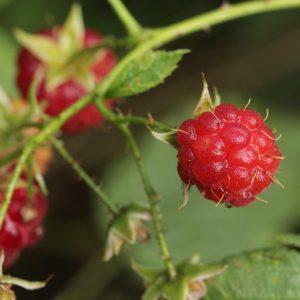
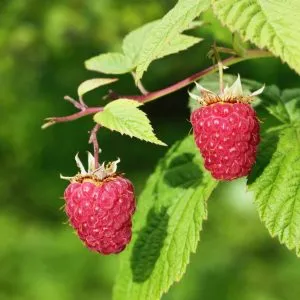
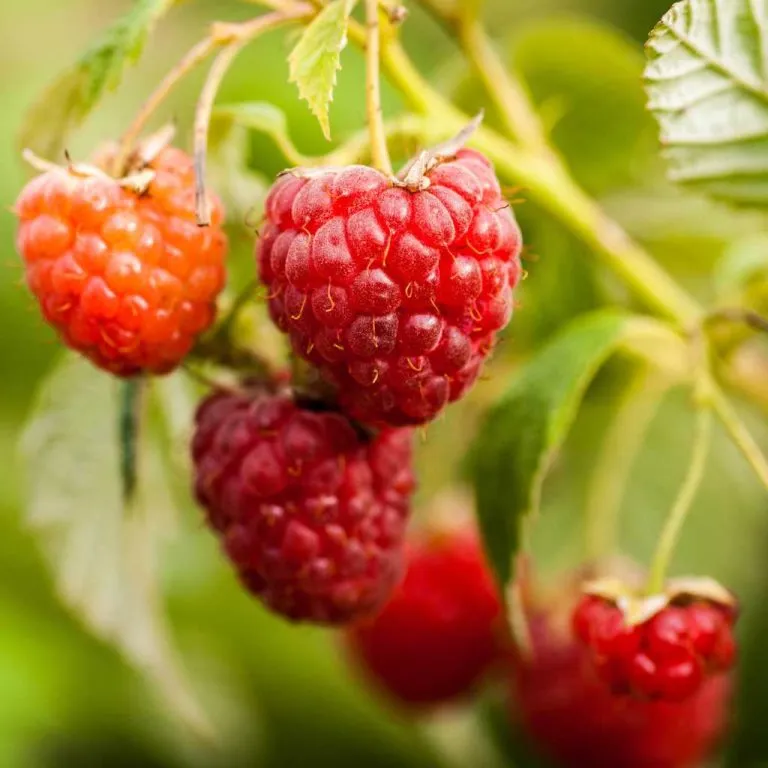
Fruit averages 3.5 grams and roughly 0.75 to 1.0 inch in diameter — on the large end for a primocane red. Flesh is firm relative to most fall-bearing reds, which translates to better fresh-market handling and a longer shelf life of two to three days refrigerated. Flavor is described consistently as rich and sweet with good taste ratings in trial evaluations, though formal Brix values have not been widely published; the sweetness profile develops best when fruit is allowed to deepen to full vibrant red before picking. The firm texture holds well through freezing, making Nantahala a workable choice for preserves, jams, baked goods, and u-pick operations where fruit must survive handling. Leaves are edible as an herbal tea with traditional uses documented in Appalachian botanical practice. Birds are attracted to the fall ripening fruit, so netting is advisable for growers prioritizing yield over wildlife.
Ripening Season: Late
Harvest Window: Late Aug - Mid Oct
Fruit Size: 0.75-1 inch (large, 3.5 g average)
Fruit Weight: 3.5 g
Flavor: Rich, sweet flavor with excellent taste ratings
Fruit Color: Vibrant red
Fruit Texture: Firm
Bearing Habit: Primocane (fall-bearing); fruits on first-year canes
Years to Bear: 1 year (primocane type bears first season after planting)
Storage Life: 2-3 days fresh; 1 year frozen
Culinary Uses: Fresh eating, jams, preserves, baking, desserts, freezing
Gray Mold or Botrytis Fruit Rot (Botrytis cinerea) is moderately resistant in Nantahala, a meaningful advantage during humid fall harvest periods when dense canopies trap moisture. Maintain this advantage by thinning canes to 4 to 6 per linear foot, orienting rows along prevailing breezes, and harvesting ripe fruit promptly — Botrytis colonizes overripe fruit rapidly. Late Leaf Rust (Pucciniastrum americanum) is where Nantahala shows genuine strength: resistant plants show minimal defoliation even in wet years, reducing the need for copper-based organic interventions. Phytophthora Root Rot (Phytophthora fragariae var. rubi) is the one significant disease vulnerability — moderately susceptible ratings require growers to prioritize drainage above everything else at site selection. Raised beds, amended heavy soils, and avoiding low-lying areas address this risk structurally. Spur Blight (Didymella applanata) and Anthracnose (Elsinoe veneta) are both moderately resistant, reducing canker pressure in the cane base. On the pest side, Spotted Wing Drosophila (Drosophila suzukii), Japanese Beetle (Popillia japonica), Raspberry Crown Borer (Pennisetia marginata), and Raspberry Fruitworm (Byturus unicolor) are all moderately susceptible — use fine-mesh exclusion netting for SWD and hand-pick or use OMRI-listed kaolin clay for Japanese Beetle. Monitor crown borer adults in late summer and apply beneficial nematodes (Steinernema carpocapsae) to the soil around cane bases in early fall.
Gray Mold / Botrytis Fruit Rot: Moderately Resistant
Late Leaf Rust: Resistant
Phytophthora Root Rot: Moderately Susceptible
Spur Blight: Moderately Resistant
Anthracnose: Moderately Resistant
Spotted Wing Drosophila: Moderately Susceptible
Japanese Beetle: Moderately Susceptible
Raspberry Crown Borer: Moderately Susceptible
Raspberry Fruitworm: Moderately Susceptible
- Drainage first: Phytophthora root rot vulnerability makes site selection the most important decision — plant in raised rows or ridged beds on well-drained soil rather than amending a wet site and hoping for the best.
- SWD window management: Begin monitoring for Spotted Wing Drosophila as fruit color transitions from pink to red in late August; exclusion netting installed before first ripe fruit is the most effective organic strategy available.
- Japanese Beetle timing: Peak adult feeding occurs July through August, overlapping with cane and leaf development; hand-pick adults in the early morning when they are sluggish, or apply kaolin clay as a repellent barrier.
- Two-crop option: Leave overwintered floricanes in place through spring for an early summer crop, then cut all canes to ground after fall harvest — this gives a summer flush from the floricanes and a fall flush from new primocanes.
- Crown borer prevention: Apply beneficial nematodes (Steinernema carpocapsae) to moist soil around cane bases in late August through September when larvae are small and vulnerable; repeat annually on susceptible sites.
We ship in late winter or early spring based on your USDA hardiness zone.
We strive to ship orders on the scheduled dates listed in the table below. However, please note that the actual shipping date may be subject to change due to factors like weather conditions and order volume.
The specific date for shipping your order will be determined according to your zipcode at the time of checkout.
Our plants are shipped bare root, packed in moist sawdust, and securely wrapped in plastic to prevent the roots from drying out. We use USPS Ground Advantage for shipping, ensuring that your plants typically arrive within 2-5 days after packaging.
In case you're unable to plant the trees immediately upon arrival, we recommend soaking them in water for a few hours and temporarily heeling them in. Ideally, they should be planted within three days of receipt for optimal health.
See our full shipping policy and map here
| Zone | Ship Date |
|---|---|
| 11 - 8b | March 1st, 2027 |
| 8a - 7b | March 8th, 2027 |
| 7a | March 15th, 2027 |
| 6b | March 22nd, 2027 |
| 6a | March 29th, 2027 |
| 5b - 5a | April 12th, 2027 |
| 4b - 4a | April 26th, 2027 |
| 3b - 1a | May 3rd, 2027 |
Our 365-Day Plant Guarantee: We ensure that our plants are delivered to you alive and healthy. If your plant does not survive its first year, you're eligible for store credit under these conditions:
- Your location falls within the appropriate USDA hardiness zone for the plant variety (refer to our hardiness zone map).
- You maintain the roots' moisture and plant within three days of delivery, following the instructions in our Planting Guide.
If you're concerned about your plant's health, please consult our guide, How to Tell if Your Tree is Dead or Dormant. Remember, our plants are shipped in a dormant state and may leaf out at different times based on their species. To check for plant vital
Related products

Himbo Top Raspberry
Checking fit
Double Gold Raspberry
Checking fit
Boyne Raspberry
Checking fit
Heritage Raspberry
Checking fitRated 4.89 out of 5


Reviews
There are no reviews yet.