Brandywine Raspberry
$14.95
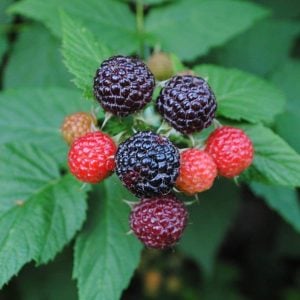
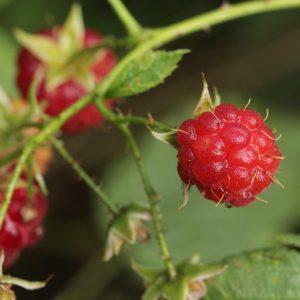
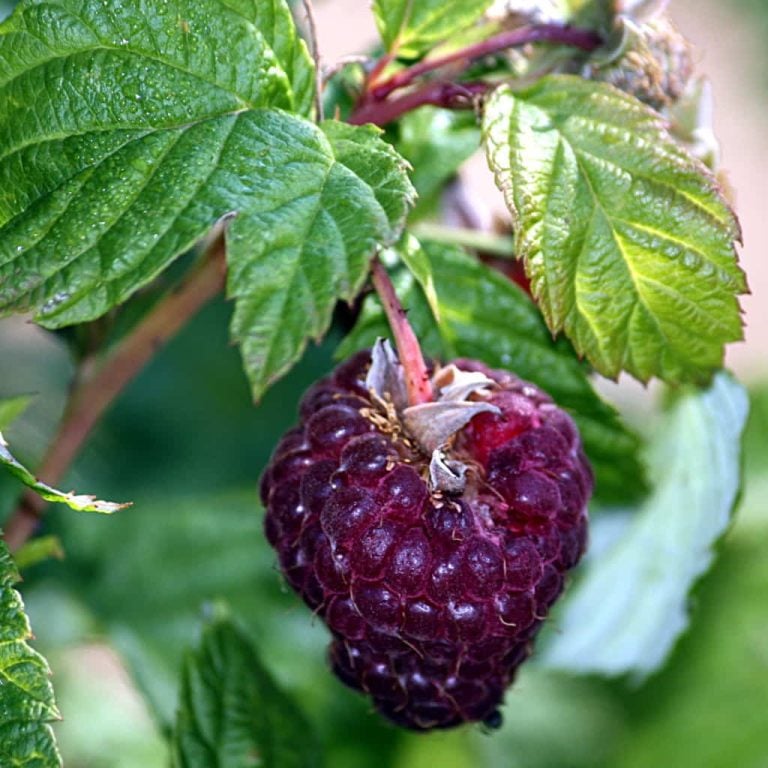
Brandywine Raspberry (Rubus x neglectus ‘Brandywine’) is a purple raspberry hybrid bearing large, intensely flavored reddish-purple fruit that turns vibrant red when cooked, making it exceptional for jams, preserves, and winemaking. It grows in USDA hardiness zones 4-8 and AHS heat zones 2-7, needs 800-1600 chill hours, and is self-fertile, fruiting reliably without a pollinator partner.
1-2′ Bare Root Plant
Propagation: Own-root
In stock
Brandywine was developed at the New York State Agricultural Experiment Station in Geneva, New York and released in 1976 under the experimental designation NY 631. It is a purple raspberry (Rubus × neglectus), a naturally occurring interspecific class produced by crossing red raspberry (Rubus idaeus) with black raspberry (Rubus occidentalis). The documented parentage is Hilton × NY 631 — where Hilton is a large-fruited red raspberry and NY 631 is a Geneva-bred selection — with the black raspberry contribution introducing the characteristic reddish-purple pigment and the concentrated, tart flavor profile that distinguishes the class from standard red cultivars. Brandywine was selected for its notably large fruit size, vigor in humid northeastern conditions, and processing quality: the firm, coherent drupelets hold up well through cooking, making it a recognized choice for jam, jelly, and preservation applications. It performs as a floricane (summer) crop, bearing on second-year canes in a window that often extends after most red varieties have finished.
Brandywine's vigor is its greatest cultivation asset and its primary management challenge. Canes routinely reach 5 to 6 feet and benefit from a two-wire trellis system that keeps the row open to airflow — a practical disease-prevention measure given the variety's moderate susceptibility to several fungal pathogens. Soil pH between 5.5 and 6.5 keeps iron and manganese available while moderating the soil conditions that favor Phytophthora root rot. Consistent moisture of roughly one inch per week during fruit development prevents hollow drupelets, but the site must drain freely: standing water for more than a few hours after rain substantially raises crown gall and root rot risk. Full sun exposure is critical — shaded canes produce fewer flowers and create the humid microclimate that accelerates botrytis. Top-dress with compost in early spring and maintain a 3- to 4-inch organic mulch layer to stabilize soil moisture and suppress weeds competing for nutrients during the rapid primocane flush.
USDA Hardiness Zone: 4-8
AHS Heat Zone: 2-7
Chill Hours: 800-1600
Sun Requirements: Full Sun
Soil pH: 5.5-6.5
Soil Type: Loam, well-drained with high organic matter
Soil Drainage: Well-drained
Water Requirements: Medium; consistent moisture, 1 inch per week
Plant Spacing: 3-4 ft in row; 8-10 ft between rows
How to Prune: Remove all floricanes (second-year canes) after harvest; thin primocanes to 4-6 per foot of row in late winter; trellising recommended due to tall vigorous growth
Brandywine produces tall, erect primocanes that sucker from the crown to form a dense clump rather than spreading by tip-layering the way black raspberries do. This upright, clump-forming habit simplifies row management but demands consistent thinning: leaving more than four to six canes per linear foot of row crowds the canopy, reduces light penetration to developing floricanes, and increases humidity within the planting — all factors that worsen fungal disease incidence. The canes carry prominent thorns, so heavy leather gloves are practical during both pruning and harvest. Floricanes (second-year canes) should be cut to the ground immediately after the harvest is complete; delaying removal allows residual disease inoculum to overwinter on dead wood. Crown suckering means the planting naturally fills gaps and maintains density over years, and with proper management the crown can remain productive for 10 to 20 years.
Mature Height: 5-6 ft tall
Mature Spread: 3-5 ft wide
Growth Habit: Upright, erect, thorny canes; crown-suckering, clump-forming
Growth Rate: Fast
Foliage Type: Deciduous
Food Forest Layer: Shrub
Thorns?: Yes — prominent thorns on canes
Attracts Wildlife: Birds, bees, pollinators
Life Span: individual canes biennial (2-year cycle); crown lives 10-20+ years
Brandywine is self-fertile, meaning a single planting will set fruit without a cross-pollinator. Bloom occurs late May through early June in a temperate climate, coinciding with peak native bee activity, which benefits fruit set across the row. The white flowers are insect-pollinated, and adequate bee visitation reduces hollow-drupelet formation — a quality issue that can arise from poor pollination timing rather than from genetics. Planting Royalty Purple Raspberry in an adjacent row provides a bloom-overlapping companion that attracts additional pollinators to the site without competing for the same harvest window, since Royalty also ripens in summer. The proximity of two vigorous purple raspberry plantings tends to improve observed fruit set in both.
Bloom Season: Early
Bloom Window: Late May - Early Jun
Pollination Requirements: Self-fertile
Pollination Mechanism: Insect-pollinated (bees); self-fertile
Flower Color: White
Fruit reaches approximately one inch in diameter — notably large for the purple raspberry class — with firm texture that survives handling and freezing better than most red varieties. Color at full ripeness is a deep reddish-purple that intensifies further on cooking, making Brandywine visually distinctive in jams and jellies. The flavor profile leans sharply tart with high aromatic intensity; the acidity level makes it less suited to fresh eating as a standalone snack but ideal as a cooking fruit where that tartness provides backbone in preserves, pies, cobblers, and fruit wines. Winemakers value the pigment stability and flavor concentration, which hold through fermentation better than milder red varieties. Fresh shelf life is short — one to three days refrigerated — so growers targeting market sales should plan for immediate processing or freezing. Young leaves are also edible as an herbal tea ingredient, a traditional use of the Rubus genus.
Ripening Season: Mid
Harvest Window: Late Jul - Mid Aug
Fruit Size: 1 inch
Flavor: Tart, tangy; intense flavor; excellent for preserves, baking, and wine
Fruit Color: Reddish-purple
Fruit Texture: Firm
Bearing Habit: Floricane (summer-bearing); fruits on second-year canes
Years to Bear: 1-2 years
Storage Life: Short fresh (1-3 days refrigerated); freezes well
Culinary Uses: Jams, jellies, baking, winemaking, fresh eating; turns vibrant red when cooked
Crown gall (Agrobacterium tumefaciens) is the most serious disease threat for Brandywine — the variety is susceptible, and once established in a planting site, the bacteria persist in soil for years. Use certified disease-free planting stock, avoid wounding crowns during cultivation, and do not replant brambles in a known infected site for at least three years. Spur blight (Didymella applanata), cane blight (Leptosphaeria coniothyrium), and botrytis fruit rot (Botrytis cinerea) all rate as moderately susceptible; maintain trellis spacing so canes do not overlap, remove floricanes immediately post-harvest, and avoid overhead irrigation during flowering and ripening. Phytophthora root rot (Phytophthora fragariae var. rubi) warrants careful site selection — moderately susceptible plants placed in poorly drained soils can develop crown decline within two to three seasons. On the pest side, spotted wing drosophila (Drosophila suzukii) and raspberry crown borer (Pennisetia marginata) are moderately susceptible concerns; SWD monitoring with commercial traps from first color change and prompt harvest reduce infestation rates. Japanese beetle (Popillia japonica) defoliation is moderately susceptible and is controlled by hand-picking or kaolin clay barriers. Raspberry aphid (Amphorophora agathonica) is the highest-concern pest given its susceptibility rating and role as a virus vector; inspect new growth weekly and apply insecticidal soap at first colony detection.
Crown Gall: Susceptible
Spur Blight: Moderately Susceptible
Cane Blight: Moderately Susceptible
Botrytis Fruit Rot: Moderately Susceptible
Phytophthora Root Rot: Moderately Susceptible
Spotted Wing Drosophila: Moderately Susceptible
Raspberry Crown Borer: Moderately Susceptible
Japanese Beetle: Moderately Susceptible
Raspberry Aphid: Susceptible
- Trellis before canes mature: Install a two-wire trellis at planting time — Brandywine's vigorous canes become difficult to train once they reach full height and thorns harden.
- Crown gall exclusion starts at purchase: Since Brandywine is susceptible to crown gall, buy only from certified disease-free nursery stock and reject any plant with swollen or irregular crown tissue before it enters your soil.
- Remove floricanes without delay: Cut spent second-year canes to soil level within days of last harvest; letting them stand through fall carries over spur blight and cane blight inoculum to the next season's primocanes.
- Harvest on a dry schedule: Botrytis fruit rot accelerates in wet conditions during ripening; pick every two to three days at peak ripeness and avoid harvesting wet fruit to reduce post-harvest mold.
- Monitor aphids from bud break: Raspberry aphid colonies build quickly in spring and transmit mosaic virus; weekly scouting from green-tip through bloom, with insecticidal soap applied at first signs, prevents population explosions.
We ship in late winter or early spring based on your USDA hardiness zone.
We strive to ship orders on the scheduled dates listed in the table below. However, please note that the actual shipping date may be subject to change due to factors like weather conditions and order volume.
The specific date for shipping your order will be determined according to your zipcode at the time of checkout.
Our plants are shipped bare root, packed in moist sawdust, and securely wrapped in plastic to prevent the roots from drying out. We use USPS Ground Advantage for shipping, ensuring that your plants typically arrive within 2-5 days after packaging.
In case you're unable to plant the trees immediately upon arrival, we recommend soaking them in water for a few hours and temporarily heeling them in. Ideally, they should be planted within three days of receipt for optimal health.
See our full shipping policy and map here
| Zone | Ship Date |
|---|---|
| 11 - 8b | March 1st, 2027 |
| 8a - 7b | March 8th, 2027 |
| 7a | March 15th, 2027 |
| 6b | March 22nd, 2027 |
| 6a | March 29th, 2027 |
| 5b - 5a | April 12th, 2027 |
| 4b - 4a | April 26th, 2027 |
| 3b - 1a | May 3rd, 2027 |
Our 365-Day Plant Guarantee: We ensure that our plants are delivered to you alive and healthy. If your plant does not survive its first year, you're eligible for store credit under these conditions:
- Your location falls within the appropriate USDA hardiness zone for the plant variety (refer to our hardiness zone map).
- You maintain the roots' moisture and plant within three days of delivery, following the instructions in our Planting Guide.
If you're concerned about your plant's health, please consult our guide, How to Tell if Your Tree is Dead or Dormant. Remember, our plants are shipped in a dormant state and may leaf out at different times based on their species. To check for plant vital
5 reviews for Brandywine Raspberry
Related products

Jewel Black Raspberry
Checking fitRated 4.60 out of 5
Double Gold Raspberry
Checking fit
Latham Raspberry
Checking fitRated 5.00 out of 5
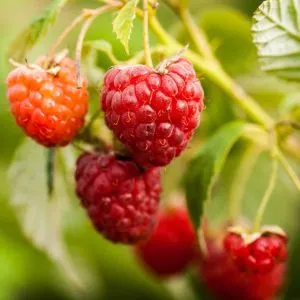
Nantahala Raspberry
Checking fit


Vanessa M. (verified owner) –
Came well packaged and healthy!
EJ P. (verified owner) –
Big size and healthy looking plants with big roots
Deborah Cook (verified owner) –
Doing well, I’m very pleased so far
Megan S. (verified owner) –
Plants arrived in great shape. Healthy and ready to plant.
Ricardo Wieler (verified owner) –
Arrived green and grew right away.