

Yoshino Cherry
$49.95
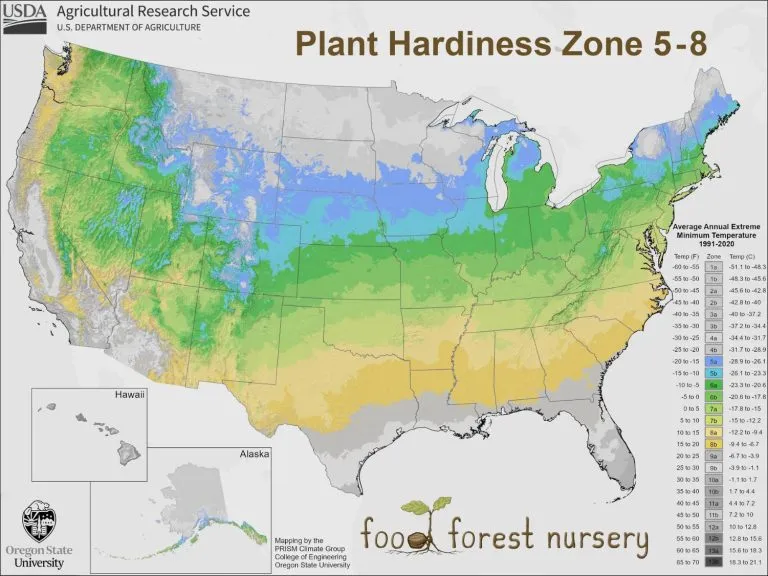
Yoshino Cherry (Prunus x yedoensis) is a hybrid ornamental cherry of Japanese origin bearing fragrant pale-pink-to-white blooms on broad, vase-shaped arching branches in early spring, followed by yellow-to-bronze fall foliage and small dark fruit that attract birds and small mammals. It grows in USDA hardiness zones 5-8 and AHS heat zones 2-8, needs about 500-600 chill hours, and requires cross-pollination with a compatible variety to set fruit.
4-5′ Bare Root Grafted Tree
Rootstock: Colt – Standard
Vigorous but slightly smaller than Mazzard, and comfortable on heavier clay loams. Note it is not especially cold hardy.
• Support: Freestanding; good anchorage.
Can’t be shipped to: AK, CA, CO, HI, ID, OR, WA
In stock
Yoshino Cherry (Prunus x yedoensis) is a hybrid of almost certainly Prunus speciosa (Oshima cherry) as the pollen parent and Prunus pendula f. ascendens (Edo higan) as the seed parent, arising in the nurseries and gardens of Edo (present-day Tokyo) during the late Edo or early Meiji period, approximately the 1860s to 1870s. The clone was propagated intensively in Somei village, a Tokyo nursery district, giving rise to its Japanese name Somei-Yoshino. Because it sets no viable seed and must be grafted, every Yoshino in cultivation worldwide is genetically identical to those original Somei trees. The variety entered the scientific record in 1912 when German botanist Emil Koehne described it as Prunus yedoensis; Ernest Henry Wilson later confirmed its hybrid status. Its international prominence traces directly to 1912, when Tokyo Mayor Yukio Ozaki gifted 3,020 Yoshino trees to the city of Washington, D.C. Planted along the Tidal Basin, those trees established Yoshino as the defining image of the American cherry blossom festival and the most widely recognized flowering cherry in North America.
Yoshino cherry grows at a moderate to fast pace, typically adding 2–3 feet per season in youth, and eventually forms a broad, vase-shaped to spreading canopy reaching 30–35 feet tall and equally wide at maturity. It performs best in full sun with at least six hours of direct light and prefers well-drained, moderately fertile soil with a pH between 6.0 and 7.0. Consistent moisture during the first two to three growing seasons is critical for establishment; once settled, the tree shows reasonable drought tolerance. It does not tolerate prolonged waterlogging. Although rated hardy to Zone 5, late-spring frosts pose the primary practical risk: the flower buds open very early and a hard frost after bud break can eliminate the entire bloom display for that year. Planting on a slight elevation or a south-facing slope with good air drainage reduces frost-pocket risk in marginal climates.
USDA Hardiness Zone: 5-8
AHS Heat Zone: 2-8
Sun Requirements: Full Sun
Soil pH: 6.0-7.0
Soil Type: Loam
Soil Drainage: Well-drained
Water Requirements: Medium
Drought Tolerance: Low
Heat Tolerance: Moderate; tolerates heat and humidity when well-watered
How to Prune: Prune immediately after flowering in spring; remove dead, diseased, or crossing branches; avoid heavy pruning to reduce borer entry points and stress; disinfect tools between cuts
The tree's most distinctive structural feature is its gracefully arching branch framework, which gives mature specimens a sweeping, broadly umbrella-shaped silhouette that reads well at distance in the landscape. Single flowers, five petals each, emerge white with a blush of pale pink at the base and fade nearly pure white as they age; they carry a light, clean almond-like fragrance detectable on still spring mornings. Bark is smooth and polished gray-brown with prominent horizontal lenticels typical of the genus, ornamental in its own right through winter. Autumn foliage turns warm orange-bronze to copper before dropping, adding a second season of interest. Small black drupes develop in summer but are inconspicuous; this tree is grown entirely for its spring floral display, not for fruit.
Mature Height: 30-35 ft tall
Mature Spread: 25-35 ft wide
Growth Habit: Upright with broad, rounded vase-shaped canopy; deciduous
Growth Rate: Fast
Foliage Type: Deciduous
Food Forest Layer: Canopy
Permaculture Role: Pollinator support, wildlife food
Leaf Color: Green
Fall Foliage Color: Yellow to bronze
Thorns?: No
Attracts Wildlife: Bees and butterflies (pollinators); birds and small mammals (fruit)
Life Span: 15-30 years
Yoshino cherry is self-fertile and blooms prolifically without a pollinator partner. Flowering occurs in early spring, typically late March through mid-April across Zones 5–8 depending on local climate, and emerges before the foliage—so the blossoms are fully visible against bare branches, maximizing visual impact. The display lasts approximately one to two weeks under average conditions; cool temperatures prolong the show while warm spells shorten it. Flowers are mildly fragrant and attractive to early-season pollinators including honeybees and native bees. Because all cultivated Yoshino trees are clonal, a single specimen delivers a complete, reliable bloom every year without any coordination with other trees.
Pollination Requirements: Self-infertile; ornamental variety primarily propagated by grafting — fruit set is negligible in cultivation
Pollination Mechanism: Insect-pollinated (primarily bees)
Flower Color: Pale pink to white
Following the spring bloom, Yoshino develops small dark drupes that ripen in early summer — pea-sized, tart, and of no culinary value, but eagerly sought by wildlife. Songbirds and cedar waxwings descend in flocks and strip the fruit quickly; birds typically clear the tree before significant drop occurs, so the mess most homeowners worry about rarely materializes. This tree is grown and sold purely as an ornamental specimen; no harvest or culinary use is expected or intended. Its value lies in the spring floral spectacle, the graceful arching canopy, and the warm autumn color. Gardeners seeking a dual-purpose ornamental-fruiting cherry should look instead at the sour cherry selections in this catalog.
Fruit Color: Small black drupes
Culinary Uses: N/A - ornamental flowering cherry
Yoshino cherry carries moderate susceptibility to brown rot (Monilinia fructicola), though this is rarely a significant issue on a purely ornamental tree where no fruit is harvested and any infected fruitlets can be left for birds. Cherry leaf spot (Blumeriella jaapii) can cause premature defoliation in warm, humid summers; good air circulation and avoiding overhead irrigation help limit infections without chemical intervention. Bacterial canker (Pseudomonas syringae) is a genuine concern, particularly in climates with wet springs; prune only during dry weather with clean tools, and remove cankered wood immediately. Black knot (Apiosporina morbosa) appears occasionally; inspect branches each dormant season and excise any swollen black galls well below the margin. X-disease (Candidatus Phytoplasma pruni), transmitted by leafhoppers, is low-incidence but incurable; remove and destroy any affected trees. Among insects, black cherry aphid (Myzus cerasi) colonies on new growth respond well to a strong water spray or insecticidal soap. Spotted wing drosophila and cherry fruit fly have minimal impact because the small fruits are of negligible commercial interest.
Brown Rot: Susceptible
Cherry Leaf Spot: Moderately Susceptible
Bacterial Canker: Moderately Susceptible
Black Knot: Moderately Susceptible
X-Disease / Cherry Buckskin: Moderately Susceptible
Plum Curculio: Susceptible
Cherry Fruit Fly: Susceptible
Black Cherry Aphid: Susceptible
Spotted Wing Drosophila: Susceptible
- Time pruning to summer or fall: Prune in midsummer or early fall — never early spring — to avoid bacterial canker infection through fresh wounds during wet weather.
- Keep mulch off the trunk: Maintain a mulched root zone but pull material back from the trunk flare to prevent crown rot.
- Choose a frost-protected site: Select a location with good cold-air drainage to protect early buds from late frosts and reduce Brown Rot infection pressure at bloom.
We ship in late winter or early spring based on your USDA hardiness zone.
We strive to ship orders on the scheduled dates listed in the table below. However, please note that the actual shipping date may be subject to change due to factors like weather conditions and order volume.
The specific date for shipping your order will be determined according to your zipcode at the time of checkout.
Our plants are shipped bare root, packed in moist sawdust, and securely wrapped in plastic to prevent the roots from drying out. We use USPS Ground Advantage for shipping, ensuring that your plants typically arrive within 2-5 days after packaging.
In case you're unable to plant the trees immediately upon arrival, we recommend soaking them in water for a few hours and temporarily heeling them in. Ideally, they should be planted within three days of receipt for optimal health.
See our full shipping policy and map here
| Zone | Ship Date |
|---|---|
| 11 - 8b | March 1st, 2027 |
| 8a - 7b | March 8th, 2027 |
| 7a | March 15th, 2027 |
| 6b | March 22nd, 2027 |
| 6a | March 29th, 2027 |
| 5b - 5a | April 12th, 2027 |
| 4b - 4a | April 26th, 2027 |
| 3b - 1a | May 3rd, 2027 |
Our 365-Day Plant Guarantee: We ensure that our plants are delivered to you alive and healthy. If your plant does not survive its first year, you're eligible for store credit under these conditions:
- Your location falls within the appropriate USDA hardiness zone for the plant variety (refer to our hardiness zone map).
- You maintain the roots' moisture and plant within three days of delivery, following the instructions in our Planting Guide.
If you're concerned about your plant's health, please consult our guide, How to Tell if Your Tree is Dead or Dormant. Remember, our plants are shipped in a dormant state and may leaf out at different times based on their species. To check for plant vital
Related products

Coral Champagne Cherry
Checking fit
Okame Cherry
Checking fit
Common Apple
Checking fit
Gold Cherry
Checking fitRated 5.00 out of 5


Reviews
There are no reviews yet.