$49.95Original price was: $49.95.$39.96Current price is: $39.96.
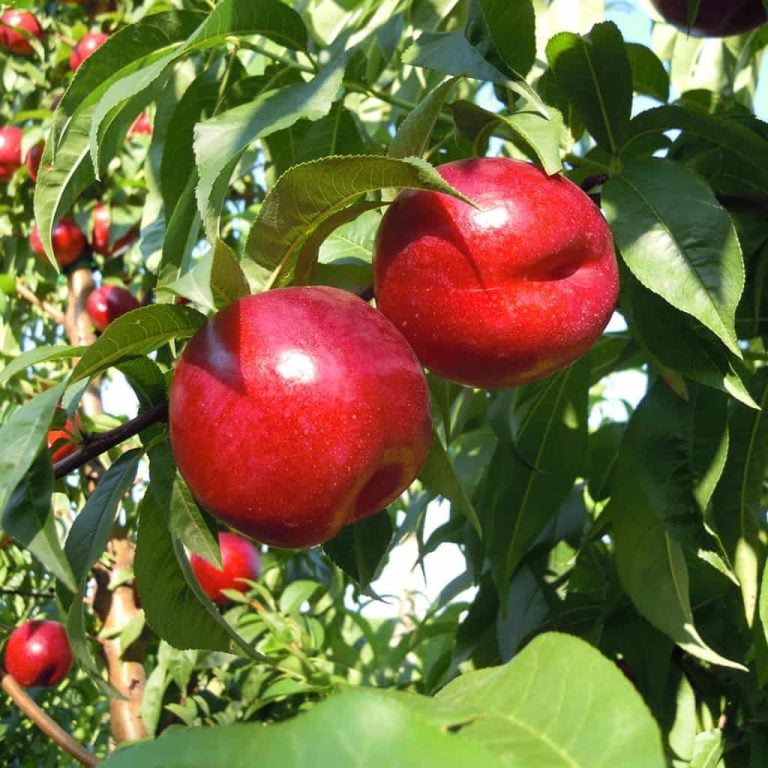
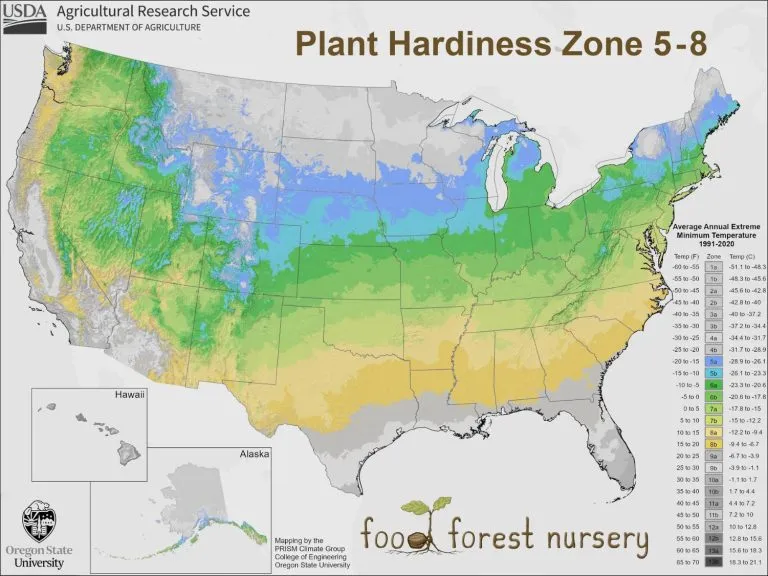
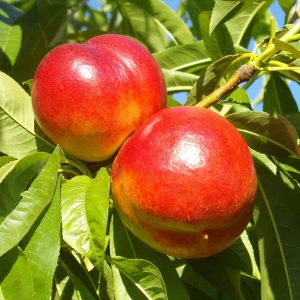
Sunglo Nectarine (Prunus persica ‘Sunglo’) is a large, bold-colored freestone nectarine developed in Merced, California, covering 80 to 90% of its 3-inch fruit in orange-scarlet red over yellow, with firm, meaty flesh and very good acidic flavor. It grows in USDA hardiness zones 5-8 and AHS heat zones 4-8, needs 750-950 chill hours, and is self-fertile, fruiting reliably without a pollinator partner.
3-4′ Bare Root Grafted Tree Rootstock: Halford – Standard
Halford (Standard): A peach seedling rootstock giving a full-size, vigorous, well-anchored tree — the workhorse of eastern peach growing. It offers no nematode resistance, so avoid known nematode ground.
Sunglo nectarine was developed in Merced, California by Fred Anderson and introduced by Stark Brothers Nurseries of Louisiana, Missouri in 1962, receiving Plant Patent No. 1929. Its parentage is documented as Sun Grand x (Le Grand x Halehaven) — crosses that combined large California commercial nectarines with the cold-hardy Halehaven peach background to broaden zone adaptation. The variety was bred under the Stark Brothers cooperative development model in which California breeders worked with the nursery to develop exclusive cultivars suitable for home orchardists across a wider geographic range than pure California commercial releases. That parentage decision paid off in cold hardiness: Sunglo performs reliably in Zones 5 through 8, well north of the Central Valley varieties that dominated commercial production at the time. As a Stark Brothers exclusive, it became widely distributed through the company’s mail-order catalog reaching home orchardists throughout the Midwest and East, giving it commercial reach that purely regional releases could not match.
Sunglo performs best in full sun with well-drained loam or sandy-loam soils; standing water during dormancy damages the crown and invites Cytospora Canker. Space standard trees 15–20 ft apart to allow adequate airflow, which reduces fungal pressure — a particular benefit for nectarines, whose smooth skin is more vulnerable to Peach Scab and Brown Rot than fuzz-covered peaches. Annual dormant pruning to an open-center structure keeps light penetration high and removes wood showing canker symptoms before they spread. Water requirements are medium; newly planted trees need consistent moisture to establish but mature trees tolerate brief dry spells — though consistent irrigation during the final 3–4 weeks of fruit swell significantly improves size and juice content. Thinning fruit to one per 6-inch cluster when the fruitlets are dime-sized reduces branch stress and maximizes the variety's characteristic large-fruit size. Cold hardiness spans Zones 5–8; late-frost sites should position the tree on a gentle north-facing slope or near a windbreak to delay bloom slightly.
USDA Hardiness Zone: 5-8 AHS Heat Zone: 4-8 Chill Hours: 750-950 Sun Requirements: Full Sun Soil pH: 6.0-7.0 Soil Type: Loam, sandy loam, clay loam; adaptable but prefers fertile well-drained soils Soil Drainage: Well-drained Water Requirements: Medium Drought Tolerance: Moderate; established trees tolerate short dry periods but benefit from consistent irrigation during fruit development Heat Tolerance: High Plant Spacing: 15-20 ft apart Container Suitability: Yes on dwarfing rootstock; standard rootstock too vigorous for containers How to Prune: Open vase system; select 4-6 outward-facing scaffold branches; annual dormant heading cuts in late winter; remove water sprouts, crossing branches, and deadwood
Sunglo grows to a moderate 10–15 ft on standard rootstock with a naturally spreading, somewhat vase-shaped habit that responds well to open-center training. Trees are vigorous in early years and settle into annual bearing by years 2–4. The canopy is dense enough to require deliberate summer tipping of upright water sprouts to maintain interior light. Bark is smooth and reddish-brown on young wood, aging to gray with characteristic lenticel patterns. Foliage is glossy dark green with the narrow lanceolate leaf typical of the species. On dwarfing rootstock the tree can be held to 6–8 ft, making it manageable in tighter spaces or for season-extension plantings under high tunnels; standard rootstock is too vigorous for long-term container culture. The 3-inch fruit is among the larger-sized nectarines in the mid-season window, with skin color running 80–90% orange-scarlet over a yellow-orange ground — high color expression that needs full sun exposure to develop fully.
Mature Height: 10-15 ft tall Mature Spread: 10-15 ft wide (standard); 8-10 ft wide (dwarf) Growth Habit: Upright spreading Growth Rate: Moderate Foliage Type: Deciduous Food Forest Layer: Canopy, Sub-canopy Permaculture Role: Pollinator support, wildlife food, edible fruit producer Leaf Color: Green Fall Foliage Color: Yellow to orange Thorns?: No Attracts Wildlife: Bees and butterflies (pollinators); birds and small mammals (fruit) Life Span: 10-15 years
Sunglo is self-fertile and sets commercially acceptable crops without a second variety nearby. Bloom is mid-season, consistent with other mid-July-ripening nectarines in temperate climate — typically mid-to-late March into early April. Flowers are pink, showy, and relatively frost-tolerant once they are past the tight-bud stage, though a hard frost at full-bloom (below 28°F) will damage the crop. Planting on a gentle elevation or near a structure that buffers cold air drainage provides practical insurance in frost-prone sites. Where cross-pollination with another nectarine or peach variety is possible, fruit set can be slightly heavier, but additional trees are not required for a full productive crop.
Bloom Season: Very Early Bloom Window: Mid Mar - Early Apr Pollination Requirements: Self-fertile; no pollinator required, though planting a second variety within 100 feet can increase crop size Pollination Mechanism: Insect-pollinated (primarily bees) Flower Color: Pink
The fruit is a yellow freestone with bright orange-scarlet skin covering 80–90% of the surface, making it one of the more visually striking mid-season nectarines. Flesh is yellow, firm at harvest, and freestone — separating cleanly from the pit for easy hand-eating, halving, and slicing. Flavor is rated very good to excellent with a lively acidic balance that keeps the sweetness from reading as flat; the acid-sugar ratio holds better in the fruit than in many modern low-acid selections bred for supermarket sweetness. At 3 inches in diameter it qualifies as a large nectarine. Storage life is notably long for a nectarine — 1–2 months under cool conditions — which makes it useful for fresh-market sales, home canning, and dehydrating. The smooth skin, freestone character, and firm flesh also make it one of the better nectarine candidates for canning whole halves or slicing into preserves.
Ripening Season: Mid Harvest Window: Early Aug Fruit Size: 3 inch Flavor: Very good to excellent acidic flavor Fruit Color: 80-90% orange-scarlet-red over yellow-orange ground color; yellow flesh Fruit Texture: Firm and meaty; melting when fully ripe Fruit Skin: Smooth (fuzz-free; defining trait of Prunus persica var. nucipersica — nectarines lack the trichomes that give peaches their fuzz) Bearing Habit: Annual (with thinning to prevent biennial tendency) Years to Bear: 2-4 years Storage Life: 1-2 months Culinary Uses: Fresh eating, canning, freezing, baking, preserves, jams
As a smooth-skinned nectarine, Sunglo faces higher disease pressure than fuzz-covered peaches on the same site: the absence of trichomes gives Brown Rot (Monilinia fructicola) and Peach Scab (Cladosporium carpophilum) easier entry points at the skin surface. Brown Rot management relies on timed kaolin clay applications at petal fall, followed by copper or sulfur sprays during wet fruiting weather. Bacterial Spot (Xanthomonas arboricola pv. pruni) pressure is moderate; fixed-copper dormant sprays and avoiding overhead irrigation reduce infection. Peach Leaf Curl (Taphrina deformans) is best prevented with a single dormant copper application before bud swell — once leaves are open, sprays are ineffective. Cytospora Canker (Leucostoma persoonii / Leucostoma cincta) is managed through prompt removal of symptomatic wood and avoiding pruning wounds in wet weather. On the pest side, Plum Curculio (Conotrachelus nenuphar) and Oriental Fruit Moth (Grapholita molesta) are the primary fruit threats; kaolin clay at petal fall and pheromone-trap monitoring guide timing. Peachtree Borer (Synanthedon exitiosa) is addressed by beneficial nematode drenches at the crown in late summer. Brown Marmorated Stink Bug (Halyomorpha halys) pressure increases near woodland edges; row covers during the final ripening window provide a physical barrier.
Thin Hard: One fruitlet per 6-inch spacing pushes the characteristic large size; overcrowded clusters produce average fruit.
Kaolin Clay: Apply at petal fall and reapply after rain to address brown rot and plum curculio simultaneously.
Dormant Copper: Spray before bud swell — peach leaf curl cannot be controlled after leaf-out.
Open-Center Pruning: Remove upright water sprouts in summer to maintain airflow and light penetration.
Harvest Cue: Harvest when the ground color shifts from green-tinted yellow to fully yellow-orange — skin blush alone is misleading on a high-color variety.
We ship in late winter or early spring based on your USDA hardiness zone.
We strive to ship orders on the scheduled dates listed in the table below. However, please note that the actual shipping date may be subject to change due to factors like weather conditions and order volume.
The specific date for shipping your order will be determined according to your zipcode at the time of checkout.
Our plants are shipped bare root, packed in moist sawdust, and securely wrapped in plastic to prevent the roots from drying out. We use USPS Ground Advantage for shipping, ensuring that your plants typically arrive within 2-5 days after packaging.
In case you're unable to plant the trees immediately upon arrival, we recommend soaking them in water for a few hours and temporarily heeling them in. Ideally, they should be planted within three days of receipt for optimal health.
Our 365-Day Plant Guarantee: We ensure that our plants are delivered to you alive and healthy. If your plant does not survive its first year, you're eligible for store credit under these conditions:
You maintain the roots' moisture and plant within three days of delivery, following the instructions in our Planting Guide.
If you're concerned about your plant's health, please consult our guide, How to Tell if Your Tree is Dead or Dormant. Remember, our plants are shipped in a dormant state and may leaf out at different times based on their species. To check for plant vital
Reviews
There are no reviews yet.
Be the first to review “Sunglo Nectarine”Cancel Reply
$49.95Original price was: $49.95.$39.96Current price is: $39.96.Select Rootstock This product has multiple variants. The options may be chosen on the product page


Reviews
There are no reviews yet.