
Summit Muscadine Grape
$24.95
Summit Muscadine Grape (also known as Summit Bronze Muscadine; Vitis rotundifolia) is a University of Georgia muscadine released in 1977, its pinkish-bronze 1-inch berries reaching 16.1% soluble solids for an exceptionally sweet, low-acid flavor outstanding for fresh eating, jelly, juice, and wine. It grows in USDA hardiness zones 7-9 and AHS heat zones 6-11, needs 150-350 chill hours, and requires cross-pollination with a compatible variety such as Carlos Muscadine Grape or Cowart Muscadine Grape to set fruit.
1-2′ Bare Root Vine
Propagation: Own-root
Can’t be shipped to: AK, HI, ID, OR, WA
In stock
Summit was released in 1977 by R. Lane of the University of Georgia, selected from the cross Fry x Ga. 29-49, where Ga. 29-49 traces back through Yuga, Higgins, Hunt, and Tarheel parentage. The UGA program had used Fry heavily as a parent during this era for its documented ability to transmit large bronze fruit and high soluble solids, and Summit was selected as an improvement on Fry itself: slightly smaller berries but better productivity, stronger berry rot resistance, and a drier stem scar that simplifies harvesting and storage. Documented soluble solids of 16.1 percent give fresh-market buyers a noticeably sweeter eating experience than Fry or Carlos typically deliver. Summit was part of the UGA program’s mid-to-late-1970s wave that also included Triumph, collectively representing the program’s push toward higher-quality fresh-market bronze types after its earlier emphasis on juice and processing cultivars. The variety is unpatented.
Summit performs in the low-chill climate band of the southeastern United States — needing only 100 to 200 chilling hours, it leafs out reliably even in warmer zones 8 and 9 where standard Vitis vinifera varieties fail to accumulate adequate dormancy. Full sun is essential; shaded vines produce lower fruit quality and become more vulnerable to fungal pressure in humid conditions. A soil pH of 6.0 to 6.5 keeps iron and manganese available while limiting the over-solubilization of aluminum that can occur in more acidic muscadine soils. Sandy loam to well-drained clay loam suits this variety well — standing water during dormancy damages the root system and predisposes vines to crown and root rots. Moderate and consistent moisture during fruit development from June through harvest in late summer improves berry size and reduces cracking. Once established after two to three years, the vine handles drought reasonably well, though irrigation during extended dry periods in late summer maintains yield. Rows oriented north-south allow balanced light interception across the canopy and improve airflow, which is practical disease management in humid climates.
USDA Hardiness Zone: 7-9
AHS Heat Zone: 6-11
Chill Hours: 150-350
Sun Requirements: Full Sun
Soil pH: 6.0-6.5
Soil Type: Sandy loam, loam, well-drained clay loam
Soil Drainage: Well-drained; cannot tolerate standing water
Water Requirements: Medium; regular moisture during establishment, moderate once established
Drought Tolerance: Moderate
Plant Spacing: 20 ft apart in rows, 12 ft between rows
How to Prune: Annual dormant-season spur pruning; cut lateral shoots back to 2-4 buds; prune mid-January to mid-March
Summit is a vigorous climbing vine capable of reaching 12 to 15 feet in height and spreading 15 to 20 feet across a properly installed trellis. The rapid growth rate means that structural trellising must be in place before planting — vines left to climb without a framework become unmanageable within two seasons. A standard single-wire trellis at five feet or a double-cordon system at four to five feet channels energy into productive wood and simplifies the dormant-season spur pruning that muscadines require annually. The canes are thick and persistent, and the deciduous foliage turns yellow to gold in autumn before drop. Green leaves during the growing season are broad and serve as an effective canopy shade layer. Plant spacing of 20 feet within rows and 12 feet between rows is the commercial standard; home growers can reduce row spacing where tractor access is not needed. The root system is extensive and moderately drought-tolerant once established, but does not tolerate compacted or poorly drained soils.
Mature Height: 12-15 ft tall
Mature Spread: 15-20 ft wide
Growth Habit: Climbing vine; trained on single-wire or double-cordon trellis system
Growth Rate: Fast
Foliage Type: Deciduous
Food Forest Layer: Vine
Leaf Color: Green
Fall Foliage Color: Yellow to gold
Attracts Wildlife: Bees, songbirds, small mammals
Life Span: vines productive for 20-30+ years with proper management
Summit carries only pistillate (female) flowers, which means it produces no viable pollen and cannot set fruit without a nearby source of compatible pollen. Bloom runs from late April through early June in temperate climates, and any self-fertile (perfect-flowered) muscadine planted within 50 feet will function as a pollinator. From the varieties available on this site, Carlos Muscadine Grape, Cowart Muscadine Grape, and Nesbitt Muscadine Grape are all self-fertile and bloom in overlapping windows that cover Summit's pistillate flush. The recommended planting ratio is one pollinator vine for every three to five pistillate vines in a row. Both wind and pollinators carry pollen between vines. In home gardens where only one or two Summit vines are planted, siting a single perfect-flowered muscadine nearby is sufficient to achieve full production.
Bloom Season: Late
Bloom Window: Late Apr - Early Jun
Pollination Requirements: Requires cross-pollinator; Summit has female (pistillate) flowers and cannot self-pollinate
Pollination Mechanism: Wind and insect (bee) pollination
Flower Color: Greenish-white
Ploidy: Diploid (2n = 40)
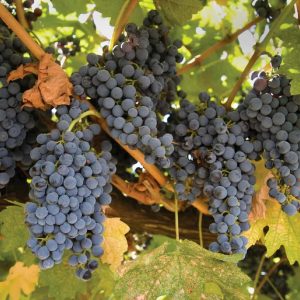
Summit's fruit runs approximately 1.0 inch in diameter (roughly 10.4 grams per berry), sizing consistently for a bronze muscadine. At 16.1% soluble solids, it sits toward the sweeter end of the muscadine flavor spectrum and carries low acidity and a pronounced, classic muscadine aroma. The skin is thick and tough in the manner typical of the species, but fully edible. Flesh is slipping-type and separates cleanly. Color at maturity is bronze to pinkish-bronze. Harvest runs from mid-August through mid-September in temperate climates, with individual berries ripening and dropping over a two-to-three week window rather than in a single flush — clusters require multiple picking passes. Yield potential is high at 3 to 4 tons per acre, and Summit rates at 80% full-crop reliability across seasons. Post-harvest, berries keep one to two weeks refrigerated; a dry stem scar, which Summit tends to produce, improves shelf stability by reducing the entry point for mold. Primary uses include fresh eating, jelly, jam, juice, wine, and preserves.
Ripening Season: Mid
Harvest Window: Mid Aug - Mid Sep
Fruit Size: 1 inch (25 mm / 10.4 g)
Fruit Weight: 10.4 g
Flavor: Exceptionally sweet, low acidity, rich muscadine flavor; 16.1% soluble solids
Fruit Color: Bronze (pinkish-bronze)
Fruit Skin: Thick, tough but edible skin
Bearing Habit: Produces on current season's spurs; annual spur pruning required for consistent crop
Years to Bear: 2-3 years
Storage Life: 1-2 weeks refrigerated; dry stem scar improves post-harvest shelf life
Culinary Uses: Fresh eating, jelly, jam, juice, wine, preserves
Summit's most notable disease advantage is very high resistance to Pierce's Disease (Xylella fastidiosa), the bacterial infection vectored by sharpshooter leafhoppers that eliminates Vitis vinifera from warm climates. For growers in zones 7 to 9, this trait alone justifies choosing muscadines over vinifera. Against Ripe Rot (Glomerella cingulata), Black Rot (Guignardia bidwellii f. muscadinii), and Powdery Mildew (Erysiphe necator), Summit is moderately resistant — manageable with cultural practices. Pruning for an open canopy and removing mummified berries after harvest reduce inoculum for all three simultaneously. Angular Leaf Spot (Mycosphaerella angulata) resistance is strong and rarely requires intervention. On the pest side, Grape Root Borer (Vitacea polistiformis) is the primary concern — Summit is susceptible, and root-feeding larvae can weaken vines over several seasons before visible symptoms appear. Pheromone traps from July through August, soil mounding at the trunk base, and manual egg-mass removal are the main organic strategies. Grape Berry Moth (Endopiza viteana), Eastern Grape Leafhopper (Erythroneura comes), and Chilli Thrips (Scirtothrips dorsalis) all register moderate susceptibility. Kaolin clay applied to fruit clusters before pest flight peaks, combined with leaf-litter removal to eliminate overwintering sites, reduces pressure without synthetic inputs.
Ripe Rot: Moderately Resistant
Angular Leaf Spot: Resistant
Black Rot: Moderately Resistant
Powdery Mildew: Moderately Resistant
Pierce's Disease: Very Resistant
Grape Root Borer: Susceptible
Grape Berry Moth: Moderately Susceptible
Eastern Grape Leafhopper: Moderately Susceptible
Chilli Thrips: Moderately Susceptible
- Plant a Pollinator on Day One: Summit's pistillate flowers produce no fruit without a perfect-flowered muscadine nearby; Carlos, Cowart, or Nesbitt planted simultaneously ensures you don't lose the first productive season waiting on a pollinator.
- Monitor for Grape Root Borer Starting in July: Pheromone traps are the most reliable early-warning tool; vine decline from root-feeding larvae is slow and easy to misdiagnose as drought stress or nutrient deficiency until damage is severe.
- Spur Prune Annually in Dormancy: Cutting lateral shoots back to 2–4 buds each January through mid-March keeps fruiting wood close to the cordon and prevents tangled growth that reduces yields within three to four seasons.
- Harvest in Multiple Passes: Muscadine berries ripen and drop over two to three weeks; checking vines every four to five days during August and September captures peak sweetness and reduces mold from overripe fruit on the vine.
We ship in late winter or early spring based on your USDA hardiness zone.
We strive to ship orders on the scheduled dates listed in the table below. However, please note that the actual shipping date may be subject to change due to factors like weather conditions and order volume.
The specific date for shipping your order will be determined according to your zipcode at the time of checkout.
Our plants are shipped bare root, packed in moist sawdust, and securely wrapped in plastic to prevent the roots from drying out. We use USPS Ground Advantage for shipping, ensuring that your plants typically arrive within 2-5 days after packaging.
In case you're unable to plant the trees immediately upon arrival, we recommend soaking them in water for a few hours and temporarily heeling them in. Ideally, they should be planted within three days of receipt for optimal health.
See our full shipping policy and map here
| Zone | Ship Date |
|---|---|
| 11 - 8b | March 1st, 2027 |
| 8a - 7b | March 8th, 2027 |
| 7a | March 15th, 2027 |
| 6b | March 22nd, 2027 |
| 6a | March 29th, 2027 |
| 5b - 5a | April 12th, 2027 |
| 4b - 4a | April 26th, 2027 |
| 3b - 1a | May 3rd, 2027 |
Our 365-Day Plant Guarantee: We ensure that our plants are delivered to you alive and healthy. If your plant does not survive its first year, you're eligible for store credit under these conditions:
- Your location falls within the appropriate USDA hardiness zone for the plant variety (refer to our hardiness zone map).
- You maintain the roots' moisture and plant within three days of delivery, following the instructions in our Planting Guide.
If you're concerned about your plant's health, please consult our guide, How to Tell if Your Tree is Dead or Dormant. Remember, our plants are shipped in a dormant state and may leaf out at different times based on their species. To check for plant vital
1 review for Summit Muscadine Grape
Related products
- SOLD OUT

Neptune Grape
Checking fit 
Reliance Grape
Checking fitRated 4.50 out of 5
Mars Grape
Checking fit- SOLD OUT

Valiant Grape
Checking fit


Anonymous (verified owner) –
Came packaged very well